A First Glance – Introduction & Atmosphere
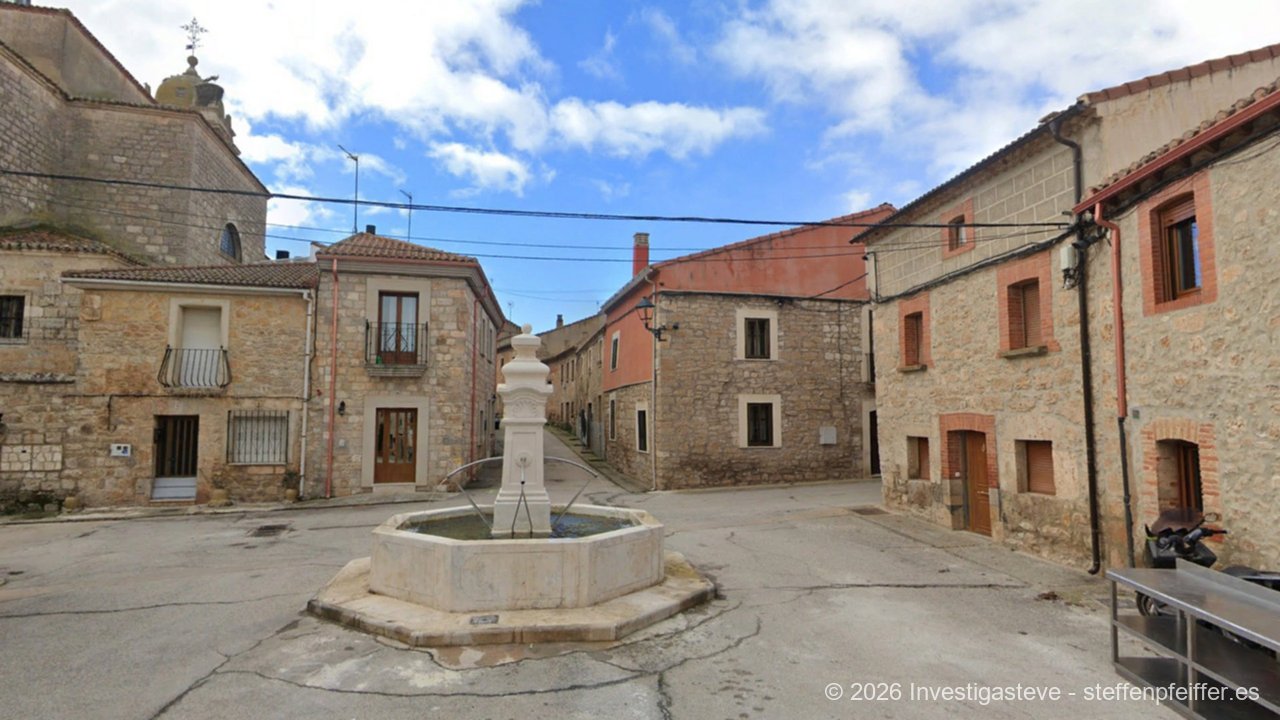
You leave the outskirts of Burgos, and with every step you take deeper into the basin of the Río Urbel, the texture of your journey changes. Rabé de las Calzadas does not appear abruptly; it slowly emerges from the ochre landscape, nestled in a gentle hollow that acts like a protective hand of God in the otherwise so relentless plateau. The air here smells already different than in the city – it carries the tart scent of dry limestone, the aroma of wild thyme, and the distant, almost metallic note of swirling dust. It is a smell that carries within it the promise of adventures and deprivations alike. When you enter the village, you feel the shift beneath your boots: the asphalted suburban path gives way to the firm, centuries-old cobblestones that translate the “Calzadas,” the Roman roads, into modernity here.
The acoustics in Rabé have a peculiar, almost sacred quality. The distant roar of the highway, which accompanied you after Burgos like an unwelcome shadow, is swallowed here by the massive walls of the church of Santa Marina and the defensive adobe houses. Instead, you hear the rhythmic click of your hiking poles, which find a resonance in the narrow alleys of Rabé that seems almost like a conversation with the past. It is a hollow, wooden sound that mingles with the rustling of the poplars on the riverbank. Psychologically, arriving in Rabé is a moment of deep relief, but also of reverent foreboding. You have left the safety of the big city behind you and now stand on the threshold of the Meseta – that landscape that either breaks the pilgrim or puts them back together. Here, in Rabé, the great trial of silence begins.
In the afternoon hours, when the Castilian sun bathes the facades of the stone houses in a warm, almost glowing light, the place unfolds a tactile intensity. The rough surface of the limestone ashlars on the Plaza Mayor feels warm and alive under your fingertips, a storage for the energy of a thousand summers. You feel the stored heat that still radiates from the walls even when the first cool winds of the evening sweep through the valley. The visual experience is marked by a harmonious monotony of earth tones, interrupted only by the deep blue of the sky and the scattered green of the gardens. Rabé is not a place of spectacle, but a place of essence. Arriving here means taking the first real step into the inner world of pilgrimage, far away from the distractions of civilization.
What This Place Tells
Rabé de las Calzadas is a stone palimpsest, a landscape upon which the layers of history have been superimposed without entirely erasing those beneath. The name itself is an etymological riddle that has fascinated linguists and historians for centuries. Whether it derives from the Hebrew “Rab” (master or great), points to an Arabic root, or even goes back to a pre-Roman designation – Rabé breathes an identity older than the borders of today’s kingdoms. The addition “de las Calzadas” unequivocally refers to the strategic location on the Roman arteries that once connected Asturica Augusta (Astorga) with Caesaraugusta (Zaragoza). This historical causality is still palpable today: Rabé was never a remote village, but always a place of passage, a crossroads of cultures, and a witness to imperial power.
In the Middle Ages, the importance of the place was consolidated through the patronage of the Bishop of Burgos. A donation document from the year 1200 documents how the place passed into the possession of the diocese, which brought Rabé special protection and prosperity. The church of Santa Marina, whose late Gothic structure still dominates the townscape today, is the stone proof of this influence. Particularly the Renaissance portal from the 16th century, set like a delicate piece of jewelry into the otherwise plain west facade, tells of a time when architecture was understood as praise of God and a demonstration of the church’s power. When you stand before this portal, you grasp the historical metamorphosis: from a Roman military station to a spiritual center of pilgrim care.
Yet the story of Rabé also has its melancholic, almost mystical undertones. The legend of the Virgen de Monasterio, once venerated in a nearby, now vanished monastery, runs like an invisible thread through the collective memory. It is said that the figure of the Madonna was hidden in a well during the Moorish invasions and rediscovered centuries later through the miraculous ringing of a bell. Such narratives are more than just folklore; they reflect the psychological resilience of people who had to survive in this barren landscape. In Rabé, history is not read in books; it vibrates in the walls of the former Hospital that now serves as a hostel. It is the story of mercy, of caring for the weak, and of unshakeable faith in a path that leads beyond the horizon.
Addresses & tips in Rabé de las Calzadas
| Accommodation | 5 |
| Restaurants | 1 |
| Bars & Cafés | 1 |
| Sights | 6 |
| Services | 2 |
Show all 15
Camino Distances
🗺️ After leaving the cathedral city of Burgos, Rabé de las Calzadas is the first real breathing space in the basin of the Río Urbel, before the path relentlessly rises onto the plateau towards Hornillos.
| Previous Place | Distance (km) | Next Place | Distance (km) |
|---|---|---|---|
| Villalbilla de Burgos | ca. 4.5 km | Hornillos del Camino | ca. 8.2 km |
Sleeping & Arriving
Arriving in Rabé de las Calzadas marks the psychological starting point of their journey through the Meseta for many pilgrims. Those who started in Burgos have the first ten kilometers in their bones here and feel for the first time the true consistency of Camino daily life. When you put down your luggage in one of the hostels such as the Albergue Liberanos Domine, you experience a tactile ritual of liberation. The cool interior of the thick stone walls welcomes you like an old friend. The smell in these dormitories is a mixture of fresh laundry, disinfectant, and the cool moisture that only centuries-old masonry can emit. It is a scent that immediately switches the brain’s signaling pathways to regeneration.
The atmosphere upon arrival is marked by a quiet bustle. You hear the rhythmic rustle of sleeping bags, the soft hiss of faucets, and the distant murmur of the hospitaleros, who often give their instructions in a soothing singsong. In Rabé, there is no haste. The emotional metamorphosis takes place here at the fountain or in the small garden of the hostel. When you take off your boots and hold your toes in the often ice-cold spring water, it is a tactile shock that immediately calls back the spirits. Psychologically, this is the moment when you finally shed the city of Burgos and reduce yourself to the essentials: feet, path, goal.
In the evening hours, the place transforms into a stage of community. Since Rabé is small, life concentrates on the plaza. You sit on the stone steps, observe the activity, and feel a deep connection with all those who sat here before you. The light of the setting sun breaks in the stained glass windows of the church and creates shadow plays on the pavement that look almost like maps of past times. Sleeping in Rabé is deep and regenerative, carried by a silence that has long been lost in the cities. Only the distant ringing of the church clock occasionally interrupts the night and reminds you that time beats a different, slower rhythm here.
At night, a cool wind often blows down from the Páramo, whistling through the cracks of the old windows. This sound is the acoustic signature of the Meseta. It is a wake-up call to the soul to prepare for the vastness. Those who stay overnight in Rabé often do so to escape the hustle and bustle of Burgos and spend the first night in “solitude.” It is a conscious decision for silence. The feeling of waking up the next morning in a village setting while the mist still hangs over the fields gives the pilgrim a spiritual strength that will carry him over the strenuous kilometers to Hornillos. Arriving here means casting the first anchor in infinity.
Eating & Drinking
The cuisine in Rabé de las Calzadas is an honest homage to the Castilian earth. There are no pretentious frills here, but food that nourishes the body and warms the soul. When you sit down in the evening at one of the massive wooden tables in one of the bars, the intense aroma of “Morcilla de Burgos” greets you, that legendary blood sausage with rice, prepared here so that it melts crispy on the tongue. It is served with the heavy, crusty bread of the region, which tastes of real yeast and sun. It is a tactile experience to break the crust and inhale the steam of the freshly baked bread – an olfactory promise of satiety and security.
A classic that you must not miss in Rabé is the Sopa de Ajo, the garlic soup. It is more than just a dish; it is a liquid remedy for the exhausted hiker. The taste of roasted garlic, sweet paprika powder, and the egg cooked in the broth is a revelation after a long march. You feel the warmth of the soup flowing through your limbs and the energy returning. In the community of the pilgrim meal, language barriers disappear. You share the heavy red wine from the Ribera del Duero or Arlanza region, which gleams dark and earthy in the glass and carries a note of ripe berries and dry wood.
The culinary experience in Rabé is refined by the simplicity of the surroundings. When you sit outside while the wind carries the scent of dry hay, even a simple bocadillo with ham tastes like a feast. The contrast between the salty jamón and the sweetness of the local tomatoes is a sensory highlight. Rabé teaches the pilgrim that true enjoyment lies in the quality of the basic products. Here you do not just eat to get full; you absorb the essence of Castile. It is a preparation for the coming days, in which you will learn to appreciate the value of every sip of water and every bite of bread anew.
Supplies & Logistics
Logistically speaking, Rabé de las Calzadas is a small but perfectly oiled supply anchor. For many, it is the last place with a certain village structure before the lonely stretch over the Páramo to Hornillos begins. You feel the centuries of experience in dealing with travelers here. The small shops, often housed directly in residential buildings, offer exactly what a pilgrim needs: blister plasters, sunscreen, dried fruit, and fresh water. The psychology of shopping here is different from in the supermarket – it is an exchange of tips and good wishes, a brief pause in the flow of logistics.
Shopping: In the high season, there are small sales points that stock fresh fruit, bread, and supplies for the Meseta stage. Pay attention to the opening hours, which often follow the siesta.
Gastronomy: The bars of the place offer the typical “pilgrim breakfast” and hearty menus in the evening. Particularly the coffee in the early morning hours, served in thick cups, is an auditory and tactile pleasure when the spoons clink against the porcelain.
Accommodation: Rabé has several hostels (municipal and private) known for their welcoming atmosphere. A reservation is advisable during the peak seasons from May to September, as the place is very popular as an alternative accommodation to Burgos.
Public Facilities: There are public fountains with drinking water quality, offering a tactile refreshment. Medical care is available on a small scale; for emergencies, Burgos is only a short drive away.
In summary, Rabé logistically forms the bridge between urban abundance and rural reduction. You should definitely refill your water supplies here, as the sun on the way to Hornillos often burns mercilessly and there is hardly any shade. The logistical security that Rabé offers is an important factor for the pilgrim’s psychological stability. When you know that your backpack is well-packed and your stomach has been filled, you can entrust yourself to the path with a feeling of freedom that now finally leads you into the vast silence.
Don’t Miss
– Church of Santa Marina: An absolute must is observing the Renaissance portal from the 16th century. The fine stonework contrasts wonderfully with the massiveness of the rest of the building. Pay attention to the echo inside when you walk softly through the nave.
– The Renaissance Portal: The architectural jewel of the village. Seek out the small details in the reliefs that tell stories of saints and donors.
– Ermita de Nuestra Señora de Monasterio: A spiritual place on the edge of the village, linked to the legend of the rediscovered Madonna. Here you feel the deep rooting of the place in the Marian cult.
– The Well of Miracles: Take a sip of the cool water and remember the legend of the bell. It is a tactile connection to the mystical side of Rabé.
– Palacio de los Rabe: Even if only remnants are recognizable, the walls tell of the former importance of the nobility and the bishopric in this small village.
Insider Tips & Hidden Places
A true insider tip in Rabé de las Calzadas is visiting the small, often overlooked bodega quarter on the slope. These cellars dug into the limestone are the private sanctuaries of the residents. If you are lucky enough to meet a local who allows you a glimpse inside, you experience an olfactory sensation: the sudden cold, the smell of damp earth, and the aroma of wine maturing in old barrels is a sensory adventure. It is the place where the true soul of Castile rests, away from the official pilgrim routes. Here you feel the deep historical causality between the land and its fruits.
Another hidden place is the small path that runs along the Río Urbel, a little off the main Calzada. Here you find a lushness of vegetation that stands in stark contrast to the dryness of the Páramo. The rustling of the poplars and the distant croaking of frogs form an auditory tapestry that invites meditation. It is a tactile pleasure to dip your hands into the cool stream water and feel the vitality of nature that has found its retreat here, in the shadow of the mountain. This place is perfect for a private reflection on the journey so far.
Pay attention to the stonemason marks on the lower wall layers of the church of Santa Marina. Some of these marks come from wandering craftsmen of the 14th century and are almost weathered. It is a tactile journey of discovery to run your fingers over these indentations. These small details tell more about the globalization of the Middle Ages than any history book. In Rabé, the hidden becomes the essential when you take the time to question the surfaces.
Finally, there is a point at the western edge of the village where an old bench stands under a solitary tree. From here you have the perfect view of the plateau you are about to climb next. When you sit there at sunrise and watch the first ray hit the church spire of Rabé, you experience a psychological clarity that is priceless. It is the moment of decision: you leave the security of the village behind and entrust yourself to infinity. In this silence between village and plain lies the true magic of Rabé.
Moment of Reflection
Do you stand in Rabé de las Calzadas only to replenish your supplies, or are you ready to accept silence as your new companion? The place on the old Calzadas reminds us that we all walk on paths that generations before us have paved. Yet the inner path you now undertake is unique. The massive walls of Santa Marina ask you: What in your life is as constant as this stone, and what is as fleeting as the dust on your boots? Rabé is the place of purification before the great emptiness.
Perhaps you recognize here, on the edge of the Urbel Valley, that the greatest challenges do not lie in the kilometers, but in the ability to stay with yourself when the landscape offers no more distraction. The legend of the Virgen de Monasterio teaches us that valuable things often lie hidden and can only be rediscovered through silence and patience. What is your personal “well” in which you have hidden your dreams from the noise of the world? Rabé gives you the space to hear that bell within yourself again. When you leave the place and climb onto the plateau, you take not only water with you, but a new clarity about your own finitude and the infinity of the path.
Camino of the Stars
This place lies on the Camino Francés, on the stage from Burgos to Hornillos del Camino. The sequence of places is:
Burgos → Villalbilla de Burgos → Tardajos → Rabé de las Calzadas → Hornillos del Camino
Did the mysterious silence of Rabé de las Calzadas touch you just as deeply as it did us, or was it the Renaissance portal that left you in silent awe? Perhaps you heard a story in one of the hidden wine cellars that changed your path? Share your experiences, your photos, and your reflections with us via the contact form – we look forward to every message, whether in German, Spanish, English, or in the silent language of the heart!
About the Author