A First Glance – Entry & Atmosphere
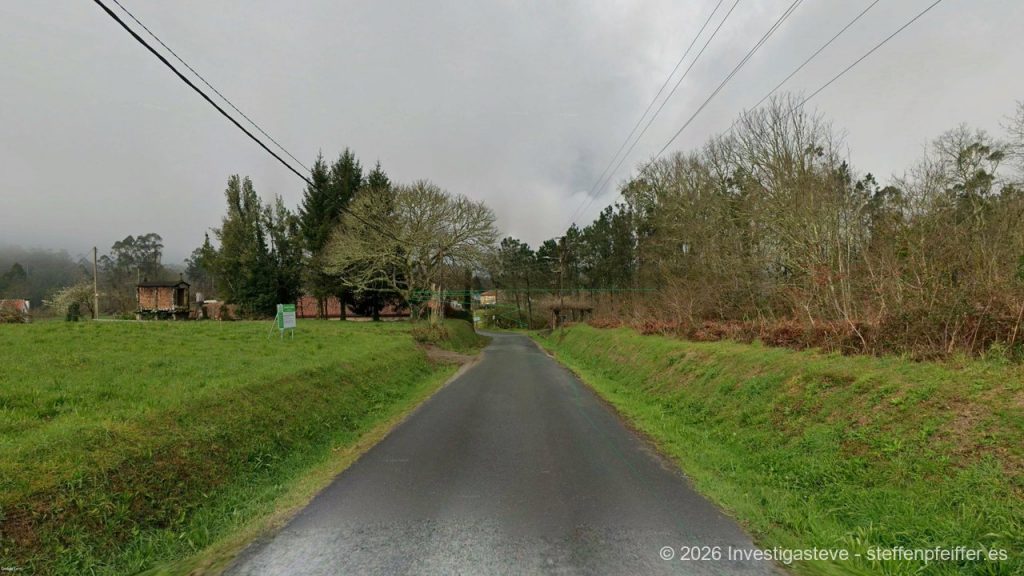
When you have left the shadow of the Cathedral of Santiago de Compostela behind and take the first kilometers of your journey to the end of the world under your soles, the path inevitably leads you to a point that puts your determination to a first hard test. After the strenuous ascent from the valley of A Maía – those two kilometers up from Augapesada, on which the Galician ground rises mercilessly under your feet and drives the sweat onto your brow – the panorama suddenly opens up. You set foot in Trasmonte, and immediately understand that you have not only climbed a geographical height here, but that a psychological threshold has been crossed. Up here, on the ridge between the valleys, the world seems to possess a completely new consistency. It is a place born from the silence of the oak forests and the wide view over the land, a minimalist hamlet that braces itself against the Atlantic winds with stoic serenity.
Anyone entering Trasmonte might possibly notice that tinnitus has settled in the ear, for the place is characterized by an almost sacred reduction and tranquility. It is not the distant noise of a city that welcomes you; on the contrary, it is the constant, deep whispering of the wind in the crowns of the “Carballeira,” those dense oak forests that envelop the place like a protective cloak. The rhythmic clacking of your hiking poles, if you even use such sporty pacemakers instead of foregoing them; on the rough asphalt of the narrow road echoes strangely lonely in the vastness of the plateau, a metallic beat that marks the end of the first great physical exertion. Mingled with it is the quiet singing of forest birds and the occasional, almost imperceptible distant rumble of life down in the valley, which seems like a distant memory up here. It is a soundscape that washes away all thoughts of the hectic pace of Santiago’s suburbs and catapults you entirely into the here and now.
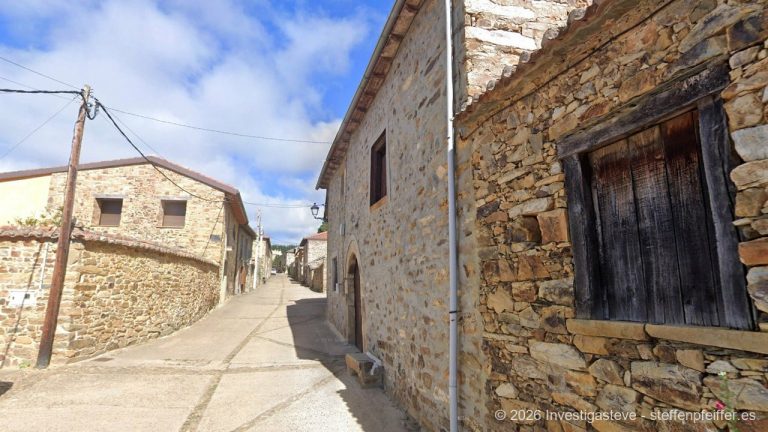
The air in Trasmonte is saturated with the moisture of the “Orballo,” that fine Galician drizzle that often drifts over the plateau like a cool breath and softens the contours of the houses. It smells of damp moss here, of the tart aroma of ferns, and of the freshness of the oak leaves, which carry an almost electric, pure note. When the sun breaks through the cloud cover for a moment and falls at a flat angle on the gray granite walls of the houses, the mica in the stone begins to sparkle gently. You feel the haptics of the place: the rough granite, which feels cool and unyielding under your fingers, and the resistance of the ground, which seems like a firm anchor to you after the steep ascent. Your clothes may still be sticking to your back, but the cool breeze blowing up here acts like a gentle cleansing.
Trasmonte is the point of the first great transformation on your way to the Cape of Fisterra. You are now far enough from the cathedral that the spiritual gravity of Santiago loses its pressure. Here, in this place of wide views, the backpack is not only put down; you also leave behind the tension of the start and immerse yourself in a silence that can clarify the mind. The view back over the valley of A Maía, with its gentle mountains and the cornfields swaying in the wind, acts like a balm for the senses. Trasmonte is not a place for a quick passage; it is a promise of authenticity, a place that teaches you to absorb the power of stillness before the path leads you further into the green heart of the Barcala region.
What This Place Tells
The history of Trasmonte is a chronicle deeply rooted in the tradition of the old “Camiño Real,” the Royal Road to Fisterra. As early as the 12th and 13th centuries, this hamlet was a fixed anchor point for those who dared the arduous journey out of Santiago and faced the wilderness of the West. The core architectural feature, the Church of Santa María de Trasmonte, tells of this long continuity. Originally founded in the Romanesque period, it now displays that characteristic face gained through comprehensive Baroque remodeling in the 18th century. It is a structure of solid granite that has stored the spiritual energy of generations of pilgrims within its walls. The façade is plain, but of a dignified severity that perfectly matches the character of the surrounding landscape.
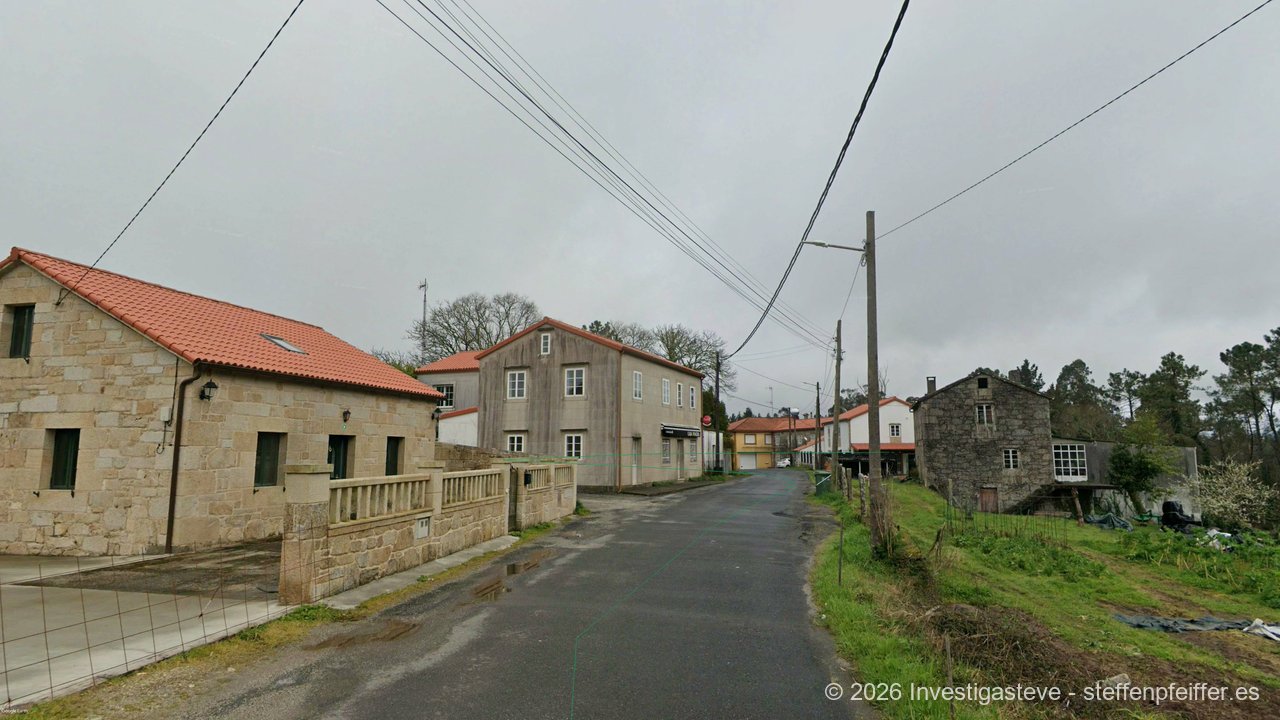
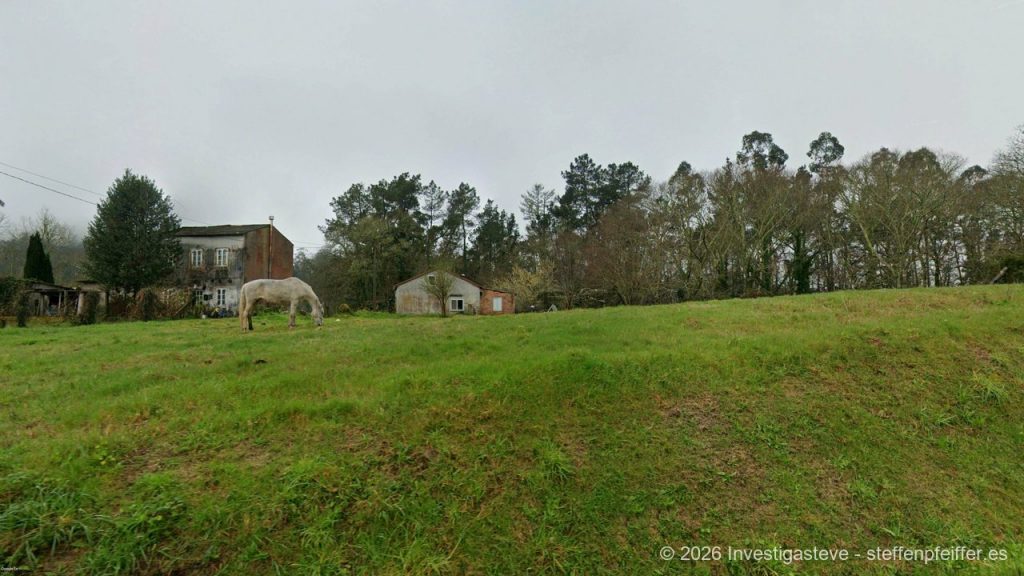
In the alleys of Trasmonte, you encounter the history of an agrarian community that has dedicated itself to the rhythm of agriculture and livestock farming for centuries. The settlement developed linearly along the path, with each house, each hórreo, and each stone wall telling of the hard work on the land. You can practically feel the historical causality here: The place did not arise from strategic planning, but as a necessary resting point on a demanding route, where man and beast could catch their breath after overcoming the first mountain ridges. The Baroque remodeling of the church was far more than just an aesthetic decision; it was a sign of the place’s significance as a spiritual signpost on the border between Santiago’s sphere of influence and the open country.
Trasmonte also tells of the difficult times of the 19th and 20th centuries, when rural exodus threatened to depopulate many Galician villages. But this place remained steadfast, a silent testimony to the tenacity of the Galician rural soul. The granite blocks of the houses, often covered with lichens and moss, seem like a natural part of the geology. With the renaissance of pilgrimage in the 21st century, Trasmonte was rediscovered – not as a tourist backdrop, but as a place of genuine encounter. The recent restoration of the church is a symbol of the appreciation of heritage and the living connection to the past. Here, the stones do not whisper loud slogans; they tell of the constancy of walking and the strength that lies in pausing after exertion.
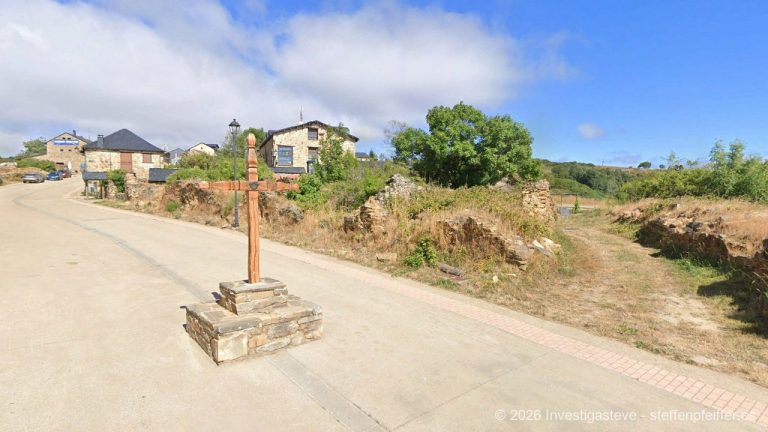
The religious dimension of Trasmonte is inseparably linked to the figure of Saint Mary, the patroness of the church. In the architecture, Galicia’s Baroque formal language finds its expression – functional in structure, yet profound in detail. It is a place of reflection where pilgrims have asked for blessings for the coming kilometers to Negreira for centuries. The historic wayside crosses, the so-called cruceiros, found in the surrounding area, mark the invisible boundaries between the profane and the sacred. Trasmonte teaches us that history does not only consist of dates, but of the energy of the deeds and prayers stored in these granite blocks. Those who place their hand on the stone here touch the memory of the way.
Camino Distances
After the most strenuous ascent of the first stage (the Alto do Vento or the climb from Augapesada), Trasmonte offers the first strategic resting point on the plateau.
| Previous Place | Distance (km) | Next Place | Distance (km) |
|---|---|---|---|
| Augapesada | approx. 2.0 km | Ponte Maceira | approx. 6.0 km |
Addresses & tips in Trasmonte
Overnight Stay & Arrival
Arriving in Trasmonte means having successfully mastered the first physical test of your journey. There are no large hostels or hotels in the classic sense in the village itself, which makes Trasmonte an exclusive place for a day’s rest or very individual contemplation. Arriving here is a ritual act of relief: When you let the backpack slide from your shoulders and sit down on one of the stone walls, you feel the healing power of silence. Since there is no overflowing tourist infrastructure for overnight stays, the hamlet remains a place of transition, where the energy of pilgrims lingers only for a short, intense moment, keeping the atmosphere on site pure and unadulterated.
The psychological experience of arriving in Trasmonte is shaped by the spectacular view that reveals itself just before or immediately in the village. When you arrive exhausted at the top and your gaze sweeps over the wide valley of A Maía, the physical heaviness gives way to a mental vastness. In the relative absence of commercial overnight accommodations, you learn here to appreciate the value of a break anew. You might sit in front of Bar Pancho or on the steps of the church, take a deep breath, and know: The greatest vertical hurdle of the first day lies behind you. It is a form of logistical deceleration that forces you to focus on the next stop in Ponte Maceira or the stage destination in Negreira.
Social interaction upon arrival in Trasmonte is characterized by a special sincerity. Since the village is small, pilgrims move closer together in the short time of their break. They share the narrow spots in the shade, exchange tired but proud smiles about the accomplished ascent, and enjoy the privilege of standing above the world for a moment. The mood is not driven by the hectic rush of bed reservations, but by the pure presence of the moment. Trasmonte teaches you that arriving does not always have to mean the end of a long day, but often just reaching an inner clarity halfway. It is the moment when the lungs breathe freely again and the mind adopts the rhythm of the land.
Those who take a break here often experience the afternoon as a time of contemplation. Since there are hardly any distractions, the place belongs entirely to nature and one’s own breath. Arriving in Trasmonte is an arrival at your own physical strength. You realize that your body is capable of far more than you might have believed when you stood down in the valley facing the ascent. It is a lesson in self-confidence that strengthens you for the remaining path to Negreira. The granite walls of the houses radiate a calm that transfers to the hiker. You don’t feel like a stranger here, but like part of a timeless movement of wanderers, which uses this place as a necessary breather.
Food & Drink
The culinary world of Trasmonte concentrates on one essential point of contact: Bar Pancho, also known as Casa Pancho. Here you will not find elaborate menus, but a gastronomy that understands the pilgrim for what he is after the ascent: a hiker whose body craves quick energy and hearty sustenance. A pintxo or a bocadillo here tastes of the honesty of Galician bar culture. The scent of freshly brewed coffee mixes with the tart aroma of the land and forms an olfactory elixir that immediately revives weary spirits. The water up here tastes clear and cold, as if it came straight from the heart of the mountain.
A special experience is sitting on the small terrace, a cool drink in hand, and letting your gaze wander over the land. In Trasmonte, eating is not celebrated, but understood as necessary and enjoyable fuel for the soul. You might share a sandwich with another pilgrim, the light of the Galician sun reflects in the water bottles, and suddenly the simplest meal tastes better than any three-course menu in the city. It is the culinary art of the moment, which focuses attention on the essentials: satiation, refreshment, and community. The simplicity of the products – often a hearty bread, local cheese, or ham – underlines the character of the place.
An insider tip for the palate are the small tortilla pieces often served as a tapa. They are juicy, strongly seasoned, and exactly what the salt balance needs after physical exertion. Since the infrastructure is limited, you also learn gratitude for what is available in Trasmonte. Drinking in this hamlet means connecting with the vitality of the plateau. It is an ascetic form of enjoyment that teaches you that a glass of water in the right place can be more valuable than any luxury. Those who rest here do so with a mindfulness that really brings the taste of freedom to the fore. It is the “meal of the victor” after the summit storm.
Supplies & Logistics
Infrastructurally, Trasmonte is a place of radical reduction. Do not expect supermarkets, banks, or pharmacies here; this place is a refuge for those who have learned to make do with what they carry in their backpacks. The supply situation is limited to the bare essentials: drinking water from the local fountains and basic catering at Bar Pancho. This logistical “scarcity” is a conscious part of the experience on the first stage from Santiago. It forces you to be self-sufficient and sharpens your focus on the essential. You learn here to ration your resources and to appreciate the small oases of supply for what they are: valuable gifts along the wayside.
Logistics in Trasmonte require a certain degree of planning. Anyone arriving here should know that the next fully equipped supply station can only be found again in Negreira, about 9 km away. Bar Pancho offers sanitary facilities and a possibility to stamp the pilgrim’s passport, but services depend on individual operating hours. It is a logistics of humanity, based on the immediacy of the encounter. You not only refill your water bottle here, but also your mental strength for the remaining path. Trasmonte is the place where you check whether your equipment has passed the first real test.
Shopping: There are no shops at all in the village. Pilgrims must have brought their supplies from Santiago or wait for the next major stop in Negreira.
Gastronomy: Bar Pancho (Casa Pancho) is the central catering point in the hamlet. The offer includes drinks, coffee, sandwiches, and tapas in a rustic atmosphere.
Overnight Stay: There are no official hostels directly in Trasmonte. The next overnight accommodations can be found either back in Augapesada (guesthouses) or ahead in Ponte Maceira and Negreira.
Public Facilities: No offices, banks, or pharmacies available. The Church of Santa María is the spiritual center; Negreira must be headed to for all administrative or medical needs.
In summary, the supply in Trasmonte is like the place itself: modest, but essential for the psychological course of the stage. Those who are willing to engage with this reduction will find exactly what they need in Trasmonte: a moment of peace and the strength to continue. It is the logistics of minimalism that teaches you here to grasp anew the value of every patch of shade and every cool sip of water. You leave this place not only strengthened, but also with the realization of how little you actually need to be on the right path.
Don’t Miss
The Iglesia de Santa María de Trasmonte: An architectural jewel that hides its medieval soul behind an elegant Baroque façade. Pay attention to the fine stonework and the simple dignity of the nave, which radiates a cooling, healing atmosphere, especially after the physical exertion of the ascent.
The Panorama over the Valley of A Maía: One of the most spectacular viewpoints on the entire way to Fisterra. Take the time to let your gaze wander just before the entrance to the village – this view is the true reward for every drop of sweat you left on the Alto do Vento.
Bar Pancho (Casa Pancho): As the sole social anchor point of the hamlet, this bar is a must for anyone wanting to feel the authentic pilgrim atmosphere. A stamp in this small oasis is a valuable document for the first day of your journey.
The Galician Hórreos: In Trasmonte, you will find some very well-preserved traditional granaries on stone mushrooms. They stand as silent guardians along the wayside and tell of the constancy of rural tradition in Galicia.
The Carballeiras (Oak Forests): The dense forests around the village not only offer shade, but are also places of an almost mystical silence. Pay attention to the play of light in the leaves of the ancient oaks.
Insider Tips and Hidden Places
Off the main road of Trasmonte, which is often hurriedly crossed by exhausted hikers on their way to Negreira, small, almost invisible treasures reveal themselves. One such place is the small area behind the apse of the Church of Santa María. While most pilgrims sit directly in front of Bar Pancho or only briefly photograph the façade, you will find a silence here that is almost physically palpable. In the afternoon sun, the old trees cast long, dancing shadows over the granite, and you can feel the “Morriña” for a moment – that untranslatable Galician longing that seems to hang in the air of this plateau. It is an ideal spot to record the first stage in a journal or simply to stare into infinity, far from the clatter of glasses and the polyphonic murmur of others.
Another hidden treasure is the old connecting path that branches off towards the fields just behind the church. If you follow this path for only two hundred meters, you reach a spot where the dry-stone walls (Muros de Pedra Seca) are particularly artfully layered. The microclimate here is often a little cooler, saturated with the scent of wild mint and ferns. It is a place of absolute grounding, where the historical threads of the Middle Ages and the rural present merge into a dense fabric of contemplation. You feel here as if in a green tunnel, lifting you out of time for a moment.
An insider tip for the senses is observing the mist in the early morning, when it settles like a white sea into the valley of A Maía. From Trasmonte, you look over this cotton-soft surface, while the mountain peaks protrude like lonely islands. It is an almost supernatural spectacle that summarizes the magic of the Camino in a single image. Only those who set out very early from Santiago will witness this metamorphosis. It is the moment when Trasmonte shows you its true, mystical face – entirely one with the elements and far from any modern civilization. Up here, the air becomes an elixir and the stone becomes a teacher.
Finally, it is worth looking for the small details on the cruceiros of the surrounding area. They are often tiny incisions or lichen patterns that look like secret maps. In Trasmonte, happiness is not found in the big things, but in the ability to discover the special in the inconspicuous. Those willing to slow down will find more than just a rest stop here – you will find an anchor point for the soul on the way to the ocean.
Moment of Reflection
Trasmonte asks you a question that touches your innermost being: How do you deal with the reward after exertion? When you stand up here, the sweat of the ascent still on your skin, and look out over the wide land, you become aware of the radical truth of your path. This place, with its solid granite walls and its infinite horizon, invites you to find your own “threshold point.” In a world that always craves the next goal, Trasmonte offers you the necessity of pausing. Are you ready to enjoy the pride of what you have already achieved in peace, or does restlessness already drive you impatiently further to the next kilometer stone?
Perhaps you recognize here that silence is not emptiness, but a space for the answers that Santiago may still owe you. The “Morriña” that hangs in the air here is not homesickness for yesterday, but a longing for your own essence in tomorrow. Trasmonte teaches you that every ascent needs a moment of reflection and that true greatness often lies in the ability to be fully present in the transition between the valleys. When you look into the vastness, you feel simultaneously small and infinitely powerful. That is the gift of Trasmonte: the realization that you are exactly where you belong – on the summit of your own first small transformation.
Camino of the Stars
This place lies on the Camino a Fisterra y Muxía, on the stage from Santiago de Compostela to Negreira (CFM 1). The sequence of places is:
Santiago de Compostela → Sarela de Abaixo → Roxos → Augapesada → Trasmonte → Ponte Maceira → Negreira
Did you feel the moment of absolute freedom when you let your gaze wander over the valley of A Maía after the ascent from Augapesada, or were you particularly inspired by the quiet dignity of the Baroque church in Trasmonte? Share your personal impressions and experiences from this atmospheric resting point with us – no matter in which language. Perhaps you took a photo of the view or the small Bar Pancho? Your story helps keep the magic of this threshold place alive for other walkers and to continue writing the “Way of the Stars” together.
About the Author