A First Glance – Introduction & Atmosphere
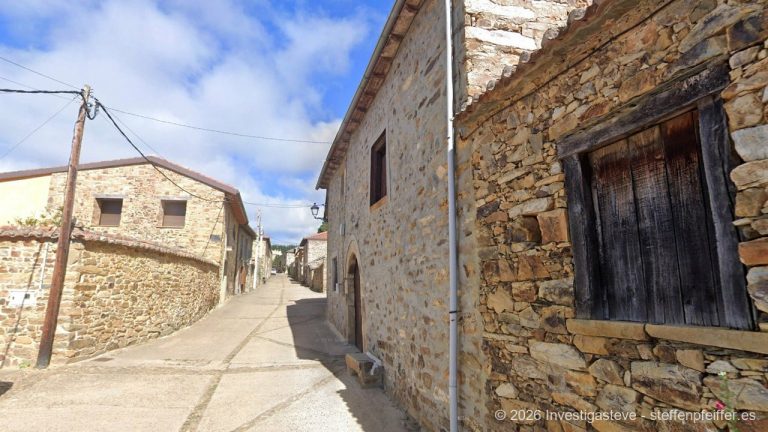
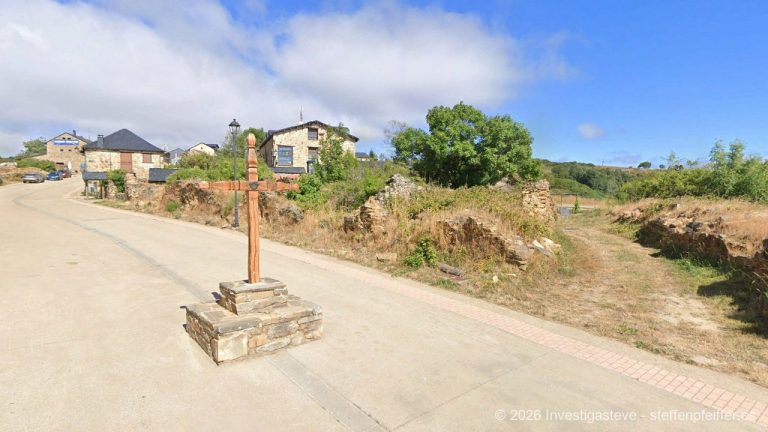
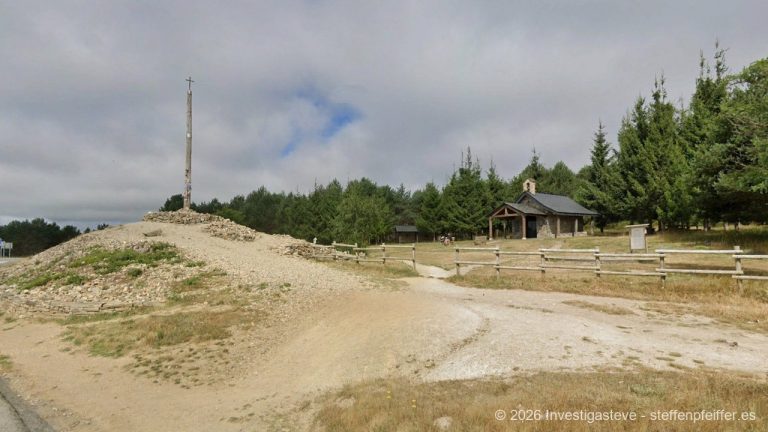
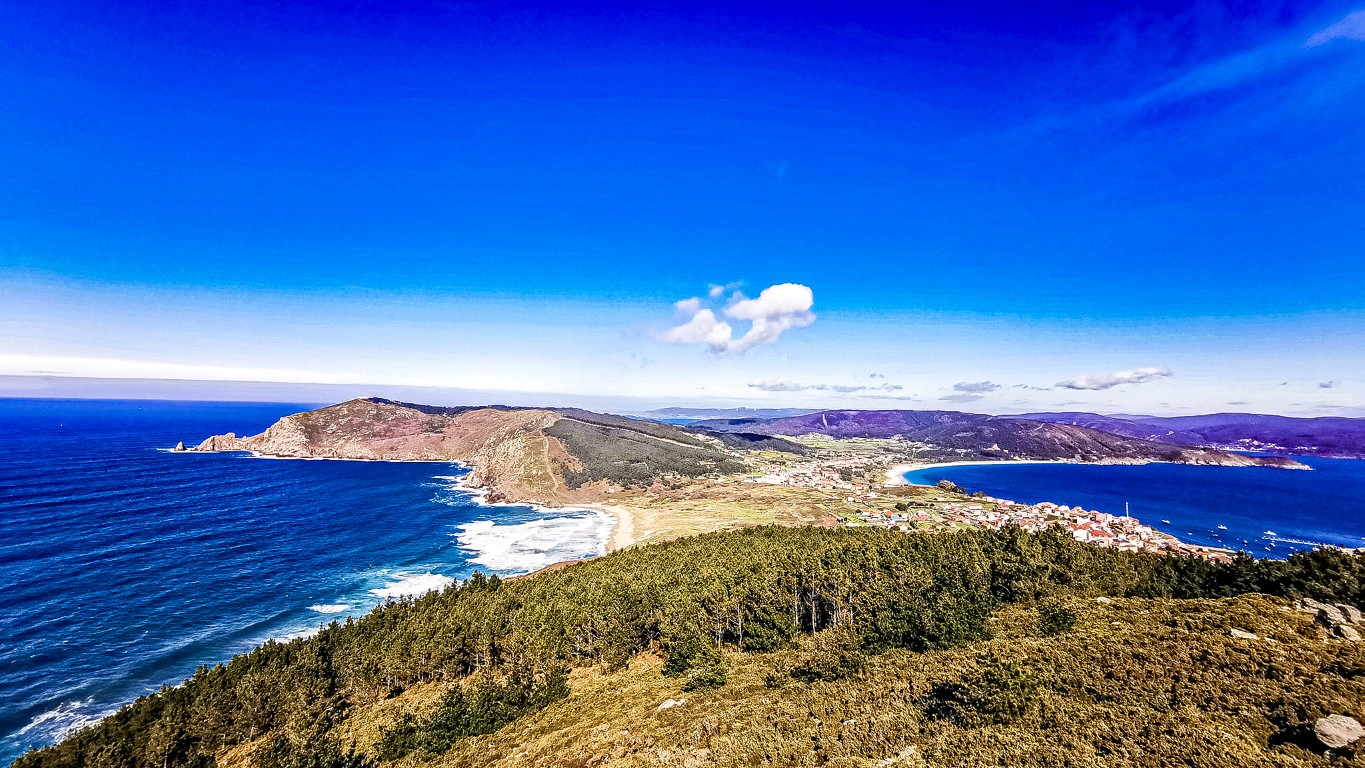
At the far edge of Galicia, where the sky tilts into the sea, lies Fisterra – the legendary “End of the World.” The town rests on a narrow peninsula, washed by the wild waters of the Atlantic, marking the final point of the Camino a Fisterra, that quiet extension of the Camino de Santiago which many pilgrims follow beyond Santiago.
The path to this place is a slow emptying – step by step across the rocky headland, accompanied by the salty wind and the breath of the sea. In the distance the lighthouse flashes, fishing boats sway in the harbor, seagulls cry above the rooftops. Fisterra does not welcome with pomp, but with depth. Whoever arrives here stands at the edge of everything – and in that very place finds a strange peace.


What This Place Tells
Fisterra, from the Latin Finis Terrae – the End of the Earth – was sacred long before Europe became Christian. The Celts believed that here began the journey of souls to the otherworldly Isles of the Blessed. Later, Phoenicians and Romans prayed at the Ara Solis, the Altar of the Sun, and in the setting light saw the gate to another world.
In the 12th century, Fisterra became part of the pilgrim tradition. The Codex Calixtinus names the place as a destination after Santiago de Compostela. Pilgrims came here to watch the sun sink into the sea and to complete their journey. The Romanesque Igrexa de Santa María das Areas, consecrated in 1199, became their spiritual center. Opposite it, in 1479, arose the Hospital de Peregrinos de Nuestra Señora del Rosario, one of the oldest hospitals in Galicia.
In the 18th century, the Castelo de San Carlos was built for protection against pirates, today home to the Museo do Mar. In 1853 came the Faro de Fisterra, a symbol of both end and beginning.
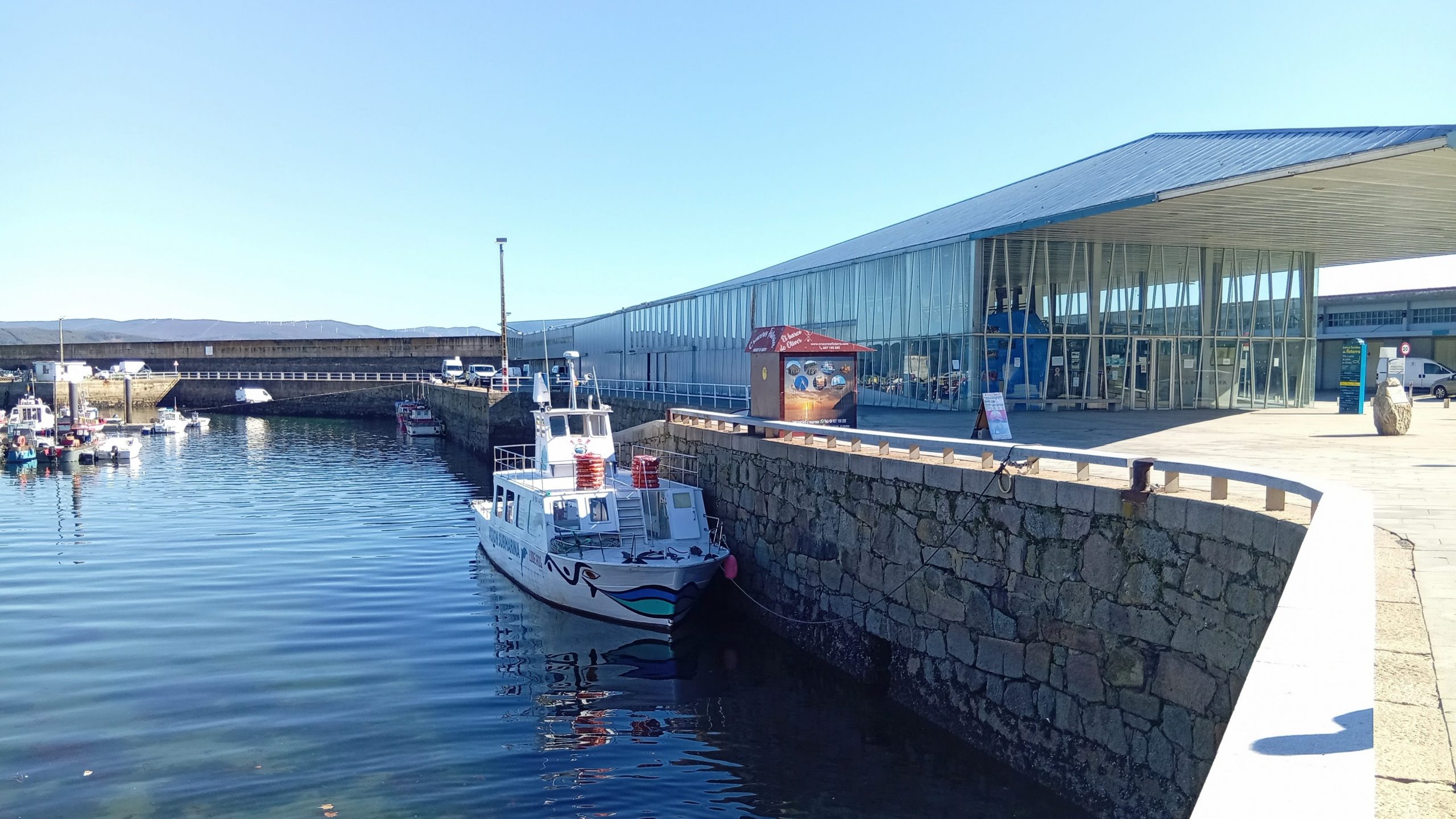
In the 20th century, Fisterra lived from fishing, yet the pilgrim brought new life: albergues, small hotels, the glass fish market Lonja de Fisterra (2006) – a union of sea, craftsmanship, and modern architecture. Today, fishermen and pilgrims, locals and travelers, meet here. Fisterra remains what it has always been – a passage between earth and water, faith and experience, end and beginning.
Camino Distances
The route from Santiago to Fisterra is not a new path but an echo of the Camino de Santiago. About 88 kilometers lead through the green expanses of Galicia – usually in three to four days. Those who continue reach Muxía after roughly 31 kilometers.
The last kilometers stretch over the Monte do Facho, then the view opens onto the wide bay of Langosteira – sand, light, Atlantic. The path descends gently toward the sea, through the village to the cape, where the lighthouse awaits, together with the silence of the end.
Thus, after about 88 kilometers from Santiago de Compostela and approximately 7.5 km from the neighboring village of Sardiñeiro, the path ends where the land falls into the sea – at the lighthouse of Fisterra, the traditional zero-kilometer point of all pilgrimage routes bearing the name Camino de Santiago.
| Section | Distance | Elevation profile | Walking time (ø) |
|---|---|---|---|
| Santiago de Compostela – Negreira | 21 km | moderate | 5–6 h |
| Negreira – Olveiroa | 33 km | hilly | 7–8 h |
| Olveiroa – Corcubión | 21 km | descending | 5–6 h |
| Corcubión – Fisterra (Faro) | 10 km | easy | 1–1.5 h |
| Total | ~88 km | – | 18–20 h |
| Previous place | Distance (km) | Next place | Distance (km) |
|---|---|---|---|
| Sardiñeiro | approx. 7.5 km | Statue of Liberty (New York Harbor) | ~5,300 km (for experienced swimmers only) |
Staying & Arriving
Fisterra is ready for those who arrive here exhausted yet fulfilled. Pilgrim hostels, guesthouses, and small hotels line the narrow streets, many run by former pilgrims. The official hostel of the Concello de Fisterra welcomes only those arriving on foo or by bicycle – simple, central, often full. Those who find no place have alternatives: private albergues with kitchens, terraces, massage services, or sea views. In almost all of them, pilgrims receive the official stamp and the Fisterrana, the certificate for reaching the end of the world.
In summer, Fisterra is lively; in winter, you often sleep alone to the sound of the Atlantic – and feel how the sea begins to breathe for you.
Food & Drink
Fisterra lives from the sea, and you can taste it in every street. In the restaurants around the harbor, the catch of the day goes straight from the boat to the pan: Pulpo á Galega, Zamburiñas, hake, sardines, Rubia Gallega beef.
The cuisine is honest, rough, and seasoned with salty patience. Many restaurants offer a Menú del Día – soup, main course, dessert, and wine – for 10 to 15 euros. Those who prefer to cook for themselves will find everything needed in Coviran, Froiz, and Familia, along with small fish shops, bakeries, and weekly markets.
In the evening, terraces fill with voices and gull cries; in winter, fires crackle indoors while the sea roars outside. Eating in Fisterra is more than a meal – it is farewell and arrival at once.
Supplies & Services
Even at the end of the world, you find everything you need. In the town center, there are several supermarkets, pharmacies, and banks. On Tuesdays and Fridays, the weekly market brings fresh products from the region. Laundromats, luggage transfers, bicycle repairs, stamp points, and drinking fountains – everything is here, just at a slower rhythm. The Centro de Salud covers basic healthcare; for major treatments, people go to Cee or A Coruña. Wi-Fi is available almost everywhere, and mobile coverage is stable. Fisterra breathes in the rhythm of the tides – slow but steady.
Not to Miss
- The lighthouse Faro de Fisterra (1853) rises 238 meters above the sea – a silent finale for many pilgrims. Beside it stand the kilometer marker 0.00 km and the bronze Bota del Peregrino.
- The Igrexa de Santa María das Areas (12th century) preserves the legend of the Santo Cristo de Fisterra, whose beard is said to grow – a place of silence and mysticism.
- The Castelo de San Carlos tells, in the Museo do Mar, stories of fishermen, pirates, and storms.
- The modern Lonja de Fisterra (2006) opens its glass fronts every afternoon from 16:00 for the fish auctions.
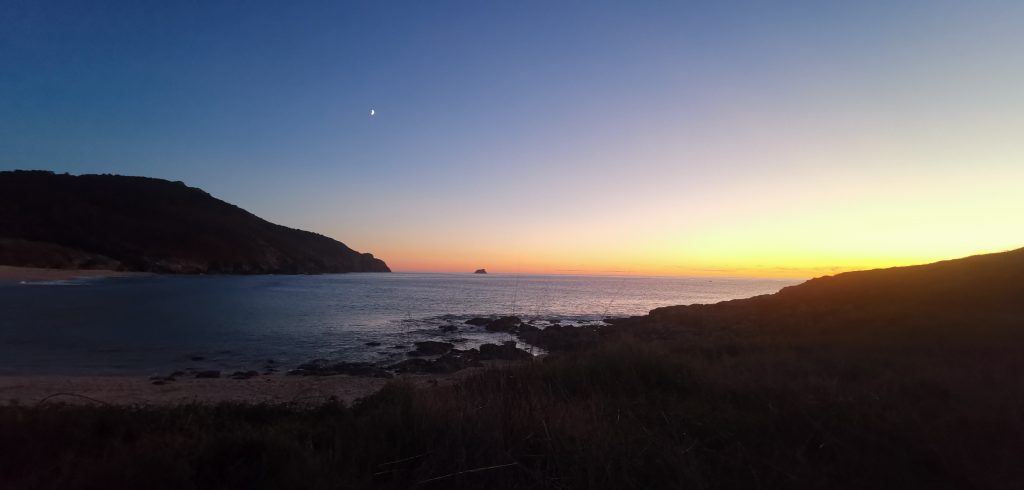
And finally, Cape Fisterra itself – a place of rituals, where pilgrims sit with a glass of wine to watch the sunset and dine exclusively at the restaurant of the Hotel Semáforo, or celebrate the end of their long journey in the adjoining bar O Refuxio, whose wooden terrace faces the setting sun.
Note: Due to fire risk, burning rituals have been strictly prohibited for several years and carry heavy fines.
Those with time should walk to the beaches of Langosteira, Ribeira, or Mar de Fora – each showing a different face of the Atlantic.
Insider Tips & Hidden Places
- Playa da Ribeira – a small town beach between rocks and boathouses, empty in the morning, golden in the evening.
- Monte San Guillermo – a half-hour climb with a wide view over the peninsula and the sea; once a site of Celtic rituals.
- Langosteira Beach at dusk – pink light, seagulls, few people; the same sun as at the cape, only without an audience.
Moment of Reflection
Fisterra is not an arrival, but a threshold. Many come to finish – and realize that something new begins.
The sea lies motionless before you; the wind carries away the last thoughts. Here there is no need for words, no answers – only presence. Whoever sits here watches the sun sink and understands: the path never ends, it only changes direction. Whoever sits here watches the sun sink and understands: the path never ends, it only changes direction.
Camino of the Stars
Fisterra lies on the Camino de Fisterra y Muxía, along the wild Costa da Morte. The route continues over Lires to Muxía before returning to Santiago through Dumbría.
| Stage | Destination | Distance | Walking time |
|---|---|---|---|
| Fisterra – Lires | 13 km | 3–4 h | |
| Lires – Muxía | 18 km | 5–6 h | |
| Total | – | 31 km | 8–10 h |
Conclusion
Fisterra is not a stopover – it is the point where everything becomes silent.
Stay one day longer; go early to the Faro, when no one is there yet. Write nothing down. Let the wind arrange your thoughts. And when you leave, don’t look back – the sea remains. You go on.
Call for Participation:
If you have photos of Fisterra and would like them to be featured here at the end of the article, feel free to contact me and send them with your name.
About the Author