First Glance – Introduction & Atmosphere
When you climb the gentle hills behind Lestedo and the path leads you slowly but steadily into the heights of the Comarca Ulloa, you reach Rosario – a place that unfolds immense spiritual force in its almost painfully stark simplicity. It is not a place that welcomes you with ornate facades or bustling activity; rather, Rosario is a pause in the world. When you reach the crest of the Alto de Rosario, the acoustic signature of your journey changes. The dull roar of civilization, which you might still have had in the back of your mind from Palas de Rei, fades completely here. What remains is the orchestral rustling of the wind, sweeping unhindered over the wide plains and breaking in the crowns of the scattered pines – a sound that seems like a deep, long-drawn breath of the earth itself.
The atmosphere in Rosario is characterized by a haptic clarity that literally grounds the pilgrim. You feel the rough, sun-warmed texture of the stone walls lining the path and the cool breeze on your skin, often carrying the first harbingers of the nearby Atlantic. It smells here of dry broom, the resinous scent of the pines, and the unmistakable note of damp earth rising from the deeper valleys. Psychologically, Rosario marks the moment of the first great promise. Here, at this strategic threshold, the pilgrim no longer only looks back at the hundreds of kilometers of the Meseta or the mountains of Cebreiro; the gaze turns forward, over the Galician hills, in the hope of glimpsing that first silhouette of the towers of Santiago. It is a place of emotional metamorphosis, where exhaustion transforms into a reverent, almost solemn calm.
In Rosario, the light seems to possess a different quality. Often it breaks through the fine veils of mist, the Galician orballo, bathing the barren landscape in a milky silver that softens the contours of the world. The visual experience is dominated by the vastness of the horizon, which opens wide here, giving the hiker the feeling of standing above things. You feel the haptic reality of your pilgrim staff, hitting the firm, stony ground with every step – a metronome of permanence in an environment that has seen hardly any change for 1,200 years. In Rosario, you are not simply at another waypoint; you stand in an anteroom of completion, a space of silence that invites you to shed your inner ballast before undertaking the final miles to the Apostle’s tomb.
What This Place Tells
Rosario is a stone witness to collective piety. Its name is no coincidence, but a direct historical causality of an ancient tradition. Since the Middle Ages, this point has been known as the place where pilgrim groups prayed the rosary together – the Rosario. The historical causality leads us back to a time when reaching this height was a ritual act. Here, in the face of the distant mountains that protectively surround Santiago, the wanderers would kneel to express their gratitude for the protection on the path so far and their hope for a safe arrival. The smell of old stone and the distant sound of prayers still seem to hang in the air, an olfactory and auditory bridge to a century when faith was the only navigation aid.
The narrative of the place is inseparable from the spiritual geography of Galicia. Legends say that on particularly clear days, from the heights of Rosario, Monte Sacro or even the first reflections of the Cathedral of Santiago are visible. Even if this is often more of a visionary than a purely visual reality, it underscores the psychological acuity of this place as a “point of first sight.” It was the historical immersion of the pilgrims that made Rosario a sacred space without walls. Here, prayer was not spoken in cathedrals, but under the open sky of Galicia, carried by the wind and the shared exhaustion. The Codex Calixtinus mentions these zones of transition as places of purification, where the soul prepares itself for the goal.
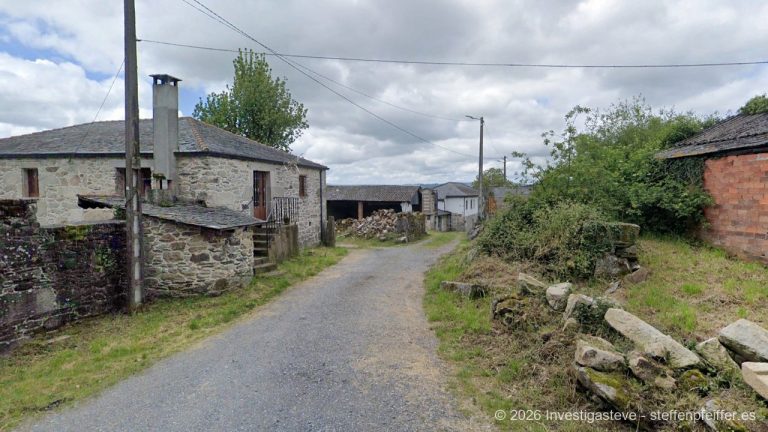
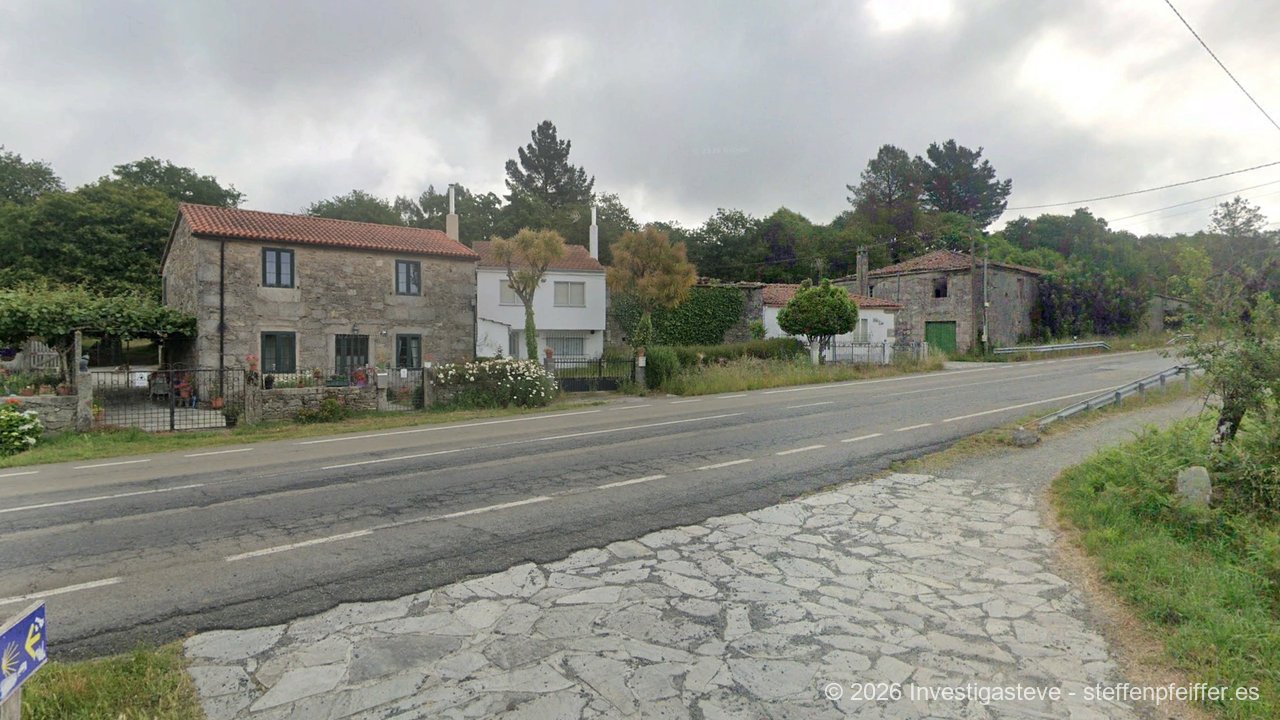
Architecturally, Rosario offers little splendor, but maximum authenticity. The simple houses of the hamlet, built of dark granite, tell of a life of frugality and deep connection to the soil. The causality of the construction – defiant against the wind, squat against the rain – reflects the character of the people who, over generations, stood by the pilgrims as silent witnesses. It is the story of a place that refuses to be more than a threshold. In Rosario, the 1,200-year history of the Camino is not read in books but felt through the soles of the feet. Every unevenness in the ground, every stone at the prayer site is a haptic document of millions of people who felt exactly the same wind on their faces and carried the same hope in their hearts.
Camino Distances
Rosario lies as a spiritual guardian on the 30th stage of the Camino Francés (French Way), shortly before the path dips into the urban center of Palas de Rei.
| Previous Location | Distance (km) | Next Location | Distance (km) |
|---|---|---|---|
| Lestedo | approx. 2.5 km | Palas de Rei | approx. 1.5 km |
Sleeping & Arriving
Arriving in Rosario is an experience of pure contemplation. There are no hostels here, no bunkhouses, no reception desks. “Arriving” takes place here on a purely mental and spiritual level. When you reach the height, a psychological calm settles over you that is far more valuable than any physical sleeping place. You don’t look for a spot in a dormitory, but a place on one of the ancient stone walls. The haptic feeling of the cool stone under your hands and the slow sinking of your pulse form the framework for this form of rest. Here, arriving becomes a ritual of pausing – a moment in which you realize that you have almost reached the administrative border of Palas de Rei, but are still lingering in the protective isolation of nature.
Since there are no lodgings, Rosario is a place of short but intense lingering. Acoustic silence becomes a luxury here. In the absence of human noise, you perceive the rustling of your own backpack and the sound of your breathing much more consciously. Psychologically, Rosario offers the opportunity to integrate the stage from Portomarín once more before its end. You often see pilgrims standing here, simply gazing into the distance, unable to tear themselves away from the vastness of the horizon. It is an arrival in the “now,” far from logistical planning. The haptic experience of the wind, often blowing more strongly here than in the sheltered forest, acts like a purification, blowing the dust of the preceding kilometers from the soul.
For many, Rosario is the place where they consciously decide against haste. You know that the comfortable bed in Palas de Rei is only a good hour away, yet the magic of the place compels you to stay. The sensory experience of absolute stillness, combined with the visual promise of nearby Santiago, creates a state of euphoria rarely found in crowded hostels. Here in Rosario, you are a guest of the landscape. The only infrastructure is nature itself, and its service is impeccable: it offers you shade under the pines, a soft spot on the moss, and a view that no five-star hotel in the world can provide. It is an arrival in your own center, a brief pause before re-entering civilization.
When the evening sun bathes the granite walls of Rosario in a deep orange, you feel the historical continuity of this place most strongly. It is that moment when the boundary between past and present blurs. You feel yourself part of an endless chain of seekers, all of whom sought the same haptic contact with the ground at precisely this point. To rest here means to connect with the spiritual primal force of the Camino. Arriving in Rosario is thus not a question of overnight stay, but a question of inner attitude. Whoever rushes past carelessly here misses one of the deepest emotional experiences that Galicia has to offer.
Eating & Drinking
In Rosario, there are no cafés, no bars, and no food stops. The gastronomic experience here is one of absolute self-sufficiency, lending the consumption of any little item you have brought along an almost liturgical significance. The taste of a simple apple or a piece of dry bread becomes a culinary revelation in the pure air and silence of Rosario. You feel the haptic texture of the food much more intensely when there is no distraction from urban noise. It is the “food of the Way” in its purest form. Olfactorily, the scent of your brought provisions mingles with the tart aroma of Galician broom and pine needles – a sensory interplay that satisfies hunger in a very primal way.
Many pilgrims use the height of Rosario for a last picnic before the destination Palas de Rei. The water from your canteen, perhaps still cool from the last spring in Lestedo, tastes up here like an elixir. The haptic coolness of the bottle in your sun-warmed hands and the sound of the flowing water in your throat become symbols of survival and refreshment. It is the psychological component of sharing that often comes into play here: you offer a fellow pilgrim a bar or a handful of nuts, and in this simple act of community, the entire philosophy of the Way of St. James is reflected.
Whoever “eats” in Rosario primarily consumes the atmosphere. The visual vastness fills the mind, while the body makes do with meager supplies. It is a lesson in frugality that teaches you that true enjoyment does not lie in the variety of the menu, but in the quality of the moment. The scent of freedom and vastness is the real menu of Rosario. When you later sit in a busy pulpería in Palas de Rei, you may remember with a certain wistfulness the simple taste of the water and bread on the windy height of Rosario – a culinary memento mori, reminding you how little you truly need to be full and happy.
Supplies & Logistics
Logistically, Rosario is a zone of absolute self-reliance. Whoever comes here must have already taken care of their basic needs. The strategic causality of this place lies in its function as a spiritual observation post, not as a supply center. This requires forward planning from the pilgrim, which is easily manageable due to the proximity to larger towns.
Shopping: There are no shops in Rosario. All provisions and water reserves must have been replenished in Lestedo or Portomarín. The next shopping opportunity is first offered by Palas de Rei, about 1.5 km away.
Gastronomy: There is no gastronomic offering. Pilgrims should plan for a small emergency ration and sufficient fluids for this section, especially on hot days, as the height offers little natural shade.
Accommodation: Accommodation is non-existent in this tiny hamlet. The logistics of the day should be planned so that Rosario serves as a resting point and Palas de Rei is reached as the final stage destination.
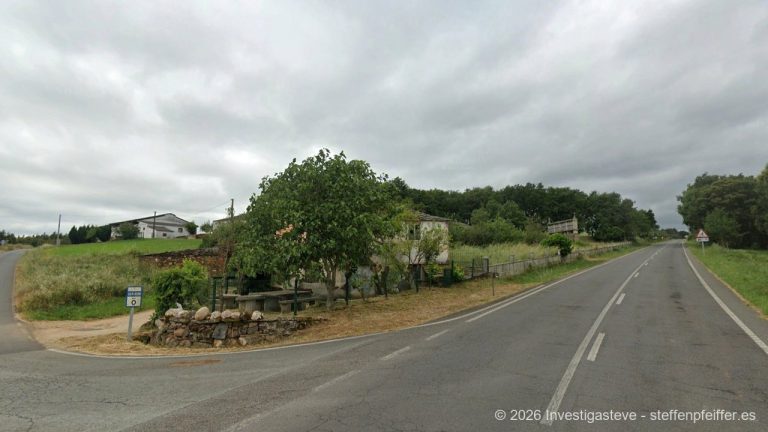
Public Facilities: There are no medical facilities, banks, or information offices. In an emergency, access via the nearby country road is excellent, and Palas de Rei offers all necessary urban services within a few minutes’ walk.
Safety in Rosario is very high due to the clarity of the terrain and the constant presence of other pilgrims. It is a place of mutual respect. Logistically, Rosario functions as a “check-in of the soul” – here you do not check your backpack, but your mental state for the upcoming kilometers. The acoustic seclusion ensures that you can concentrate fully on your orientation. Those who pass this place should be aware of the logistical reduction and accept it as part of the spiritual experience. Rosario teaches you that the best logistics sometimes consist of needing nothing except what you carry within yourself.
Don’t Miss
- The Alto de Rosario: Climb to the highest point and enjoy the visual panorama that opens up the view far over Galicia.
- The prayer site: Pause at the place where the rosary has traditionally been prayed and feel the historical immersion of collective piety.
- The first glimpse toward Santiago: Search the horizon for the distinctive hills that protect the destination of your journey.
- The pine groves: Find a spot in the shade of the pines and breathe in the resinous aroma – an olfactory delight of the highest order.
- The granite walls: Touch the rough stones of the old houses and feel the haptic permanence of Galician architecture.
- The silence of the wind: Take five minutes, close your eyes, and simply listen to the rustling of the wind – an auditory meditation.
Insider Tips & Hidden Places
Off the marked path, just a few meters behind the traditional prayer site, an almost invisible trail leads to a small hill hidden by dense broom bushes. Here you find a flat stone slab that seems almost like a natural altar. It is a place of extreme acoustic isolation, where even the wind is only heard muffled. The ground here is covered with a thick layer of dry grass and moss, offering a haptic blessing for your feet. In the air lies an intense scent of wild thyme, often drowned out by dust on the official pilgrim paths. This is the perfect spot for private reflection, far from the cameras of other hikers.
Another hidden treasure in Rosario is the small stone carving on one of the corner pillars of a dilapidated stable at the edge of the village. It is not an official monument, but a decades-old engraving by an unknown pilgrim, showing a simple cross and a date. When you run your fingers over this incision, you touch the individual history of a person who stood at this threshold just like you. It is a haptic connection across time, making the psychological depth of the Camino tangible. These small, unofficial traces often tell more about the essence of the pilgrimage journey than the great monuments.
Did you know that in Rosario there is a spot where the echo of your own voice is thrown back from the opposite hills in a very specific way? When you stand at the right point and speak softly, the wind seems to catch the words and bring them back as a gentle whisper. This auditory phenomenon intensifies the sense of mystical presence that surrounds this place. It is as if the landscape itself is communicating with you. Those who take the time to explore these acoustic nuances discover a Rosario that is far more than just a hamlet along the road. It is a place of subtle vibrations that reveals itself only when you adjust the speed of your mind to the speed of your steps.
Finally, it is worth looking not only into the distance, but directly at the ground. Between the granite crevices of the old walls grow tiny ferns and succulents that glisten like little jewels in the morning dew. The visual experience of these tiny microcosms offers a fascinating contrast to the monumental vastness of the horizon. It teaches you the psychological acuity of observing details: even in the small, inconspicuous lies the greatness of creation. Rosario is a place of contrasts – between the infinity of the sky and the haptic reality of a single fern leaf. Whoever recognizes this has deciphered the secret of Rosario.
Moment of Reflection
In Rosario, you stand at a point of maximum spiritual density. Here, where the rosary has been the metronome of hope for centuries, the question inevitably arises: “What prayer or wish do I carry in my heart on the final stage to Santiago?” The psychological metamorphosis that takes place here is the transition from physical achievement to spiritual expectation. Rosario invites you to pause before the civilization of Palas de Rei swallows you again. It is a filter for your thoughts. In the vastness of the horizon, your worries become small, and your goals emerge more clearly.
The historical causality of your being here connects you with the millions of people who bent their knees at precisely this spot. Do you feel the responsibility to carry forward this legacy of gratitude? In Rosario, you become aware that the Camino is not a race, but a sequence of moments of clarity. The haptic reality of the rough stone under your hands reminds you of your own resilience. Use this moment of reflection to sharpen your mind for the finale. When you leave Rosario tomorrow and perhaps already see the towers of Santiago in your dreams, take a piece of the silence and humility of this place with you. It will be your anchor when the jubilation of arriving overwhelms you.
Camino of the Stars
This place lies on the Camino Francés (French Way), on the stage from Portomarín to Palas de Rei. The sequence of locations is:
Portomarín → Gonzar → Castromaior → Hospital da Cruz → Ventas de Narón → Ligonde → Eirexe → Portos → Lestedo → A Calzada → Rosario → Palas de Rei
Did you also feel that deep moment of awe at Alto de Rosario when your gaze opened for the first time wide toward Santiago? Was the communal heritage of the rosary prayer tangible for you on this windy height? Perhaps you found your own hidden corner in the broom or made a special observation on the horizon? Share your experiences, your photos of the wide landscape, or your thoughts on this spiritual threshold place with us. Every story enriches the magic of Rosario!
About the Author