First Glance – Introduction & Atmosphere
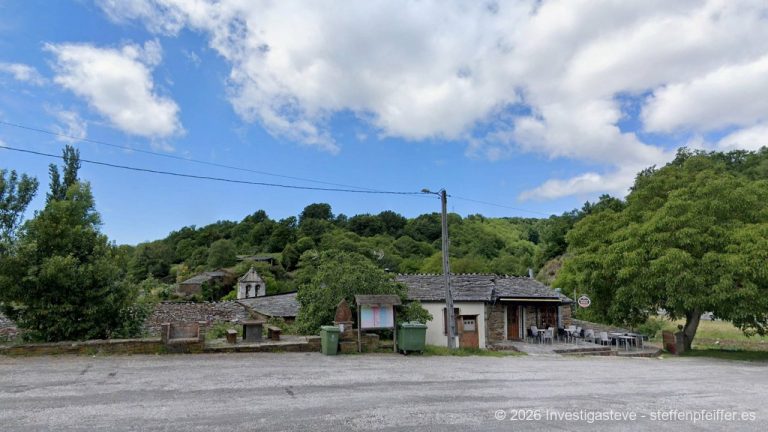
When you leave the mighty, crenellated walls of the Templar castle of Ponferrada behind and the urban pavement gradually gives way to a softer, reddish ground, you reach Columbrianos. It is the moment when the Camino Francés takes a deep breath. The loud echo of the city, the metallic roar of traffic, and the hustle of civilization fade here into a distant hum, carried by the wind over the gentle waves of the terrain. Columbrianos does not welcome you as an isolated village, but as an organically grown oasis where the green of the orchards and the deep slate blue of the roofs form a calming alliance. Here, barely three kilometers after setting out in the morning, you feel a peculiar change in the atmosphere: the air is heavier, saturated with the scent of damp earth, the tart aroma of grapevines, and the freshness of the nearby irrigation channels.
Your hearing adjusts to a new frequency in Columbrianos. The rhythmic tapping of your hiking poles on the asphalt of the Calle Real is often drowned out here by the chirping of larks circling over the wide vegetable fields. It is a haptic experience of grounding; the ground beneath your boots feels alive, shaped by millennia of human cultivation. When you place your hand on the rough, sun-warmed stone walls of the old farmsteads, you feel the stored warmth of a land known as the “garden of León.” Psychologically, Columbrianos marks a decisive caesura for the pilgrim: it is the first real step out into the rural infinity of the Bierzo, a gentle transition that mentally prepares you for the fact that the coming days will be determined by nature and no longer by the monuments of the big cities. The immersion here is total – you smell the approaching rain in the mountains on the horizon, hear the distant murmur of the Sil River, and feel the gentle breeze brushing through the fruit trees, bringing a promise of coolness.
What This Place Tells
Columbrianos is a place whose foundations reach back to the archaic time of the Castros. Long before the Romans carried their eagles over this fertile plain, Celtiberian tribes settled on the surrounding hilltops. The historical causality that created this place is closely linked to the politics of Emperor Augustus. After the final subjugation of the stubborn Astures and Cantabri, the Roman strategists forced the inhabitants of the hard-to-control hilltop fortresses down into the plain. Columbrianos emerged as part of this new, ordered settlement landscape, strategically located on the alluvial areas made fertile over eons by river sediments. When you walk through the alleys today, you literally tread on the layers of this resettlement history, which laid the foundation for today’s agricultural culture of the Bierzo.
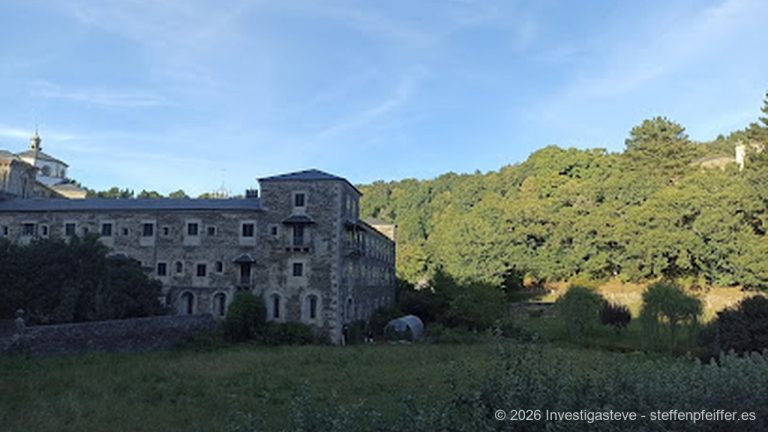
In the Middle Ages, the role of Columbrianos changed fundamentally. With the rise of the pilgrimage to Santiago, the place became an indispensable link in the chain of pilgrim stations. Early on, the village had a Hospital offering shelter to the exhausted – proof of the early realization that the first section after a larger city like Ponferrada is often characterized by psychological and physical adjustment difficulties. The architecture of the place reflects this historical layering: the Iglesia de San Esteban, built in 1778 on the remains of a much older sacred building, dominates the townscape with its Baroque pride. Its walls of local stone and the heavy slate roof are a haptic monument to the perseverance of the inhabitants, who for centuries tended the stream of pilgrims while at the same time wresting produce from the soil.
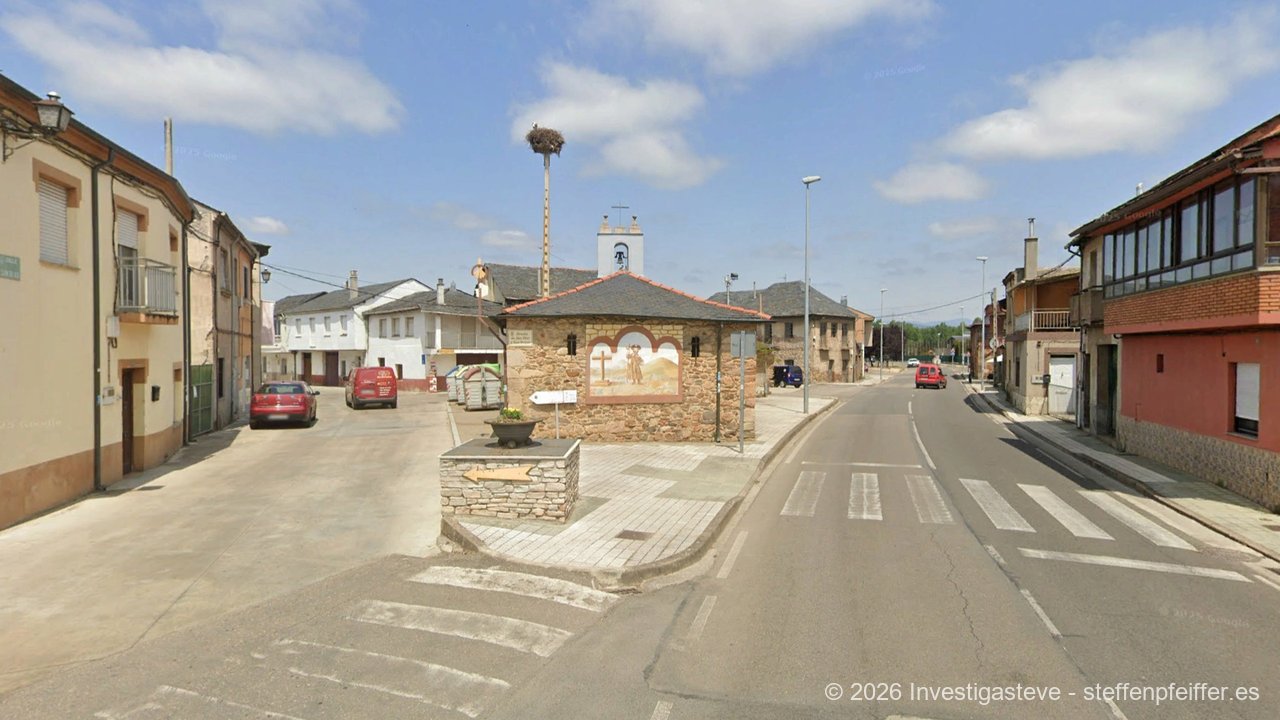
The story of Columbrianos, however, is also a story of silence and contemplation. Beside the main church, the small hermitages, such as the chapel of San Blas or the sanctuary of San Roque, tell of a deeply rooted popular piety hidden in the niches of everyday life. On dark winter evenings, they still tell of the miraculous healings attributed to Saint Roch, the patron of pilgrims and plague victims. These legends give the landscape a psychological depth; the path through Columbrianos is not only a geographical movement but a journey through a collective memory weaving together suffering, healing, and hope. The metamorphosis of the place from an ancient forced settlement to a flourishing Christian pilgrim village is tangible in every facade and every old archway – a narrative density that invites the wanderer to slow down and absorb the breath of history.
Addresses & tips in Columbrianos
Camino Distances
In this table you will find the distances to the immediate neighboring villages. Please note that the path leading out of Ponferrada goes through the urban periphery before finding its first rural resting point in Columbrianos.
| Previous Location | Distance (km) | Next Location | Distance (km) |
|---|---|---|---|
| Ponferrada | approx. 2.8 km | Fuentesnuevas | approx. 1.5 km |
| Molinaseca | approx. 11.5 km | Camponaraya | approx. 5.0 km |
Sleeping & Arriving
Arriving in Columbrianos is a haptic experience of a special kind, as it often coincides with the realization of how quickly the surroundings change. When you reach the first hostel by the wayside, you feel a sudden psychological relief. The backpack, which often felt heavier in the urban confines of Ponferrada, seems to find a different balance here. Arriving in Columbrianos means welcoming the first dust of the Bierzo on your boots. The accommodations, often housed in lovingly restored stone houses, smell of freshly washed linen, the cool aroma of old masonry, and the distant scent of fireplace smoke. It is an atmosphere of reduced but warm hospitality that immediately returns the pilgrim to the “mode of the way.”
Particularly noteworthy is the pilgrim hostel, often run by volunteers with an almost meditative calm. Here you feel the coolness of the stone under your feet when you take off your boots – a haptic feast for swollen soles. The light in the common rooms is soft, often filtered through small window openings that keep out the heat of the Spanish summer. Spending the night in Columbrianos is a conscious decision for peace; while most pilgrims in their eagerness march all the way to Cacabelos or Villafranca, those in the know find here the silence necessary to process the impressions of Ponferrada. The acoustic backdrop of the night is characterized here by the distant rustle of the wind in the poplar avenues and the occasional, metallic echo of a distant church tower clock, gently accompanying you to sleep.
The ritual of arriving in Columbrianos often includes a visit to the village fountain. The water is ice-cold, crystal clear, and has that mineral taste that can only come from the depths of the slate rock. When you let the water run over your wrists, you feel a thermal reaction that instantly awakens your spirits – a small moment of catharsis. The pilgrim’s psychological metamorphosis becomes visible here: faces relax, conversations become quieter and deeper. You are no longer part of the city; you are part of the plain. Those who set up camp here seek not luxury but the authenticity of a place that has preserved its identity as a resting station for millennia. It is a sleep in the arms of history, protected by thick walls that have guarded generations of seekers from the coolness of the night.
Eating & Drinking
The cuisine in Columbrianos is an honest homage to the fertility of the soil on which you walk. Here you taste the landscape in its unadulterated form. When you settle into one of the small bars on the Calle Real, the first sensory impression is often olfactory: it smells of freshly roasted coffee, the sweetish aroma of pears from the surrounding plantations, and the savory scent of empanadas baking in the local ovens. Here, nothing is staged for tourists, but for people who work the land. A piece of the regional Empanada Berciana, filled with potatoes, Swiss chard, and perhaps a hint of spicy chorizo, offers a haptic texture ranging from crispy to meltingly tender, filling the palate with the power of the Bierzo.
An absolute must are the fruits of the region, especially the conference pears and Reineta apples, which enjoy worldwide renown in Columbrianos. The feeling of biting into a sun-warmed pear whose juice runs over your hands is a sensory immersion that connects you directly with the life force of this place. It is often accompanied by a cool country wine, a Mencía whose deep violet color recalls the blood of the earth. The wine carries the minerality of the slate and has a freshness that harmonizes perfectly with the often heavy, rustic fare. In the bars, there is a lively bustle; the clinking of glasses and the loud, lively Spanish of the locals form an acoustic backdrop that immediately integrates you into the social rhythm of the village.
For dessert, you should look for the local honey, often still produced using traditional methods. Its taste is complex – woody, floral, with a light note of heather. In Columbrianos, eating is not merely consumption; it is celebrated as an act of ritual satiety after the first physical exertion of the day. The simplicity of the ingredients is not a lack here but a luxury. Those who engage in it experience a gastronomic grounding that goes far beyond mere calorie counting. It is a psychological strengthening: you absorb the energy of the soil to be prepared for the coming kilometers. Eating in Columbrianos means tasting the generosity of nature, which has made this place one of the most fertile areas of Spain since the days of the Romans.
Supplies & Logistics
Logistically, Columbrianos is a strategic stroke of luck for the pilgrim, as it offers the perfect infrastructure of an established place immediately behind a large city. Here you calibrate your gear one last time before the path becomes more solitary. The supply here is pragmatic and focused on the essentials. In the small shops, you find everything necessary for daily needs: fresh fruit, energy bars, and of course water. The place also has excellent sanitary facilities in the hostels, often more modern than one would expect in a village of this size. This logistical security takes an enormous psychological load off the pilgrim’s shoulders and allows him to turn his gaze back to the inner journey.
The drinking water supply in Columbrianos is exemplary; the numerous fountains are not only historical monuments but functional lifelines. It is a haptic pleasure to fill your water bottle in the cold stream and feel the tingling of the cold on your skin. For cycling pilgrims, the place also offers good repair conditions due to its proximity to Ponferrada. The organization of luggage transport is perfectly coordinated here; the courier vans are part of the morning townscape, giving the pilgrim the freedom to enjoy the path unencumbered. You sense a professional serenity here that has grown from decades of experience dealing with pilgrim flows.
Shopping: Small grocery stores and bakeries for daily needs are available and cover basic supplies completely.
Gastronomy: Several bars and cafés offer pilgrim breakfast and hearty raciones; ideal for a first rest after Ponferrada.
Accommodation: A good selection of private and municipal hostels offers accommodations in different price ranges and comfort levels.
Public Facilities: A medical practice for emergencies and ATMs are easily accessible; the connection to Ponferrada by bus is excellent.
In summary, Columbrianos is logistically the ideal “lock.” Those who check their supplies and treat their minor ailments here set out with a feeling of strength into the heart of the Bierzo. The place offers the security of civilization, embedded in the timeless panorama of the orchards – a combination that makes Columbrianos one of the most sensible and pleasant stops on this section of the way. Here, nothing is left to chance so that the wanderer can surrender completely to the flow of the path.
Don’t Miss
– The Iglesia de San Esteban: Admire the Baroque portal and the simplicity of the interior; a place of absolute silence amidst the daily hustle. – Ermita de San Blas: A small chapel often overlooked but radiating incredible spiritual energy – ideal for a short meditation. – The slate architecture of the old houses: Pay attention to the hand-laid roofs; the way the light breaks on the dark slabs is a visual spectacle. – The historic village fountain: A haptic experience; feel the primal power of the water and replenish your supplies for the day. – The panorama of the orchards: Walk a few steps out of the village and enjoy the view over the green sea of pear and apple trees. – The statue of San Roque in the church: An important symbol for pilgrims; pause briefly and reflect on the history of healing. – The irrigation channels (Acequias): Observe the clever water distribution system that has ensured the region’s fertility for centuries. – Daily life on the Calle Real: Sit in a café and watch the steady, quiet stream of pilgrims; it is the heart of the Camino.
Insider Tips & Hidden Places
Beyond the yellow arrows, where the Calle Real branches off into small dirt paths, hides a place the locals call “Castrelo.” It is a gentle elevation where the prehistoric ancestors of today’s inhabitants once built their huts. Today, this place is overgrown with wild thyme and dry heather. When you stand up there, you have a 360-degree view over the entire Bierzo basin, all the way to the snow-capped peaks of the distant mountains. It is a place of total auditory immersion; no traffic noise reaches here, only the distant screech of a buzzard and the soft rustle of the wind. Here, it smells of freedom and history. This is the ideal spot for a secret picnic while the world below bustles in hurried haste.
Another hidden treasure is a small, private garden behind an inconspicuous stone house near the church, which often opens its gates to pilgrims asking for directions. There grow rose bushes so old that their stems look like gnarled trees. Those who look closely often find small, handmade clay figures placed in the crevices of old barn walls by local artists – a silent, almost magical communication with the attentive observer. It is also worth following the small irrigation ditches that run through the village. In some places, they form tiny waterfalls that sparkle like liquid glass in the sunlight. These hidden corners challenge you not just to pass through Columbrianos but to inhale it. The haptic experience of touching the cool, damp stones on the edges of these ditches is a moment of perfect presence.
A special insider tip is to visit one of the smaller bodegas in the side streets. The doors are often open, and for a few euros you can taste straight from the barrel. In these cellars, where cobwebs hang from the ceilings like gray silk, you experience the true olfactory soul of Columbrianos: a mixture of damp earth, old oak wood, and the living fruit of the wine. Here, nothing is staged for tourists; here, work is done. Those who take the time to exchange a few words of Spanish with the winegrowers are often rewarded with stories found in no guidebook – tales of harsh winters and the indestructible love for this reddish soil. In these encounters, the true heritage of Columbrianos reveals itself.
Moment of Reflection
In Columbrianos, you encounter your own shadow. After the monumental force of Ponferrada and the often euphoric departure in the morning, this is the place of the first psychological inventory. Have you already found the rhythm of the way, or do your thoughts still carry the ballast of civilization? The historical causality of your being here – millions of pilgrims before you have passed exactly this point – gives you deep humility. You recognize that you are not alone, even if you walk physically alone. The metamorphosis happens here in silence, almost unnoticed between two steps. You feel the inner tension give way to a meditative peace.
The orchards of Columbrianos are a mirror of your own development. Just as the trees take years to bear fruit, your journey also takes time to reveal its true meaning. In Columbrianos, you learn the art of waiting and slow growth. As you look at the gnarled vines, you recognize: true strength needs no loud words. It grows from standing firm on the earth and accepting the elements. Take this insight with you on your onward way. The silence of Columbrianos is not a lack of sound, but the presence of peace. When you sit in the evening perhaps on one of the stone benches before the church of San Esteban, you reflect on the lightness of your existence. You are ready for what comes because you have learned to take the first step with care.
Camino of the Stars
This place lies on the Camino Francés, on the stage from Ponferrada to Villafranca del Bierzo. The sequence of locations is:
Ponferrada → Columbrianos → Fuentesnuevas → Camponaraya → Cacabelos → Pieros → Villafranca del Bierzo
Did you also feel that moment of peace in Columbrianos that prepared you for the vast vineyards of the Bierzo? Perhaps you paused in one of the small hermitages or had a particularly warm encounter at the village fountain? Share your experiences of this fertile gateway with us. Was it the scent of the pear orchards or the cool water of the fountains that you remember most? Your story brings the path to life for future pilgrims!
About the Author