First Glance – Introduction & Atmosphere
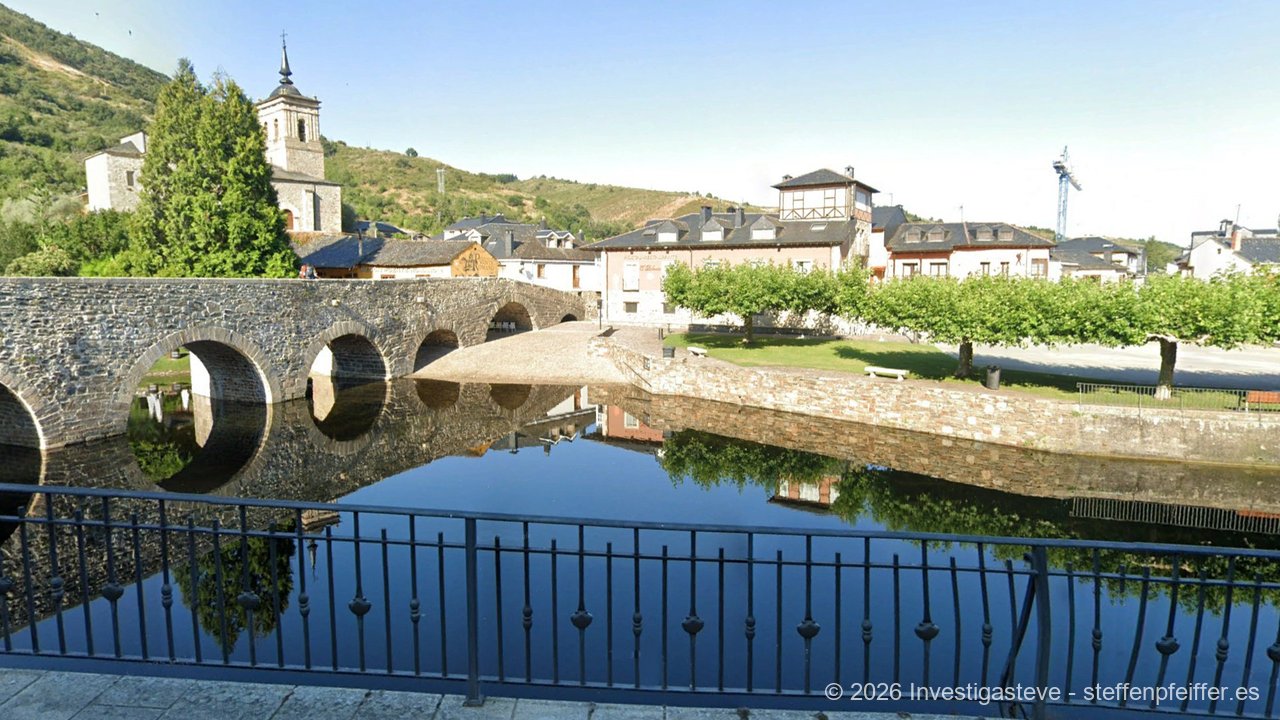
When your legs have become heavy from the long, steep descent from the Cruz de Ferro and through the lonely mountain ranges of the Montes de León, Molinaseca appears like a mirage of stone and water on the horizon. You leave the barren highlands behind and immerse yourself in the gentle microclimate of the Bierzo, which welcomes you with a softer, almost maternal air. Your first glance inevitably falls on the monumental medieval bridge spanning the crystal-clear Río Meruelo. Here, at the entrance to the village, the world seems to hold its breath for a moment. The roar of the water breaking over the rounded pebbles forms the acoustic backdrop for arriving at a place that has been considered one of the most beautiful stage stops on the entire Way of St. James for centuries.
Molinaseca welcomes you with an archaic elegance. The Calle Real, the stone backbone of the place, is lined with stately casonas with their typical wooden balconies and proud family coats of arms, deeply carved into the dark slate. It smells here of damp moss on the riverbank, the heavy, sweetish aroma of ripe grapes, and the enticing scent of meat grilled over an open fire wafting from the numerous mesóns. Haptically, you experience the place through the coolness of the stone under your hands and the freshness of the river at your feet. It is a place of thresholds: you physically feel the tension of the mountain world fall away from you, giving way to a deep, earthy security. Molinaseca is not a place to merely pass through; it is a place to pause, to breathe, and to immerse yourself in a history that is alive in every cobblestone.
What This Place Tells
Molinaseca is a living archive whose roots reach deep into Roman antiquity. The engineers of the Empire already knew this strategic point, for today’s bridge likely stands on the foundations of a Roman construction that was once part of the important Gold Road. This route transported the precious metal from the nearby mines of Las Médulas. The historical causality is tangible here: where gold and trade routes meet, wealth arises, and Molinaseca early became a center of power in the Bierzo. In the 11th century, King Alfonso VI consolidated this status by placing the place under the protection of the nobility. One of the first lords of Molinaseca was Ramiro Froilaz, a nephew of the legendary El Cid, lending the hamlet a touch of chivalric splendor that still echoes in the massive walls today.
The name of the place itself tells a story of diligence and ingenuity. Molinaseca derives from “mill” and “dry,” indicating the clever channeling of water to operate mills that ground for the monasteries even in dry periods. In the late Middle Ages, the village experienced a heyday due to the constantly growing pilgrim stream. Noble families built their palaces along the Calle Real to show their presence on the most important artery of Christianity. In the Casona de Don Pelegrín, it is said that even Queen Urraca of León regularly stayed overnight when traveling to her Galician estates. These legends are not distant fairy tales in Molinaseca but lived identity, manifested in the impressive Baroque facade of the church of San Nicolás de Bari, whose bells have marked the same rhythm over the valley for centuries.
Architecturally, Molinaseca is a total work of art made of slate and chestnut wood. The galleries of the houses, often intricately carved, served not only as protection from the Atlantic rain but also as box seats for social life. Molinaseca was always a transit space, a bottleneck through which all had to flow who made their way from the highlands to the plain. The metamorphosis from a medieval seat of power to a modern pilgrim hotspot took place organically, with the protected status as a historic ensemble since 1975 ensuring that the soul of the place was not sacrificed to progress. When you walk across the Puente de los Peregrinos today, you step in the footsteps of millions who sought shelter from the night and strength for the soul here.
Addresses & tips in Molinaseca
Camino Distances
Molinaseca marks the end of the long descent from the mountains of León and offers an ideal strategic location before entering the Templar city of Ponferrada.
| Previous Location | Distance (km) | Next Location | Distance (km) |
|---|---|---|---|
| Riego de Ambrós | approx. 4.8 km | Campo | approx. 4.5 km |
| El Acebo | approx. 8.2 km | Ponferrada | approx. 7.0 km |
Sleeping & Arriving
Arriving in Molinaseca is a moment of haptic and psychological redemption. When you cross the seven arches of the old bridge, the tapping of your poles on the massive stone blocks signals the end of a physical trial. In Molinaseca, the density of hostels and hotels is as high as in hardly any other place of this size, offering the pilgrim a choice ranging from monastic simplicity to modern comfort. The Albergue Santa Marina or the Albergue Señor Oso are places where hospitality is lived with a familial warmth that immediately makes you forget the dust of the journey. In the dormitories, the smell of dried leather mingles with the coolness of the thick stone walls that form a natural bulwark against the midday heat.
Those seeking a more private atmosphere find a haptic quality reminiscent of past centuries in lovingly restored guesthouses like Casa San Nicolás. The creaking of the old floorboards under your socks and the view of the river from the deep window niches create a deep sense of security. The psychological effect of these accommodations is immense: they function as protective spaces of regeneration. You feel the weight of history in every beam and every latch. In Molinaseca, after the deprivations of the mountains, you consciously allow yourself the luxury of a hot shower and a soft bed to undergo the metamorphosis from exhausted to restored.
In the evening, the Calle Real fills with a vibrant community from all over the world. Pilgrims sit on the stone steps, exchange experiences, and enjoy the soft light of the “golden hour” when the sun bathes the slate roofs in a metallic glow. Arriving in Molinaseca also means becoming part of a ritual evening walk that inevitably leads back to the bridge. Those who stay overnight here choose the silence of the valley over the urban roar of nearby Ponferrada. It is a sleep under the protection of the mountains, accompanied by the steady, meditative song of the Río Meruelo, which lulls you into the night like a lullaby.
Eating & Drinking
The cuisine in Molinaseca is a passionate declaration of love to the El Bierzo region. Here, Botillo reigns – that legendary smoked meat specialty so intensely flavored with paprika, garlic, and tradition that it awakens the spirits in seconds. When you sit down at one of the massive wooden tables in the famous Casa Ramón, the first sensory impression is overwhelmingly olfactory. It is an honest, powerful cuisine that makes no compromises. The meat is so tender it falls off the bone and is often served with potatoes and cabbage that soak up the spicy juice – a haptic pleasure for the hungry hiker.
You drink it with a robust red wine of the Mencía variety, which sparkles in the glass like liquid ruby. The wine carries the aroma of wild blackberries and the mineral note of the slate soils over which you walked today. The wines of the D.O. Bierzo are omnipresent in Molinaseca and tell of the hard work on the steep slopes of the area. Those who prefer lighter fare should try the trout from the Meruelo, prepared fresh, possessing a pure, mineral taste. For dessert, chestnuts in syrup or the juicy Reineta apples, ripening in the gardens around the village and whose scent fills the entire main street during harvest time, beckon.
Supplies & Logistics
Logistically, Molinaseca is a true oasis and a strategic anchor point on the way to Santiago. Despite its village structure, the place offers infrastructure perfectly tailored to the needs of pilgrims. Here, the hiker recalibrates his gear; there are small shops providing the daily necessities, from fresh fruit to blister plasters and energy bars. The psychological security of being able to get everything important once more in Molinaseca before tackling the last kilometers into the big city of Ponferrada takes the pressure off daily planning.
Basic medical care is provided by a small medical practice, and pharmacies in nearby Ponferrada are only a short drive away. Drinking water fountains are fed directly from the mountain springs, offering water of a purity that makes any purchased energy drink superfluous. Haptically, you experience logistics through the weight of your backpack, which you might lighten here using a luggage transport service to enjoy the onward way more carefree. Molinaseca is logistically excellently connected and serves as a reliable base for exploring the central Bierzo.
Shopping: Several small grocery stores and souvenir shops along the Calle Real cover daily basic needs.
Gastronomy: An enormous density of bars, mesóns, and upscale restaurants offers excellent regional cuisine and local wines.
Accommodation: With over 15 hostels and several hotels, the place has outstanding capacity for all price ranges.
Public Facilities: Tourist office, a small ATM, and basic medical care are centrally accessible in the village.
In summary, Molinaseca logistically builds the perfect bridge between the solitude of the Montes de León and the urbanity of the Bierzo. Those who check their supplies and treat their minor ailments here set out strengthened for the next chapter of their journey.
Don’t Miss
– Puente de los Peregrinos: The iconic medieval stone bridge is the heart of the place and a must for every pilgrim photo. – Iglesia de San Nicolás de Bari: The Baroque jewel on the hill impresses with its facade and the bell that plays the Ave María daily at noon. – Piscina Fluvial: In the summer months, a bath in the dammed river Meruelo is the ultimate haptic reward for tired legs. – Calle Real: A stroll along this street reveals the most magnificent noble palaces and most beautiful wooden balconies in the region. – Santuario de las Angustias: This chapel at the entrance of the village is a place of deep spirituality and houses fascinating inscriptions. – Plaza del Rollo: The central square with its historic judicial column is the social heart of the village. – Heraldry: Pay attention to the stone coats of arms of the Balboa and Cangas de Pambley families on the facades – history you can touch. – Fiesta del Agua: If you are here in mid-August, you experience a spectacular water festival where the entire Calle Real is flooded.
Insider Tips & Hidden Places
Beyond the main tourist routes, Molinaseca reveals its quiet corners. One such place is the small park by the river, about five hundred meters above the bridge. While the crowds swarm at the bridge, you find shady spots under willow trees here where the water is deeper and darker. Wild thyme grows on the bank, and when you rub the leaves between your fingers, an aroma unfolds that anticipates the wildness of the nearby mountains. It is a place of total auditory immersion: the roar of the water here drowns out every human sound and leads the mind into deep relaxation.
Another hidden treasure is the old cemetery in the afternoon. It is a quiet, contemplative place with tombstones, some over two hundred years old. From the wall, you have an unobstructed view back at the mountain ranges you have just crossed. It smells here of dry grass and old stone, and you feel the historical causality of the region most deeply: life in the valley is fleeting, but the stone remains. Those who look closely often find tiny ferns in the crevices of the old barn walls, thriving only in this specific microclimate – a botanical secret right by the wayside.
A special tip for adventurers is a hike to the Puentes de Malpaso, about eight kilometers southeast in the forest. These almost forgotten Roman bridges are archaeological jewels rarely visited by tourists. The path there leads through dense oak forests and offers a silence that has become rare on the main path. The bell tower of San Nicolás is also occasionally accessible; the climb offers a breathtaking 360-degree view over the entire Bierzo basin to the peaks of the Ancares.
Those who experience Molinaseca at sunrise, when the mist still hangs over the Meruelo and the first pilgrims glide silently across the bridge, experience the true mysticism of this place. In these moments, when the light is still diffuse and the world is still quiet, you feel the timeless connection between humans and landscape most intensely. It is worth getting up early to inhale this magical moment of absolute peace before the busy bustle of the day fills the alleys again.
Moment of Reflection
In Molinaseca, you encounter your own transformation. The transition from the rugged mountain world to this gentle, blooming valley is a powerful psychological symbol of the progress of your journey. Here, at the threshold to the Bierzo, the question often arises: What did you leave in the mountains, and what are you taking with you to the plain? The historical causality of the bridge, which has borne the burden of seekers for a millennium, gives you deep serenity. You recognize that you are only a tiny link in an infinite chain. This realization is liberating and gives you the humility so important for the last two hundred kilometers to Santiago.
The metamorphosis in Molinaseca takes place in the dialogue between stone and water. As you sit by the river and watch the water flow tirelessly toward the sea, you grasp the necessity of moving forward. But the massive casonas also teach you the value of permanence. In Molinaseca, you learn that true strength does not lie in fighting against the elements, but in harmonious harmony with them. Take this peace into your heart, breathe deeply the scent of the wine fields, and feel the solid ground beneath your feet. You are ready for Ponferrada, strengthened by the timeless beauty of this place.
Camino of the Stars
This place lies on the Camino Francés, on the stage from Rabanal del Camino to Ponferrada. The sequence of locations is:
Rabanal del Camino → El Acebo → Riego de Ambrós → Molinaseca → Campo → Ponferrada
Did you feel the healing freshness of the Río Meruelo on your feet or find a moment of perfect silence in the alleys of Molinaseca? Perhaps a Botillo in one of the mesóns gave you back the strength for the march into Ponferrada? Share your personal experiences from this medieval jewel with us – we look forward to your story of the gateway to the Bierzo!
About the Author