First Glance – Introduction & Atmosphere
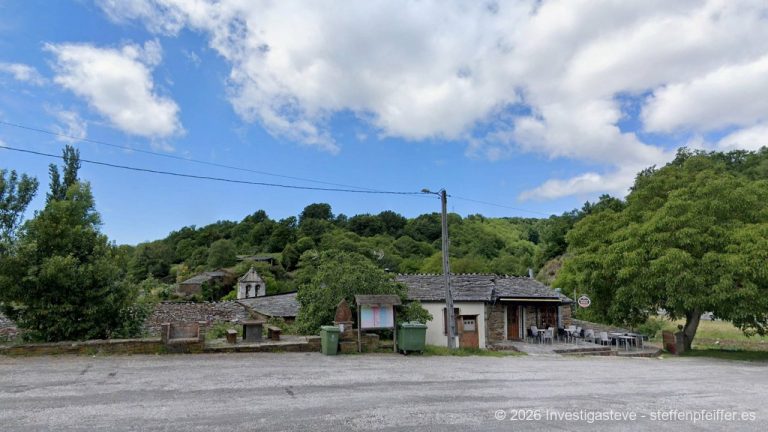
When the dense mist of the Montes de León wraps around the massive stone houses like a protective veil and bathes the world in a diffuse, silvery light, you reach Riego de Ambrós. It is a place that does not present itself loudly, but rather welcomes the pilgrim with an archaic, almost solemn silence. Up here at 920 meters altitude, you physically feel how the rugged mountain world of Monte Irago gradually gives way to the gentler, fertile plain of the Bierzo. The ground beneath your boots is characterized by dark slate rock, which shimmers deep black in the rain, while the air here has a texture all its own – it is cool, spicy, and carries the heavy aroma of damp leaves and ancient chestnut forests.
Your hearing adjusts to a new frequency in Riego de Ambrós: the constant, often merciless whistling of the wind on the mountain ridges gives way here to a softer rhythm. You hear the distant echo of cowbells and the rhythmic tapping of pilgrim staffs on the rough cobblestones of the Calle Real. Haptically, you experience this place through the coolness of the water at the Fuente de la Magdalena and the roughness of the unplastered stone walls that have withstood the elements for centuries. It is a moment of psychological relaxation – you look back on the rigors of the mountain range and feel the anticipation of the lower-lying Molinaseca, while Riego de Ambrós holds you once more like a cocoon of granite and wood to give you the essence of rural constancy on your way.
What This Place Tells
The story of Riego de Ambrós is a narrative of noble power and merciful hospitality, deeply rooted in the 12th century. The name itself is a historical monument: it derives from a medieval lord named Ambrós, whose family administered the fertile land at the edge of the mountains for generations. Here you encounter the historical causality of the Way of St. James in its purest form – the place exists and has survived the centuries because it was indispensable as a strategic resting point for pilgrims. It is documented that Riego de Ambrós already had a pilgrim Hospital in the Middle Ages, which until the 18th century offered travelers protection from the night and the dangers of the lonely passes.
Architecturally, the village is a prime example of the Bierzo building style. The massive stone houses with their characteristic slate roofs and wooden balconies, the so-called “corredores,” tell of a time when humans and livestock lived closely together to survive the bitter cold of the winter months. Every external staircase and every low-hanging wooden beam is a haptic testimony to this pragmatic will to survive. The spiritual heart is the parish church of Santa María Magdalena, built in the 16th century on Gothic foundations. Its Baroque high altar from 1706 is an artistic jewel that stands in sharp contrast to the otherwise simplicity of mountain life, showing that the inhabitants, despite isolation, always kept an eye for divine beauty.
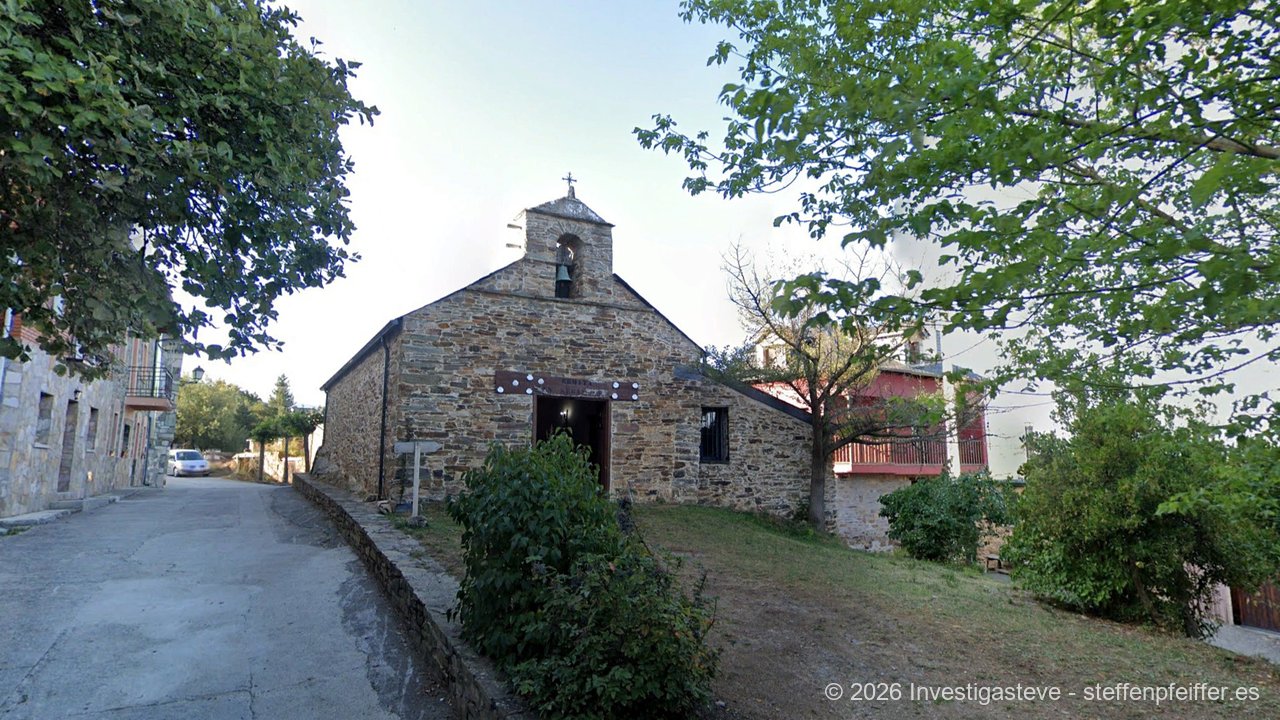
In Riego de Ambrós, a special form of popular piety also comes alive. At the entrance of the village, the Ermita de San Sebastián from the 14th century keeps watch, a tiny chapel dedicated to the saint traditionally meant to protect against plague and epidemics. You can imagine the psychological effect on pilgrims of past eras, who, after the dangerous mountain passages, felt a sense of security here for the first time. It is a story of holding out against the elements and time. When you walk along the Calle Real today, you tread on a path polished by millions of steps – every crack in the pavement and every weathered inscription is part of a colossal puzzle of European identity, quietly preserved here.
Addresses & tips in Riego de Ambrós
Camino Distances
Riego de Ambrós marks the final section of the descent from the Cruz de Ferro. Please note that the path after this place becomes particularly rocky and steep.
| Previous Location | Distance (km) | Next Location | Distance (km) |
|---|---|---|---|
| El Acebo | approx. 3.0 km | Molinaseca | approx. 4.3 km |
| Manjarín | approx. 10.2 km | Ponferrada | approx. 11.3 km |
Sleeping & Arriving
Arriving in Riego de Ambrós is a ritual act of slowing down. When you push open the heavy door of the municipal hostel, the biting mountain wind gives way to a pleasant, almost motherly warmth. This hostel, run with great dedication by the local Junta Vecinal, is a place of radical reduction to the essentials. Here you feel the coolness of the stone walls on your fingertips and hear the soft creaking of the wooden floorboards under your socks. It is an atmosphere of deep psychological security, far from the tourist hustle of big cities. The sleeping places are simple, but they smell of cool mountain rain and dried lavender, instantly bringing the mind into a state of meditative calm.
Those seeking a more private atmosphere find a haptic quality of homecoming in lovingly restored rural houses like the Casina de Gelo. The feeling of sleeping in a massive stone house that may have already hosted pilgrims generations ago creates a deep historical connection. In Riego de Ambrós, you not only arrive at a geographical point but step into a timeless space of regeneration. The creaking of the beds at night and the gentle murmur of the distant Río Meruelo form an acoustic blanket that envelops you in deep, dreamless sleep. Here, the bed becomes a holy resting place before the final descent into the warm valley of the Bierzo.
The hospitaleros in Riego de Ambrós are often known for their direct but warm manner. They have seen thousands of pilgrims come and go and know exactly when an exhausted hiker needs a glass of cool water or just a moment of silence. The ritual of arriving here often includes filling water bottles at the village fountain next to the chapel – a haptic experience of freshness, where the ice-cold mountain water beads over your wrists and awakens your spirits. In this tiny hamlet, you experience the metamorphosis from the hurried hiker to the contemplative pilgrim most intensely, as there is no distraction from souvenir shops or modern infrastructure. You are completely with yourself and the massive constancy of the place.
Eating & Drinking
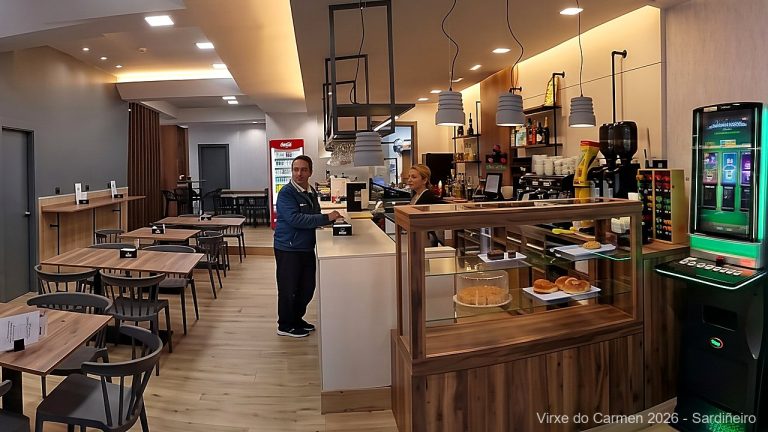
The cuisine in Riego de Ambrós is an honest homage to the gifts of the mountains, reduced to the essentials and served with a rustic directness. In the only bar in the village, the Mesón Las Puentes, the principle of authenticity reigns. Here, the food tastes of earth and hard work. When you sit down at one of the massive wooden tables, the first sensory impression is olfactory: the scent of homemade chorizo, mixed with the tart aroma of robust red wine from the nearby Bierzo, fills the air. It is a cuisine for border crossers, transforming the sweat of the day into new energy.
A must for every pilgrim is the simple “Plato del Día” or a hearty bocadillo, whose bread is so crumbly that it cracks loudly with the first bite – a haptic pleasure that sharpens the senses. The taste is intense and unadulterated, often refined with ingredients from the small gardens of the area. You drink it with the regional wine, a deep red Mencía that sparkles in the glass like liquid ruby and carries a fine note of blackberries and slate. In Riego de Ambrós, eating becomes a communal ritual; you share the table with locals, hear the rough Castilian of the older residents, and feel the warmth of the food flood your body. There is no unnecessary luxury here, but the quality of the simple meals nourishes the soul for the onward way.
Supplies & Logistics
Logistically, Riego de Ambrós is a place that demands foresight and modesty from the pilgrim. Since there are no supermarkets or ATMs here, the hiker depends on his own supplies and the hospitality of the mesón. This infrastructural scarcity is a conscious part of the experience on this section of the Camino Francés. Those who stop in Riego de Ambrós must learn to make do with what they carry in their backpack. It is a lesson in autonomy that sharpens the eye for the value of simple things like a handful of nuts or a cool bottle of water.
The supply in the village is concentrated on the communal hostel and the local bar. Here you calibrate your gear one last time before the most demanding descent of the stage. The drinking water supply is secured by excellent public fountains, whose water comes directly from the springs of the Montes de León and is known for its purity. For medical help or the purchase of special equipment, you depend on neighboring El Acebo or the onward way to Molinaseca. This logistical simplicity creates a psychological sharpness – you become aware of your dependence on nature and your own preparation, which fits perfectly with the meditative mood of the place.
Shopping: No shops available. Provisions and cash must absolutely be brought from El Acebo or postponed until Molinaseca.
Gastronomy: Mesón Las Puentes offers hearty pilgrim fare and regional drinks, but opening hours may vary seasonally.
Accommodation: The municipal pilgrim hostel offers 26 beds; additionally, a few private rural houses are available.
Public Facilities: Public drinking water fountain at the Ermita San Sebastián and a small rest area at the church are available.
Riego de Ambrós functions logistically as a “base camp” at altitude. It offers the last opportunity for rest before the technologically and physically demanding passage through the steep slate paths of the Meruelo Valley. The reduction to the essentials promotes concentration on the next step.
Don’t Miss
– Ermita de San Sebastián: Visit this simple chapel at the entrance of the village from the 14th century and feel the medieval austerity that has promised pilgrims protection for 600 years. – Iglesia de Santa María Magdalena: Admire the magnificent Baroque high altar of 1706 inside this defiant stone building – a surprising highlight of village art. – Fuente de la Magdalena: Cool your wrists at the historic fountain next to the church; the water is ice-cold and of legendary purity. – The corredores of the Bierzo: Pay attention to the typical wooden balconies of the stone houses; they are architectural witnesses to life in the mountains. – View into the Meruelo Valley: Just behind the village, a panorama opens that, in clear weather, reaches far into the plain of the Bierzo – a visual gift of vastness. – The slate architecture: Observe the hand-laid roofs of dark slate; their structure resembles an armor-like scaly skin against the mountain rain. – Evening atmosphere at the church: Sit on one of the benches in front of the parish church and watch the clouds drift through the alleys – a mystical experience of transcendence.
Insider Tips & Hidden Places
Off the yellow arrows, where a narrow path behind the church branches off toward the valley, hides a place that only few pilgrims discover in their haste: a small plateau above the Río Meruelo. If you take ten minutes and walk there, you hear only the distant murmur of the stream and the whisper of the wind in the rock crevices. It is a place of total auditory immersion, perfect for a silent meditation before the difficult descent. Here it smells of dry thyme and warm slate – a scent that promises both freedom and peace. In the crevices of the old barn walls, rare lizards nest here, whose shimmering scales blend with the stone in the sunlight.
Another hidden treasure is a small, almost overgrown path leading to the ruins of an old watermill on the riverbank. There, where the water tumbles over smooth-polished rocks, you feel the archaic power of nature most intensely. It is a haptic experience to touch the moss-covered stones and breathe in the coolness of the shade that lingers here even in high summer. Those who look closely also discover small details on the massive doorsteps in Riego de Ambrós – carved crosses or symbols meant to ward off evil spirits. It is a place of subtle magic that reveals itself only to those willing to lift their gaze from the ground and understand slowness as strength.
Moment of Reflection
In Riego de Ambrós, you encounter your own rhythm. The massive presence of the stone houses and the historical weight of pilgrim history challenge you to question your inner walls. Psychologically, this place is an intermediate world. You have left the barren solitude of Monte Irago behind, but you have not yet reached the bustling civilization of the valley. In Riego de Ambrós, you learn that strength does not arise from noise, but from the acceptance of silence. The historical causality of your being here – millions of pilgrims before you have cast this very gaze upon these mountains – gives you deep humility.
The pilgrim’s metamorphosis takes place here in the dialogue between the hard stone and the soft mist. As you sit on a stone wall in the evening perhaps, you reflect on the constancy of your own resolutions. What do you take with you to the plain? Riego de Ambrós gives you the necessary grounding and emptiness to prepare yourself for the impressions to come. The silence of the hamlet is not a lack of sound, but the presence of peace. It is the moment when you recognize that the way not only leads you to Santiago, but to a version of yourself capable of finding the highest in simplicity.
Camino of the Stars
This place lies on the Camino Francés, on the stage from Rabanal del Camino to Ponferrada. The sequence of locations is:
Rabanal del Camino → El Acebo → Riego de Ambrós → Molinaseca → Campo → Ponferrada
Did you also feel that moment in Riego de Ambrós when time stood still for a heartbeat? Was it the silence before the chapel of San Sebastián or the majestic view into the Meruelo Valley that deeply moved you? Share your experiences of this stone refuge with us. Perhaps you had a conversation in the hostel that changed your view of the onward way? We look forward to your story of the Way of St. James!
About the Author