First Glance – Introduction & Atmosphere
When you leave the last outskirts of Ponferrada behind, that city so deeply shaped by the stone heritage of the Templars, the texture of your path changes almost imperceptibly, but with profound consequence. The hard, often unyielding asphalt of the urban periphery begins to transform into the reddish, iron-rich earth of the Bierzo basin. It is a moment of transition, where the urban noise gradually gives way to the rhythmic gurgling of small irrigation channels. Fuentesnuevas does not welcome you with monumental force, but with a subtle, almost maternal security. The air up here, on a gentle elevation of about 540 meters, is filled with a peculiar mixture of aromas: the tart scent of freshly plowed earth, the sweetish aroma of flowering orchards, and, depending on the wind direction, a hint of cool humidity wafting up from the nearby Sil Valley.
In Fuentesnuevas, time seems to have a different consistency. It is the “village of the new wells,” and this promise of freshness and new beginning you feel in every breath. Your hearing adjusts to a new frequency; the distant hum of the city is replaced by the chirping of swallows nesting in the roof trusses of the old slate houses. Haptically, you experience this place through the resistance of the ground – the earth of the Bierzo is fertile and heavy, it clings to your boots like a memory of the toil of those who have cultivated this land for generations. When you place your hand on the rough, sun-warmed granite stones of the hermitage, you feel the stored energy of a long day. Psychologically, Fuentesnuevas marks the point of first consolidation after the departure from Ponferrada. It is a place to catch your breath, a green lock that prepares you physically and mentally for the seemingly endless sea of grapevines awaiting you over the next kilometers heading west.
What This Place Tells
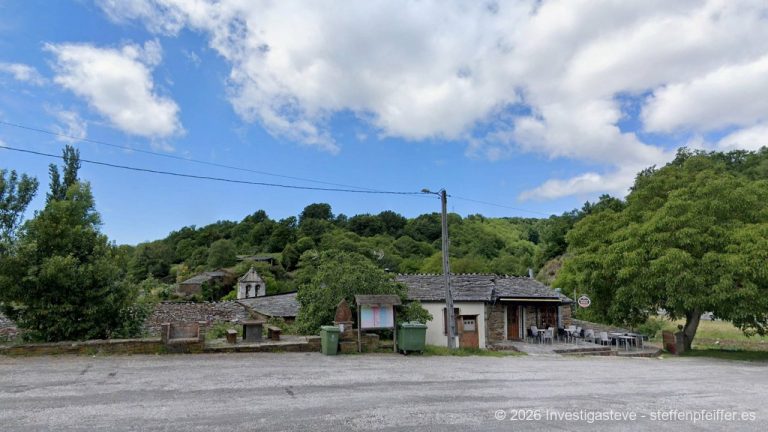
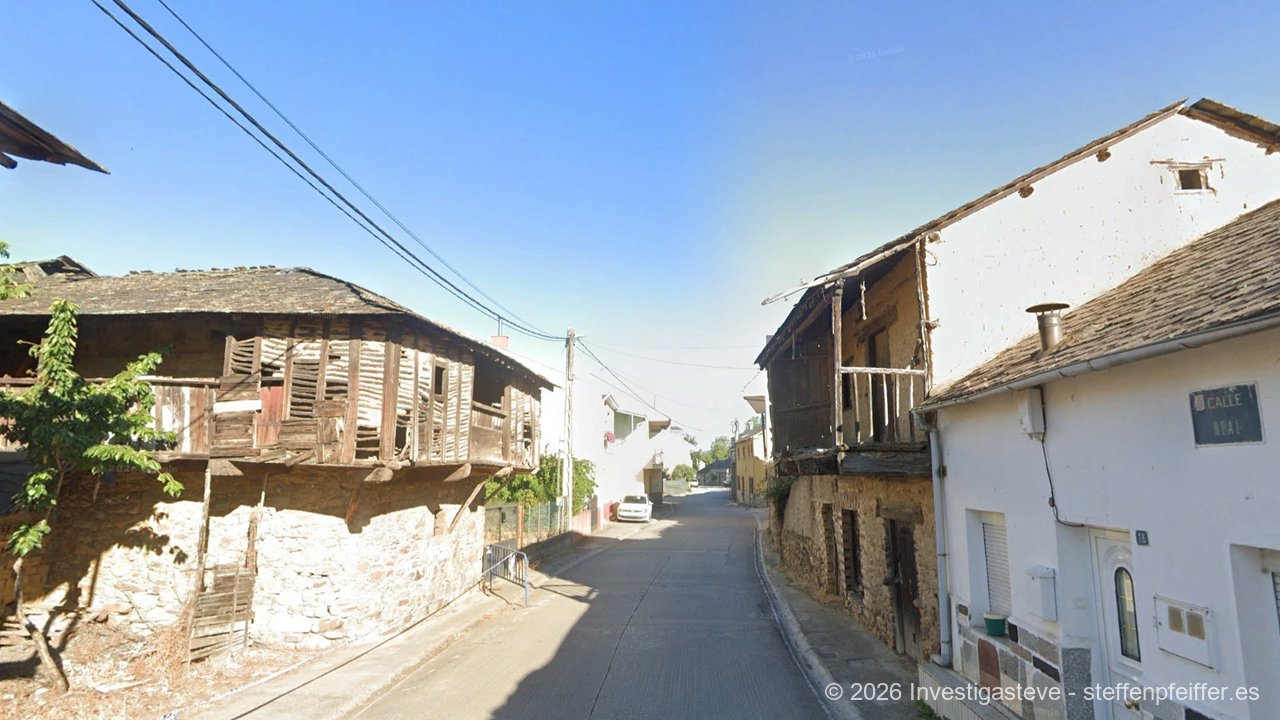
The story of Fuentesnuevas is a narrative of duality and constancy. The name itself – the “New Wells” – refers to a time when water became the most precious asset for the settlers who established themselves in the shadow of the mighty Templar castle of Ponferrada. Historically, the place is a classic pilgrim settlement, born from the necessity of supplying the stream of people who, since the 11th century, have been pressing relentlessly toward Santiago. Here you encounter the fascinating layering of “Pueblo Viejo” and “Pueblo Nuevo.” The old village with its crouched houses of rough fieldstone and dark slate tells of medieval hardship, while the newer districts reflect the economic upswing of the region in the 20th century. It is a historical causality reflected in the architecture: from simple shelter for livestock and people to a modern community that has nevertheless preserved its rural core.
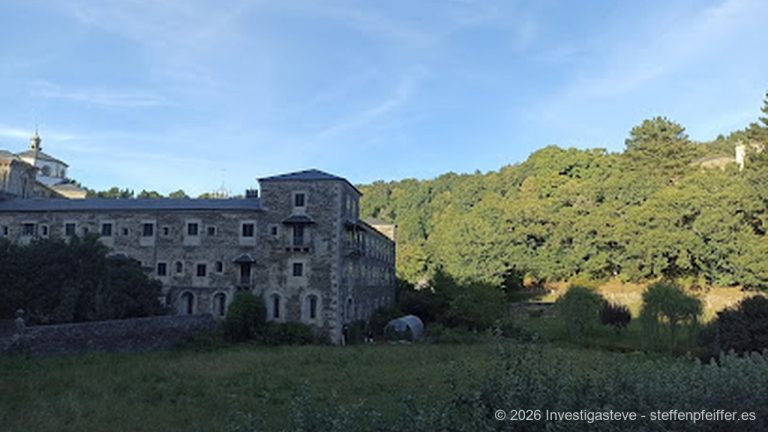
The spiritual heart, the Iglesia de Nuestra Señora de la Asunción, stands like an unshakeable guardian in the middle of the village. Its massive square tower is far more than just a bell tower; it is a landmark that, for centuries, signaled to pilgrims that they had left the dangerous mountain terrain behind for the time being. Inside the church, it smells of centuries-old incense, cold stone, and the wax of countless candles lit by pilgrims whose names are long forgotten, but whose longing lives on within these walls. The Ermita del Santo Cristo de la Vera Cruz on the edge of the village, on the other hand, tells a more intimate story. Here, the inhabitants sought protection from plagues and crop failures. It is a place of popular piety, where the boundary between the divine and the everyday blurs.
In Fuentesnuevas, the metamorphosis of the Bierzo becomes tangible. Once this was a land of charcoal burners and herders, but with the arrival of the Way of St. James, the social structure changed fundamentally. The place became a logistical hub. You feel the presence of history not only in the buildings but also in the way the gardens are laid out – small, fertile plots that have belonged to the same families for generations. This deep-rooted identity gives the place a psychological weight that stands in beneficial contrast to the transience of the pilgrim’s existence. As you walk along the Calle Real, you tread on a path polished by millions of steps. Every crack in the stone, every weathered inscription is part of a colossal puzzle that we today understand as European cultural heritage.
Addresses & tips in Fuentesnuevas
Camino Distances
In this table you will find the distances to the immediate neighboring villages. Please note that the path leading out of Ponferrada is largely flat but may be characterized by urban periphery before regaining its rural character in Fuentesnuevas.
| Previous Location | Distance (km) | Next Location | Distance (km) |
|---|---|---|---|
| Ponferrada | approx. 4.5 km | Camponaraya | approx. 3.5 km |
| Columbrianos | approx. 1.5 km | Cacabelos | approx. 9.3 km |
Sleeping & Arriving
Arriving in Fuentesnuevas is a haptic experience of a special kind. When you reach the Albergue Nuestra Señora del Camino, you immediately feel the weight of your backpack lifting from your shoulders. It is that moment of sudden lightness that can be almost dizzying. The hostel, often housed in simple but functional buildings, offers exactly what the pilgrim needs after the often hectic departure from Ponferrada: clarity and peace. The floor in the dormitories is often cool, a haptic blessing for burning soles. It smells here of freshly washed linen, disinfectants, and the distant scent of coffee brewing in the communal kitchen. It is an atmosphere of reduced existence that frees the mind.
Staying overnight in Fuentesnuevas is a conscious decision for silence. While many pilgrims try to cover the distance to Cacabelos or Villafranca in one go, the “repeat offenders” and the seekers find here a place where they not only sleep but regenerate. The soft creaking of the beds, the muted murmuring of fellow pilgrims in various languages, and the distant chiming of the church tower clock form an acoustic tapestry that envelops you in deep, dreamless sleep. Psychologically, Fuentesnuevas offers a shelter; you are close enough to the civilization of Ponferrada to feel safe, yet far enough away to rediscover the spiritual solitude of the way.
The ritual of arriving here also includes a visit to the village fountain. The water is ice-cold, crystal clear, and has a mineral taste that instantly invigorates you. When you let the water run over your forearms, you feel your body’s thermal reaction – a haptic shock that awakens the spirits. The hospitaleros in Fuentesnuevas often have a quiet, almost stoic manner; they have seen thousands of pilgrims come and go and know exactly when a word of comfort or a simple glass of water is more important than any stamp in the pilgrim passport. Here, hospitality is not understood as a service but as a handed-down heritage, deeply rooted in the Christian tradition of mercy.
Eating & Drinking
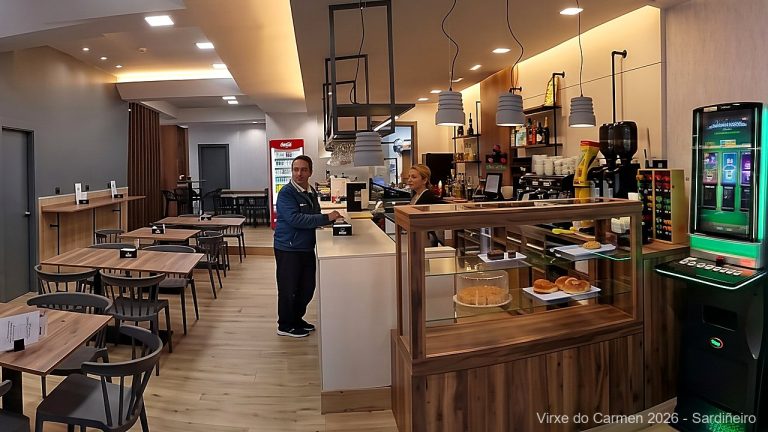
The cuisine in Fuentesnuevas is an honest homage to the fertile soil of the Bierzo. Here, you taste the landscape in every bite. In the small mesóns and bars along the main street, they serve what the surrounding gardens and vineyards produce. The first sensory impression upon entering a local tavern is overwhelmingly olfactory: the scent of homemade Empanada Berciana, that savory pie often filled here with potatoes and Swiss chard, mingles with the aroma of robust red wine. The taste is intense, earthy, and deeply satisfying. The haptic experience of breaking a warm, crispy empanada as the steam rises is a ritual moment of satiety.
An absolute must is the local wine of the Mencía variety. It sparkles in the glass like liquid ruby and carries the aroma of wild berries and a hint of minerality from the region’s slate soil. When you bring the glass to your lips, you feel the coolness of the wine and at the same time the warmth it ignites in your body. In Fuentesnuevas, the wine is often served in simple glasses, underscoring the immediacy of the enjoyment. It is often accompanied by a plate of local cheese or Cecina, the region’s air-dried beef, whose smoky aroma perfectly harmonizes with the wine. The texture of Cecina is firm and tender at the same time – a haptic marvel of preservation.
In the evening hours, the bars fill with locals, whose loud, lively laughter forms an acoustic backdrop that immediately immerses you in Spanish village life. Here, food becomes the social glue. People share raciones, discuss the harvest and the weather, and as a pilgrim, you become part of this vibrant community for a moment. For dessert, there are often fruits from the surrounding orchards – peaches so juicy that the juice runs over your hands, or in autumn the famous chestnuts, roasted over open fires, whose nutty, sweetish aroma drifts through the alleys. In Fuentesnuevas, you don’t just eat to get full; you absorb the life force of the Bierzo.
Supplies & Logistics
Logistically, Fuentesnuevas is a strategically important point that offers far more than its size suggests. As a suburb of Ponferrada, the place benefits from excellent connections and infrastructure. Here you find everything you need to stock up for the coming stages. In the local supermarkets and small tiendas, there is a bustling atmosphere. Pilgrims check their water supplies, buy fresh fruit, and the indispensable energy bars. Particularly noteworthy is the Hospital del Bierzo, located right on the edge of the village. For many pilgrims, this is a psychological anchor – knowing that modern medical help is within reach in an emergency gives a deep sense of security.
The pharmacies in the village are specialized in the needs of hikers. Here it smells of essential oils and the professional calm of the pharmacists, who with practiced hands fetch blister plasters and magnesium tablets. Haptically, you experience the logistics through the certainty that your body will find the necessary support here to continue the journey. Fuentesnuevas is also a good stop for cycling pilgrims, as there are small workshops that can carry out quick repairs. The water supply is ensured by numerous public fountains, the quality of which is legendary. It is a comforting feeling to know that you can consolidate your logistical base here once more before delving deeper into the rural zones of the western Bierzo.
Shopping: Several well-stocked supermarkets and small specialty shops cover daily needs for food and pilgrim equipment completely.
Gastronomy: A good selection of bars and restaurants offers everything from a quick breakfast to an evening pilgrim’s meal, often focusing on regional specialties.
Accommodation: In addition to the well-known municipal hostel, there are private guesthouses and accommodations near the Hospital offering peace and comfort.
Public Facilities: The large district Hospital (Hospital del Bierzo) is located here; there are also ATMs and regular bus connections to Ponferrada.
In summary, Fuentesnuevas logistically builds the perfect bridge between the urbanity of Ponferrada and the rural idyll of the further way. Those who do their homework here and sort their supplies start the next chapter of their journey with a feeling of strength. The place radiates a functional serenity that helps the pilgrim refocus on the essential: the way itself.
Don’t Miss
– The Iglesia de Nuestra Señora de la Asunción: A massive brick and stone building that impresses with its simplicity and the distinctive square tower – a place for a moment of inner reflection. – The Ermita del Santo Cristo: This small chapel on the western edge of the village is a spiritual jewel of popular piety and offers wonderful peace away from the main road. – The Hospital del Bierzo: Even if you hopefully do not need to see it from the inside, the modern architecture of this medical center is an interesting contrast to the historical core of the village. – The historic fountain in the Pueblo Viejo: Here you feel the haptic freshness of the water that gave the place its name – a ritual place of refreshment for every hiker. – The traditional slate architecture: Pay attention to the roofs of the old farmhouses; the way the dark stone is layered is a masterpiece of local craftsmanship. – The orchards on the edge of the village: A walk through the flowering or fruit-bearing trees offers sensory immersion into the fertility of the region. – The view back to the mountains of León: From the higher points of the village, you have an impressive panorama of the mountain ranges you have left behind. – The local wine cooperative: A visit is worthwhile to understand the dimensions of wine production in the Bierzo and to taste a drop or two directly at the source.
Insider Tips & Hidden Places
Beyond the yellow arrows, where the asphalt turns into dusty dirt roads, hides a small, almost forgotten path leading to a group of ancient chestnut trees. These giant trees are the silent witnesses of a time when the Bierzo was still an almost untouched wilderness. When you sit there in the shade, you hear only the distant rustle of leaves and the distant echo of a tractor. It smells of dry leaves and the cool moisture of the earth. This is a place for total auditory immersion; no pilgrim noise reaches here, only the voice of nature. Here you can feel the haptic sensation of the rough bark under your hands and forget for a moment that you have a destination.
Another hidden treasure is a small, private garden behind an inconspicuous stone house in the Pueblo Viejo, which often opens its gates to pilgrims asking for water. There, herbs grow that, in the hot sun of the Bierzo, emit an aroma that is almost intoxicating. Those who look closely often find small, handwritten notes or stones in the crevices of the hermitage walls, left by locals and pilgrims as votive offerings – a silent, almost magical communication with the divine. It is also worth taking the path through the fields in the early morning hours; when the dew still glistens on the leaves, the landscape transforms into a visual fairy tale, reminiscent of the descriptions of the old Romantics.
A special insider tip is to visit the weekly market near the Hospital if you happen to be there on the right day. Here you experience the haptic pleasure of rummaging through boxes of fresh produce and hearing the unadulterated language of the region. It is a place of sensory overwhelm: the shouting of the vendors, the smell of freshly slaughtered poultry, and the vibrant colors of the vegetables. In these moments, Fuentesnuevas reveals its true soul as a marketplace and supply center for the entire surrounding area. Those who engage in it are rewarded with impressions far beyond the usual pilgrim experience.
Moment of Reflection
In Fuentesnuevas, you stand at a psychological threshold. You have left Ponferrada, that city of symbols and power, and now find yourself in a place that calls you to humility. Psychologically, this is the moment of mental consolidation. Here, amidst the “new wells,” the question often arises: What do you leave behind in the city, and what do you take with you into the vastness of the vineyards? The historical causality of your being here – millions of pilgrims before you have trodden this very ground – gives you deep humility. You recognize that you are only a tiny part of a vast, thousand-year-old movement. This realization is liberating; your individual pain and doubts become part of a universal experience.
The metamorphosis in Fuentesnuevas happens in silence. Perhaps it is the cold water on your wrists or the sight of the massive church tower against the blue sky that lets you recognize that true strength grows from constancy. In Fuentesnuevas, you learn to absorb the rhythm of nature into your own heartbeat. You are no longer just a hiker; you become part of the Bierzo. Take this calm with you into your sleep, for it is the foundation on which you will master the kilometers through the vineyards tomorrow. In Fuentesnuevas, you prepare not only your body but also your soul for the light of Galicia, already shimmering as a distant premonition on the horizon.
Camino of the Stars
This place lies on the Camino Francés, on the stage from Ponferrada to Villafranca del Bierzo. The sequence of locations is:
Ponferrada → Columbrianos → Fuentesnuevas → Camponaraya → Cacabelos → Pieros → Villafranca del Bierzo
Did you also find that moment of pause at one of the fountains in Fuentesnuevas that gave you the strength for the onward way? Perhaps you found an answer to a question that had been bothering you for days in the hermitage of the Holy Christ? Share your experiences of this place of refreshment and reflection with us – was it the taste of the Mencía wine or the cool water of the fountains that you remember most? Your story brings the path to life for future pilgrims!
About the Author