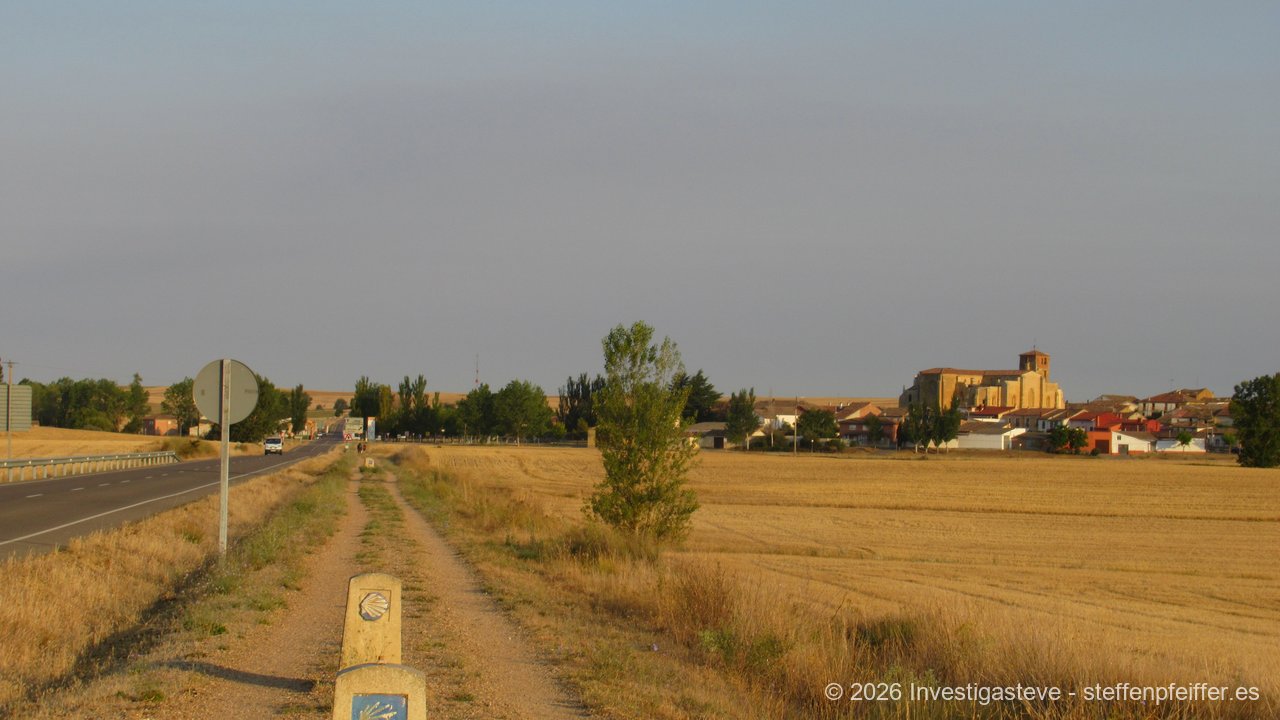
A new stage day – entering the stage
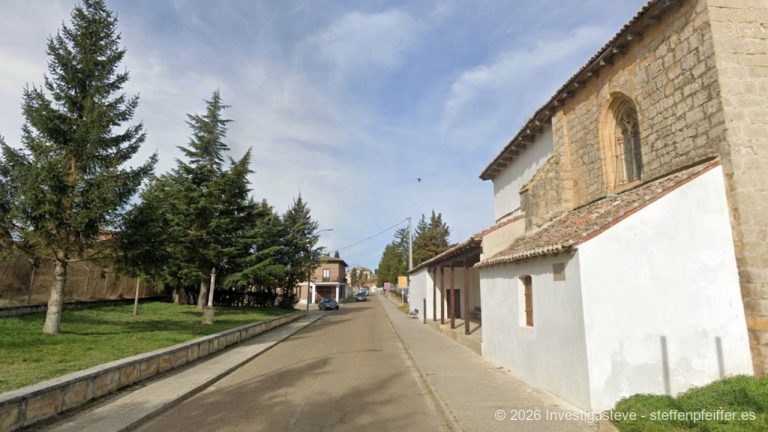
The morning in Frómista begins with an almost mathematical clarity, reflected in the perfect proportions of the church of San Martín. When the first, still oblique sunlight touches the ochre limestone of the Romanesque towers, time seems to stand still for a fleeting moment. The air is cool and clear, laden with the dew lying on the wide fields of the Tierra de Campos, and carries the pungent, earthy scent of damp clay and dry grain dust. It is a departure into absolute geometry. As you lace up your boots and the rhythmic clicking of your hiking poles on the old pavement marks the awakening of the village, you feel the expanse that lies before you. Behind you remains the Canal de Castilla, this marvel of engineering, and ahead of you opens a horizon that seems to know no bounds.
This departure from Frómista is more than just physical progress; it is a ritual entry into the “Golden Land” of Castile. The light changes in these early hours from a pale blue to a glowing gold, making the dust particles in the air dance like tiny diamonds. You feel the hard, unyielding ground beneath your soles, which here in the Tierra de Campos possesses an almost archaic firmness. It is a moment of mental reorientation. The mind, which often gets caught in the narrow alleys of cities, is here literally stretched apart until it reflects the vastness of the landscape. Every breath fills the lungs with a purity that is almost painfully honest, while the knowledge of the coming kilometers on the dead-straight Vía Aquitana allows a meditative calm to rise within you.
Route and elevation profile
Distance: 18.8 km
Elevation gain: ↑ 80 m / ↓ 40 m
Difficulty: Easy (physically). The stage is almost completely flat and places no demands on fitness in terms of inclines. The challenge is purely psychological.
Special features: Dead-straight “Andaderos” (pilgrim paths parallel to the road), the absence of natural shade over long stretches, the “geometry of walking” on the ancient Vía Aquitana.
Today’s route is a lesson in patience and visual constancy. We leave the harmonious symmetry of Frómista and penetrate deeper into the heart of the province of Palencia. The elevation profile is almost a zero line; there are no significant ascents or descents. The path largely runs on artificially created pilgrim paths, the so-called Andaderos, which often run parallel to the country road. These paths are functional and efficient, but they demand a high tolerance for frustration from the walker, as the panorama seems to hardly change for kilometers on end. The ground is compacted gravel or asphalt, which tires the feet through the constant identical strain.
The focus of these 18.8 kilometers lies on the transition between the small settlements of the “Campos.” The path connects places like Población de Campos, Revenga de Campos, and Villarmentero de Campos like pearls on a tightly drawn string. An architectural and historical highlight breaks the monotony in Villalcázar de Sirga, before the final, also dead-straight approach to Carrión de los Condes. It is a stage that trains rhythm: step by step, breath by breath, without the distraction of topographical obstacles. Here, the path becomes a mirror of one’s own inner self, as the outside offers few stimuli.
Variants and small detours
Shortly after Frómista, the pilgrim faces a classic decision that significantly influences the character of the first third of the stage. The official route leads along the country road on the Andadero to Población de Campos. However, those who shy away from the proximity to asphalt can opt for the variant along the Río Ucieza. This path is scenically more appealing, as it leads through the greenery of the river vegetation and offers softer ground. It is a blessing for the joints and the ears, as the sound of the water swallows the distant traffic noise. This variant rejoins the main path in Población but offers a gentler start to the day.
Another small but worthwhile detour offers itself in Población de Campos itself. Instead of moving on directly, one can choose the path to the Ermita de San Miguel, a small, lonely chapel on the edge of the village. Such tiny detours are essential on this stage to break the visual monotony and grasp the historical depth of the region. In Villalcázar de Sirga, it is also worth not just taking the main route but leisurely circling the monumental church of Santa María la Blanca to comprehend the immense dimensions of this Templar heritage before tackling the last six kilometers to Carrión.
Description of the path – with all senses
When you leave Frómista, the first thing your senses register is the absolute silence of the plain, broken only by the rhythmic crunching of gravel under your boots. The sound is dry and hollow, a constant companion that sets your pulse like a metronome. You hear the wind sweeping unhindered over the Tierra de Campos – a soft whistling in the dry stalks of the grain fields, which in summer can intensify to a hot roar. It is an acoustic emptiness that forces the mind to concentrate on the smallest sounds: the distant chirping of a lark or the hum of a passing car on the nearby road, which in this expanse almost seems like an otherworldly signal.
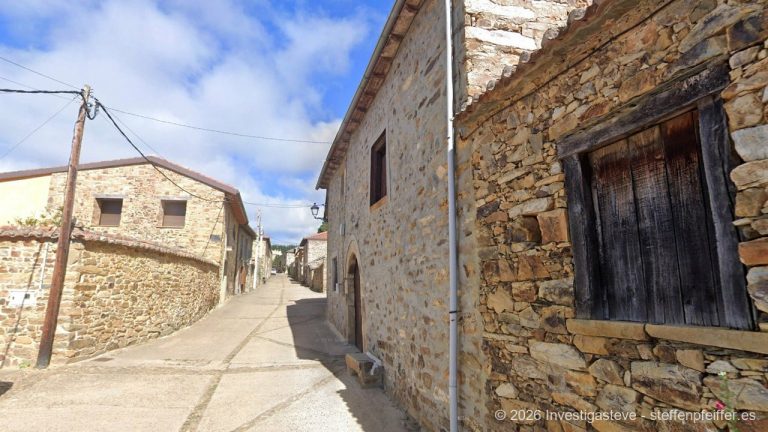
Haptically, this stage is an experience of hardness and textures. The air feels dry; it draws moisture from the skin and leaves a fine layer of dust on your lips. You feel the warmth rising from the bright ground, an almost tangible heat that shimmers and blurs the contours of the horizon. When you place your hand on the walls of the adobe houses in Población de Campos, you feel the rough, porous surface of the sun-dried clay. It stores the cold of the night and the heat of the day equally. Your backpack seems to get heavier with every kilometer on the straight, while the straps dig into your shoulders, reminding you of the gravity of the Meseta.
Olfactorily, the Tierra de Campos is a feast of earthy scents. It smells of dust, of dry straw, and the metallic note of hot stone. Occasionally, the sweetish, heavy scent of wild thyme or rosemary, growing at the edge of the pilgrim path, mixes in. In the villages, the bouquet changes: here you smell the heavy scent of livestock farming, of damp manure, and the aroma of wood fires rising from the chimneys of the small houses. In Villalcázar de Sirga, the smell becomes more sacred – there, a hint of incense and old, cool stone often wafts from the open portal of the mighty church, an olfactory anchor in the heat of the day.
Visually, the path is a challenge of perspective. The Vía Aquitana, this ancient Roman artery, stretches like a grey ribbon to the horizon. You often see your destination – a church tower or a group of trees – hours before you reach it. This optical illusion, that the destination seems not to get closer despite constant walking, is a psychological test. The light here is relentless; there is no shade, no refuge. The colors are reduced to ochre, a washed-out blue, and the pale green of the sparse vegetation. This color reduction acts like a filter, leaving the complexity of the world outside and throwing you back to the essential: the path and yourself.
In Revenga de Campos, you encounter the architecture of modesty. The church of San Lorenzo stands stoically by the wayside. If you can enter, a coolness envelops you, settling like a wet cloak on your heated skin. The light inside is muted, filtered through small window openings, and your eyes take seconds to recover from the glare outside. You feel the smoothness of the wooden pews and hear the distant ticking of a clock – a space outside of time. These brief moments of sensory deprivation are vital for processing the sensory overload of the expanse.
The section to Villarmentero de Campos leads through an almost static landscape. Here, the historical causality becomes tangible. You walk in the footsteps of Roman legionaries, medieval traders, and millions of pilgrims. The straightness of the path is no coincidence, but the legacy of Roman land surveying. You feel the connection to the generations before you who tasted the same dust and felt the same wind. It is a psychological metamorphosis: away from the individual walker, towards being part of a millennia-old stream. Your ego becomes small in this vast setting, and precisely in this lies a strange freedom.
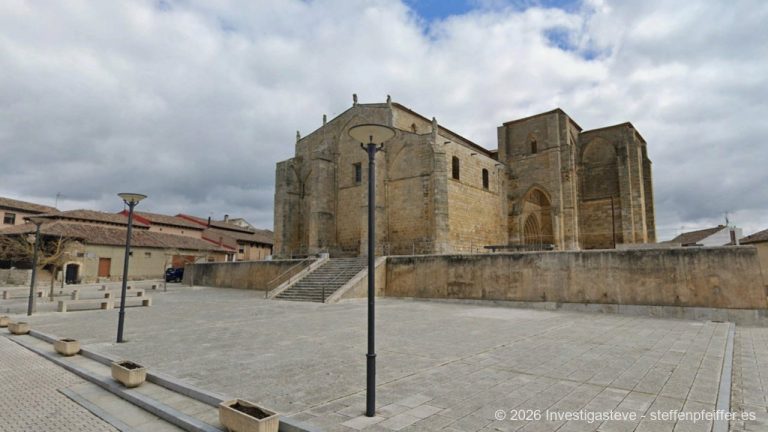
Villalcázar de Sirga breaks the monotony with monumental force. When you stand before the church of Santa María la Blanca, the sheer size overwhelms you. The haptic experience of the massive stone blocks, so different from the clay of the surroundings, tells of the power and wealth of the Templars. The portal is a stone picture book; your eyes wander over the intricate figures casting shadows in the sunlight. The contrast between the simplicity of the fields and the opulence of this structure is a visual shock. You practically taste the coolness of the stone on your tongue as you pause inside before the tomb of the Infante Don Felipe.
The last six kilometers to Carrión de los Condes are a final exercise in mental discipline. The road and the Andadero seem to stretch into infinity. You hear the rhythmic “clack-clack” of your poles, which almost acts like a mantra. The fatigue in your legs is now a physical presence, a dull throbbing that corresponds with every step. You smell the approaching river Carrión, a damp, fresh note that mixes with the dust. The light begins to sink lower, the shadows grow longer and lie like cool fingers over the path.
The entry into Carrión de los Condes is a feast for the senses. Suddenly, the acoustics change: the murmur of people, the clatter of dishes in the bars, and the ringing of the many bells welcome you. The ground beneath your feet becomes cobblestones, hard and uneven, a new challenge for your tired joints. You smell freshly baked bread and the scent of garlic and olive oil wafting from the kitchens. The historical density of the town is tangible; you traverse gates that have welcomed pilgrims for centuries.
When you finally reach the church of Santa María del Camino or the church of Santiago, you experience the final immersion of the day. The famous portal of the Santiago church with its frieze of craftsmen is a haptic and visual masterpiece. You run your fingers over the rough stone and feel the energy of the people who made this town one of the most important centers of the Middle Ages. The psychological relief of arrival mixes with exhaustion into a deep satisfaction. You have conquered the geometry of the Meseta today by becoming part of it.
Intermediate places & special features
Frómista The starting point is famous for the church of San Martín, a jewel of Romanesque architecture built in the 11th century. Its perfect symmetry and the almost 300 ornate corbels under the eaves make it a must-stop for art lovers. Frómista was also an important junction on the Canal de Castilla, whose monumental lock staircase lies directly at the town entrance. The town breathes a calm, almost scholarly atmosphere that prepares the pilgrim with dignity for the expanse of the Tierra de Campos.
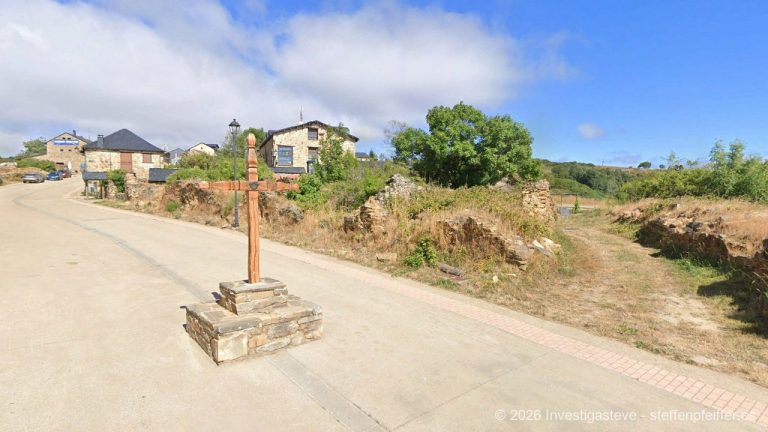
Población de Campos A charming village known for its traditional architecture of adobe and brick. The church of Santa Magdalena towers over the village and offers a wide view over the fields. Particularly worth seeing is the small Ermita de San Miguel, which lies somewhat off the beaten path and radiates an almost mystical silence. In Población, one feels the deep connection of the inhabitants to their barren but fertile land.
Villalcázar de Sirga This place is inseparable from the monumental church of Santa María la Blanca. Once a fortress of the Knights Templar, it houses significant royal tombs and a famous statue of Mary celebrated in the “Cantigas de Santa María” by Alfonso the Wise. The village itself seems small in the shadow of this mighty house of God, but its gastronomic tradition – especially the roast lamb – attracts pilgrims and gourmets alike.
Carrión de los Condes The stage destination was one of the most important cities in Spain in the Middle Ages, seat of kings and counts. The city is a treasure trove of architecture, with the church of Santiago, whose facade is a masterpiece of Romanesque sculpture, and the monastery of San Zoilo, famous for its magnificent Plateresque cloister. Carrión is also known for its vibrant pilgrim community, especially the singing nuns in the monastery of Santa María, who offer pilgrims an unforgettable spiritual welcome every evening.
Dining, accommodation & supplies
The supply situation on this short stage is excellent, which somewhat reduces the mental pressure. In almost every small town, there are bars and cafés specializing in the pilgrim trade.
Gastronomy: In Villalcázar de Sirga, you should definitely stop in one of the traditional “Mesónes.” The regionally typical “Lechazo” (suckling lamb) is a heavy but delicious reward for the hardships of the Meseta. In Carrión de los Condes, numerous bars offer excellent tapas and the classic pilgrim menu.
Accommodation: Carrión offers a wide range of accommodations. The Albergue de Peregrinos Santa María is legendary for its atmosphere and the warmth of the nuns. For those who prefer luxury, the Hotel Real Monasterio San Zoilo offers exclusive accommodation in a historic setting.
Public facilities: In Carrión, there are pharmacies, ATMs, and supermarkets in large numbers. It is the ideal place to stock up on supplies for the coming, more solitary stages towards Sahagún.
The special thing today
The absolute unique selling point of this stage is the encounter with the “geometry of walking.” On the dead-straight sections of the Vía Aquitana, the pilgrim is confronted with a kind of sensory deprivation. The special thing here is not what you see, but what this emptiness does to the human psyche. It is a form of active meditation. In a world constantly craving new stimuli, this path offers radical reduction. You learn to distinguish the fine nuances in the ochre of the fields, to observe the play of light and shadow on the gravel, and to understand the infinity of the horizon not as a threat, but as space for inner freedom.
A second highlight is the “Singing Nuns” of Carrión de los Condes. In the monastery of Santa María del Camino, a meeting takes place every evening that goes far beyond a purely religious ceremony. The sisters invite the pilgrims to sing together and share their experiences. In a time of individualization and often anonymous mass pilgrimage on the Camino, this moment offers a deep human connection. When the voices of the nuns resonate in the ancient church, the ice of exhaustion breaks, and many pilgrims find here the emotional catharsis they unconsciously sought on the lonely kilometers of the Tierra de Campos.
Finally, the architectural heritage of the Templars in Villalcázar de Sirga is a special phenomenon. The fact that in the middle of the apparent emptiness of the Castilian plateau stands a church of such cathedral-like dimensions testifies to the enormous importance of the Camino in the Middle Ages. It is a place of superlatives: the richly decorated capitals, the royal sarcophagi, and the aura of mystery that still surrounds the Templar Order to this day. Here, history is not just read, but experienced in its stony force. It is the point where the “earthly” Tierra de Campos meets the “heavenly” splendor of the Christian world.
Reflection at the end of the stage
When you walk through the narrow alleys of Carrión de los Condes in the evening, while the setting sun bathes the facades in a warm red, you feel a deep metamorphosis. Today’s stage was short in kilometers, but long in insights. You realize that the monotony of the Tierra de Campos was a necessary filter. It has silenced the noise in your head so that you can now perceive the subtleties of this historic city. The heaviness in your legs no longer feels like a burden, but like grounding.
Carrión de los Condes is a place of arrival and pause. Here, surrounded by monasteries and churches that have defied storms and wars for a thousand years, your own haste is put into perspective. You realize that the Camino is not a race against time, but a dance with eternity. The songs of the nuns echo within you, and the dust of the Vía Aquitana on your shoes is like a badge of honor. You are ready for the coming challenges, because today you have learned that silence is your best companion and that behind every straight line, a wonder awaits you.
Camino of the Stars
This stage lies on the Camino Francés, on the stage from Frómista to Carrión de los Condes. The sequence of places is:
| Stage | Start | Destination | Distance (km) | Elevation gain | Difficulty | Intermediate places |
|---|---|---|---|---|---|---|
| 16 | Frómista | Carrión de los Condes | 18.8 | ↑ 80 / ↓ 40 | easy | Población de Campos → Revenga de Campos → Villarmentero de Campos → Villalcázar de Sirga |
Did you choose the meditative calm of the river variant or face the challenge of the Roman straight? Which song did the nuns sing for you in Carrión, when the dust of the Meseta still lay on your shoulders? Share your moment of silence or deep encounter with us – your story is another point of light in the sky of the pilgrim.
About the Author

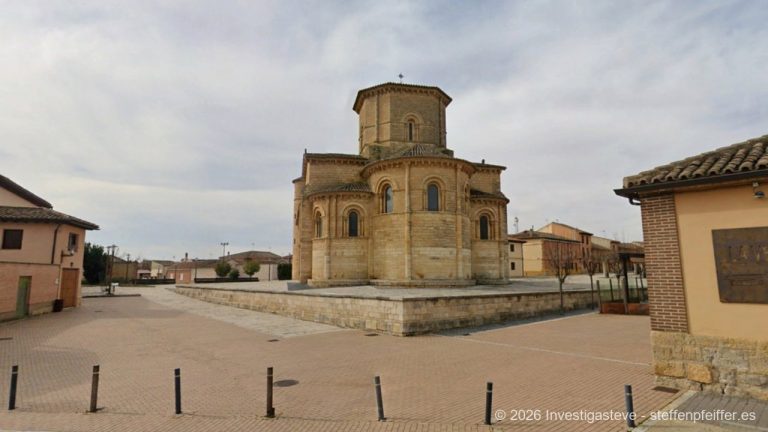
Frómista – The Stone Manifesto of Perfection on a Ribbon of Water
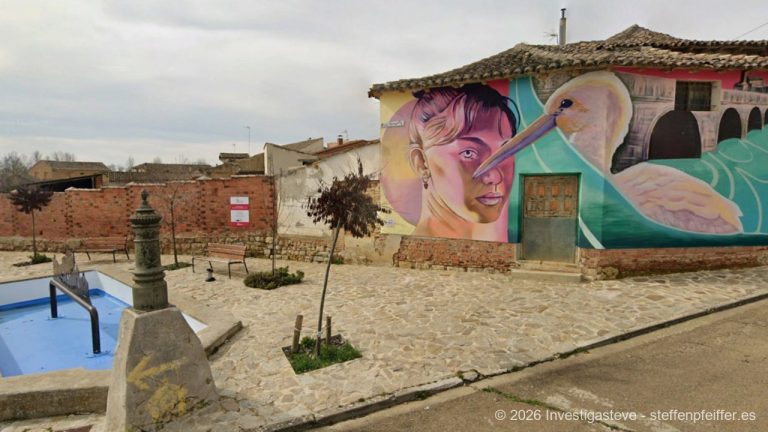
Población de Campos – The Knightly Guardian of the Tierra de Campos
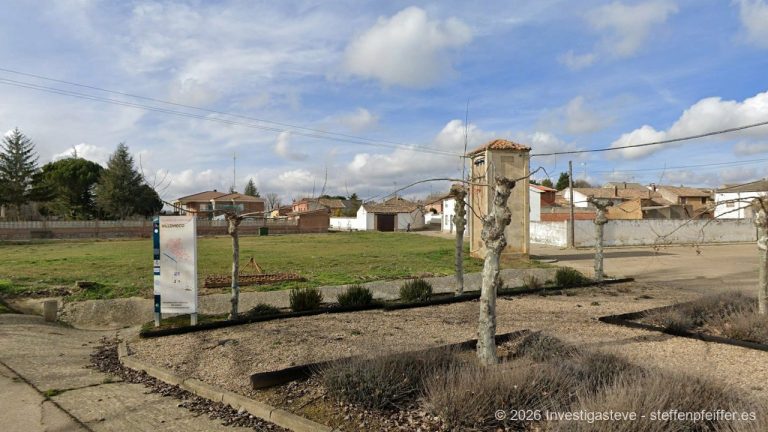
Villovieco – The Green Promise on the Banks of the Río Ucieza
Villalcázar de Sirga – The Stone Wonder in the Infinity of the Meseta