First Glance – Introduction & Atmosphere
When you cross the gentle hill ranges of Galicia and the panorama of the town of Sarria opens up before you, you immediately feel a change in the pulse of your journey. Sarria is not an ordinary stage destination; it is an energetic epicentre, a place where the silence of the Galician forests mingles with the vibrant anticipation of thousands of walkers. As soon as you enter the lower districts, you perceive an acoustic diversity that forms a sharp contrast to the solitude of the preceding paths. The bustling activity in the streets, the clatter of coffee cups in the cafés on the riverbank, and the polyphonic babble of languages of pilgrims from all over the world weave a tapestry of pure joy of life. The air here smells of departure – a mixture of the fresh aroma of roasted coffee, the scent of freshly baked country bread, and the cool, damp note of the Río Sarria, which meanders leisurely through the town centre.
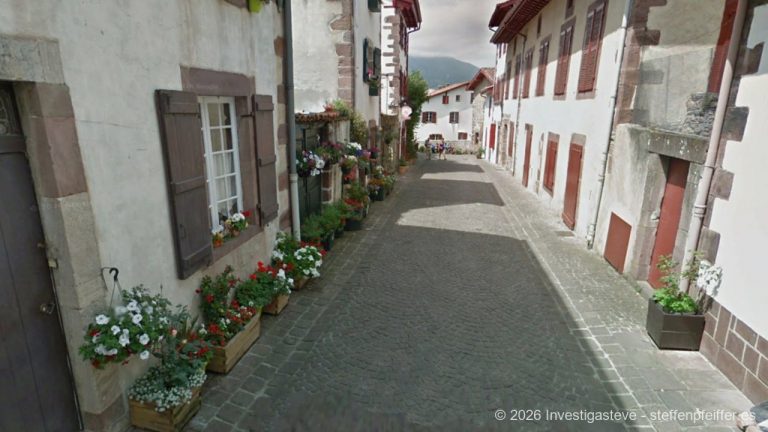
In Sarria, a psychological metamorphosis takes place. For those who already have hundreds of kilometres in their legs, the town marks the entry into the “final round”, while for a new wave of pilgrims it is the solemn starting point. You feel the energy of those who open their credential here for the first time and take aim at the magical marker of the last 100 kilometres. The town welcomes you with a tactile versatility: you feel the rough texture of the ancient stone walls in the upper town, the smooth handles of your pilgrim staff, and the warmth of the sun caught in the narrow lanes of the Rúa Maior. The visual experience is dominated by the striking contrast between the modern lower town and the historic core, which sits defiantly on the hill. Sarria challenges you to pause and literally breathe in the anticipation of Santiago. Here, you are no longer just a walker in the forest; you are part of an unstoppable movement that already senses its goal on the horizon of the soul.
What This Place Tells
Sarria is a stone chronicler whose narratives reach deep into the foundations of medieval Spain. The historical causality of its significance lies in its strategic location on the ancient Roman road and its later promotion by the Galician nobility and the Crown. It was King Alfonso IX of León who officially founded the town in 1189 and made it an administrative heart of the region. The tragedy of history is closely linked here to the figure of the king, for it was right here, in Sarria, that he breathed his last on his final pilgrimage in 1230. When you walk through the Rúa Maior today, you feel this historical immersion in every crack of the granite. It is the story of a place that has served as a safe haven for seekers for 800 years, and whose architecture testifies to a time when power and piety were inextricably interwoven.
The heart of the narrative is undoubtedly the Monasterio de la Magdalena. Its foundation in the 13th century by a group of pilgrims, driven by the spirit of penance and healing, created a spiritual power centre that radiates to this day. The mixture of Romanesque, Gothic, and Plateresque elements tells of continuous renewal and the constancy of faith across the centuries. Another chapter is opened by the Torre de la Fortaleza, the lonely remnant of a once mighty castle. It tells of the violent Irmandiño wars of the 15th century, in which the Galician people rose up against oppression by the nobility. The fact that only one tower remained of the castle acts as a psychological reminder of the transience of worldly power compared to the eternity of the Way.
But Sarria also tells of the rural identity of Galicia. The town has always been a centre for craftsmanship and trade, known for its smithies and its market days. In the architecture of the old Hospital buildings, which once cared for the poor and sick, the essence of hospitalitas is preserved. Here, charity was not only preached but lived in the form of shelter and food. In Sarria, the history of the Camino de Santiago is kept alive through the continuous presence of pilgrims; each generation adds new pages to the great book of the town. Those who wander through the alleys hear the echo of oxcarts and the whisper of medieval monks, mixed with the spirit of modern times. It is a place that proves to you that true history never sleeps, but finds its highest form in movement and encounter.
Addresses & tips in Sarria
| Accommodation | 91 |
| Restaurants | 27 |
| Bars & Cafés | 46 |
| Shopping | 18 |
| Health | 2 |
| Services | 8 |
Show all 192
Show all 91
Show all 27
Show all 46
Show all 18
Camino Distances
Sarria lies as a significant hub on the Camino Francés, exactly where the final phase of the journey truly begins for many.
| Previous Town | Distance (km) | Next Town | Distance (km) |
|---|---|---|---|
| Aguiada | ca. 4.0 km | Barbadelo | ca. 4.0 km |
Sleeping & Arriving
Arriving in Sarria is like entering a pulsating centre of hospitality. When you have crossed the last hill and immerse yourself in the urban area, you are greeted by an infrastructure second to none. The selection of accommodation ranges from simple pilgrim hostels to upscale boutique hotels. A particularly atmospheric arrival awaits you in the hostels of the upper town, such as the Albergue Monasterio de la Magdalena or the Albergue HR. Here, checking in is associated with a deep calm; you put down your heavy backpack on the cool floors and feel the weight of the kilometres fall from your shoulders, while the light of the setting sun bathes the granite walls in a warm gold.
The rooms in Sarria offer a quality of rest that is crucial for the demanding stages ahead. In the modern accommodations of the lower town, you feel the professionalism of a place that has been specialising in travellers for generations. The acoustic panorama in the dormitories is often characterised by a respectful silence or the soft exchange of the day’s experiences. It is a sensory experience to snuggle into the clean, fresh-smelling sheets while the distant murmur of the city slowly fades outside. Those who stay here consciously choose social immersion – Sarria is the place of great encounters, where friendships are forged for the last 100 kilometres.
Particularly noteworthy is the personal touch of many family-run guesthouses on the Rúa Maior. Here, arriving becomes a welcoming ritual: you are often greeted with a cool drink or a kind word, making you feel not like an anonymous tourist, but a valued guest. The sanitary facilities are generally of an excellent standard, and the feeling of hot water on tense muscles is perceived as pure luxury after the long forest stages. Sleeping in Sarria means diving deep into the regenerative energy of the town. The psychological effect is immense – you wake up the next morning with a clarity that lets you set off light-footed.
For those seeking a more spiritual hostel experience, the Magdalena monastery offers a framework of reflection. Arriving within the monastic walls means withdrawing from the hustle of the world for a moment. Here, you only hear the distant ringing of the chapel bell and the soft rustle of the trees in the cloister. The logistics of the place ensure that you can concentrate entirely on your regeneration; everything from luggage transport to laundry service is perfectly organised. Those who come to rest in Sarria find the necessary balance between the sociable joy of the Way and the inner stillness needed to reach the destination of Santiago.
Eating & Drinking
The culinary world of Sarria is a feast for the senses and a homage to the treasures of the Galician soil. When you stroll through the streets in the evening, you are inevitably drawn by the tempting aroma of boiling octopus. The town is famous for its pulperías, where Pulpo á Galega is prepared with a mastery that is second to none. The steam rising from the large copper cauldrons carries the scent of bay leaf and sweet paprika. The octopus is served on traditional wooden plates that retain the warmth and make the golden olive oil shine. The texture of the tender meat on the tongue is a reward that immediately fills the body with new energy.
Alongside the octopus, the meat richness of the Lugo region is ubiquitous. You taste the famous Ternera Gallega, the juicy beef from local pastures, often refined only with coarse sea salt to unfold its full flavour. The smell of roasted meat mixes with the scent of freshly baked Galician country bread, whose crust is so crispy that it gives a loud, auditory signal of freshness when broken. To drink, the heavy, characterful wine of the nearby Ribeira Sacra is traditionally served in white ceramic bowls, the cuncas. The cool weight of the bowl in your hand and the earthy taste of the wine form the perfect soundtrack for a moment of deep satisfaction.
Eating in Sarria also means tasting the quality of craftsmanship. The town is known for its traditional sweets, such as the fine Tarta de Santiago, whose almond scent wafts through the lanes of the upper town. In the small bars by the river, you enjoy the lightness of being with a café con leche and observe the constant coming and going of pilgrims. The psychological component of eating is closely linked here to community: you sit at long wooden tables, share bread and wine, and experience a form of hospitality that knows no language barriers. Those who dine in Sarria literally absorb the strength and joy of life of Galicia – food for the soul that will carry you over the coming hills to Portomarín.
Supplies & Logistics
Logistically, Sarria is the undisputed powerhouse in the last third of the Camino Francés. Those who come here find everything necessary for a smooth pilgrimage. The town functions as a highly efficient supply hub, perfectly adapted to the needs of thousands of walkers.
Shopping: Several large supermarkets (such as Mercadona or Eroski) offer a complete supply of food and hygiene items. For pilgrim equipment, there are specialised shops where you can find everything from hiking boots to blister plasters to weatherproof capes. Sarria is also a well-known centre for antiques; in the shops of the Rúa Maior, you can discover unique finds.
Gastronomy: The density of restaurants, bars, and cafés is enormous. From a quick tapas for in between to an extensive three-course pilgrim’s menu in the evening, food is always available, with opening hours reliably aligned with the rhythm of the walkers.
Sleeping: With a capacity of well over 1,000 beds in various categories, Sarria is prepared for large pilgrim flows. Nevertheless, advance reservation is recommended in high season, especially if you prefer a private room or a specific hostel.
Public Facilities: The town has a modern health centre (Centro de Saúde), several pharmacies, post offices, and numerous banks with ATMs. The tourist information office offers comprehensive maps and support with planning. The connection to the rail and bus network to Madrid, Santiago, or Lugo is excellent.
Safety in Sarria is exemplary; the town is a pure pilgrim zone where social control and the presence of the local police offer a high level of protection. The logistical handling of luggage transport is particularly professionally organised here – almost every hostel cooperates with reliable services such as Jacotrans or Correos. Acoustically, despite its size, the town remains a place of pleasant bustle due to the traffic-calmed zones in the historic core. Those who replenish their supplies and care for their bodies in Sarria can be sure that they are well prepared for the final sprint to Santiago. Sarria proves that modern efficiency and traditional hospitality on the Camino de Santiago need not be opposites.
Don’t Miss
- Monasterio de la Magdalena: Visit the monastery at the end of the upper town and admire the cloister – a place of absolute spiritual silence.
- Rúa Maior: Stroll through the historic main street of the pilgrims and feel the medieval flair between the ancient stone façades.
- Torre de la Fortaleza: Climb up to the remnant of the old castle and enjoy the visual panoramic view over the entire Sarria region.
- Iglesia de Santa Mariña: Look at the striking church tower ensemble in the centre; the sound of the bells is the acoustic heart of the town.
- The river bridge “Ponte de Áspera”: Cross the medieval stone bridge over the Río Celeiro at the exit of the town – an iconic photo point for every pilgrim.
- A visit to the antique dealers: Take the opportunity to search for hidden treasures and Galician craftsmanship in the numerous shops.
- Sunset at the Mirador: Find a spot above the stairs of the Rúa Maior and watch how the light of dusk softens the contours of the town.
Insider Tips & Hidden Places
Away from the bustling Rúa Maior and the tourist centre, Sarria hides corners of almost ethereal calm. One such place is the small park on the banks of the Río Sarria, a little off the main bridge. When you sit down there under the ancient plane trees, the noise of the town disappears and is replaced by the steady, soothing lapping of the water. Here it smells intensely of fresh grass and damp earth – an olfactory contrast to the urban bustle. It is the perfect spot for a private reflection, far from the cameras of other pilgrims. You feel the coolness of the water and the peace of nature, which helps you to organise your thoughts for the coming kilometres.
Another hidden treasure is the small, almost forgotten cemetery near the Monasterio de la Magdalena. While most visitors only visit the monastery, this place preserves an intimacy that is deeply moving. The moss-covered tombstones and the names carved into the stone tell of generations of inhabitants whose fates were closely linked to the town. At dusk, silhouettes are created here that look like old legends. It is a space without distraction where the history of Galicia whispers in every crack of the masonry. If you look closely, you often find small inscriptions or symbols that go far beyond the religious and testify to the deep connection of the people with their land.
Did you know that there is a tiny craft business in one of the narrow side streets of the upper town that still makes traditional pilgrim staffs from chestnut wood? The smell of freshly worked wood and the fine sawdust in the air transport you to an era when every piece of equipment had a personal soul. When you watch the craftsman at work there, you feel the historical continuity of the Camino most strongly. It is not mass-produced goods, but a piece of genuine Galician constancy. Such encounters reveal themselves only to those who are willing to adapt the pace of their journey to the speed of their soul and to look curiously behind the official façades.
Finally, it is worth following the path at dusk that leads behind the Torre de la Fortaleza towards the outer meadows. There you will find ancient dry stone walls that span the fields like a stone net. When the last daylight disappears behind the distant mountains of Samos, these walls appear as silent guardians of time. The wind carries the aroma of wild thyme and pines. It is a place for the flow of your own thoughts, a space where you realise that, although you are in a town, the wild soul of Galicia waits only a step away. Those who lose themselves here often find a part of themselves that they had forgotten in the hustle of preparing for the Camino de Santiago.
Moment of Reflection
In Sarria, you stand at a point of maximum decision-making power. The town challenges you to question your own position on this path: Are you just a walker who wants to reach the magical 100-kilometre mark, or are you a seeker of inner depth? The psychological metamorphosis that takes place in Sarria is the shift from physical exertion to awareness of the bigger picture. In the silence of the cloister of La Magdalena, ask yourself: “What is the real reason I am walking this path, and which burdens would I like to symbolically leave behind here, at this strategic gateway?”
The historical causality of your being here connects you with kings like Alfonso IX and the millions of pilgrims for whom Sarria has been a spiritual lifeline for centuries. Do you feel the responsibility to carry forward this heritage of respect and hospitalitas? In Sarria, you become aware that the Camino is not a race, but a sequence of moments of presence. The rough reality of the granite under your hands reminds you of your own resilience. Use this moment of reflection to recalibrate your inner compass. When you leave Sarria tomorrow and cross the bridge towards Barbadelo, take the “light of the spirit of departure” within you. It will be your anchor when the path demands more from you again. Here, in the heart of Galicia, you have found the strength to continue your journey with a new, indestructible dignity.
Camino of the Stars
This place lies on the Camino Francés, on the stage from Triacastela to Portomarín. The sequence of places is:
Triacastela → Samos → San Cristovo do Real → Renche → San Vitoiro de Ribas de Miño → Aguiada → Sarria → Barbadelo → Rente → Mercado da Serra → Brea → Ferreiros → Mirallos → A Pena → Mercadoiro → Vilachá → Portomarín
Did you also feel that special spark of anticipation in the historic streets of Sarria, or find a moment of absolute peace at the Monasterio de la Magdalena? Perhaps the enjoyment of a Pulpo á Galega in one of the pulperías strengthened you for the last 100 kilometres? Share your personal impressions, your photos of the Rúa Maior, or your insider tips from the corners of the town with us. Every story enriches the magic of Sarria and inspires other pilgrims to pass through this gateway to Santiago with open senses!
About the Author