A First Glimpse – Arrival & Atmosphere
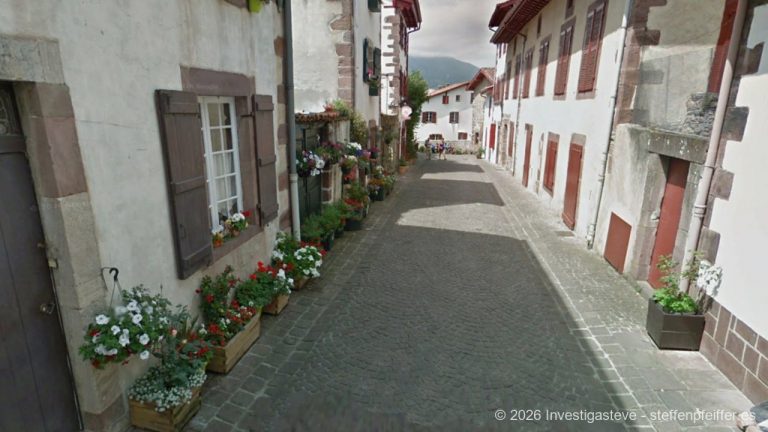
When you tread the dusty path that inexorably leads you deeper into the wild, unvarnished soul of the Costa da Morte, you reach, with Castrexe, one of those places that feel like a forgotten verse in an ancient Galician epic. It is a tiny hamlet, barely more than a handful of houses built of heavy granite, crouching into the gentle waves of the coastal landscape as if to offer the eternal, lashing west wind of the Atlantic as little surface area as possible. Here, on stage CFM 4 of the Camino Fisterra y Muxía, you encounter a silence so substantial and heavy that it almost stands in the room like an independent entity. The fine Galician drizzle, the mystical Orballo, often lays itself like a cool, almost invisible veil over the gray walls and makes the already lush green of the ferns and grasses shine in an almost unnatural, deep gleam. It is a light that knows no hard contours but bathes everything in a soft, melancholic aura that immediately makes you feel: you have finally left noisy civilization behind you.
In Castrexe, you are welcomed by an atmosphere of archaic isolation. Only the distant, rhythmic rumbling of the surf on the nearby Praia do Rostro, which penetrates through the ground into the soles of your feet like a deep, vibrating bass, forms the orchestral backdrop for your arrival. It smells here of an intoxicating, almost heady mixture of salty sea air, the heavy humidity of the earth, and the tart, almost medicinal aroma of eucalyptus wafting over from the surrounding hills. You feel the resistance of the ground under your heavy pilgrim boots – the hard slate and the coarse granite are the bones of this earth, carrying you with stoic composure on the final kilometers of your long journey. Castrexe is not a place for a quick selfie; it is a place of deep preparation, a psychological gate that teaches you to endure the absolute solitude of the coast before life in Muxía releases you back into modernity.
What This Place Tells
Castrexe is a stone testimony to Galician steadfastness, a hamlet whose history is written not in magnificent chronicles, but in the deep furrows of the faces of its few inhabitants and in the moss lichen on the old stone walls. Administratively, this tiny place belongs to the Parroquia Sardiñeiro within the municipality of Fisterra. This affiliation is far more than a bureaucratic side note; it connects Castrexe to a millennia-old tradition of coastal dwellers who learned to live in harmony with an ocean that gives as much as it takes. The settlement structure is a classic example of the Galician minifundismo system: tiny plots of land, laboriously wrested from the rocky subsoil, marked by those characteristic stone walls that now crisscross the landscape like petrified memories.
The geographical location of Castrexe is marked by a dramatic duality. On one side, the sheltered hollow where the houses stand, and on the other, the immediate proximity to Praia do Rostro, one of the wildest and most dangerous beaches on this entire coastline. The name “Costa da Morte” is not a tourist invention here, but a daily reality reflected in the architecture and way of life. The Hórreos of Castrexe, those traditional granaries on stone stilts, tell of the clever, rural engineering of past generations. They were constructed so that the harvest was protected from the all-pervading moisture of the sea and from rodents – a symbol of the victory of human will over the harsh conditions of nature. When you walk through Castrexe today, you step into the footsteps of guardians and shepherds whose lives were determined by this constant interplay of stone, wind, and water.
In local folklore, Castrexe is often described as a place of transition. Stories are told of the “Meigas,” the Galician witches, who are said to have been seen on foggy nights in the hollow paths around the hamlet. These myths are deeply rooted in the soul of the region and lend the place a spiritual depth that reaches far beyond Christian pilgrimage. Castrexe has always been a transit point, a place where travelers felt the proximity of the sea even before they could see it. The element of water plays a central, almost sacred role here – whether as the destructive force of the Atlantic waves or as the life-giving liquid of the small springs that bubble out of the granite in the surroundings. Castrexe is the stone echo of a time when man was still part of the landscape and not its conqueror.


Camino Distances
After about 2.5 kilometers of steady walking through the often windswept coastal heath from San Salvador de Duio, the view opens up here to the rural structures of Castrexe.
| Previous Place | Distance (km) | Next Place | Distance (km) |
|---|---|---|---|
| San Salvador de Duio | approx. 2.5 km | Lires | approx. 5.0 km |
Addresses & tips in Castrexe
| Accommodation | 2 |
| Bars & Cafés | 1 |
Opening hours
Opening hours
Accommodation & Arrival
Arriving in Castrexe means accepting silence as the most valuable asset of your journey. There are no glittering signs here promising you a pilgrim menu, and no modern bed fortresses welcoming you with Wi-Fi and hot showers. The place is a pure transit hamlet, a microscopic cluster of about 20 residents who live in their gray stone houses a life that almost completely eludes the tourist flow. Arriving in Castrexe is therefore a purely inner process. It is that moment when you perhaps lean your heavy backpack against one of the ancient stone walls for a few minutes, roll your neck, and realize that you are all alone on the edge of Europe.
Those seeking an overnight stay in Castrexe will be disappointed, for there are no hostels or hotels in the village itself. The absence of commercial accommodations should not be seen as a shortcoming, however, but as a rare opportunity. It is the invitation not to fear isolation but to use it as an energetic recharge for the coming kilometers. The next reliable sleeping options are either behind you in Fisterra or ahead in picturesque Lires, about five kilometers away. Castrexe is the place where you learn that comfort does not always need four walls, but sometimes just a cool stone in the shade and a moment of absolute calm to come back to yourself.
The atmosphere in the narrow, often crooked alleys is characterized by the feel of the rough granite. When you place your hand on the walls, you feel the stored coolness of the last rain showers and the weight of centuries. It is a place that imposes nothing on you except the moment of pausing. This psychological break is crucial for the pilgrim to process the force of the experiences so far before the journey heads towards its end in Muxía. Arriving in Castrexe means enduring the silence and understanding that the true path often begins where the infrastructure ends.
For many pilgrims in 2026, Castrexe is a “psychological base camp.” After the emotional departure in Fisterra, this is the first place where the reality of moving on seeps in. Arrival here is often accompanied by a deep relief, as the paths through the coastal heath can be physically demanding. The simple hospitality, which may only express itself in the silent nod of an old farmer herding his cows, is more honest here than any tourist welcome sign. It is a place of grounding, where you feel that you are a part of the landscape and not a foreign object.
Food & Drink
Culinarily, Castrexe presents itself as a place of radical asceticism and total self-sufficiency. There are neither bars nor restaurants nor cafés in the hamlet. For you, this means that your anticipation of a cool drink or a warm meal must be postponed to the next stage destinations. Often hanging in the air is the scent of fresh hay, decaying seaweed from the nearby beach, or the smoky smell of a fireplace, creating an atmosphere of archaic security that stands in stark contrast to the absence of public catering. It is a world where the gardens behind the houses form the basis for the kitchen – potatoes, cabbage, and corn are the undisputed main characters of daily life here.
However, a picnic on one of the old stone walls of Castrexe can become one of the most intense taste experiences of your entire pilgrimage. When you eat a simple piece of bread and Galician cheese from your backpack here, while the wind carries the salty sea breeze, you taste Galicia in its purest form. It is a moment of conscious enjoyment without the distraction of menus or other guests. The absence of gastronomy forces you to reassess the quality of your own supplies and the simple joy of a break in nature.
The historical water supply of the place was always a challenge, and even today you should not rely on finding a public well with guaranteed drinking water in Castrexe. A wise pilgrim has already filled his bottles in San Salvador de Duio. Drinking here thus becomes a conscious act of gratitude towards one’s own foresight. In Castrexe, you learn that hunger and thirst are the best spices and that the simplicity of the surroundings opens the mind to the essentials. The culinary anticipation of the excellent fish restaurants in Muxía becomes a motivating companion here while you enjoy the tranquility of the woods and stones.
Supplies & Logistics
Infrastructurally, Castrexe is what one would probably call a “supply desert” today, but in the context of the Camino, it is a place of salutary reduction. There are no supermarkets, no pharmacies, and no ATMs. This circumstance is an essential part of the experience on the Costa da Morte, which repeatedly confronts the pilgrim with the harsh reality of Galician remoteness. Anyone arriving in Castrexe must realize that they are on their own for the coming kilometers. It is a lesson in self-sufficiency that often catches the modern 21st-century individual unprepared, but precisely therein lies its transformative value.
The nearest opportunity for serious errands is only offered again by Lires, about five kilometers away, or the starting point of Fisterra. Due to its isolation, the place is only conditionally equipped for medical emergencies or logistical mishaps. This underlines the absolute necessity of good preparation and appropriate equipment. Castrexe teaches you self-sufficiency – you are dependent on what you carry in your backpack and what your body is capable of. This realization is a valuable experience shortly before reaching the great goal, one that lastingly sharpens the character of the pilgrimage.
Shopping: There are no shops whatsoever in the village. The next supermarkets can only be found in Muxía or Fisterra.
Gastronomy: You will find no bars or restaurants in Castrexe. Plan your meals as a picnic.
Accommodation: No hostels or hotels available. The nearest accommodations are in Lires (approx. 5 km away).
Public Facilities: No notable buildings. Castrexe should be regarded as a pure transit passage without infrastructural expectations.
In summary, Castrexe presents a logistical challenge, which, however, is more than compensated for by the scenic wildness and the deep tranquility of the place. It is a place for pilgrims who see the path not as a pure completion of kilometers, but as a physical and psychological immersion into a rugged, pristine landscape. Castrexe forces you to think ahead and to take full responsibility for your own progress.
Don’t Miss
Praia do Rostro: Even if the descent to the beach costs energy, the sight of the unbridled Atlantic waves thundering against the kilometer-long sandy beach is an indispensable experience for understanding the Galician soul. The wildness of this place is legendary and, at the same time, a cautionary reminder of the power of the elements.
The Traditional Hórreos: Pay attention to the different construction styles of the granaries in Castrexe. They are the silent witnesses of Galician agricultural history and offer excellent photo motifs that perfectly capture the steadfastness of the place.
Coastal View from the Height: Before you enter or leave the hamlet, the higher elevations offer breathtaking panoramic views over the Costa da Morte. Take the time to let your gaze wander and comprehend the vastness of your own journey.
The Feel of the Stone Walls: Run your hand over the old walls that line the path through Castrexe. Feel the rough stone and observe the micro-ecosystems of mosses and lichens that have been thriving here for decades. It is a ritual contact with the earth of Galicia.
Insider Tips and Hidden Places
Beyond the marked path, Castrexe reveals small, almost invisible treasures that only the attentive pilgrim notices. One such place is a small, weathered Cruceiro, a stone wayside cross, often half-hidden in the shade of old oaks. These crosses stand at old crossroads to protect travelers and ward off evil spirits. Place your hand on the rough, lichen-covered granite and feel the cool heaviness of the centuries. It is a place where you can forget time for a moment and feel connected to the long chain of those who stood here before you, full of hope and exhaustion.
Another hidden spot is the old connecting road towards Praia do Rostro, which still exhibits the original, coarse paving in parts. If you deviate from the main path here, you often discover small, half-ruined walls completely overgrown with bright green moss and ferns. These ruins are silent witnesses to demographic change and offer a melancholic backdrop for a brief pause away from the pilgrim streams. Here you can physically grasp the transience of human endeavor while nature reclaims the space piece by piece, without hurry and without regret.
In the late afternoon sun, when the light falls at a flat angle on the mica content in the granite of the houses, the whole village begins to sparkle as if billions of tiny diamonds were embedded in the stone. It is a magical moment of visual poetry that only those experience who do not hurry past the stones. Find yourself a spot on one of the walls and watch how the colors of the stone change from a cool gray to a warm golden tone – a visual spectacle that no camera in the world can fully capture. It is the reward for slow walking and an open eye.
A final insider tip is observing the local flora in the small niches between the houses. You often find ancient medicinal plants or herbs there, cultivated in the traditional way. The air in these sheltered corners of Castrexe is often even purer and carries the scent of wild thyme and mint. It is an invitation to open your senses wide and perceive the small wonders at the wayside, which often say more about the soul of a place than the major sights. Castrexe is a place of small discoveries waiting only to be found by you.
Moment of Reflection
In Castrexe, your pilgrimage reaches a point of inner silence that has become rare in our noisy world. You stand in a village whose existence defines itself almost exclusively through its stoic steadfastness, while you yourself are only a fleeting shadow moving through this world. This contrast between the immobility of the place and your own restlessness is the core of reflection in Castrexe. Here, in the isolation of this hamlet, the hardships of the past days are put into perspective. You inevitably ask yourself: What is truly necessary for a fulfilled life? How much ballast am I carrying around – not just in my backpack, but also in my head?
The rhythm of your breathing adapts in Castrexe to the slow heartbeat of Galicia. The psychological effect of the landscape is immense. As you wander through the silent alleys, you literally feel how the weight of everyday worries falls from your shoulders, like dust blown away by the wind. It is a time of radical inner contemplation. The sight of the simple, strong stone houses reminds you that protection and home often need no magnificent facades, but only a solid base of stone and will. In Castrexe, you grasp that the path does not end with obtaining a certificate, but in the transformation of your own inner self, which begins in such silent places.
Are you ready to take the silence of Castrexe with you as a part of yourself? When you leave this place, you will no longer be the same person who entered it. The wildness of Praia do Rostro and the tranquility of the Hórreos have burned themselves into your memory. Castrexe is the moment when you realize that the Costa da Morte is not a place of death, but a place of radical vitality, where everything superfluous is washed away. It is the gate to a new, purified version of yourself, ready for the final steps to the sanctuary of the Virxe da Barca.
Camino of the Stars
This place lies on the Camino Fisterra y Muxía, on the stage from Fisterra via Lires to Muxía. The sequence of places is:
Fisterra → San Martiño de Arriba → Hermedesuxo → San Salvador de Duio → Buxán → Castrexe → Lires → Frixe → Guisamonde → A Canosa → Morquintián → Xurarantes → Muxía
Has the archaic silence in the alleys of Castrexe touched you as deeply as us, or did you experience a moment at Praia do Rostro that changed your view of the path? Share your personal impressions and perhaps even a photo of the mysterious Hórreos of this hidden jewel with us. Your experiences make this guide a living companion for all subsequent pilgrims!
About the Author