A First Glance – Introduction & Atmosphere
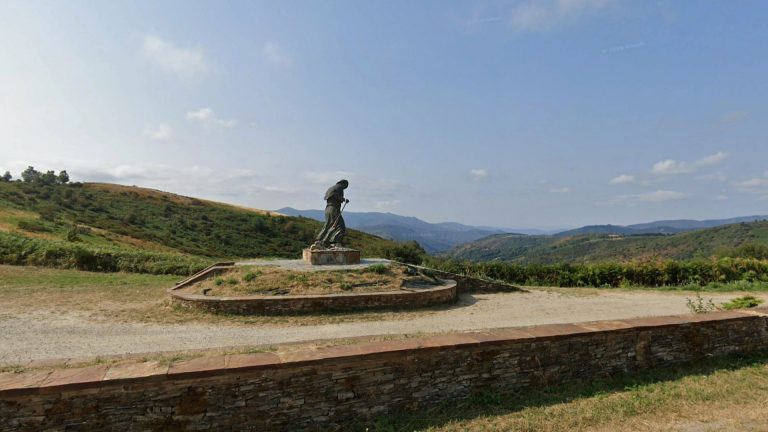
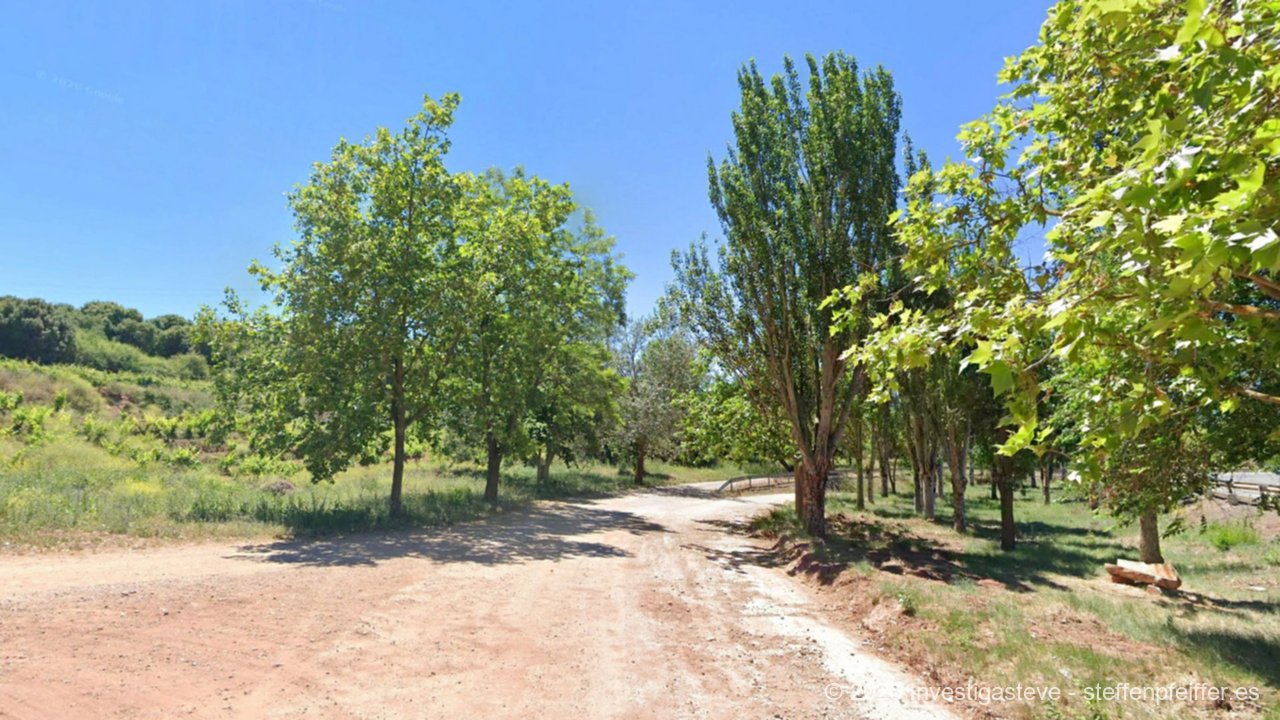
When the pilgrim leaves the royal residence city of Nájera behind and the path relentlessly leads him up the first steep slopes, an ascent begins that is far more than just a physical overcoming of altitude metres. The Alto de San Antón does not announce itself with monumental walls, but with a noticeable change in the elemental forces. The higher you climb, the more the protective microclimate of the Najerilla valley gives way to a rough, unfiltered freedom. Once at the summit, usually at an altitude between 630 and 700 metres, a panorama unfolds that takes your breath away. The Rioja Alta lies at the walker’s feet like a magnificent tapestry woven in purple and gold. The characteristic red soil of the region, the “Tierra Roja”, positively burns in the sunlight and forms a sharp contrast to the deep azure of the sky, which up here possesses an almost unreal depth.
The acoustic backdrop on the Alto de San Antón is characterised by a constant, almost orchestral roar of the wind that sweeps unhindered over the high plateau. It is a sound that does not disturb the silence, but first makes it audible. You perceive the rhythmic whipping of dry grasses against your hiking boots and the distant, metallic clicking of poles on the stony ground, which sounds like an echo of your own effort. Olfactorily, this place is dominated by the pungent spiciness of the macchia. It smells intensely of wild rosemary, of sun-burnt thyme, and the dusty, ferruginous aroma of the reddish sandstone that determines the geology of this pass. Tactilely, you feel the dry heat shimmering over the ground, while the cool wind simultaneously dries the sweat on your forehead – a constant interplay of temperatures that jolts the body awake.
Psychologically, the Alto de San Antón marks a moment of total presence. The view back shows the church towers of Nájera, already appearing small and distant, while the view forward points to an infinity that is both intimidating and alluring. It is the feeling of having crossed a threshold. You stand up here as a tiny point in a vast landscape, and yet you feel a deep connection to the earth. The weight of the backpack seems meaningless for a moment, as your eye tries to grasp the fractal geometry of the vineyards and wheat fields. It is a five-dimensional immersion into the heart of the Rioja, a place that grounds the pilgrim and simultaneously inspires him for the onward journey. Up here, you become aware of the historical causality: for millennia, this has been the point where travellers paused to orient themselves and gather new strength.
What This Place Tells
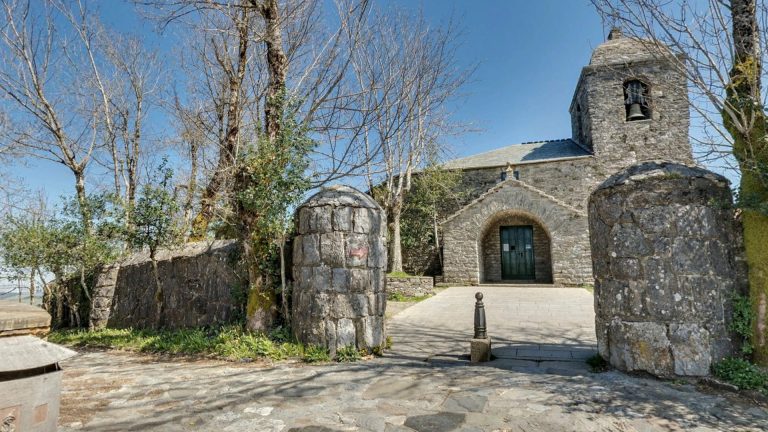
The Alto de San Antón is a stone witness to a turbulent past deeply rooted in Spain’s spiritual and martial identity. Its name derives from Saint Anthony the Great, the patron saint of the Antonians, a knightly order that played a crucial role in the care of pilgrims during the Middle Ages. Historically, this pass was far more than just a geographical landmark; it was a strategic outpost on the border between the often warring kingdoms of Castile and Navarre. Standing up here, you can almost physically grasp the historical tension. Imagine the watchtowers that once lined the slopes, and the knights who controlled the vast plains from here. The echo of the Reconquista resonates in every gust of wind that sweeps over the barren rock formations.
A central element of this place’s narrative is the ruin of the Ermita de San Antón, which once towered over the path like a lighthouse of faith. This chapel was not only a place of prayer, but also a spiritual sanatorium. The Antonians were famous for their healing arts, especially in treating “St. Anthony’s Fire” (ergotism), a dreaded disease in the Middle Ages. Pilgrims who had managed the arduous ascent often found here the first medical and spiritual refreshment after days of deprivation. The smell of healing herbs and old incense seems to be stored in the remaining wall remnants. When you run your hands over the roughly hewn sandstone, you touch the hopes and fears of millions of people who trod this same ground centuries ago. The tactile roughness of the stone tells of a time when survival on the Camino was a daily grace.
Furthermore, the Alto de San Antón was the scene of diplomatic and military encounters that shaped the fate of the Iberian Peninsula. It was part of a buffer zone where treaties were concluded and battles prepared. The historical causality is evident in the structure of the path itself: the old Roman road that once ran here forms the foundation for today’s pilgrim trail. This layering of time is fascinating – beneath the modern hiking boots lie the traces of Roman legionaries, medieval knights, and early modern traders. Psychologically, this knowledge imparts a deep calm. You realise that your own path is part of an infinite continuity. The pilgrim’s emotional metamorphosis is nourished by this historical depth; you are not just walking through a landscape, but through the accumulated time of a nation. The Alto de San Antón is thus an altar of permanence, where history has been carved into the rock.
Addresses & tips in Alto de San Antón
Camino Distances
The passage over the Alto de San Antón is an essential part of the stage between Nájera and Santo Domingo de la Calzada. Although the pass does not constitute a settlement of its own, it functions as a crucial topographical turning point.
Sleeping & Arriving
“Arriving” at the Alto de San Antón is a purely mental process, as there are no physical walls here to shelter you. It is reaching the zenith, a moment of completion of the first day stage after Nájera. Whoever reaches the pass height feels an immediate psychological relief. The body reports the end of the ascent, and the eyes feast on the reward. There is no hostel here in the classic sense, but the place functions as an “anchor point for the soul.” You find a spot in the lee of one of the few remaining walls or under a solitary oak. Tactilely, arriving is defined by setting down the backpack on the dry, warm ground. The sudden easing of weight on the shoulders leads to an almost dizzying lightness as you draw the cool air deep into your lungs.
For actual overnight accommodation, the pilgrim must look ahead. The village of Azofra, only a few kilometres away in the plain, offers the necessary infrastructure. In Azofra, the walker is greeted by one of the most modern and architecturally interesting hostels on the Way, the Albergue Municipal. Here, the tactile experience of arriving continues: cool tiled floors, clean communal areas, and the rare luxury of double rooms. Acoustically, the scene shifts from the roar of the wind on the pass to the distant ringing of church bells and the babble of languages of the pilgrim community. The smell of freshly washed laundry and the cool evening air streaming from the thick stone walls of the hostels forms the conclusion to a day that found its spiritual climax on the Alto de San Antón.
The psychological effect of this sequence – the solitude of the pass and the subsequent sense of security in the village – is essential for the pilgrim’s emotional metamorphosis. On the Alto de San Antón, you are thrown back upon yourself; you feel your own smallness and strength. In Azofra, however, you become part of the community again. This alternation between the “I” on the summit and the “We” in the hostel is the heartbeat of the Camino. Whoever pauses on the pass prepares their mind for the rest that awaits them below. It is a ritual process of arrival that begins already on the pass height, when you cast one last look back at the Rioja Alta and mentally prepare for the coming kilometres. The silence of the Alto de San Antón lingers as you bathe your feet in the cool water of the fountain in Azofra – a tactile confirmation of the work accomplished.
For those seeking an even more intense experience, the area around the pass offers opportunities for a brief pause for meditation or journaling. The smell of dry grass and the wide horizon create a space of clarity. You hear only your own breathing and the distant call of a bird of prey. This arrival at oneself, far from Wi-Fi and the noises of civilisation, is the true luxury of the Alto de San Antón. It is the preparation for the night, a transitional state in which time seems to stand still. When you finally begin the descent to Azofra, you carry the vastness of the pass within you, a psychological armour against the hardships of the coming days.
Eating & Drinking
On the Alto de San Antón, the gastronomy is as simple as the place itself: it consists of what you carry in your backpack and what nature offers in inspiration. But the food up here gains an intensity that no Michelin-starred restaurant can offer. When the pilgrim, seated on a stone, unpacks their piece of “Chorizo de La Rioja” and a slice of dark country bread, the meal becomes a five-dimensional celebration of the region. The smell of spicy paprika and garlic mingles with the aroma of the wild herbs that line the pass. Tactilely, you feel the firm crust of the bread and the oily texture of the sausage, which unfolds its full flavour in the midday sun. Each chew is an act of conscious energy intake, accompanied by the steady roar of the wind carrying the scent of the food over the high plateau.
A particular delight is the water you filled up in Nájera or at one of the fountains on the ascent. At the pass height, it tastes like life itself. The coolness of the water bottle in your hands and the tingling sensation of refreshment in your throat are tactile highlights. Those who were foresighted may have brought a few almonds or dried figs – small energy suppliers whose sweetness contrasts with the harsh surroundings. Psychologically, this picnic at the summit feels like a communion with the landscape. You do not just eat to become full; you absorb the essence of the Rioja. The vast wine fields you see from up here already give the imaginary sip of Rioja wine you are saving for the evening in Azofra a flavourful depth.
In the surrounding villages, reachable from the Alto de San Antón, the full culinary splendour of the region awaits. In Azofra or nearby Nájera, the “Patatas a la Riojana” beckon, a hearty stew of potatoes and chorizo whose spicy steam enlivens the senses. The creamy consistency of the potatoes, which have absorbed the sauce, offers a tactile pleasure on the palate. Acoustically, the meal there is accompanied by the clinking of glasses and the lively exchange among pilgrims. But the memory of the simple meal on the wind-swept pass often remains more present. It is the quality of simplicity that is taught up here. You learn that hunger is the best cook and that the best view is the finest spice. Eating on the Alto de San Antón is thus an exercise in gratitude and mindfulness.
A small apple or orange often concludes a rest on the pass, whose fruity acidity cleanses the mouth and refreshes the mind. The scent of the citrus peel, which you then rub briefly between your hands, forms an olfactory contrast to the dusty earth. While you pick up the last crumbs, you hear the distant ringing of a flock of sheep grazing somewhere on the lower slopes. This acoustic signal of civilisation reminds you that the rest is time-limited. You leave the “table” of nature strengthened and with a feeling of satiety that goes far beyond the physical. Eating and drinking on the Alto de San Antón is a ritual act of strength that solidifies the bond between the pilgrim and the ground they sanctify with every step.
Supplies & Logistics
Logistically, the Alto de San Antón is a place of “stock management.” Since there are no shops, cafés, or water sources at the pass height, preparation in Nájera is existential. The modern pilgrim must learn here to plan their self-sufficiency. The smell in the outdoor shops of Nájera, a mix of leather, high-tech textiles, and impregnation, is the olfactory prelude to this logistical feat. Tactilely, you check the fit of your backpack and the weight of the water bottles before starting the ascent. Everything you need on the Alto de San Antón must be carried up by your own strength. This physical necessity creates a psychological bond with your own equipment; the backpack becomes a vital companion, whose contents need to be well-considered.
Shopping: There are no shopping opportunities on the pass. Pilgrims must stock up in Nájera with sufficient provisions, especially dried fruit, nuts, and bread, as well as enough fluids.
Gastronomy: None available. The place is a purely natural area. The next opportunity for refreshment is offered by Azofra after the approximately 1.5 km descent.
Accommodation: There are no lodgings directly on the pass. Logistical planning provides for an overnight stay in Nájera, about 4.5 km away, or in Azofra, 1.5 km away.
Public Facilities: No toilets, no Wi-Fi, no power sources. A small shelter or the shade of the trees are the only “facilities” the place offers. Mobile phone reception is usually available, which is logistically important for emergencies.
The logistical significance of the Alto de San Antón lies in its function as a boundary marker. Up here, you often check the map or GPS app one last time to plan the further course through the Rioja Alta. Acoustically, logistics are characterised by the silence of civilisation – no traffic noise, no announcements. You hear only your own heart and the wind. Tactilely, you feel the ground: the ascent is often stony and demands sure-footedness, while the descent to Azofra is replaced by softer field paths. This logistical caesura – the change in ground conditions – signals to the body the transition to a new phase of the stage.
Psychologically, the logistical emptiness of the pass conveys a feeling of freedom and self-reliance. You are entirely dependent on yourself here, which promotes the emotional metamorphosis into a “true” pilgrim. Whoever crosses the Alto de San Antón has overcome a logistical hurdle. You learn to manage your own resources and to understand silence as part of your supply. The lack of distraction ensures that the senses are sharpened. You pay more attention to your own water balance and the signals of your muscles. The Alto de San Antón is thus a school of logistics that goes far beyond the material – it is the logistics of the spirit, which learns to be completely content with little.
Don’t Miss
– The panoramic view over the Rioja Alta: Enjoy the visual infinity and seek out the church towers of Nájera and the distant peaks of the Sierra de la Demanda.
– The remains of the Ermita de San Antón: Feel the tactile power of the old walls and let the historical causality of the Antonians work on you.
– The five-dimensional rest: Take 15 minutes for absolute silence to absorb the acoustic, olfactory, and tactile details of the summit.
– The reddish play of light: Especially in the early morning or late afternoon, the earth positively glows in a purplish sheen – a photographic and emotional highlight.
– Observing birds of prey: The thermals at the pass often attract buzzards and falcons; pay attention to the acoustic calls and majestic flight paths.
Insider Tips & Hidden Places
Away from the marked pilgrim path, hidden just a few metres in the undergrowth, you will find places of archaic power on the Alto de San Antón. One such place is a small, natural rock pulpit slightly south of the pass height. When you settle there, you are completely protected from the often gusty wind. A completely different acoustics prevails here: the roaring becomes a distant whisper, and you hear the busy buzzing of wild bees in the lavender bushes. The ground here is covered with a soft layer of pine needles, which tactically feel like a natural cushion. The smell of warm resin and dry rock is intoxicating. It is an insider tip for inner contemplation, a private altar in the vastness of the high plateau, where you can write in your journal undisturbed or simply watch the clouds.
Another hidden treasure is the almost completely overgrown foundations of an old border hut, located not far from the Ermita ruins. If you carefully push aside the tall grass, you can recognise the precise dry-stone wall technique of past centuries. It is a tactile puzzle – who dragged these stones here? Who sought shelter here from the winter snowstorms? In these wall remnants, you often find small stones or notes with wishes left by pilgrims. It is a place of collective psychology, an archive of hopes. The smell of damp earth under the stones and the coolness they radiate form a fascinating contrast to the sun-drenched surface of the pass. Here, the historical causality of offering help to strangers becomes tangible.
For the curious, there is also an old shepherd’s path that circumvents the summit in a wide loop and leads into a small, hidden valley shaded by ancient holm oaks. Here, the air is noticeably cooler and more humid than on the exposed pass height. You hear the distant gurgle of a small spring that often only flows in spring. The tactile quality of the moss on the north sides of the trees and the soft earth underfoot offer a welcome change from the hard gravel of the Camino. It is an olfactory paradise of ferns and damp forest floor. This place is an insider tip for those seeking a brief respite from the relentless vastness of the Rioja and wishing to enjoy the intimacy of a sheltered space.
One final tip: pay attention to the small geological layers in the sandstone at the roadside. In some places, fossils or special crystal inclusions come to light. When you run your fingers over these formations millions of years old, you feel the timeless dimension of the earth. It is a tactile grounding par excellence. These small details make the Alto de San Antón more than just a pass; it becomes a journey of discovery into deep time. You leave the summit not only with a view for the distance, but also with an awareness of the detail under your own feet. These hidden corners and insights are what complete the pilgrim’s emotional metamorphosis and transform the Way into an adventure of the senses.
Moment of Reflection
On the summit of the Alto de San Antón, the pilgrim often reaches a point of inner clarity, facilitated by the geographical height. Psychologically, the pass functions as a “reviewing point” of one’s own life. In the absolute silence and the wide view, you begin to see the things of everyday life from a new perspective. The exertions of the ascent symbolise the challenges you have left behind, while the view towards the plain of Azofra represents the future. The historical causality – that people with similar burdens and questions have stood here for a thousand years – gives you a deep sense of security. You are not alone in your search; you are part of an infinite chain of wanderers between worlds.
You might sit at the edge of the path, feel the rough stone against your back, and watch how the shadows of the clouds dance over the vineyards. The emotional metamorphosis from the hurried everyday person to the calm observer unfolds here almost by itself. You realise that growth is often connected with resistance – just as the wind shapes the trees up here, the path shapes the pilgrim’s character. The Alto de San Antón teaches us patience and the ability to accept the inevitable. Up here, there is no room for masks or role-playing; you are simply a human being in nature. This psychological nakedness is liberating. You breathe in freedom and leave the ballast of worries behind in the valley. When you finally begin the descent, you do so with a new lightness in your heart and the certainty that every summit is only a herald for the next horizon.
Camino of the Stars
This place lies on the Camino Francés, on the stage from Nájera to Santo Domingo de la Calzada. The sequence of places is:
Nájera → Alto de San Antón → Azofra → Cirueña → Santo Domingo de la Calzada
Did you also feel that moment of absolute freedom on the wind-swept summit of the Alto de San Antón, as your gaze swept over the purplish-red Rioja? Perhaps you paused in the ruins of the Ermita de San Antón and thought of the healers of centuries past, or you discovered one of the hidden corners away from the path? Share your personal impressions, your photos of the infinite vastness, or your thoughts on the spiritual power of this pass with us. Your story is a valuable part of the infinite mosaic of the Camino that makes this place so unique!
About the Author