A new stage day – entering the stage
The morning in San Martín del Camino begins with an almost tangible silence, broken only by the distant, rhythmic roar of the main road that has followed us like an unloved companion over the last kilometers of the Castilian plateau. The air is cool, laden with the dew that has settled on the dusty leaves of the poplars, and carries the pungent scent of damp earth and the distant smoke of the first chimney fires in the small clay houses of the village. When you take your first step out of the door of your hostel, you feel the anticipation in your limbs – it is that subtle moment of metamorphosis in which the monotone grey of the Páramo slowly gives way to the first splashes of color of the Maragatería. Your gaze wanders westward, where the horizon is no longer just an endless line, but begins to form gentle waves that appear like harbingers of a new world at the edge of your field of vision.
It is a departure that feels psychologically heavier than the purely physical distance would suggest. The monotony of recent days has laid itself over the mind like a sedation, yet today this crust breaks open. The clicking of your hiking poles on the hard asphalt of the Calle Real acts like a metronome, pulling you out of the trance of the Meseta. You feel the resistance of the backpack on your shoulders, the straps that have perfectly worked themselves into your tissue over the kilometers, and you notice that every breath goes deeper. In the distance, a change of light announces itself; the pale blue of the early morning gives way to a warm ochre that already hints at the red earth of the coming hills. Today, we leave the realm of infinity and enter a stone fairy tale that smells of chocolate and speaks of chivalric honor.
Route and elevation profile
Distance: 23.7 km
Elevation gain: ↑ 260 m / ↓ 110 m
Difficulty: Moderate. The technical challenge is low, but the psychological effect of the transition and the final ascent to Astorga demand concentration.
Special features: The historic crossing over the Paso Honroso, exposed paths in the Maragatería without shade, and the emotional view from Santo Toribio of the towers of the city.
Today’s route can be divided into two fundamentally different acts, separated by a monumental structure. The first part leads us for almost seven kilometers parallel to the N-120, a necessary evil mitigated by the anticipation of what is to come. Here, the ground is firm, the terrain flat, and orientation simple. But as soon as the towers of Hospital de Órbigo appear on the horizon, the path transforms. The crossing of the legendary bridge marks the point where we leave modern civilization behind.
The second part of the stage is an aesthetic pleasure. We leave the flat river valley of the Órbigo and ascend into the rolling hills of the Maragatería. Here, red earth paths dominate, lined with thorny scrub and fragrant broom. The inclines are moderate but steady, leading us up to viewpoints that allow the gaze to wander far over the land. The final ascent to Astorga occurs via the hill of San Justo de la Vega, where the city presents itself like an impregnable fortress before the snow-capped peaks of the Montes de León. It is a path that requires patience but rewards with one of the most spectacular city arrivals of the entire Camino Francés.
Variants and small detours
Shortly after Hospital de Órbigo, the pilgrim faces a classic decision that significantly influences the character of the rest of the day. The official route continues near the main road via Villares de Órbigo and Santibáñez de Valdeiglesias. This variant is scenically far more attractive, as it leads the pilgrim deep into the agricultural heart of the region. You walk through well-tended fields, small orchards, and over the typical red clay paths that, after a rain shower, form an almost sticky, intense connection with the soles of your boots. This route is about one kilometer longer but offers the silence and scenic depth you seek after the noisy start of the morning.
The alternative route runs more directly along the road. It is faster, but also more merciless in its acoustic burden. Experienced pilgrims almost invariably choose the route via Villares, as the psychological recovery in the hills far outweighs the extra time. There are also small paths that lead shortly before Astorga to the Crucero de Santo Toribio. It is worth not taking the shortest route through the industrial area here but making the small detour up to the cross. The moment you stand at the monument at the top and see the cathedral of Astorga flash in the sun for the first time is one of those magical waypoints that burn themselves deep into the emotional memory.
Description of the path – with all senses
The path out of San Martín is initially a haptic experience of resistance. The ground beneath your feet is hard, the asphalt does not give way, and the monotone sound of tires on the nearby road forms an acoustic wall. But with every kilometer you get closer to Hospital de Órbigo, the atmosphere changes. The light becomes softer, and the smell of fresh water and river vegetation heralds the Río Órbigo. When you finally stand before the bridge of the Paso Honroso, everything changes. Your hand glides over the cool, rough stone of the medieval parapet. You feel the unevenness of the centuries-old ashlars, polished smooth by millions of footsteps, and suddenly history is no longer just a narrative but a physical presence. The rushing of the river under the twenty arches acts like white noise, finally extinguishing the hustle of the road.
Behind Hospital de Órbigo, the five-dimensional immersion of the Maragatería begins. The ground changes from grey to a deep, almost unnatural rust red. Dust settles on your skin, mixes with sweat, and forms a thin patina that connects you with the land. It is a dry, earthy smell that tickles the nose, mixed with the sweetish aroma of dry grass and wild thyme, which releases its essential oils under your footsteps. The hills here are not steep, but they challenge your rhythm. You feel the strain in your calves, the pulling of tendons with every ascent, while your gaze sweeps over the wide, ochre-colored fields that stretch like a patchwork quilt to the horizon.
In Villares de Órbigo, the architecture of the region welcomes you: rough stone, heavy wooden doors, and a calm that feels almost tangible. Here, you hear the distant barking of a dog, the clatter of dishes from an open window, and the wind chime at a small bar. It is a world of deceleration. The historical dimensions become tangible as you pass the small churches along the wayside, whose bells mark the time with a deep, resonant tone. You feel small in this wide landscape, yet perfectly embedded in a chain of people who have felt these very stones beneath their feet for over a thousand years.
The ascent behind Santibáñez de Valdeiglesias is a psychological test. The path seems to wind endlessly through the low vegetation. The sun burns mercilessly here, as there are hardly any tall trees. You taste the salt on your lips, feel the heat rising from the red ground, and instinctively seek a rhythm that carries you. It is a meditative phase. Your mind wanders back to the knights who once patrolled here, and you wonder what they must have felt in their heavy armor under this sun. The historical causality here becomes an inner monologue about endurance and purpose.
Then, almost abruptly, you reach the ridge of the hills. The wind freshens, cools the sweat on your forehead, and brings a new smell – the scent of the mountains. In the distance, you see the silhouette of Astorga. The cathedral and the bishop’s palace rise like stone guardians from the sea of houses. It is a visual shock after the simplicity of the last hours. The colors of the city – a warm yellow and grey – contrast sharply with the deep blue of the sky and the green of the distant mountains. Your heartbeat quickens, not from exertion, but from excitement. The goal is within reach.
The descent to San Justo de la Vega leads you past small gardens where grapevines hang heavily on the fences. You hear the hum of insects in the midday heat and the distant ringing of the city bells. The Crucero de Santo Toribio is the place where you pause. You place your hand on the cool base of the cross, look back at the path you have covered today, and feel a deep satisfaction. The psychological metamorphosis is almost complete: from the exhausted pilgrim of the plain to the amazed visitor of a historic metropolis.
The last kilometers into the city are characterized by the hard sound of your steps on the pavement. You cross the valley of the Tuerto River, feel the moisture of the meadows, and then begin the final, steep ascent up to the city plateau. The walls of Astorga draw nearer, massive and protective. You step through the invisible gates of history. The smell changes radically: suddenly, a heavy, sweet note lies in the air. It is the aroma of roasted cocoa beans and vanilla – the legacy of the Arrieros that still shapes Astorga to this day. This olfactory welcome is like a reward for the hardships of the day.
When you finally reach the Praza Major, you are surrounded by the splendor of the Maragatería. The architecture is playful, almost fairytale-like, especially when your gaze falls on the palace of Gaudí. The haptic experience of the city is characterized by smooth granite and ornate wrought ironwork. You feel like you are in a different time. Arrival in Astorga is not merely the end of a stage, but immersion in a cultural oasis that appeals to all senses at once. You have arrived, exhausted, but filled with the aesthetic and historical impact of this place.
Intermediate places & special features
Hospital de Órbigo This village is inseparable from its bridge. The “Puente de Órbigo” is one of the most significant structures of the Camino. With its twenty arches, it spans the wide bed of the river, which today often carries little water but can become a raging torrent in spring. The village itself radiates a hospitable calm. Everywhere, there are references to the chivalric heritage, and the parish church of San Juan Bautista testifies to the importance of the Order of St. John in this region. It is a place that invites you to linger before heading into the solitude of the Maragatería.
Villares de Órbigo A picturesque village nestled on the slopes of the hills. Here, time seems to have stood still. Agriculture is still the timekeeper of life. Particularly worth seeing is the church of Santiago Apóstol, whose simple beauty forms a stark contrast to the opulence of Astorga. In Villares, one feels the down-to-earth nature of the people who have lived off the clay and grain for generations. A short stop at one of the fountains refreshes not only the body but also the spirit.
Santibáñez de Valdeiglesias This village marks the lowest point before the ascent into the actual Maragatería. It is known for its wine cellars, often dug into the soft ground. The architecture is functional but charming, characterized by the red clay of the surroundings. Behind the village begins a long passage through nature, one of the most beautiful on the entire Way, as it completely isolates the pilgrim from the modern world.
San Justo de la Vega The suburb of Astorga is functionally characterized but possesses with the hill of Santo Toribio one of the most spiritual points of the stage. Here, a monument commemorates Saint Toribio, the bishop of Astorga, who bid farewell to his city here. The place offers a 360-degree view encompassing both the wide plain and the majestic mountains. It is the perfect place for a final meditation before the bustle of the city.
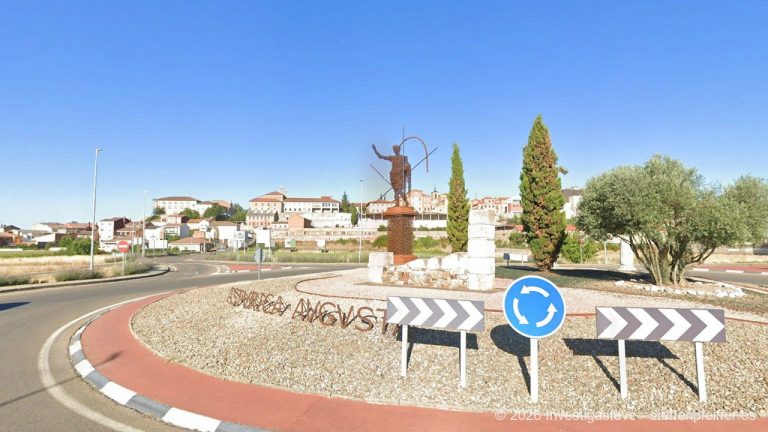
Astorga The capital of the Maragatería is a city of contrasts. Founded as the Roman camp Asturica Augusta, every street corner breathes history. The city wall encloses a core of monumental splendor. The Cathedral of Santa María combines Gothic, Renaissance, and Baroque into a harmonious whole. Directly next to it stands the Palacio Episcopal by Antoni Gaudí, a Neo-Gothic jewel that looks like an enchanted castle. Astorga is also the world capital of chocolate, a legacy of the muleteers (Arrieros) who brought cocoa beans from the northern ports inland.
Dining, accommodation & supplies
The supply situation on this stage is excellent, making it attractive for pilgrims who like to take frequent breaks. In Hospital de Órbigo, numerous cafés and small restaurants directly at the bridgehead specialize in the “pilgrim breakfast.” It is particularly recommended to stock up on water here, as the following passage through the hills can be very demanding in the heat. In Villares and Santibáñez, there are charming small bars that often offer homemade tortilla or regional specialties.
In Astorga, the selection of hostels and hotels is immense. From the traditional Albergue de Peregrinos (Siervas de María) to modern private accommodations and excellent hotels like the Hotel Gaudí, there is something for every budget and requirement. The gastronomy in Astorga is legendary. You should definitely try the “Cocido Maragato” – a hearty stew traditionally eaten in reverse order (first the meat, then the vegetables, lastly the soup). And of course, a visit to one of the numerous chocolate manufactories is a must, where you can buy the famous “Mantecadas” or hand-dipped chocolates.
Public facilities such as pharmacies, post offices, and supermarkets are plentiful in Astorga. It is the ideal place to stock up on supplies or replace equipment before heading into the more solitary mountain regions of Rabanal and the Cruz de Ferro. The city is compact and can be wonderfully explored on foot, repeatedly encountering small parks and viewing platforms that invite you to rest.
The special thing today
The absolute highlight and soul of this stage is the chivalric legacy of the Paso Honroso. In 1434, a holy year, the knight Suero de Quiñones challenged all passersby to a tournament. His goal was to free himself from a love chain he wore around his neck every Thursday. He swore to break 300 lances before moving on to Santiago. For weeks, a real knightly tournament took place on the meadows before the bridge, documented in detail by chroniclers. When you cross this bridge today, you step onto a stage of honor and romance. It is a place where the chivalric virtues of loyalty and courage still echo in the stones. You can almost hear the neighing of horses and the splintering of wood when you close your eyes.
A second, completely different “special” is the chocolate heritage of Astorga. While many cities in Spain define their history through wars or saints, Astorga does so through pleasure. The Maragatos were the transport kings of Spain. With their mule caravans, they brought goods from all over the world into the heart of Castile. Thus, cocoa also reached this city early on. The connection between rough transport culture and fine confectionery is unique. The Museo del Chocolate in Astorga is not a dry museum but a homage to the senses. It explains why this city housed over 60 chocolate factories in the 19th century. This contrast between the chivalric past at the bridge and the sweet industrial history in the city makes this stage one of the most multi-layered of the entire Camino.
Reflection at the end of the stage
When you walk through the illuminated streets of Astorga in the evening, the cathedral bathed in a warm gold and Gaudí’s palace appearing like an apparition from another world, you feel a deep gratitude. The path has challenged you today, led you through noise and heat, but has rewarded you with a beauty that seems almost unreal. You notice how your perception has changed. The details – the grain of a stone, the scent of a blossom, the smile of a local – weigh heavier than the mere kilometers.
Astorga is a place of arrival and pause. Here, Roman severity mixes with Modernist playfulness and Maragato pride. You realize that the Camino is not only a physical journey but a journey of discovery through the layers of time. The pain in your feet fades into the background as your mind is nourished by the tales of knights and chocolate merchants. You are ready for what is to come – the mountains of León await – but for this moment, you simply enjoy the magic of this city, which feels like a well-deserved gift at the end of a long day.
Camino of the Stars
This stage lies on the Camino Francés, on the stage from San Martín del Camino to Astorga. The sequence of places is:
| Stage | Start | Destination | Distance (km) | Elevation gain | Difficulty | Intermediate places |
|---|---|---|---|---|---|---|
| 21 | San Martín del Camino | Astorga | 23.7 | ↑ 260 / ↓ 110 | moderate | Hospital de Órbigo → Villares de Órbigo → Santibáñez de Valdeiglesias → San Justo de la Vega |
Did you lose yourself in the white towers of Gaudí’s palace, or did you drown the pain of the stage in the first cup of Astorga chocolate? How did it feel when you saw the city for the first time from Santo Toribio? Share your “sweet” Camino moment with us – your story is another star in the sky of the pilgrim.
About the Author

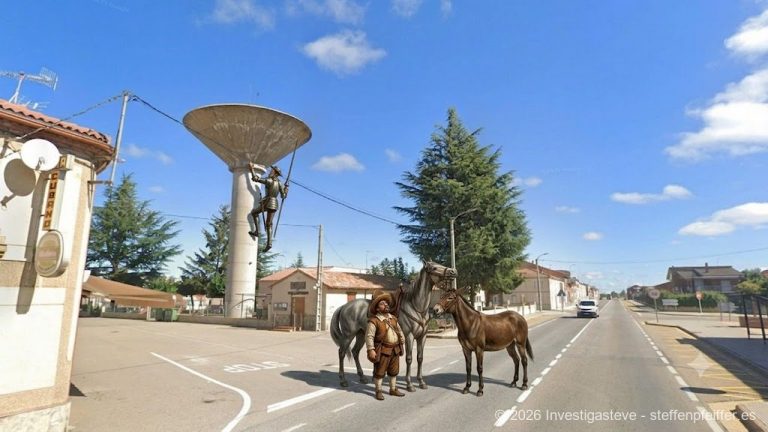
San Martín del Camino – The Stoic Rest in the Vast Leonese Páramo
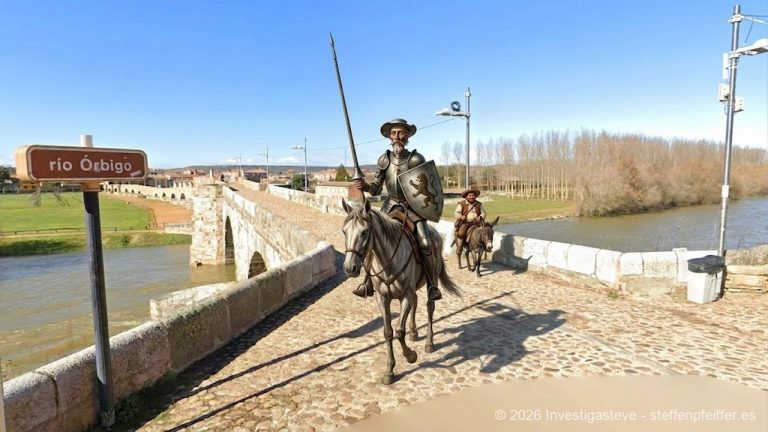
Hospital de Órbigo – The Stone Monument of Knightly Honor on the River of Time
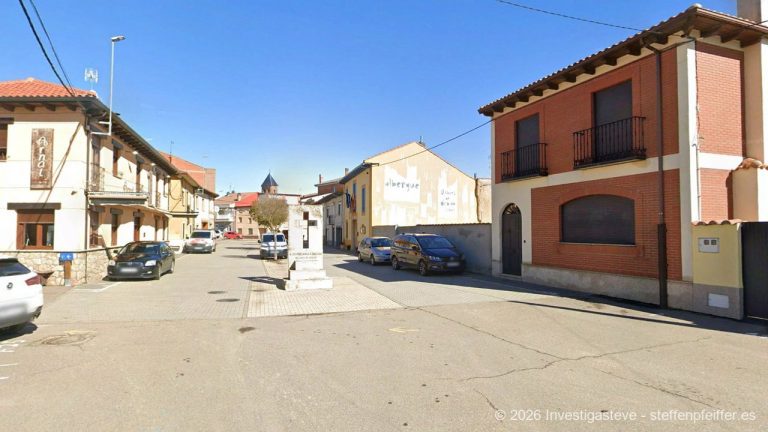
Villares de Órbigo – The Green Oasis of Silence in the Garden of León
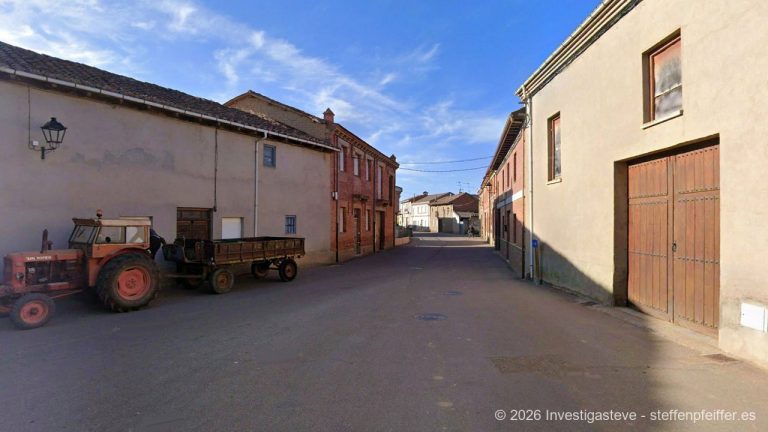
Santibáñez de Valdeiglesia – The Silent Heart in the Valley of the Churches
San Justo de la Vega – The Green Gate to the Maragatería in the Shadow of the Towers