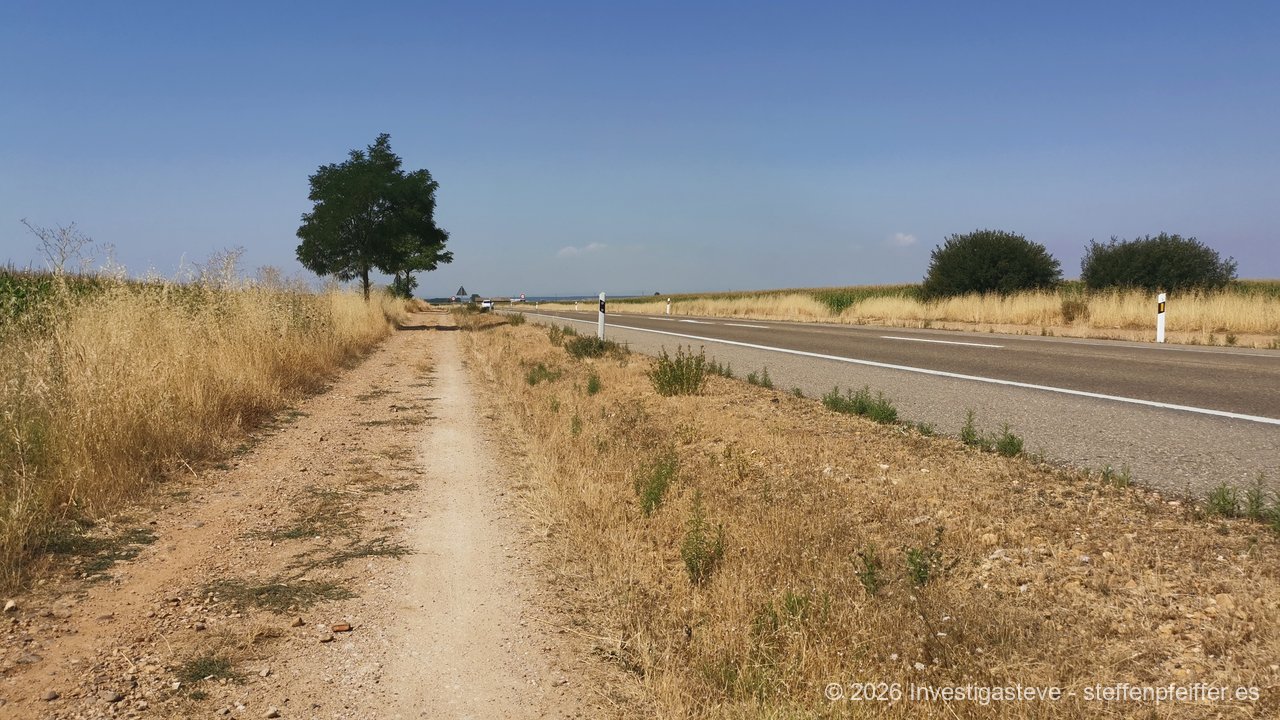
A new stage day – entering the stage
The morning in León does not begin with the silence of nature, but with the majestic awakening of a historic metropolis. When the first light of day makes the delicate stained glass windows of the “Pulchra Leonina” cathedral glow from within, a cool, almost sacred breath still lies over the city. You stand on the Plaza de Regla, and while the granite beneath your boots has stored the cold of the night, you feel the transition: the protective security of the splendid old town gives way to the uncertainty of the wide plateau. The smell of freshly roasted coffee mixes in the narrow alleys with the pungent scent of old stone and damp asphalt. It is a moment of caesura. Behind you lie the Gothic wonders and the comfort of civilization; ahead of you stretches the “Páramo Leonés,” a landscape that, in its simplicity and vastness, presents a psychological challenge all its own.
The departure from the city is a ritual leaving. While the rhythmic clicking of your hiking poles echoes on the cobblestones between the stately facades, you feel the urban fabric slowly dissolving. Gaudí’s magnificent Casa Botines and the Palacio de los Guzmanes glide past you like witnesses of a bygone time, now releasing you into the freedom of the plain. Yet this freedom comes at a price today: the noise of modernity. The path leads you through the Avenida de Quevedo, where the city takes off its shining mask and shows its industrial, pragmatic face. The air becomes heavier, laden with exhaust fumes and the bustling activity of early morning commuter traffic. But for the pilgrim, this is not an obstacle, but the necessary path through the labyrinth to find the true essence of the Castilian plateau. Every step away from the center is a step into the meditative monotony that will shape this day.
Route and elevation profile
Distance: 24.6 km
Elevation gain: ↑ 160 m / ↓ 130 m
Difficulty: Moderate. Physically, the stage is not demanding due to the slight inclines, but the psychological burden of the asphalt proportion and proximity to the N-120 main road is high.
Special features: Long urban exit from León, monotonous “Andaderos” (pilgrim paths) parallel to the road, exposed sun exposure without significant shade in the second part of the stage.
Today’s route is characterized by an almost mathematical linearity. After leaving the city limits of León behind, the path rises gently, almost imperceptibly, towards the high plateau. The elevation profile shows no dramatic fluctuations; it is a steady wave-riding on the back of the Páramo. The ground changes from urban concrete to the typical “Andaderos” – artificially created, gravel paths that run like a narrow ribbon between the noisy main road and the endless agricultural areas. These paths are haptically demanding; the fine gravel crunches under every step and sends vibrations up to the knee joints, while the gaze often gets caught on the crash barriers of the road.
The challenge of these 24.6 kilometers lies in the auditory and visual sensory overload of the first half, followed by an almost meditative emptiness in the second half. There are hardly any natural barriers or protective forests. The sun, if it shines, burns unhindered on the bright gravel and creates a shimmering light that optically distorts distances. It is a stage that trains rhythm. Here, the mind is not distracted by spectacular panoramas, but thrown back to the essential: your own breath, the sound of steps, and the slow, almost agonizing advance of the kilometer markers. The Páramo Leonés demands endurance and an inner fortitude that defies external stimuli.
Variants and small detours
Shortly after the Basilica in La Virgen del Camino, every pilgrim faces one of the most important strategic decisions of the Camino Francés. Here, the path divides into two fundamentally different worlds. The official route, which we describe today, follows the N-120 via Valverde de la Virgen and Villadangos del Páramo. It is the direct, functional connection to San Martín del Camino. Those seeking efficiency, appreciating proximity to services, and having no problem with the permanent presence of the road, choose this path. It is the historical axis that has channeled trade routes and pilgrim streams for centuries.
The alternative leads south via Villar de Mazarife. This variant is about four kilometers longer but offers a complete escape from the acoustic burden of the main road. It leads deep into the heart of the solitude of the Páramo, over unpaved field paths and through small, sleeping villages largely untouched by mass tourism. The decision between the “road route” and the “Mazarife variant” is often a matter of type: do you seek the historical, direct connection with all its modern accompaniments, or do you sacrifice time and energy for the absolute silence of nature? For today’s report, we focus on the main path, as it includes the architectural highlights such as the Basilica of La Virgen del Camino.
Description of the path – with all senses
The path begins with the stark contrast between the aesthetic perfection of León’s old town and the harsh reality of its suburbs. When you cross the bridge over the Río Bernesga, you feel the trembling of the metal beneath your feet, while below you the water flows sluggishly southwards. The smell changes abruptly here; the aroma of pastries from the bakeries of Calle Ancha is replaced by the smell of rubber, exhaust fumes, and construction dust. It is a haptic experience of hardness. The asphalt of the Avenida de Quevedo does not give way; every step is harshly cushioned, and the monotonous surroundings of Trobajo del Camino force you to turn your gaze inward or focus on the distant goal on the horizon.
After about seven kilometers, you reach the ascent to La Virgen del Camino. Here, the atmosphere changes. The Basilica appears like a Modernist monolith on the edge of the high plain. When you stand before the bronze doors, you feel the coldness of the metal and the power of the art of Josep Maria Subirachs. The figures look gaunt, almost ascetic, and reflect the psychological state of the pilgrim preparing for the emptiness of the Meseta. Inside the church, a cool silence envelops you, completely extinguishing the noise of the road for a moment. It is a place of spiritual decompression before the path finally releases you into the expanse.
Behind La Virgen, the actual Páramo begins. The “Andadero” is your constant companion. The sound is now a rhythmic crunching of limestone and gravel. It is an auditory anchor. To your right, the world rushes by in the form of trucks and cars, a constant roar that crashes against your senses like a surf. To your left, fields stretch out, whose colors vary from a dusty brown to a shimmering gold depending on the season. You taste the fine dust on your lips, a mixture of earth and dry wind. The haptic experience of heat is intense here; there is no shade, the sun reflects off the bright ground and makes the air shimmer before your eyes.
In Valverde de la Virgen, the Camino offers a brief moment of intimacy. The small alleys of the village dampen the road noise. You hear the splashing of a fountain, a sacred sound in this dry world. The water on your skin is a shock of freshness, a small victory over the relentless sun. You smell the dry hay stored in the barns and the slightly acidic scent of wine maturing in the deep cellars of the region. But the pause is short; the path inevitably pulls you back onto the ribbon of gravel leading you further west.
The section to San Miguel del Camino is a test of mental discipline. The landscape remains static. You see the village on the horizon, yet it seems not to get closer. The historical causality becomes tangible here: you are walking on a route that has been the lifeline of this region since the Middle Ages. Then as now, this path is a necessary evil to connect the great centers. The psychological metamorphosis begins here: you stop hating the road and begin to accept it as part of reality. The monotony becomes a form of meditation. Your mind detaches from your body, and the kilometers pass in a trance-like state.
Villadangos del Páramo welcomes you with a weight of history. Here, on these fields, decisive battles took place in the 12th century between the troops of Urraca of Castile and Alfonso I of Aragon. As you walk through the village, you feel the archaic power of the ground. The architecture is functional; clay and brick dominate. The smell of agricultural machinery and diesel mixes with the scent of stews being prepared in the hostels for the pilgrims. It is a world of survival and tenacity, qualities you will also need for the last kilometers of this day.
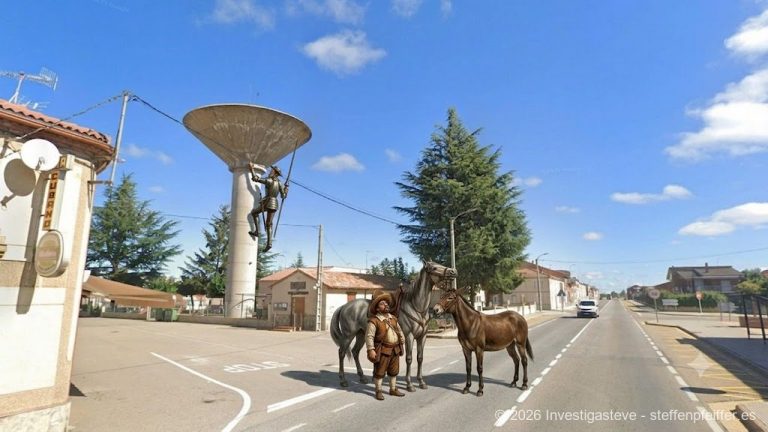
The final section to San Martín del Camino stretches like an elastic band. The Andadero seems even narrower here. You feel the fatigue in your calves, the steady throbbing in your feet. Psychological exhaustion is highest here, as the goal is not yet visible, but energy reserves are dwindling. The wind brushes over the low bushes and creates a mournful sound that mixes with the distant hum of engines. But then, almost abruptly, the water tower of San Martín appears – an unaesthetic but welcome landmark of arrival.
Arriving in San Martín, the acoustics change again. As soon as you leave the main street and turn into the side paths, the silence returns. The village seems like an oasis after the storm. The ground beneath your feet is now firm clay again, vibrating less than the gravel. You smell the dinner being served in the small bars and feel the relief of setting down your backpack. The haptic experience of hot shower water and the feeling of clean clothes are the rewards for a day that challenged your mind more than your body. You have not conquered the Páramo today; you have become part of it.
Intermediate places & special features
León The city is far more than just a starting point. With its cathedral, which houses one of the most beautiful stained glass ensembles in the world, and the Basilica of San Isidoro, the “Pantheon of Kings,” it is the cultural heart of the region. The gastronomic scene in the “Barrio Húmedo” offers the perfect foundation for the coming stages. León represents the splendor of the old kingdom and sets a high standard for the pilgrim’s aesthetic expectations.
Trobajo del Camino This place is now almost completely merged with León. It is emblematic of the industrial development along the Camino. Nevertheless, it preserves small relics of the past, such as the chapel of Santiago. For the pilgrim, Trobajo is a place of mental adjustment: away from tourist strolling, towards determined forward progress.
La Virgen del Camino A spiritual fixed point. Legend says that in 1505, the Virgin appeared to a shepherd here. The present Basilica, built in the 1950s, is a masterpiece of Spanish Modernism. The 13 monumental bronze statues on the facade (the Apostles and Mary) are of dramatic intensity. They form a sharp contrast to the medieval architecture usually found on the Way, showing that the Camino is a living, constantly evolving path.
Villadangos del Páramo A place with a warlike past. The church of Santiago shows depictions of the Battle of Villadangos inside. The village appears robust and weather-beaten, just like the people who have cultivated the barren soil of the Páramo here for centuries. For pilgrims, it is an important resting place, offering everything necessary to tackle the final stage of the day.
San Martín del Camino A typical linear village of the Páramo. It is functional and geared to the needs of agriculture and pilgrims. There is no pomp here, but honest hospitality. The place marks the end of a stage of endurance and offers the necessary rest to process the impressions of the main road and prepare for the chivalric splendor of Hospital de Órbigo the next day.
Dining, accommodation & supplies
The supply situation on this stage is excellent despite the landscape monotony. Since the path runs almost constantly near the N-120, there are bars, cafés, and small supermarkets in every village. Gastronomy: In La Virgen del Camino, you should take the opportunity to have a second breakfast in one of the modern bars. Villadangos del Páramo is known for its hearty pilgrim menus, often containing regional specialties like “Morcilla de León” (blood sausage). Accommodation: San Martín del Camino offers several hostels, differing in character. The municipal hostel is functional and offers the classic pilgrim vibe. Private hostels like “La Casa Maragata” are often more personally run and emphasize a communal atmosphere at dinner. Public facilities: Pharmacies and ATMs are found in León, La Virgen del Camino, and Villadangos. San Martín is more simply equipped but has the basic infrastructure for an overnight stay.
The special thing today
The outstanding feature of this stage is undoubtedly the Basilica of La Virgen del Camino. In a world often dominated by Romanesque and Gothic on the Camino, this structure acts like a futuristic exclamation mark. The architect Francisco Coello de Portugal created a space here that uses light and shadow in a completely new way. Particularly impressive are the doors by Subirachs, who also worked on the Sagrada Família in Barcelona. The haptic weight of these doors and the almost painfully gaunt figures of the Apostles perfectly capture the suffering and determination of pilgrimage. It is a place that provokes and stimulates thought – a modern shrine for an ancient longing.
Another special aspect is the phenomenon of the “Andaderos.” These paths are a direct result of efforts to separate the pilgrim path from the dangerous main road. They are a compromise between safety and aesthetics. Here, the history of the Camino in the 21st century becomes tangible: how do you deal with millions of people wanting to walk an ancient route in a motorized world? The Andadero is the answer. It is not a “beautiful” path in the classical sense, but it is a path of community. Here, you meet pilgrims from all over the world, all swallowing the same dust and enduring the same roar of the road. This shared “hardship” bonds people together and often leads to profound conversations that might not find space in a more distracting landscape.
Finally, the psychological significance of the Páramo itself must be emphasized. It is a landscape of the “in-between.” You have left the mountains behind León and have not yet arrived in the mountains before Astorga. This stage is the heart of the Castilian plateau in the province of León. It forces the pilgrim into introspection. When external stimuli are minimized, the inner voices grow louder. It is the day when many pilgrims question their motivation and precisely through that find a new, deeper determination. The special thing today, therefore, is not what you see, but what you discover within yourself as you accept the monotonous rhythm of the gravel.
Reflection at the end of the stage
In the evening in San Martín del Camino, when the sun hangs low over the fields and the water tower casts a long shadow over the village, a strange calm sets in. The noise of the N-120 is now only a distant hum, almost like the sound of the sea in a shell. You sit perhaps in front of your hostel, your feet still burning a little, and the fine film of dust on your skin reminds you of every single kilometer. In this moment of silence, you recognize the quality of today. It was not a day of spectacular photos, but a day of mental mastery. You have not only endured the monotony, you have walked through it.
The reflection of this day leads you to the realization that the Camino is a mirror of life. There are phases of splendor (León) and phases of hard, grey work (the Páramo). Both belong inseparably together. Without the discipline of today’s march, the arrival at the magical bridge of Hospital de Órbigo tomorrow would be only half as valuable. You feel a new form of pride – a chivalric pride not based on external victories, but on inner steadfastness. The dust of the Páramo is not dirt; it is a badge of honor. Tomorrow, you will dive back into history, but tonight you simply enjoy the simple happiness of arriving in the simplicity of a linear village.
Camino of the Stars
This stage lies on the Camino Francés, on the stage from León to San Martín del Camino. The sequence of places is:
| Stage | Start | Destination | Distance (km) | Elevation gain | Difficulty | Intermediate places |
|---|---|---|---|---|---|---|
| 20 | León | San Martín del Camino | 24.6 | ↑ 160 / ↓ 130 | moderate | Trobajo del Camino → La Virgen del Camino → Valverde de la Virgen → San Miguel del Camino → Villadangos del Páramo |
Did you face the challenge of the N-120, or did you find the silence in the Páramo? Which “lance” did you have to break for yourself on this stage, when the asphalt seemed to have no end? Share your chivalric moment of endurance with us – your experience is a signpost for all who come after you.
About the Author

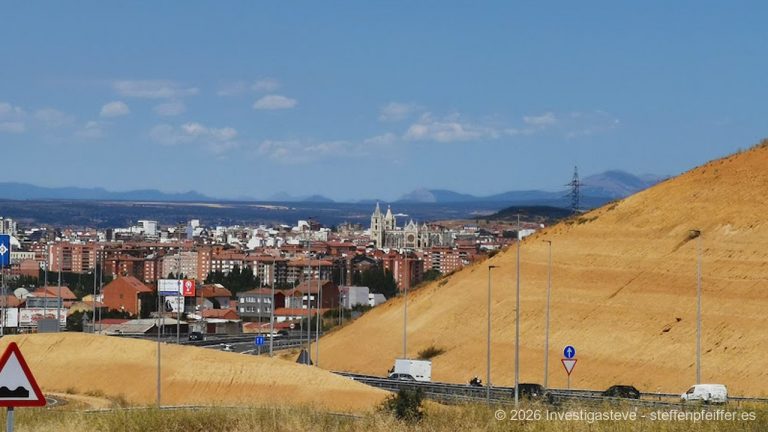
León – The Radiant Heart of Kings at the Gate of Infinity
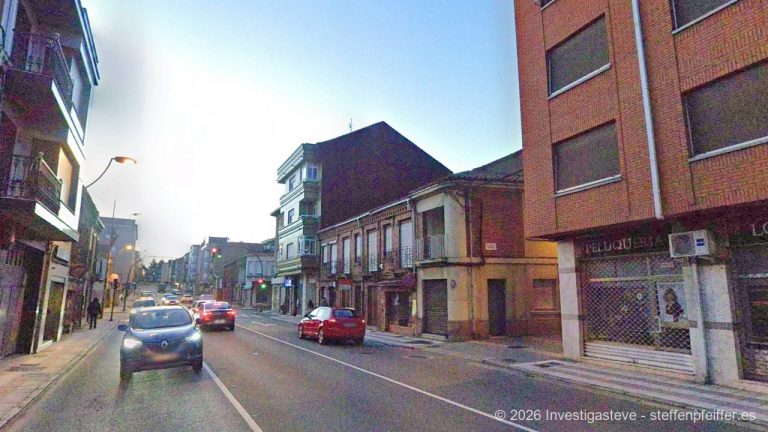
Trobajo del Camino – The Urban Portal to the Infinite Freedom of the Meseta
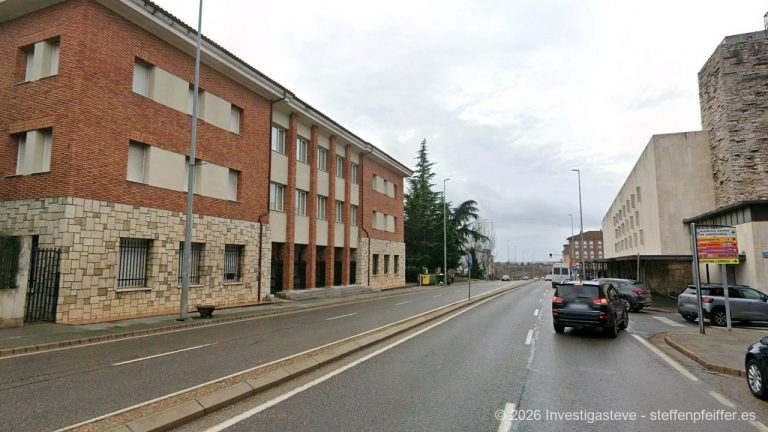
La Virgen del Camino – The Modern Sanctuary at the Gate of Infinity
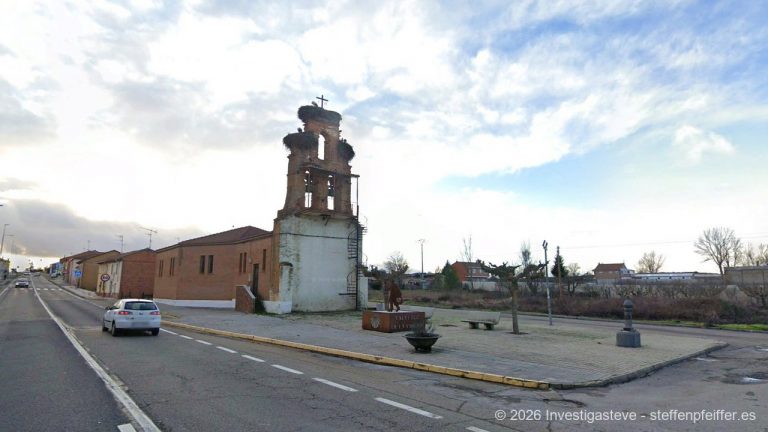
Valverde de la Virgen – The Spiritual Hinge on the Edge of the Meseta
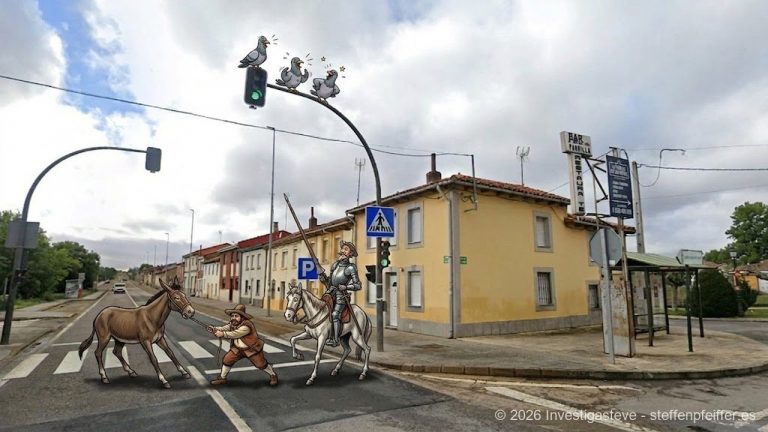
San Miguel del Camino – The Knightly Guardian at the Edge of Infinity
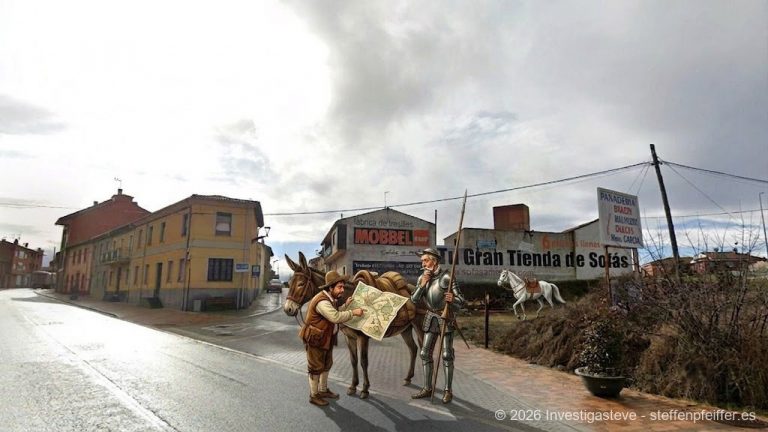
Villadangos del Páramo – The Stone Echo of History in the Wind of the Plateau