A new stage day – entering the stage
The morning in Mansilla de las Mulas begins with a ritual farewell to the protective security of the medieval city walls. When you pass through the Puerta de la Concepción, the world still lies in a twilight grey, and the coolness of the night seems deeply stored in the massive pebble walls. The smell of damp clay and the nearby river Esla hangs in the air, mixed with the first, pungent scent of burning poplar wood from the chimneys of the old houses. It is that moment of transition, in which the meditative silence of the Meseta, which has accompanied you like a second skin for days, slowly gives way to a new, vibrating expectation. Your gaze wanders westward, where the horizon still appears flat, but the knowledge of the approaching metropolis of León already lies in the air like an electric tension.
The departure from Mansilla is more than just physical progress; it is a psychological awakening. The rhythmic clicking of your hiking poles on the cobblestones acts like a metronome, pulling you out of the trance of recent days. As soon as you cross the massive bridge over the Esla, you feel the expanse of the land spreading before you, yet it feels different than in the solitude of the provinces of Burgos or Palencia. Here, in the approach to the former capital of the kingdom, the wind already carries the distant sounds of civilization. It is a departure between two worlds: behind you, the arcadian peace of the clay buildings; ahead of you, the “architecture of illumination” waiting to flood your senses with light and splendor.
Route and elevation profile
Distance: 18.5 km
Elevation gain: ↑ 140 m / ↓ 110 m
Difficulty: Easy. The stage is short and technically unremarkable, but the high proportion of asphalt and proximity to the main road challenge mental discipline.
Special features: Historic bridge crossing in Villarente, gentle ascent to the Alto del Portillo viewpoint with the first panoramic view of León, urban entry into the provincial capital.
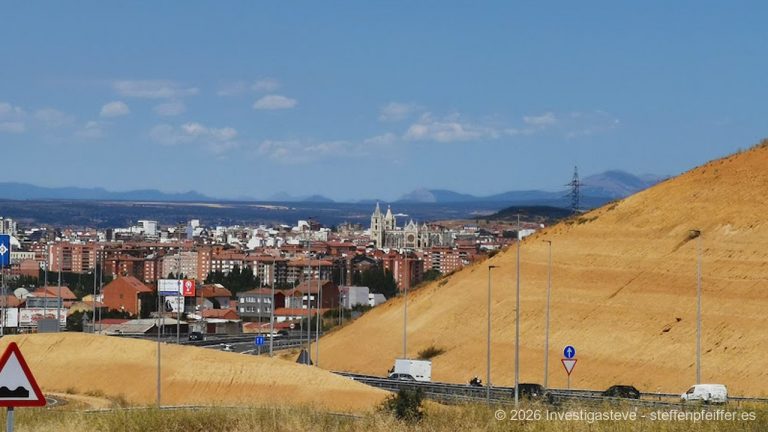
Today’s route is a study in contrasts. On the first kilometers, the typical field paths of the Castilian plateau still dominate, but very soon the N-601 main road dictates the rhythm. The elevation profile is initially gentle; it resembles a soft wave lifting you over the Porma river valley. The ground alternates between compacted earth and the hard, unyielding asphalt of the service roads, subjecting your soles to a haptic test. The psychological apex of the stage is reached at the Alto del Portillo. Here, the monotony of the road breaks open, and the terrain grants you one of those moments for which you walk the Camino: the first view of the towers of León Cathedral.
The final descent into the urban basin of León is a journey through time – from the functional suburbs of the 21st century to the Gothic heart of the Middle Ages. The inclines are negligible, but the visual and acoustic density increases with every kilometer. It is a stage of approach that requires little physical strength but a high attention span to perceive the fine nuances of change as you immerse yourself from the dust of the country road into the splendor of the royal city.
Variants and small detours
There are no significant official variants on this section, as the route is largely fixed by the geography of the river courses and the historical alignment of the main road. Nevertheless, at Puente de Villarente, the attentive pilgrim has the opportunity to change perspective. Instead of blindly following the modern pilgrim path alongside the road, it is worth pausing for a moment to study the old Roman bridge construction in its full length. These small conscious delays are the true detours of the mind on a stage that otherwise urges haste.
A small, unofficial detour shortly before the Alto del Portillo leads via narrow paths through the low vegetation of the hill ranges. While the main path is often dusty and exposed, these tiny deviations allow you to feel the wind on the Lomas de la Sobarriba unfiltered before entering the stone labyrinth of León. It is the choice between direct, functional progress and the slow, almost reverent approach to the city of kings.
Description of the path – with all senses
When you leave Mansilla de las Mulas, the first thing your senses register is the cool dampness of the Esla plain. You hear the soft gurgling of the water under the bridge arches, an archaic sound that has accompanied walkers for centuries. The ground beneath your feet is still soft here, almost yielding, a last greeting from the fertile fields before the hard asphalt of the N-601 takes command. The smell is earthy and fresh, a bouquet of dew-kissed grass and the distant scent of sheepfolds, maintaining the connection to the agricultural tradition of the Meseta like an invisible thread.
But soon the acoustic backdrop changes radically. The monotonous roar of car tires on the nearby main road becomes a constant companion. It is a modern test of patience. You feel the vibrations of the heavy trucks passing by in the soles of your hiking boots. It is a haptic reminder that the Camino is not an isolated open-air museum, but a living vein through modern Spain. In this moment, the psychological metamorphosis begins: you learn to block out the noise and focus on the inner rhythm of your breath, while your eyes search for the small details along the wayside – a weathered scallop shell on a boundary post or the tenacious survival of wild thyme in the dust of the roadside ditches.
At Puente de Villarente, the path reaches a historical density that is almost physically tangible. When your hand glides over the rough, sun-warmed stone of the monumental bridge, you feel the unevenness left by two thousand years of history. The bridge with its twenty arches looks like a stone backbone over the Río Porma. Here, the smell of stagnant river water mixes with the metallic aroma of iron and concrete. The clicking of your poles on the stone slabs produces a hollow, resonant sound that, for a brief moment, transports you back from the 21st century to the era of the Roman legionaries.
The subsequent ascent to Arcahueja is a haptic challenge of heat. The red earth of the path reflects the sunlight, and you taste the fine dust on your lips, a salty mixture of exertion and Castilian soil. The landscape here becomes more undulating, almost nervous. In Arcahueja itself, time seems caught in a deep, afternoon slumber. You hear the distant barking of a dog, sounding strangely sharp in the dry air. The smell of dry hay and the sweetish scent of jasmine climbing over some garden walls offer a brief olfactory respite before the path leads you further up to the Lomas de la Sobarriba.
The Alto del Portillo is the emotional anchor point of this day. When you reach the summit, the wind suddenly breaks over you with new force, cools the sweat on your forehead, and carries the first greeting from the distant mountains of León. And then it lies before you: León. The towers of the cathedral rise like delicate needles from the sea of houses, and the glass of the windows reflects the sunlight in a spectrum that almost hurts the eyes. It is a visual shock after the earthy tones of recent days. You feel a tingling in your fingertips, a mixture of relief and awe. The historical causality here becomes certainty: you stand at the place where millions before you cast their first glance at their goal.
The descent into León is a journey through the layers of urbanity. You pass through suburbs where the smell of freshly baked bread from industrial bakeries competes with the scent of diesel exhaust. The acoustic backdrop condenses into a crescendo of city noise, voices, and the distant ringing of church bells. The asphalt here is relentlessly hard, and you feel every joint as you walk down the Avenida de Madrid. Yet the anticipation acts like an anesthetic. You pass modern glass buildings reflecting in the puddles of last night and notice how your inner focus shifts from the expanse of the landscape to the complexity of the architecture.
As soon as you cross the bridge over the Río Torío, the texture of the city changes again. You enter old León. The air becomes cooler in the narrow alleys, and the smell of old stone, incense, and roasted meat from the bodegas of the Barrio Húmedo envelops you. The light is filtered through the narrow rows of houses and falls in long, golden fingers onto the cobblestones. You hear the murmur of people, the clatter of dishes, and the laughter in the cafés – a lively, pulsating energy that carries you like a wave.
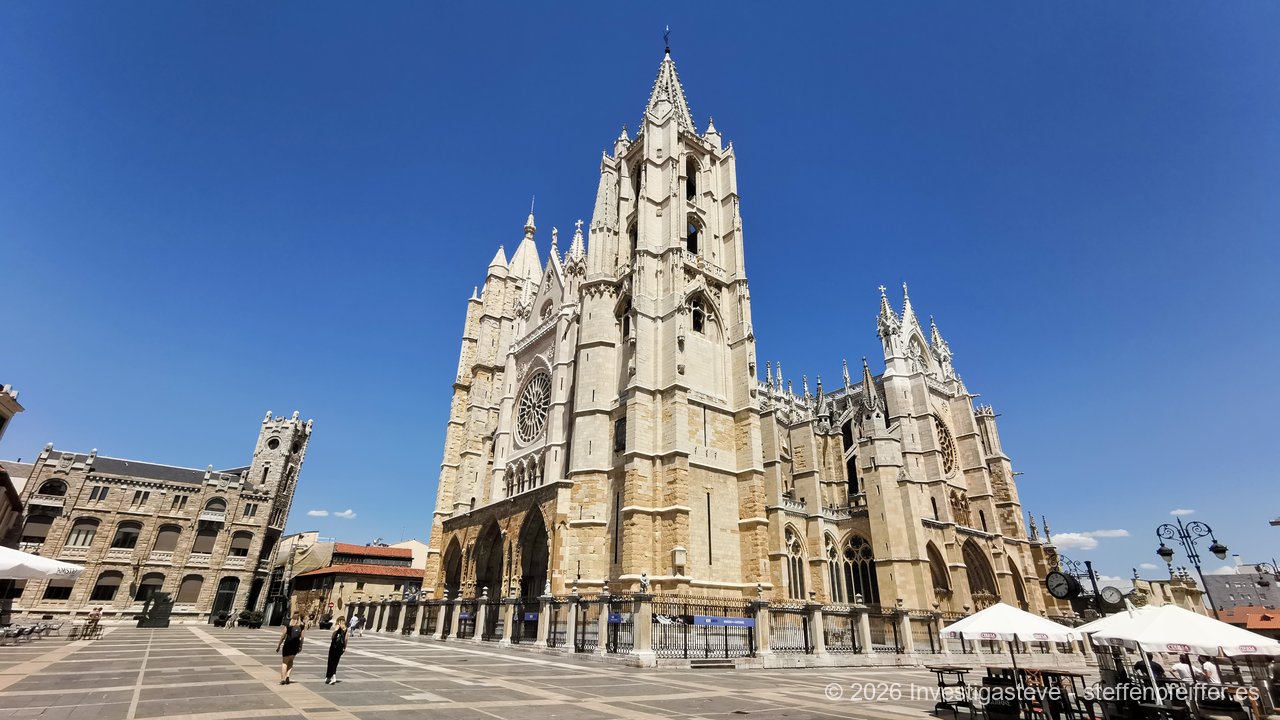
The moment you finally stand before the cathedral is a five-dimensional immersion of the highest order. The visual impact of the facade, the haptic feel of the smooth granite of the plaza, the smell of wax and history streaming from the portal, and the knowledge that you now stand in the heart of one of the most powerful medieval kingdoms. Your mind comes to rest, while your body still carries the rhythm of the country road. It is a metamorphosis from walker to guest of kings. Arrival in León is not merely the end of a stage, but the entry into a cathedral of light and time.
Intermediate places & special features
Mansilla de las Mulas – This town is a stone archive of the Middle Ages. The mighty city walls from the 12th century, built with round pebbles from the riverbed of the Esla, lend the place an archaic security. Particularly worth seeing is the ethnographic museum of the province of León, housed in a former monastery. In the shady arcades of the Plaza Mayor, one still feels the spirit of the traders and muleteers who gave the town its name. It is the perfect place to mentally prepare for the leap into the big city.
Puente de Villarente – Here stands one of the most important structural testimonies of the medieval Way. The bridge over the Porma is a technical masterpiece of adaptation. Over the centuries, it was repeatedly expanded and reinforced to withstand the pilgrim streams and the seasonally fluctuating water masses. In the chronicles of the Middle Ages, it was often mentioned as a place of rest and of danger from robbers – today it is a place of reflection on the constancy of paths and bridges.
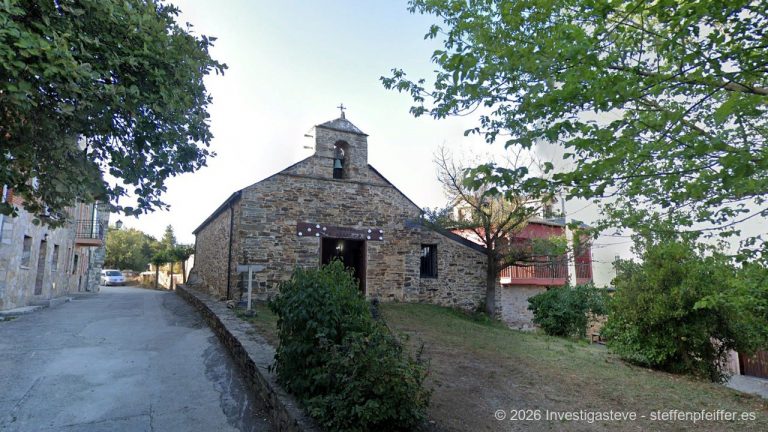
Arcahueja – A small village that appears like a relic of the Meseta near the big city. The church is simple but offers a moment of silence. Here is the last opportunity to enjoy the simplicity of village life before the urban belt of León begins. The inhabitants of Arcahueja have been accustomed to the passing of pilgrims for generations and exude a stoic serenity that is contagious.
Alto del Portillo – This is more than just a viewpoint; it is a geographical monument of hope. On the summit stands a large iron cross, often decorated with small stones and personal messages from pilgrims. From here, the strategic location of León in the valley basin can be perfectly understood. You see not only the cathedral but also the expanse of the plain you have left behind and the first foothills of the Cantabrian Mountains to the north.
León – The capital of the kingdom of the same name is a treasure chest of European culture. The Cathedral of Santa María de Regla, also known as “Pulchra Leonina,” is famous for its 1,800 square meters of stained glass, creating a light that is unparalleled worldwide. In addition, the Basilica of San Isidoro impresses with its “Pantheon of Kings,” the “Sistine Chapels of Romanesque art.” Modernity also has its place here: Antoni Gaudí’s Casa Botines is one of the master’s few works outside Catalonia, lending the city a fairytale note.
Dining, accommodation & supplies
The supply situation on this stage is excellent, making the short distance even more pleasant. Everywhere along the N-601, there are small bars and gas stations that have adapted to pilgrims.
Gastronomy: In Puente de Villarente, there are traditional inns offering hearty Castilian soups. In León itself, a visit to the “Barrio Húmedo” (the wet quarter) in the evening is a must. Here, free tapas are served with every drink – from spicy Morcilla to the finest Cecina (air-dried beef).
Accommodation: The choice in León ranges from the traditional Albergue of the Benedictine nuns (Santa María del Carbajal) in the middle of the old town to modern hostels for flashpackers. For those who prefer luxury, the Parador de San Marcos, a former pilgrim hospital and monastery, offers one of the most exclusive accommodations in Spain.
Public facilities: In León, there is everything the heart desires: specialized outdoor shops for new equipment, post offices, pharmacies, and excellent medical care.
The special thing today
The absolute highlight and unique selling point of this day is the “architecture of illumination” in León Cathedral. While other cathedrals impress with their massive stone weight, the Pulchra Leonina seems built of light. When you enter the interior while the sun is in the south or west, you experience a chromatic explosion. The light is filtered through the medieval stained glass windows and transforms the grey stone into a canvas of ruby red, sapphire blue, and emerald green patches. It is an almost psychedelic experience that frees the pilgrim from the physical weight of their journey. This light is not merely an effect; in the Middle Ages it was a theological statement: light as the direct image of God.
Another special element is the presence of Antoni Gaudí in León. Casa Botines, a Neo-Gothic palace that resembles a fortified castle, shows the versatility of the Catalan genius. The fact that Gaudí placed such a monument precisely here, in the heart of Castile, testifies to the economic and cultural importance of the city at the end of the 19th century. The contrast between the Gothic cathedral, the Romanesque Basilica of San Isidoro, and the Modernist Gaudí building makes León an architecture lesson in a very small space. For the pilgrim, this means that today they are not just walking a stage but traversing the entire history of European art.
Reflection at the end of the stage
When you sit on the Plaza de Regla in the evening and watch the facade of the cathedral in the evening light, while the swallows circle around the towers, you feel a deep metamorphosis of your own being. The Meseta has stripped you bare in recent days, reduced you to the essential. León, on the other hand, now fills this created space with beauty, culture, and an almost royal dignity. You are no longer the same person who set out weeks ago in the Pyrenees. The dust of Mansilla may still cling to your shoes, but your mind has already risen into the world of light of León’s windows.
The reflection of this day is dedicated to the balance between the rough reality of the path (the asphalt, the noise) and the sublime reward at the destination. León teaches us that arrival consists not only of the stillness of the feet but of the wonder of the eyes. You realize that every painful step on the main road was necessary to fully appreciate the preciousness of this moment. The city of kings has received you, not as a stranger, but as part of an infinite chain of seekers who have found comfort in the light here for over a thousand years.
Camino of the Stars
This stage lies on the Camino Francés, on the stage from Mansilla de las Mulas to León. The sequence of places is:
| Stage | Start | Destination | Distance (km) | Elevation gain | Difficulty | Intermediate places |
|---|---|---|---|---|---|---|
| 19 | Mansilla de las Mulas | León | 18.5 | ↑ 140 / ↓ 110 | easy | Puente de Villarente → Arcahueja → Valdelafuente → Alto del Portillo |
Did you feel the moment when León Cathedral “baptized” you with its light? Which window told your very own story, when after the dusty kilometers of the Meseta you touched the cool stone of the old town for the first time? Share your impressions from the city of kings with us – your experience is another ray in the great mosaic of the Camino.
About the Author

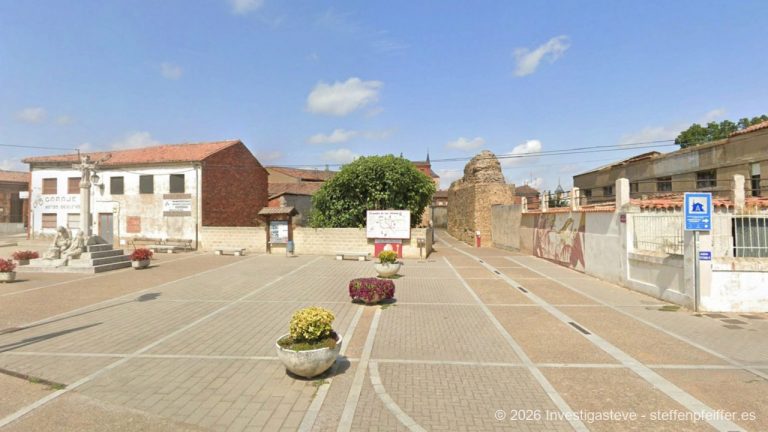
Mansilla de las Mulas – The Stone Guardian on the Banks of the Esla
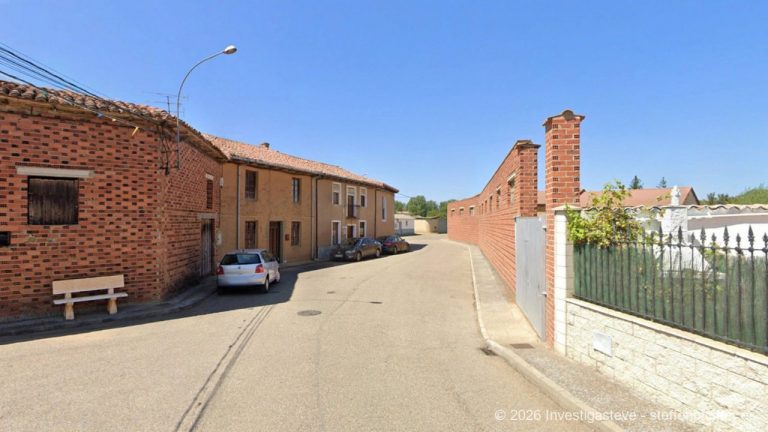
Villamoros de Mansilla – The Clay-Colored Echo of the Reconquista on the Edge of La Sobarriba
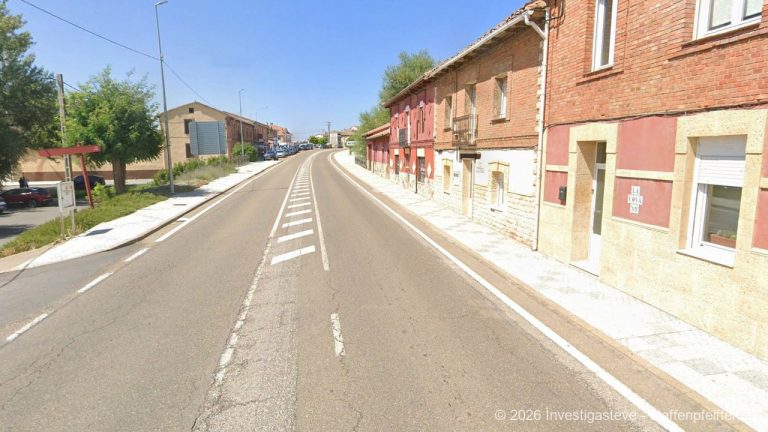
Puente Villarente – The Stone Backbone over the Waters of the Porma
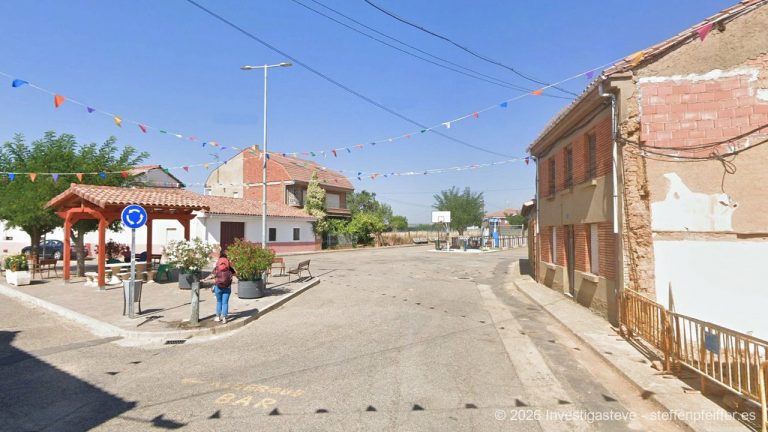
Arcahueja – The Silent Watch on the Plateau of La Sobarriba

Puente Castro – The Stone Portal at the Threshold of the Legions