A new stage day – entering the stage
The morning in Sahagún begins with an almost sacred silence, broken only by the distant ringing of the bells of San Lorenzo. When you take your first steps through the narrow alleys of this historic town, you still feel the coolness of the night stored in the thick walls of red brick. The smell of damp clay and the nearby river Cea hangs heavy in the air, mixed with the first fleeting aroma of freshly baked bread from a small bakery behind the Plaza Mayor. It is that magical moment of caesura, in which the old kingdom of León welcomes you with open arms, while you leave behind the geographical center of the Camino. Your gaze wanders over the massive arches of Mudéjar architecture, whose geometric perfection appears almost unreal in the first, oblique sunlight.
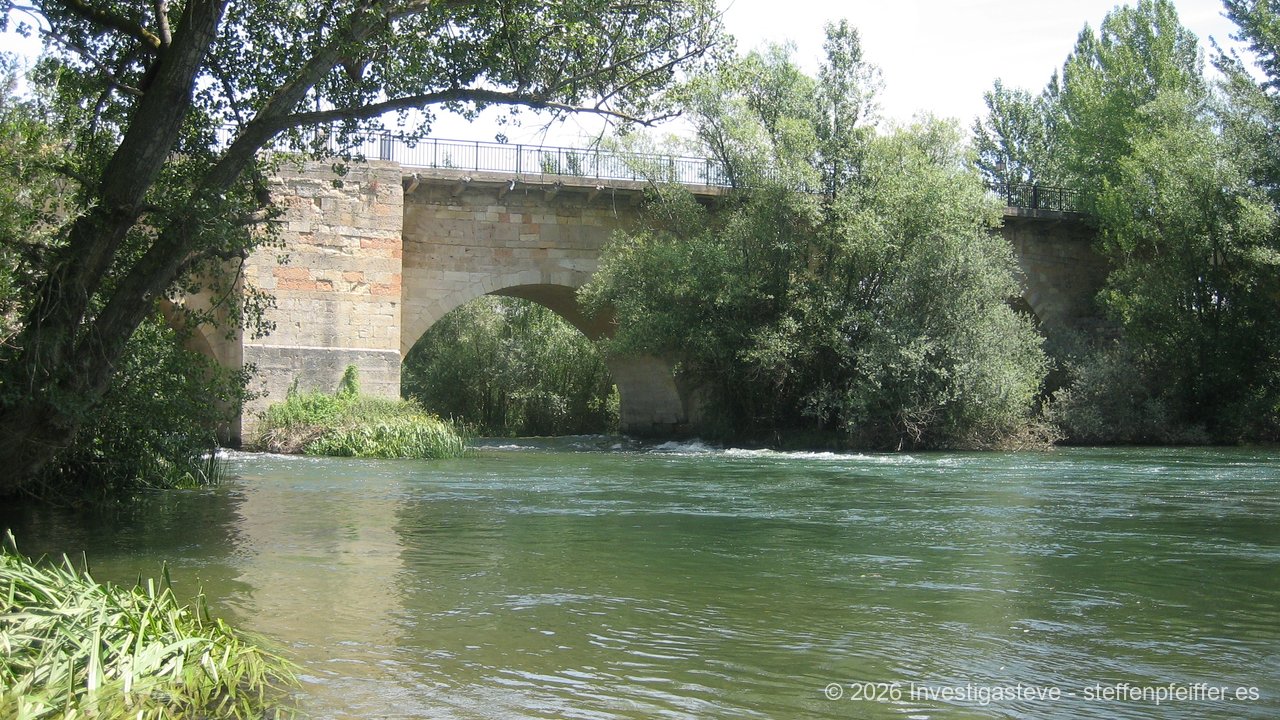
The departure from the town is a ritual leaving of security. As your hiking boots click rhythmically on the old cobblestones, you feel the transition from urban density to the infinite expanse of the Castilian plateau. The light changes from a deep blue to a shimmering ochre, and the horizon seems to shift further back with every step. Behind the bridge over the Cea, whose stone parapet feels cool and rough under your hands, the gate to a new world opens. It is a departure into reduction, a journey into the heart of the Páramo Leonés, where the path is no longer just a route, but a mental manifestation of your own endurance. In this moment of silence, before the wind of the plain reaches you, you feel a deep gratitude for the simplicity of walking.
Route and elevation profile
Distance: approx. 37.0 km (total distance to Mansilla).
Elevation gain: ↑ 150 m / ↓ 180 m.
Difficulty: Moderate. Physically, the route is easy due to the lack of inclines, but the enormous distance and the psychological burden of monotony challenge the pilgrim.
Special features: Fundamental fork in the path behind Calzada del Coto; kilometers-long, exposed passages without shade; historical Vía Trajana.
Today’s route is a geometric exercise on the plain. We leave Sahagún and head towards a landscape that seems to hold no secrets, but in its openness possesses an almost frightening depth. The elevation profile resembles an almost flat line, broken only by minimal wave movements when the path crosses small streams or climbs gentle elevations. The ground alternates between hard, dusty asphalt of the service roads and the fine gravel paths of the artificially created “Andaderos.” It is a ground that forgives no mistakes; every stone, every unevenness transmits itself directly through the soles to your joints.
The true challenge of this stage, however, is not the topography, but time. Over 37 kilometers (if you do not split the stage), perception stretches. The lack of visual stimuli forces the mind into introspection. There are sections where the landscape appears static for hours, as if walking on a treadmill. The sun, burning relentlessly from the wide sky, and the wind, sweeping unhindered over the fields, become the only timekeepers of your progress. It is a stage for long-distance walkers and meditators, a path that separates the wheat from the chaff and throws you back to the essential.
Variants and small detours
Shortly after the village of Calzada del Coto, every pilgrim faces an existential decision that shapes the character of the entire day. Here, the Camino Francés forks into two completely different worlds. Variant A leads via El Burgo Ranero. This is the “classic” modern path, running on an artificially created pilgrim path, the Andadero. It is lined by over 30,000 poplars, planted in the 1990s to provide pilgrims with shade and protection from the wind. This route is efficient, well-supplied, and offers an almost hypnotic rhythm through the even spacing of the trees. It is ideal for those who want to cover kilometers and seek community in the villages.
Variant B, on the other hand, follows the ancient Roman Vía Trajana via Calzadilla de los Hermanillos. This is the path of solitude. It runs far from any civilization and any main road, through the archaic wilderness of the high plain. Here, you feel the historical causality beneath your feet as you walk on the remains of the old legionary road. On this variant, there are hours without a bar, without a fountain, and without distraction. Those seeking absolute silence and willing to carry their own supplies will be rewarded with a mystical experience. The decision between these two paths is more than a choice of route – it is a choice between the protection of community and the freedom of solitude.
Description of the path – with all senses
The path out of Sahagún begins with the smell of cool stone and old brick dust. When you leave the monumental gate of San Benito behind, you feel the historical weight of this place. The air here in the Cea valley is still damp, and the soft rustling of the river forms a gentle acoustic backdrop for your departure. Your fingers glide over the rough surfaces of the Mudéjar patterns, engraved like hidden messages in the walls of the churches of San Tirso and San Lorenzo. It is a haptic farewell to urban elegance, before the infinity of the province of León swallows you.
As soon as you reach Calzada del Coto, the acoustics change. The distant hum of the main road fades into the background, and you hear the dry rustling of the first poplar leaves. The psychological tension rises at the fork: to the left, the shade of the trees beckons; to the right, the promise of the Roman stones. If you decide on the path via El Burgo Ranero, you enter the Andadero. Here, you hear the rhythmic “clack-clack” of your poles on the compacted gravel, a sound that mixes with the wind in the 30,000 poplars to form a hypnotic melody. It is an auditory anchor in a landscape that otherwise offers no points of reference.
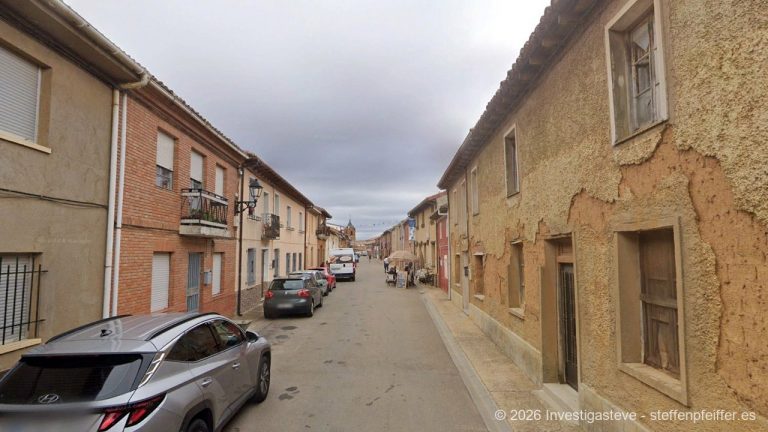
In El Burgo Ranero, the smell of adobe greets you. This traditional building technique of clay and straw dominates the village scene and exudes an earthy, almost archaic scent, especially when the midday sun heats the walls. You feel the warmth radiating from the ochre-colored walls as you pause briefly in the shade of a bar. The water from the village fountain tastes metallic and cold, a vital contrast to the dust of the country road, which has already settled like a fine layer on your skin. Here, in the Laguna del Camino, a small wetland on the edge of the village, you hear the distant croaking of frogs – a strangely lively sound in the midst of the dry plain.
The passage to Reliegos is a five-dimensional immersion into monotony. The visibility seems infinite, and yet the panorama hardly changes. You feel the salt on your lips, the result of relentless evaporation, and your eyes desperately search for a splash of color to break the eternal ochre of the fields and the deep blue of the sky. The historical dimension is made present here by the knowledge that this plain was once the granary of the Roman Empire. You are not just walking through Spain; you are walking through a millennia-old heritage of tenacity. Every step is a haptic confirmation of your physical presence in an almost abstract environment.
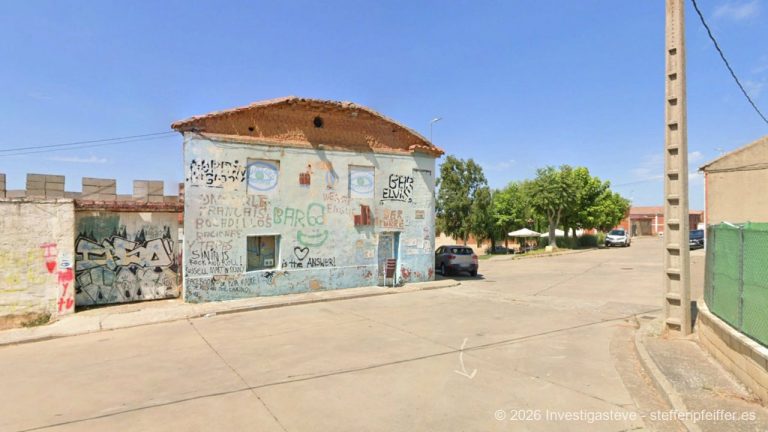
In Reliegos, the atmosphere changes abruptly. Here, you smell the heavy, sweetish scent of wine and damp earth rising from the numerous bodegas – the wine cellars dug into the ground. Reliegos is a place of legends, not least because of the bar “La Morena,” where the walls are covered with the stories of thousands of pilgrims. The acoustics here are lively, characterized by laughter, the clinking of wine glasses, and the lively exchange of experiences. It is a psychological oasis that strengthens you for the last kilometers to Mansilla. You feel the rough texture of the graffiti-covered walls under your fingers and realize that the path also consists of the traces we leave behind.
The final descent to Mansilla de las Mulas leads you past wide agricultural areas, where the wind creates a metallic rustling in the dry grain. You hear the distant rumble of tractors, a sign of modern agriculture that gently pulls you back from your meditative trance into reality. The smell of diesel mixes with the aroma of dry earth. But then they appear: the mighty city walls of Mansilla. Their sight is a visual shock of constancy. The massive pebbles from which they are built gleam in the late afternoon sun and convey a feeling of unshakeable security.
When you finally pass through the Puerta del Castillo, the haptics of the ground change. The gravel gives way to firm cobblestones, challenging your tired joints once more. The air in the narrow alleys is cooler, protected by the massive walls. You smell the dinner being prepared in the hostels – a hearty Castilian stew, whose aroma of garlic and pimentón draws you magically. The historical causality is tangible in every stone of the 1200-year-old city wall. You are no longer just a walker; you are an arrival in a fortress of history.
The evening reflection, as you sit on the city wall and watch the sunset over the river Esla, is marked by a deep emotional metamorphosis. The 37 kilometers have not only exhausted you, they have stripped you bare and reassembled you. You feel the fatigue in your bones as a form of pride. The expanse of the Páramo has widened your mind, and the silence of the plain echoes within you. You hear the soft gurgling of the water under the bridge and know that today you have passed one of the most important tests of the Camino: the victory over your own impatience and the acceptance of infinity.
Intermediate places & special features
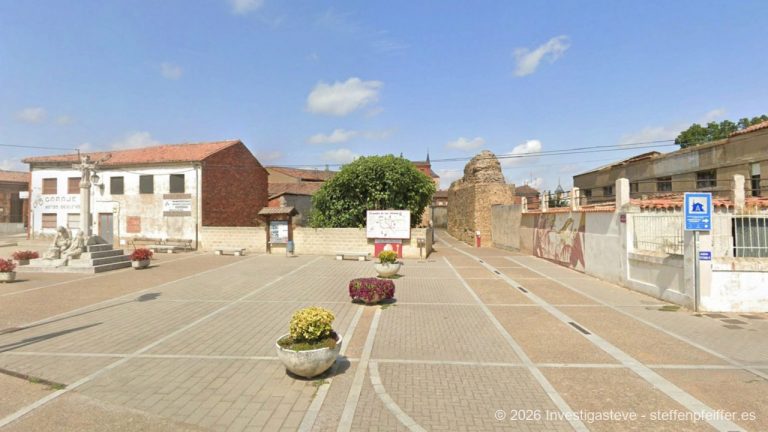
Sahagún – The starting point of the stage is a jewel of Mudéjar architecture. As the geographical center of the Camino, Sahagún possesses its own dignity. The churches of San Tirso and San Lorenzo are masterpieces of brickwork, whose delicate arches recall the Moorish past. Those starting here should take time for the monastery of San Benito, whose gateway frames the path like a triumphal portal. Sahagún is a place of transitions – from the kingdom of Old Castile into the kingdom of León.
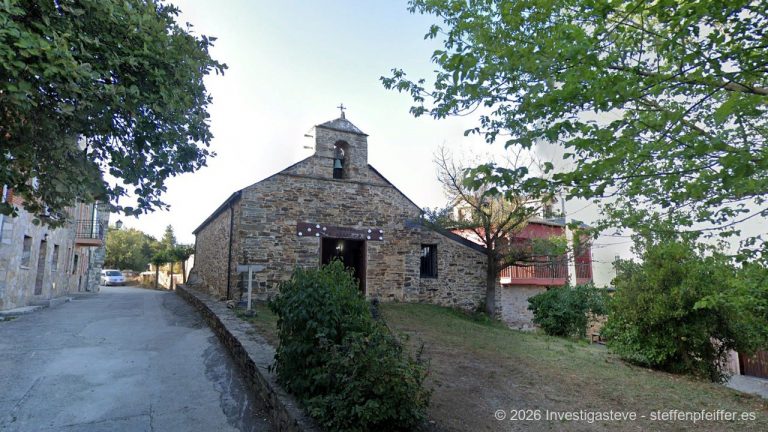
Calzada del Coto – This unremarkable village marks one of the most important strategic points of the Way. It is the “gate of decisions.” The small chapel of San Roque offers a last moment of silence before deciding on one of the two variants. Here, one feels the weight of freedom of choice: do I choose the comfort of the poplar avenue or the archaic solitude of the Roman road? It is a place that confronts the pilgrim with their own will.
El Burgo Ranero – A typical village of the Leonese plain, characterized by adobe architecture. It appears like an oasis along the artificially created Andadero. Particularly worth seeing is the village church of San Pedro with its impressive altarpiece. For many pilgrims, El Burgo Ranero is the place for an overnight stay to split the long stage to Mansilla. The atmosphere is warm and down-to-earth, an ideal place to process the impressions of the plain.
Reliegos – Famous for its wine cellars and its “meteorite,” Reliegos is a cult stop on the Camino. The village lies in a gentle depression and seems frozen in time. The bar “La Morena” is an institution where the spirit of the Camino lives on in its rawest form. Here, it is not about pomp, but about authentic encounters and the stories of those who taste the dust of the country road.
Mansilla de las Mulas – The stage destination impresses with its almost completely preserved medieval city wall from the 12th century. Mansilla lies on the banks of the Esla and was once an important hub for the livestock trade. The architecture is defensive and rustic, characterized by pebbles and clay. A walk along the city wall at sunset offers a spectacular view over the region and lets the hardships of the day be forgotten.
Dining, accommodation & supplies
The supply situation on this stage is divided. While the variant via El Burgo Ranero offers opportunities for refreshment every few kilometers, the Vía Trajana requires self-sufficient planning.
Gastronomy: In El Burgo Ranero, the bars offer affordable pilgrim breakfasts. In Reliegos, stopping at one of the bodegas or at “La Morena” is almost a duty to get a whiff of the local atmosphere.
Accommodation: Mansilla de las Mulas has an excellent municipal hostel in a former Augustinian monastery as well as several charming private accommodations like “Albergue Gaia.”
Public facilities: In Sahagún and Mansilla, there are pharmacies, ATMs, and post offices. El Burgo Ranero offers basic medical care and small grocery stores.
The special thing today
The outstanding feature of this stage is the conscious choice between modernity and antiquity. Nowhere else on the Camino Francés is the pilgrim so clearly confronted with the question of what kind of experience they seek. The Andadero with its 30,000 poplars is a testament to modern pilgrim care – an attempt to make the rough nature of Castile more accessible to humans. The even spacing of the trees acts like a metronome for the steps and offers a protective space that feels almost maternal. It is a stage of linear order that helps the mind to lose itself in the rhythm of walking.
On the other side stands the Vía Trajana, the original Roman route. Here, history becomes haptic. You walk on stones already trodden by Roman legionaries, medieval traders, and millions of pilgrims before you. There are no rows of poplars to protect you, and no bars to distract you. The special thing here is the absolute reduction to being. This variant is a homage to the origins of pilgrimage, when the path was still a physical and spiritual challenge to be mastered without a safety net. This duality of paths makes the 18th stage a philosophical journey into the nature of our choices.
Finally, Reliegos is a special place of social immersion. While the landscape around you is empty, the place fills with human energy. The story of the meteorite that struck here in 1947 lends the village an almost cosmic note. In the bodegas, you feel the connection to the earth. It is this contrast between the lonely expanse of the high plain and the warm intimacy of the wine cellars that makes this stage so unforgettable. Reliegos teaches us that after the drought of the path, the refreshment of community always awaits.
Reflection at the end of the stage
When you sit on the massive walls of Mansilla de las Mulas in the evening, you feel a deep metamorphosis of your inner state. Today’s stage was not a walk, but a crossing. You have conquered the monotony of the Páramo Leonés by surrendering to it. In the silence of the evening, you realize that the external emptiness of the landscape has created a space within you that is now filled with peace and clarity. The dust on your shoes is not dirt, but the visible memory of a path that pushed you to your limits.
You look back towards the east, where the plain disappears in the twilight light, and recognize the beauty of reduction. In Mansilla, surrounded by stones that have defied every storm for 800 years, you feel yourself a bit more invincible. The decision at the fork, the effort of the 37 kilometers, and the encounters in the villages merge into a feeling of perfection. The Camino has not rewarded you with panoramas today, but with the realization that your own rhythm is the strongest tool you possess. You are ready for the light of León that awaits you tomorrow.
Camino of the Stars
This stage lies on the Camino Francés, on the stage from Sahagún to Mansilla de las Mulas. The sequence of places is:
| Stage | Start | Destination | Distance (km) | Elevation gain | Difficulty | Intermediate places |
|---|---|---|---|---|---|---|
| 18 | Sahagún | Mansilla de las Mulas | 37.0 | ↑ 150 / ↓ 180 | moderate | Calzada del Coto → El Burgo Ranero → Reliegos |
Did you choose the ancient silence of the Romans or the community under the poplars? Which path did your heart choose when you stood at the signpost in Calzada del Coto, and what did the silence of the plain do to you? Share your story of the decision with us – every chosen path is a star on the map of the pilgrim soul.
About the Author

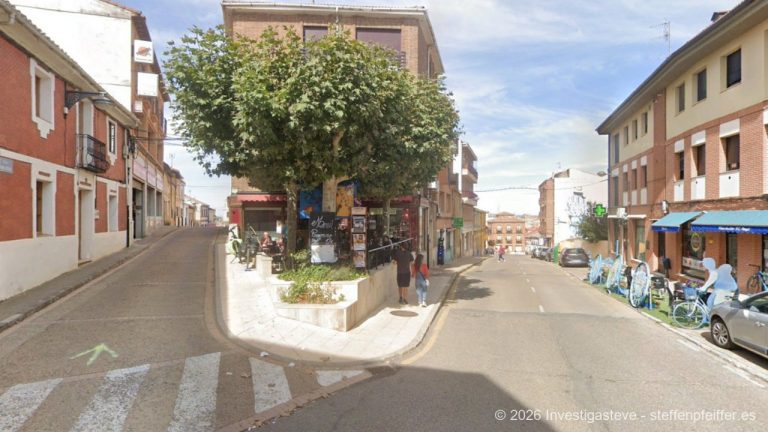
Sahagún – The Stone Heart of the Meseta and the Legacy of Cluny
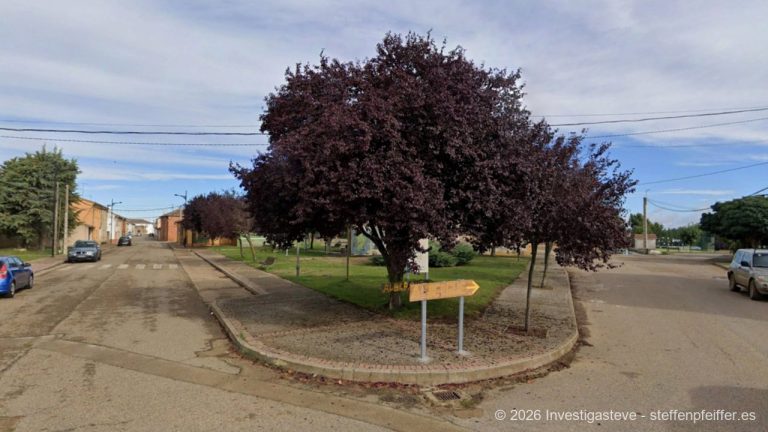
Calzada del Coto – The Stone Gate to the Choice of Paths
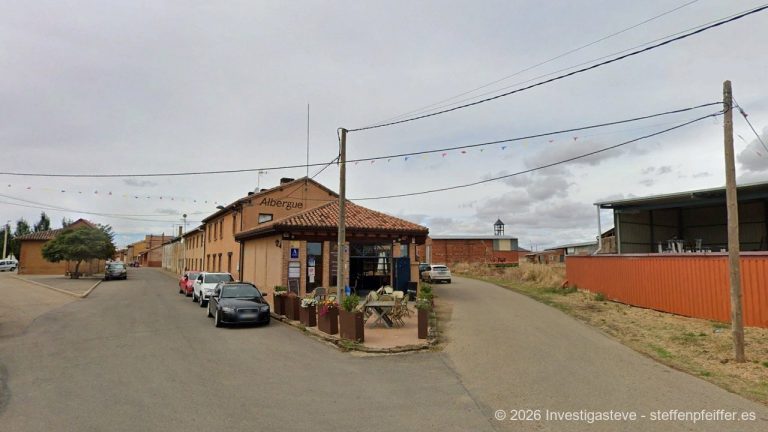
Bercianos del Real Camino – The Village of Settlers in the Golden Sea of the Tierra de Campos
El Burgo Ranero – The Village of Adobe Brick and Whispering Storks
Reliegos – The Dusty Oasis of the Via Trajana