A First Glance – Introduction & Atmosphere
When the pilgrim, after the seemingly endless, seventeen-kilometer solitude of the high plateau from Carrión de los Condes, gradually approaches the horizon where the shimmering gold of the wheat fields transforms into a deep, almost bloody rust red, Terradillos de los Templarios appears. It is a village that does not simply exist; it seems to rise from the earth itself, shaped from the clay and sweat of centuries. The first contact with this history-soaked place is a tactile experience of a special kind: the fine, red dust of the Meseta has settled on the skin like an archaic war paint, and the soles of the hiking boots register the change from the hard gravel path to the softer, almost velvety ground of the village alleys. Here, at 882 meters above sea level, the air is thinner, clearer, and carries the tart, dry scent of drying grain and hot stone.
The psychological effect of arriving in Terradillos is phenomenal. After hours of total exposure on the “Senda,” where one often feels small and insignificant under the merciless Castilian sky, the silhouette of the village appears like a protective fortress. It is the feeling of immersing oneself in another time – a time when the clatter of hooves and the clinking of iron armor set the pace. Acoustically, today the soft murmuring of pilgrims and the occasional banging of a window shutter in the wind dominate, but those who pause believe they can hear in the distant whistling over the plain the echo of those knightly orders that once sanctified this ground. It is a place of transition, an oasis of tranquility that regenerates the body while the mind dives into the deep layers of history.
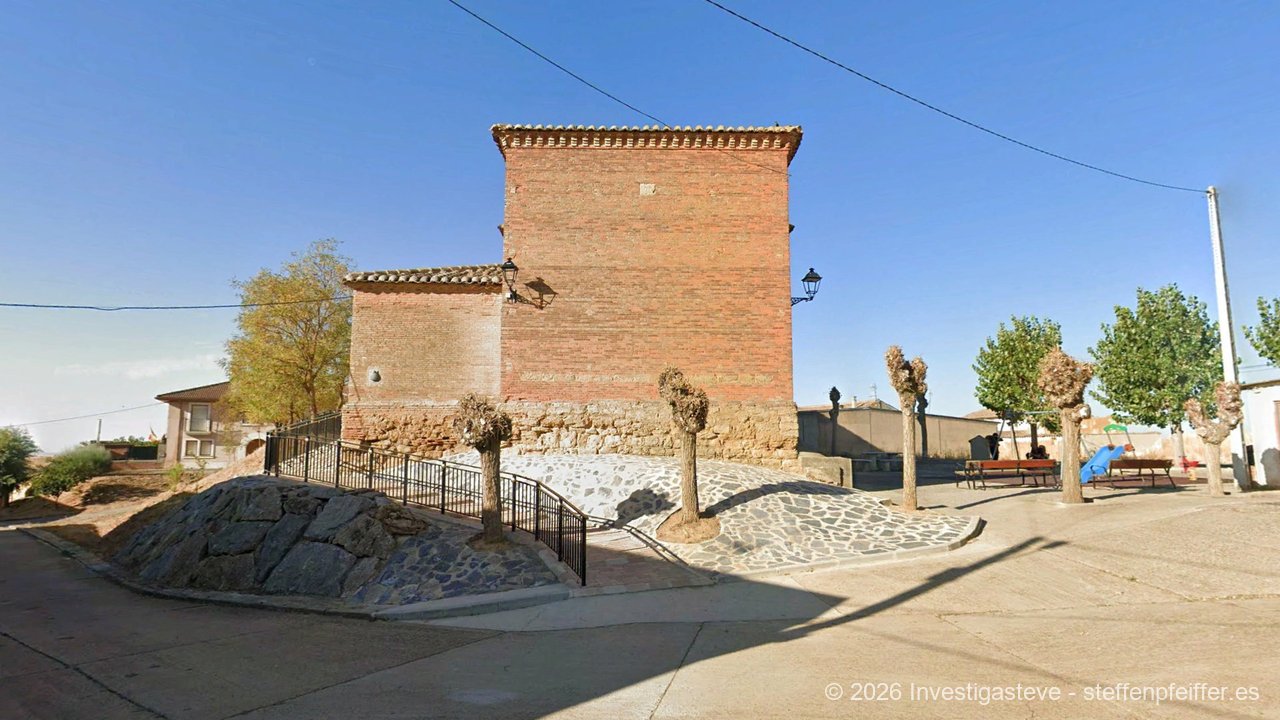
The visual panorama of Terradillos is shaped by the characteristic brick architecture, which develops an almost sacred aura in the evening light. The light of the province of Palencia possesses a density here that sharply outlines the contours of the houses and makes the cracks in the adobe appear like maps of bygone times. You feel the historical causality of this place in every fiber: it exists because the Camino exists; it breathes because the pilgrims pass through it. Those who enter Terradillos experience an emotional metamorphosis. The pain in the legs recedes into the background, replaced by an awestruck curiosity about the legacy of the Templars, which seems to whisper in every corner here.
What This Place Tells
The history of Terradillos de los Templarios is inextricably linked to the rise and mysterious fall of the Order of the Poor Knights of Christ and of the Temple of Solomon. In the 12th century, this region was entrusted to the Order for administration and the protection of pilgrims. The historical causality is fascinating: at a time when the Meseta was a dangerous no-man’s-land between the Christian kingdoms and the Moorish territories, the Templars formed the logistical and military backbone of the path. One must imagine the village as a strategic outpost, a commandery where not only was prayer offered, but the safety of souls and bodies was guaranteed with the sword.
A central element of local tradition is the legend of the “Gallo de Oro,” the golden rooster. It is said that before their expulsion and dissolution by the Crown, the Templars buried their most valuable treasure – a life-sized rooster made of pure gold – in the earth of Terradillos to save it from the greed of worldly rulers. This narrative is more than just folklore; it is a psychological metaphor for the hidden value of this place. The treasure may not be material but lies in the spiritual power that Terradillos radiates to this day. When you wander over the fields today, you walk on ground that witnessed secret rites, hard field labor, and unshakeable faith.
Architecturally, the parish church of San Pedro is the stone heart of the community. Built from the red brick of the region, it houses a 14th-century crucifix that reflects the spirituality of that era in its ascetic severity. The tactile experience of the interior – the coolness of the massive walls, the smell of old wood and incense – forms a stark contrast to the heat of the outside world. Terradillos also tells of the change of power: after the Templars, the Order of Santiago took over jurisdiction, underscoring the ongoing importance of the place for pilgrimage. Each generation has left its traces in the clay houses and paved paths, creating a palimpsest of history that the attentive walker can uncover layer by layer. It is a place that teaches us that constancy grows from the connection of faith, protection, and labor.
Addresses & tips in Terradillos de los Templarios
| Accommodation | 1 |
| Restaurants | 1 |
| Bars & Cafés | 1 |
| Sights | 1 |
| Services | 1 |
Camino Distances
Terradillos de los Templarios marks the end of the long stage through the solitude of Carrión and the beginning of the border region to the Kingdom of León. The distances are characterized by the vastness of the Tierra de Campos.
| Previous Place | Distance (km) | Next Place | Distance (km) |
|---|---|---|---|
| Ledigos | approx. 3.5 km | Moratinos | approx. 3.5 km |
Sleeping & Arriving
Arriving in Terradillos de los Templarios has something ritualistic about it. After the long dry stretch through the Meseta, reaching the first row of houses is a physical redemption. You feel the tension of the day slowly falling from your shoulders as you let your gaze wander over the ochre-colored roofs. The tactile experience of checking into one of the history-soaked hostels, such as the “Albergue Los Templarios” or the “Albergue Jacques de Molay,” is characterized by a rustic warmth. The massive wooden doors creak familiarly, and the floor beneath your feet feels solid and steeped in history. Within these walls, often reminiscent of the architecture of old commanderies, the hospitality of the Middle Ages is translated into modernity.
The psychological component of staying overnight at a place dedicated to the Templars should not be underestimated. It creates a form of mental grounding. You lie in your bed knowing that for centuries, knights and pilgrims sought protection precisely at this point. The smell in the dormitories is a mix of fresh linen, the aroma of hiking boots, and that cool earthiness that only old adobe buildings exude. Acoustically, the night in Terradillos is characterized by an almost sacred stillness, occasionally interrupted by the distant barking of a dog or the rushing of the wind in the grain silos at the edge of the village. It is a darkness so deep that the stars above the village shine like bright diamonds on black velvet.
A special tactile highlight is the first foot bath after arrival. Feeling the cool water on the heated skin, marked by the red dust, is a moment of pure presence. Many hostels have spacious inner courtyards or gardens where you can put your feet up and soak up the historical atmosphere. You observe the other pilgrims at their tasks – washing clothes, treating blisters, silently writing in diaries. This collective experience of regeneration connects people in Terradillos in a way that goes beyond words. It is the vestibule to a restful night that prepares the body for the coming kilometers towards Sahagún.
When dusk sets in, Terradillos transforms into a magical place. The shadows of the buildings stretch into the infinite, and the village seems to retreat back into the wide plain. Psychologically, this is the time for reflection. You realize the distance you have already covered and feel the power that lies in the simplicity of this place. There is no urban luxury here, but a luxury of reduction that clears the mind. Those who stay overnight in Terradillos consciously choose against the hustle of larger towns and for a night full of authenticity. The peace found here is not merely an absence of noise but an active presence of peace and historical depth.
You should take the time to step outside again in the evening and breathe in the coolness of the Castilian high plateau. The olfactory contrast between the dry heat of the day and the damp freshness of the night is enchanting. You feel the historical causality of pilgrim care in every detail – from the placement of the beds to the community at dinner. Terradillos is an anchor point in the infinity of the Meseta, a place that not only accommodates the walker but integrates them a little into its own mysterious history. Those who sleep here may dream of the clatter of hooves on the Real Camino, while outside, time seems to stand still for a few hours.
Eating & Drinking
The gastronomy in Terradillos de los Templarios is a powerful homage to the treasures of the Tierra de Campos. Here, you don’t just eat; you draw strength, just as the knights and pilgrims did eight hundred years ago. The olfactory experience often begins in the late afternoon, when the scent of homemade “Sopa de Ajo” wafts through the alleys. The smell of olive oil, plenty of garlic, old bread, and the indispensable Pimentón de la Vera awakens the spirits and signals to the body: the toil of the day is over. When you then sit at the table and bring the first spoonful of the hot, spicy soup to your mouth, you feel the warmth down to your toes – a tactile pleasure that dispels the cold of the Meseta nights.
A classic in the local hostels is the “Menú Templario,” often consisting of hearty stews with lentils or chickpeas that have simmered for hours on a low flame. The consistency of the legumes, mixed with spicy chorizo and tender meat, is an explosion of flavor that appeals to all the senses. A robust red wine from the province of Palencia or nearby León is served with it, its color as deep red as the earth you have walked upon. The tactile feeling of holding the heavy wine glass and tasting the full-bodied flavor on your tongue is an act of grounding. Acoustically, the meal is accompanied by the cheerful murmuring in many languages, a lively contrast to the silence of the path.
For dessert, you must not miss the simple but delicious pastries of the region, often crumbly almond cookies that dissolve in the mouth and leave a fine sweetness. Psychologically, communal eating in Terradillos is a moment of total community. You share bread baskets and carafes of wine with people you didn’t know that morning. This form of nourishment is an essential part of the emotional metamorphosis on the Camino; you learn to appreciate the quality of simple, nutritious food again. Those who leave Terradillos culinarily do so with an inner satiety that goes far beyond physical hunger. It is the honest cuisine of Castile that here reaches the soul directly through the stomach.
Supplies & Logistics
Terradillos de los Templarios is a classic roadside village whose logistics are completely adapted to the pilgrim flow. Despite its small size, the place offers everything necessary to safely complete the next stage.
Shopping: There is no large supermarket, but the hostels often have small kiosks where you can buy the most necessary items: water, fruit, blister plasters, or chocolate. For larger supplies, you should plan for Sahagún.
Gastronomy: Several bars and restaurants in the hostels offer continuous catering. The pilgrim menus in the evening are especially tailored to the caloric regeneration of the walkers.
Accommodation: The capacities are considerable for the size of the village. There are several private hostels (Albergues) that often have reservation options, which is advisable in high season.
Public Facilities: A public fountain with drinking water is located in the center. Emergency medical care is only rudimentary; for pharmacies or doctors, a trip to nearby Sahagún is necessary.
The psychological security of encountering functioning logistics in this isolated region takes much pressure off daily planning. You sense that the inhabitants are accustomed to the pilgrim flow and display a pragmatic warmth. The acoustic backdrop of the logistics is characterized by the occasional passing of a tractor or the rushing of the distant highway, a constant reminder of the modern world, while you yourself walk in the rhythm of the Middle Ages. Supply in Terradillos is not luxury, but a reliable service to people, translating the historical tradition of hospitality into modernity.
Don’t Miss
1. Church of San Pedro: An architectural must from the 16th century. Admire the crucifix and the filigree work of the bricks on the exterior façade.
2. The Monument of the “Gallo de Oro”: Look for clues to the legend of the golden rooster. Even though the real rooster remains buried, the story is omnipresent in the village.
3. The Senda de los Templarios: Walk back or ahead a little on the path at sunset. The play of light and shadow on the red earth is visually overwhelming.
4. The inner courtyards of the hostels: Often small oases of tranquility with fountains and flowers, forming a tactile contrast to the dry surroundings.
5. The Starry Sky: Find a dark spot at night. The Milky Way over Terradillos is an acoustic and visual experience of absolute silence and vastness.
6. Local Red Wine: Try a drop directly from the region. Its robust character reflects the soul of Castile.
Insider Tips & Hidden Places
Away from the main street, Terradillos de los Templarios offers hidden jewels for the attentive observer. One such place is the old irrigation canal just outside the village. Here you find a small group of trees that cast an almost unreal shade. The ground here is softer, and you hear the soft gurgling of water – an acoustic blessing in the dry Meseta. Here it smells of damp earth and wild thyme, an olfactory refuge for a short meditation. It is a place of psychological regeneration, where you can forget for a moment that you are walking on a fixed route.
Another insider tip is the search for old inscriptions on the barn walls in the rear part of the village. Those who look closely can discover faded symbols that recall the time of the great sheep flocks and the Mesta. These tactile traces of the past tell of a time when wool was the white gold of Castile. When you trace the engraved signs in the stone with your fingers, you establish a physical connection to the people who cultivated this land centuries ago. It is a historical causality that only reveals itself on second glance and makes the place appear in an entirely new light.
For photography lovers, there is a special viewpoint at the small bridge west of the village. From there, you have the perfect view of the silhouette of Terradillos as it stands out against the wide sky. At dusk, when the first lights come on in the village, the place looks like a luminous island in a dark sea. The tactile experience of the cold iron railing of the bridge under your hands forms a sharp contrast to the warm atmosphere of the village. This place offers the best perspective to grasp the isolation and simultaneous security of the settlements in the Meseta.
Finally, a look into the private vegetable gardens, often hidden behind high walls, is worthwhile. If you are lucky and a door is open, a small green paradise of tomatoes, peppers, and vines reveals itself. The smell of freshly watered earth is enchanting here. These gardens are the psychological symbol of the fertility wrested from the barren soil. Those who observe a local at work understand the deep connection of the people to their land, which goes far beyond tourist perception. It is a lesson in patience and devotion that the Camino gives the attentive pilgrim in Terradillos.
Moment of Reflection
Terradillos de los Templarios is a place that confronts the pilgrim with the idea of protection and service. In the historical causality of the Templar Order lies the call to reflect on one’s own willingness to serve one’s neighbor. The psychological weight of the Meseta is caught here by the spiritual lightness of the legacy. You recognize that the path is not only a physical achievement but a journey through time and the self. The emotional metamorphosis takes place here in the moment of pause. You leave the ambition to devour kilometers at the village entrance and learn to accept silence as a conversation partner.
In the stillness of Terradillos, while contemplating the red bricks and listening to the wind, the question of one’s own “golden rooster” often arises. What treasure do I carry hidden within me, waiting to be discovered? The tactile experience of the village, its earthiness and mystical aura, acts like a mirror for the soul. Those who leave Terradillos de los Templarios carry not only red dust on their shoes but a new clarity in their minds. They have learned that true strength lies in humility and the protection of the weaker – a lesson the Templars pass on to us across the centuries.
Camino of the Stars
This place lies on the Camino Francés, on the stage from Carrión de los Condes to Sahagún. The sequence of places is:
Carrión de los Condes → Calzadilla de la Cueza → Ledigos → Terradillos de los Templarios → Moratinos → San Nicolás del Real Camino → Sahagún
Did you also feel that mysterious energy in Terradillos de los Templarios emanating from the red earth and the legacy of the knights? Did you perhaps even search for the golden rooster or find a moment of enlightenment in the silence of the church of San Pedro? Share your story, your photos of the flaming sunset, or your tips for the best Templar soup with us. Your experiences keep the myth of this place alive for all of us!
About the Author