First Glance – Introduction & Atmosphere
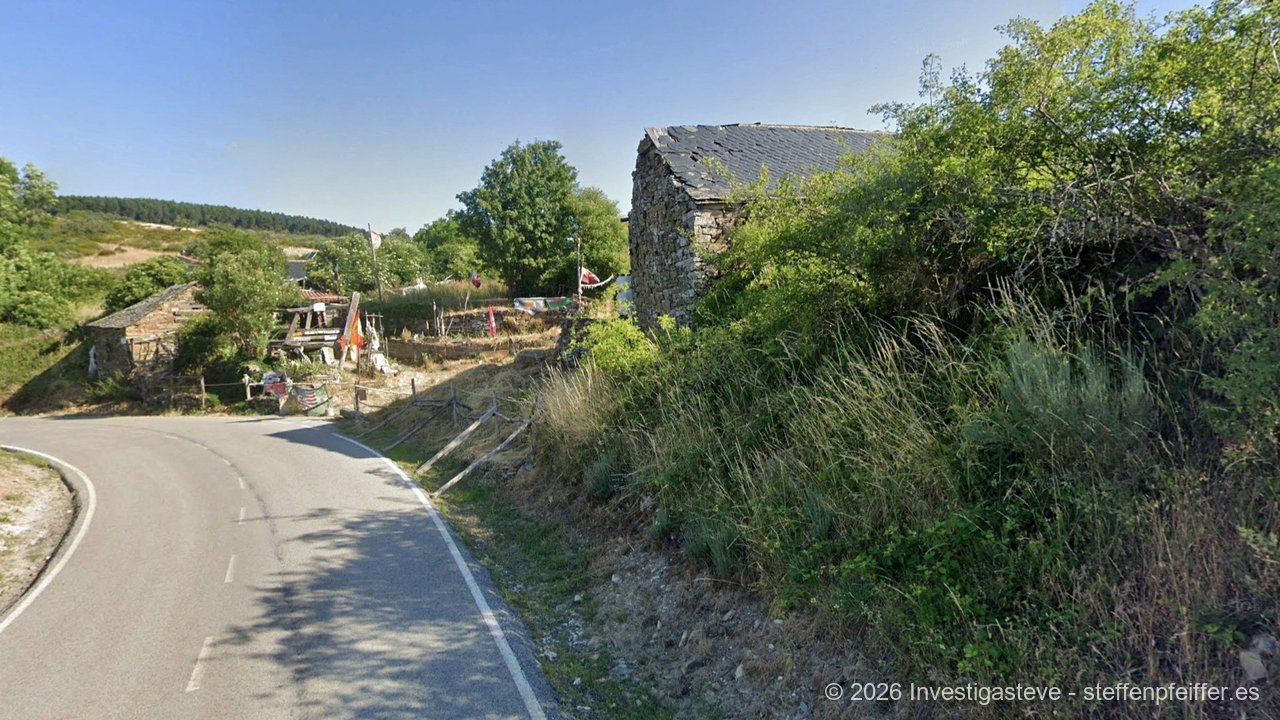
You set foot in Manjarín – and immediately feel that you have crossed a border not recorded on conventional maps. Up here, at about 1,460 meters altitude, the sky seems to have a different consistency, heavier and yet more tangible, while the world below you sinks into a sea of clouds and distant valleys. It is a place of threshold experience, a barren, windswept landscape of ruins that follows immediately after the emotional climax at the Cruz de Ferro and releases you into an atmosphere oscillating between post-apocalyptic silence and medieval mysticism. The ground beneath your pilgrim boots has changed; the coarse asphalt has long since yielded to the rule of slate and weathered stones that make a dry, almost plaintive sound with every step.
The air up here tastes of freedom and solitude, a tart mix of cool mountain wind, the smoky scent of wood fires, and the damp note of moss clinging to the crumbling walls. When you step out of the mist that often envelops Manjarín like a protective cloak, it is the ringing of a bell that welcomes you – a deep, metallic sound struck by the invisible hand of a hospitalero, rolling over the ridge of Monte Irago. It is a signal of humanity in a landscape that turned its back on civilization decades ago. You feel the physical relief of having overcome the ridge, yet at the same time a reverent melancholy seizes you at the sight of the ruined houses, whose skeletons of dark stone rise into the sky like silent guardians of the past.
Manjarín in the rhythm of the Camino is neither a classic rest stop nor an ordinary stage location; it is an experience stop, a psychological gateway to the Bierzo. Here, where colorful Templar flags flutter in the relentless west wind and Gregorian chants from simple speakers compete with the roar of nature, time becomes an elastic concept. It is a place where you shed the hectic pace of kilometer-chasing like an old skin. You stand before an improvised hut, decorated with countless signs and directional markers pointing to all corners of the earth, and realize that pilgrimage here reveals its purest, almost anarchic core. In this solitude, surrounded by chickens scratching freely among the rubble and the distant barking of a dog, you find a form of spirituality that needs no opulent cathedrals, only a warm cup of tea and the knowledge that you are not alone on this long path.
What This Place Tells
The story of Manjarín is a narrative of rise, deep fall, and an almost eccentric rebirth. Originally established in the 11th and 12th centuries, this small hamlet was never planned as a splendid village but as a functional survival post. In a time when crossing Monte Irago was a life-threatening undertaking – not only because of the unpredictable weather whims but also due to the constant threat of wolves and marauding bandits – the pilgrim hospice located here offered the necessary protection. It is assumed that even then, monks or even members of the Templar Order took on the task of giving travelers light, warmth, and safety. When you wander through the ruins today, you can almost imagine how the medieval pilgrim, whose impressions were immortalized in the Codex Calixtinus, arrived here with trembling knees and burning lungs, grateful for the sparse walls that shielded him from the inhospitable mountains.
But the harsh reality of modernity took its toll. In the mid-20th century, Manjarín became one of those “despoblados,” those abandoned places so typical of the remote regions of the Maragatería and the Bierzo. Rural exodus, driven by the longing for an easier life in the cities and the impossibility of wresting a living from the barren soil at this altitude, let the village die. The roofs collapsed, the gardens grew wild, and the forest began to reclaim what had once been taken from it. For decades, Manjarín was nothing more than a collection of stone heaps, a silent monument to transience, over which time passed without a trace while the Camino de Santiago itself sank into a Sleeping Beauty slumber.
The radical turning point came in 1993, a holy year of the Way of St. James, when a man named Tomás Martínez de Paz, a former industrial worker from Ponferrada, decided to turn his back on the world and settle in the ruins of Manjarín. He saw himself not simply as a host, but as an heir of the Templars, a guardian of tradition, and a spiritual defender of pilgrims. With the simplest means, without mains electricity and without running water, he built the Refugio Templario. It was the birth of a modern myth. Tomás, often wrapped in a cloak with the red cross pattée, became an icon of the modern Camino Francés. His presence transformed the abandoned place into “Una luz en el Camino” – a light on the way. He created a world in which the boundaries between reality and legend blurred, in which prayers were performed with the sword, and in which every pilgrim, regardless of origin, was welcomed as a brother in spirit.
Today, in the year 2025, Manjarín tells the story of a slow farewell. Tomás, now over 80 years old, has largely withdrawn, and the refugio has closed its doors for overnight stays. Yet the spirit he breathed into these stones over three decades is still palpable. The place now functions as a living museum of the pilgrim renaissance of the 1990s. It reminds us that a place is not defined by its architecture or its wealth, but by the mission of the people who inhabit it. Manjarín is a memorial to the power of an individual to give a soul back to a wasteland, and remains an indispensable chapter in the chronicle of the Way of St. James, teaching us that the most valuable gifts often lie in the total reduction to the essentials.
Addresses & tips in Manjarín
| Accommodation | 1 |
| Bars & Cafés | 1 |
| Sights | 1 |
Camino Distances
After about 5.5 kilometers of steady ascent through the barren mountain landscape of the Montes de León, past the last foothills of the Maragatería, you reach this symbolic point between heaven and earth.
| Previous Location | Distance (km) | Next Location | Distance (km) |
|---|---|---|---|
| Foncebadón | approx. 5.5 km | El Acebo | approx. 7.0 km |
Sleeping & Arriving
Arriving in Manjarín today means entering a place of silence that has long since left behind the nightly bustle of the large hostels. Those who come here should be aware that the era of overnight stays in this legendary refugio is effectively over. Since 2022, regular hostel operations have ceased, and the Refugio Templario primarily serves as a spiritual resting place for passersby. There are no modern bunkhouses, no communal kitchens with induction stoves, and no Wi-Fi passwords on the walls. Those who arrive here should not perceive the absence of infrastructure as a deficiency, but as an invitation to plan their stage in such a way that the spirit of Manjarín can be used as a source of strength for the upcoming, exhausting descent to El Acebo.
The atmosphere around Tomás’s hut is characterized by an archaic haptic quality. The walls are rough and marked by wind and weather, and those lucky enough to catch a glimpse inside feel the narrowness and history embedded in every crevice of the stone walls. It is a place that smells of old wood, smoke, and the dusty history of thousands of pilgrim fates. Should a pilgrim find themselves stranded here in an absolute emergency – for example, due to sudden snowfall or health failure – the tradition of hospitality will surely not fail, yet the times when one slept on mattresses on the floor among Templar flags largely belong to the past. Manjarín today is a place of pausing, not a place of lingering until the next morning.
For modern pilgrim logistics, this means: Manjarín is the emotional gateway to the descent. Those who stand here should tighten their backpack once more, check their hiking boots, and let the anticipation of the next reliable accommodation in El Acebo or Molinaseca rise within them. The next hostels in El Acebo are about seven kilometers away, a path that demands the highest concentration due to its steepness and the slate surface. In Manjarín, you don’t refuel on sleep, but on inspiration. It is the point where you soak up the barren solitude of the mountains one last time before the green, gentler valleys of the Bierzo welcome you again.
Eating & Drinking
The culinary world of Manjarín is as reduced and honest as the village itself. Do not expect a menu with pilgrim meals or cool refreshments from a vending machine. Up here, everything is based on the principle of donativo – a donation that enables the preservation of this special place. In the small, improvised rest stop, you are often offered a hot coffee or a steaming tea, served in simple cups that pass the warmth directly to your often cold fingers. There may also be a few simple biscuits or a piece of bread. It is an ascetic pleasure that, in the exposed location at almost 1,500 meters altitude, can nevertheless feel like a feast.
The scent of burning wood hangs in the air almost all year round here, for even in summer, the morning hours in Manjarín can be noticeably cool. A small stove often provides a cozy, albeit smoky, warmth in the hut, mingling with the smell of dried herbs and incense. There is no running water from the tap; drinking water must be laboriously brought in canisters, which is why every sip up here holds a different value than in the valley. It is a place that teaches you to appreciate the value of the simplest things again: the warmth of a drink, the sweetness of a biscuit, and the human encounter that takes place without commercial interest.
For your onward journey, you should definitely ensure your water bottles are filled before leaving Manjarín, as there are few reliable sources on the way down to El Acebo. You will only find comprehensive provisions again in the restaurants and shops of El Acebo. Manjarín itself offers you no calories for the body, but nourishment for the soul. It is the pause in which you sit on a stone wall, let your gaze sweep over the infinite panorama, and realize that a simple tea in this environment tastes better than any gourmet coffee in a big city.
Supplies & Logistics
Infrastructurally, Manjarín is what one would today call an “off-grid scenario” – a place of conscious renunciation of modern conveniences. There are no supermarkets, no pharmacies, no banks, and no charging stations for mobile phones. Those who come here hoping for seamless supply will quickly realize that the mountains have their own rules. Energy is usually generated via solar panels or generators, and mobile phone reception is as capricious as the weather: in dense fog or storms, the smartphone up here can quickly become a useless piece of glass and metal.
This supply desert is an integral part of the experience. Pilgrims should definitely ensure they have replenished their supplies in Foncebadón, as Manjarín offers no shopping opportunities. Medical help is also far away; the nearest pharmacies are in Molinaseca or Ponferrada, which means a long way in an emergency. The only “public facility” is the famous outdoor latrine – a pit toilet that confronts the pilgrim with the harsh reality of nature and exchanges the smell of disinfectants for that of earth and excrement. It is a lesson in humility and a glimpse back to a time when life was not yet fully planned and sterile.
Shopping: There are no shops whatsoever. The next shopping opportunities for provisions are in Foncebadón or El Acebo.
Gastronomy: Only simple drinks (coffee/tea) and snacks for donation at the rest stop. No hot meals or restaurants available.
Accommodation: Permanently closed since 2022. Next hostels in El Acebo (approx. 7 km away).
Public Facilities: No medical care, no police, no ATM. The place is largely depopulated.
Manjarín teaches you self-sufficiency – a valuable lesson shortly before entering the fertile Bierzo. It forces you to look into your own backpack and check what you really need to survive. When you leave Manjarín, you do so with the knowledge that the most important provisions on the Camino do not come from a shop, but from your own preparation and the mental strength you have found in the solitude of the Montes de León.
Don’t Miss
– The legendary signpost: In front of Tomás’s hut stands one of the most photographed motifs of the entire Way of St. James. A post with dozens of signs indicating distances to cities like Rome, Jerusalem, Santiago, or Tokyo. It is a symbol of the global interconnectedness of pilgrimage and a wonderful spot for a souvenir photo documenting the vastness of your journey. – The red Templar stamp: Be sure to get the Sello from Manjarín for your Credencial. It is large, usually in red, and shows the Templar cross. It is not only bureaucratic proof of your hike but a sought-after souvenir from one of the route’s most eccentric places. – The fluttering Templar flags: Pay attention to the flags flapping in the wind over the ruins. Especially in the fog, they create an almost eerie but highly atmospheric backdrop that transports you directly back to the Middle Ages. – The first view of the Bierzo: A few hundred meters behind the place, the panorama suddenly opens up in clear weather. Far below you lies the lush green valley of the Bierzo, framed by the mountains of the Aquilianos. It is the moment you realize that the harsh Meseta and the barren mountains now lie behind you, and a new, fertile section of your journey begins.
Insider Tips & Hidden Places
Beyond the marked path and the rest stop, Manjarín reveals small, almost invisible treasures that only catch the eye of the attentive pilgrim willing to lift their gaze from their feet. One such place is the interior of the hut itself – provided you are invited in or allowed to glance through the door. It resembles a cabinet of curiosities, a dusty archive of humanity. Here hang notes, photos, small relics, and patches from thousands of pilgrims who passed through here in the last 30 years. It is a living memory of the way, in which every square centimeter of wall space whispers its own story. When you stand there, you feel the collective energy of those who were here before you.
Another hidden point is the bell of Manjarín. It is often rung by the hospitaleros when they spot a pilgrim on the horizon. Yet those who take the time to examine the bell and its suspension up close recognize the improvised but loving craftsmanship with which this place is kept alive. It is a haptic experience to touch the cool metal and know that this sound has acted like an acoustic lifeline for many pilgrims in moments of deepest exhaustion or in dense fog.
When you leave Manjarín and take the steep path toward El Acebo, you often find small stone cairns or symbols left by pilgrims in the ruins. These “silent prayers” made of slate are often placed in spots you only notice on a second look – in wall niches or under weathered beams. It is worth pausing for a moment to contemplate these small traces of solidarity before devoting yourself to the descent that will demand your full concentration. Sometimes, when the afternoon light falls obliquely on the dark slate stones of the ruins, they begin to shimmer golden – a magical moment reserved only for those who do not rush past history.
Moment of Reflection
In Manjarín, your pilgrimage reaches a critical, almost sacred turning point. You stand on the roof of the world; the Cruz de Ferro lies behind you, and with it the symbolic burden you laid down there in the form of a stone. In this small, unassuming hamlet, relief and a deep-seated melancholy mingle. It is the place where you grasp that the Camino consists not only of moving forward but also of enduring emptiness and decay.
The absolute silence of the mountains, broken only by the flapping of flags or the distant ringing of the bell, challenges your inner reflection. As you wander through the ruins of Manjarín, you can almost feel the weight of the past weeks and the dust of the way falling from your shoulders, only to make room for a new question: What remains of us when we move on? Tomás and his refugio are testimonies that a single person can give meaning to a wasteland, yet now that this place is changing, it becomes a mirror of your own transience and constancy.
Do you stay here a moment longer to let the echo of the Templars resonate within you, or does the certainty of the approaching goal and the comfort of the valley already pull you inexorably onward? Manjarín is the gateway to a new version of yourself. The rhythm of your breath adapts to the vastness of the horizon, and you grasp: the way does not end at the destination; it transforms at places like this into a lasting memory that teaches you that the true treasures are found where the world appears most barren.
Camino of the Stars
This place lies on the Camino Francés, on the stage from Rabanal del Camino to Ponferrada. The sequence of locations is:
Rabanal del Camino → Foncebadón → Cruz de Ferro → Manjarín → El Acebo → Riego de Ambrós → Molinaseca → Campo → Ponferrada
Did you feel the moment of absolute silence in the ruins of Manjarín, or did the encounter with the Templar identity of this place leave a lasting impression on you? Perhaps you even have a photo of the famous signpost or a story about the legendary Tomás to share? Write to us about your personal impressions and experiences at this mystical point on the roof of the world – we look forward to your story!
About the Author