First Glance – Introduction & Atmosphere
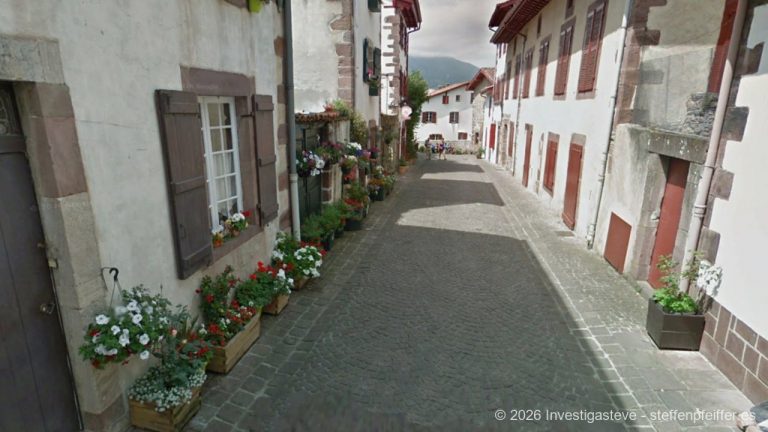
When the dense mountain mist of the Montes de León parts for a moment and reveals a seemingly endless succession of deep-black slate roofs, then you know you have reached El Acebo. The place appears as if grown from the mountain itself, a bulwark of dark rock that defiantly braces itself against the often whistling winds at 1,150 meters altitude. You have left the symbolic Cruz de Ferro and the lonely desolation of Manjarín behind and now physically feel the entry into a new world. The air up here is thinner, clearer, and carries the tart scent of burning birch wood and damp fern. El Acebo welcomes you with an archaic aesthetic: the Calle Real, which runs through the village like a stone backbone, is lined with houses whose wooden balconies extend so far over the alley that they seem almost to touch the sky.
Arriving in El Acebo is characterized by a deep psychological relief, mixed with a haptic roughness. The ground beneath your boots consists of coarse cobblestones that gleam metallically in the rain and, with every step, whisper a story of centuries of pilgrimage. It is a place of thresholds: here you finally bid farewell to the high plateau and prepare for the technically demanding descent into the fertile basin of the Bierzo. The silence of the village is only broken by the rhythmic tapping of pilgrim staffs and the distant gurgling of mountain streams. In El Acebo, time seems to have a different density; the massive stone walls radiate a constancy that grounds the wanderer and at the same time fills him with awe before the power of nature and the will to survive of the people in this extreme altitude.
What This Place Tells
The history of El Acebo is inseparable from the protection and survival of pilgrims in the high mountains. In the Middle Ages, the place was of such crucial strategic importance that the crown granted the inhabitants an extraordinary privilege: they were exempted from all tax payments. This grace, however, was tied to a vital condition. The village community had to mark the path over the pass with 800 wooden posts so that pilgrims would not lose their orientation even in the densest snowfall and raging winter storms. Every time you see the yellow arrows today, you walk on the legacy of these 800 posts – a testament to medieval logistics and merciful care that made El Acebo a sacred anchor point in the mountains.
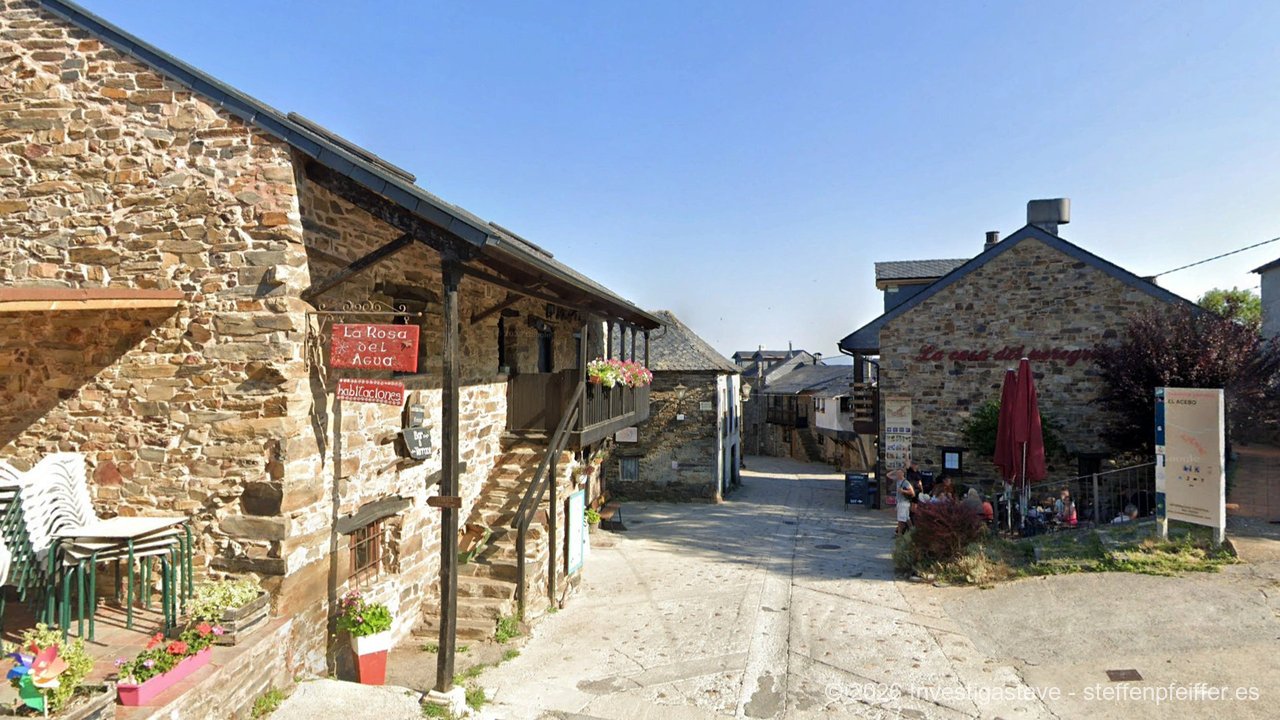
Architecturally, El Acebo tells the story of slate, which here is called “Pizarra.” It is the material that determines everything – the walls, the stairs, and the armor-like roofs that lie on top of each other like the dark scales of a dragon. The wooden “corredores,” those sweeping balconies, served not only as decoration but were functional box seats to make use of the sparse hours of sunshine at altitude or to protect laundry from the Atlantic rain. As you walk along the Calle Real, you feel the historical causality of the construction: below often lived the livestock, whose body heat heated the living quarters above in winter. It is an architecture of frugality that nevertheless radiates a sublime beauty, preserved today for modernity through careful restorations.
The name of the place itself leads us back to nature: “Acebo” means holly. This evergreen plant, immune to cold and wind, stands symbolically for the character of the region and its inhabitants. El Acebo was always the outpost of the Bierzo, a place that initiates the transition from Leonese harshness to Galician mildness. The church of San Miguel Arcángel, dedicated to the fighting angel, reminds us that the path over the mountains has always been a struggle against one’s own limits. In El Acebo, the legend comes alive that San Miguel protects pilgrims from the “demons” of exhaustion and disorientation. It is a narrative of steadfastness that echoes in every stone and every gust of wind sweeping through the narrow alleys.
Addresses & tips in El Acebo
| Accommodation | 7 |
| Restaurants | 1 |
| Sights | 6 |
| Services | 2 |
Show all 16
Camino Distances
In El Acebo begins the steep and rocky descent into the valley of the Bierzo. The elevation changes demand full concentration and good equipment.
| Previous Location | Distance (km) | Next Location | Distance (km) |
|---|---|---|---|
| Manjarín | approx. 7.5 km | Riego de Ambrós | approx. 3.1 km |
| Foncebadón | approx. 11.5 km | Molinaseca | approx. 8.2 km |
Sleeping & Arriving
Arriving in El Acebo is an act of physical relaxation and mental reorientation. After the often lonely kilometers on the ridge of Monte Irago, the village offers an infrastructural oasis that is astonishing for a place with fewer than 30 permanent residents. When you set down your backpack in one of the hostels, you immediately feel the special warmth emanating from the thick stone walls. The parish hostel next to the church offers that simple, spiritual security on a donation basis that many pilgrims seek, while the Mesón El Acebo in the village center radiates a rustic coziness where the smell of freshly brewed coffee and homemade lentil soup hangs in the air.
A haptic highlight at the edge of the village is the modern complex La Casa del Peregrino. It is an almost surreal contrast: in the midst of the rugged mountain world, you find a pool here, its blue water sparkling in the mountain sun. The feeling of dipping your burning feet into the cool water after days of dusty paths, while your gaze sweeps over the wide valley to Ponferrada, is a modern form of metamorphosis. Here, the asceticism of the mountain gives way for a moment to the luxury of regeneration. The accommodations in El Acebo offer a range from monastic simplicity in the parish hostel to boutique rooms in renovated stone houses like La Rosa del Agua, where the creaking of the old floorboards under your socks reminds you of past centuries.
In the dormitories and common rooms, a concentrated, almost reverent atmosphere prevails in the evenings. You hear the muted murmuring of pilgrims, the rustling of maps, and the distant chiming of the church tower clock. The psychological effect of El Acebo lies in its seclusion; you are close enough to civilization to feel safe, yet far enough away to breathe in the silence of the night at over 1,000 meters altitude. Those who sleep here do so under a wide starry sky that, in the clear mountain air, seems so close you could almost reach out and touch the Milky Way. El Acebo gives you that kind of deep, dream-filled sleep that only the mountain can offer after a deed accomplished.
Eating & Drinking
The cuisine in El Acebo is a powerful response to the cold and the exertion of the mountains. Heartiness reigns here. When you sit down at one of the massive wooden tables in the mesón, the first sensory impression is often olfactory: the scent of spicy fried chorizo, garlic, and Pimentón de la Vera fills the room. An absolute must is the local version of Botillo – that legendary meat dish of the Bierzo, often served here with cabbage and potatoes. The taste is intense, smoky, and deeply satisfying; it is food for people who cross mountains. The texture of the meat is so tender that it practically falls off the bone, a haptic pleasure for the hungry hiker.
Alongside the heavy meat dishes, El Acebo also offers the treasures of the mountain forests. In autumn, the whole village smells of roasted chestnuts, whose nutty, sweetish aroma mixes with the smoke from the fireplaces. The local honey, often dark and strong with a note of heather, is a true energy provider for the next morning. You drink it with the wine of the region, a deep red Mencía that sparkles in the glass like liquid ruby and carries the minerality of the slate soil. Drinking this wine is a ritual act of grounding; it warms from within and lets the rigors of the Cruz de Ferro fade into the background.
In the evening hours, eating in El Acebo becomes social glue. You share raciones of regional cheese or Cecina, the air-dried beef that melts on the tongue when sliced wafer-thin. The haptic experience of balancing a slice of spicy sausage on a crust of fresh country bread while discussing the meaning of life with pilgrim friends is the essence of gastronomy along the way. To finish, a homemade Orujo de Hierbas is a must – an herbal liqueur that aids digestion and gets the blood flowing. In El Acebo, you taste the unadulterated nature of the mountains in every bite and every sip.
Supplies & Logistics
Logistically, El Acebo is a strategically important point that demands foresight from the pilgrim. Although the place has a good density of hostels and restaurants, there is no classic supermarket with a fresh produce counter. Supplies are limited to the bare necessities, often offered in the hostels or in the small minimarket of the Casa del Peregrino. Here you find blister plasters, sunscreen, nuts, and water. It is a logistics of short distances, designed to cover the elementary needs of a traveler passing through. If you need special medications or a larger selection of food, you should bear in mind that the next pharmacy and full-range supermarket are only found again in Ponferrada.
The drinking water supply in El Acebo is exemplary. The public fountains, foremost the Fuente de San Miguel next to the church, are fed directly from the mountain springs. The water is ice-cold, crystal clear, and has a purity that puts any purchased energy drink to shame. Haptically, you experience logistics through the weight of your backpack, which you might critically sort out once more up here before undertaking the exhausting descent. For cycling pilgrims, El Acebo is also an important stop to check brakes and equipment, as the coming kilometers show no mercy. The psychological component of logistics here is security: knowing that you have a base here before heading hundreds of meters downhill.
Shopping: No large shops; a small minimarket for pilgrim supplies and snacks is located in the La Casa del Peregrino complex.
Gastronomy: Several restaurants and bars offer hearty pilgrim menus, breakfast from early morning, and regional specialties like Botillo.
Accommodation: Excellent capacities with three hostels and several private guesthouses; everything from donation-based to luxury standard is available.
Public Facilities: Public drinking water fountains and a small medical emergency service (Consultorio), which, however, is only sporadically staffed.
In summary, El Acebo is logistically the perfect “base camp” station at altitude. Those who check their supplies and sort their gear here set out with a feeling of strength into the demanding descent. The place offers the security of an established pilgrim structure, embedded in the wild innocence of the mountains.
Don’t Miss
– Monumento al Ciclista: Directly at the entrance of the village stands a simple monument in the form of a bicycle. It commemorates the German cycling pilgrim Heinrich Krause, who had an accident here. A place of pause and a serious reminder to be cautious during the descent. – Iglesia de San Miguel Arcángel: Visit this Baroque church with its massive walls and look for the statue of James as a pilgrim – a place of silence and strength. – The wooden corredores: As you stroll along the Calle Real, pay attention to the balconies; they are masterful testimonies of local carpentry and shape the face of the Bierzo. – Fuente de San Miguel: Cool your wrists at the ritual fountain next to the church; the water is legendarily pure and invigorating. – Panorama terrace of La Casa del Peregrino: Even if you don’t stay there, a look from the terrace over the plain of the Bierzo is worthwhile – in clear weather, an unforgettable panorama. – Traditional slate roofs: Observe the technique of how the heavy stone slabs are layered; it is a haptic wonder of vernacular architecture. – Evening starry sky: Light pollution is minimal here; use the night for an astronomical reflection at 1,150 meters. – Local holly trees: Look for the namesake acebos at the edge of the village; they are the green guardians of the village.
Insider Tips & Hidden Places
Beyond the Calle Real, where the alleys become narrower and the asphalt turns into paths, hides the “Ruta Vieja,” the old forest path that runs parallel to the modern way. If you take ten minutes and enter this path, you hear only the distant rustle of chestnut leaves and the whisper of the wind. It is a place of total auditory immersion, where you can feel the original wilderness of Monte Irago. It smells here of dry leaves, mushrooms, and the cool moisture of the earth. This is the ideal spot for a silent morning meditation before the bustle of the pilgrim stream begins.
Another hidden treasure is a small, almost overgrown path behind the church leading to a rocky viewpoint. Up there, far from cameras, you can experience the haptic pleasure of simply sitting on an ancient rock and watching the shadows of the clouds chase across the Bierzo Valley like ghosts of the past. Those who look closely often find small symbols in the crevices of the old barn walls, left there by the inhabitants over generations – carved crosses or protective signs against evil spirits. In these details, El Acebo reveals its true, mystical soul.
A special tip is to visit the village at sunrise. When the light is still diffuse and the mist flows through the alleys like a liquid mass, El Acebo transforms into a place between worlds. In this moment, when only the first chirping of larks can be heard, you feel the spiritual weight of the centuries most intensely. It is also worth asking local vendors about forest honey or hand-harvested chestnuts; these products are often sold directly from the houses and offer an unadulterated taste of the region. Those who seek out these hidden corners and moments experience El Acebo not just as a transit place, but as a profound experience of deceleration.
Moment of Reflection
In El Acebo, you stand at a psychological threshold. The altitude of 1,150 meters and the massive presence of the slate-roofed walls challenge you to question your own resilience. Psychologically, this is the moment of metamorphosis: you leave the barren harshness of the mountains behind and prepare yourself for the abundance of the valley. Do you feel the change in your breath? In El Acebo, you learn that strength lies not only in moving forward, but also in standing firm against the elements. The historical causality of the 800 posts reminds you that you are part of a network – every step you take has already been taken by millions before you.
This realization gives you deep humility. As you sit perhaps on the wall before the church of San Miguel and drink the cool water, you reflect on your own path. What are your 800 posts? Who are the guides in your life? El Acebo gives you the necessary emptiness and silence to move these questions. The historical depth of the place acts like a soothing anchor. You recognize that you are not alone, even if you walk physically alone. The metamorphosis takes place here in the dialogue between the hard stone and the soft light of the evening. When you leave El Acebo, you take the solidity of the slate with you in your heart – ready for the descent, ready for the goal.
Camino of the Stars
This place lies on the Camino Francés, on the stage from Rabanal del Camino to Ponferrada. The sequence of locations is:
Rabanal del Camino → Foncebadón → Manjarín → El Acebo de San Miguel → Riego de Ambrós → Molinaseca → Campo → Ponferrada
Did you feel the silence above the clouds in El Acebo or enjoy the coolness of the water at the Fuente de San Miguel? Perhaps the encounter at the cyclist’s memorial gave you a new perspective on the way? Share your experiences of this special mountain village with us – was it the view into the valley or the security of the slate walls that impressed you most? We look forward to your story of the Way of St. James!
About the Author