First Glance – Introduction & Atmosphere
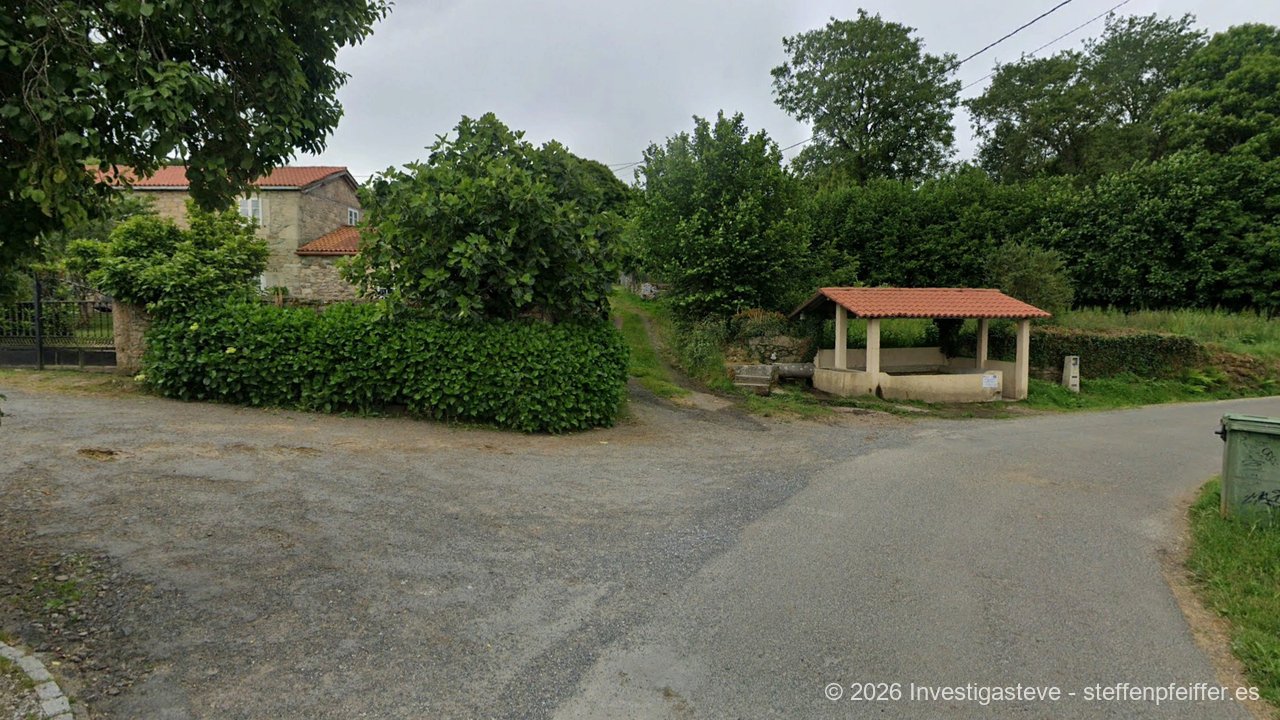
When you leave the dense, often mist-shrouded forest passages behind Portomarín and Airexe, the Galician landscape opens up to a gentle, almost contemplative vastness, where Lestedo rests like a forgotten jewel of granite. It is that moment on the Camino Francés when the rugged wilderness of the preceding kilometres gives way to a cultivated, deep silence. You set foot on the path leading to Lestedo and immediately feel a tactile change: the ground, often still damp from the legendary Galician orballo, springs beneath your boots, while the rhythmic click of your pilgrim staffs on the scattered stone slabs creates an echo thrown back by the ancient dry stone walls. The air here has a special quality; it is saturated with the resinous scent of the pines and the heavy, earthy aroma of ferns thriving in the shade of the mighty oaks. It is an olfactory welcome that instantly decelerates you and prepares your mind for the spiritual depth that this hamlet has preserved since the 12th century.
The atmosphere in Lestedo is marked by an archaic sense of security. While the wind gently brushes through the crowns of the chestnut trees, weaving an acoustic panorama of soft rustling and the distant ringing of a cowbell, you feel as a pilgrim like being in a time capsule. The visual experience is dominated by the harmony between the grey weight of Galician granite and the almost unnaturally bright green of the surrounding meadows. Lestedo is not a place of loud promises, but a place of subtle transitions. Psychologically, arriving here marks the moment when the physical exertion of the long stage gives way to a deep, inner peace. You smell the distant smoke of a wood fire and the promise of a warm meal, while the sun – if it shows itself – bathes the lichen-covered walls of the houses in a warm, golden light. Here you are no longer just a walker; you become part of a centuries-old procession of seekers who have found an anchor for their souls in the simple beauty of this place.
What This Place Tells
Lestedo is a stone chronicler of medieval pilgrim glory and the deep rooting of faith in the Ulloa region. The historical causality of its existence is inseparable from the veneration of the Apostle James, which is already manifested in the official name of the parish “Santiago de Lestedo”. The heart of the village, the 12th-century parish church, is a masterpiece of rural Romanesque architecture. Its walls tell stories of stonemasons who, with the simplest tools, created an architecture of eternity. When you breathe in the cool, heavy air inside the church, you smell the dust of centuries and the beeswax of countless candles. The simple design of the building acts like a psychological mirror: it challenges you to shed the unnecessary ballast of your everyday life and to reflect on the foundation of your being.
The history of Lestedo is also closely linked to the monastic heritage of Galicia. Once, there were connections here to powerful orders that protected and supplied the flow of pilgrims. An outstanding testimony of this time is the Casa Rectoral, the old rectory, which is now experiencing a renaissance as a boutique hostel. This building is far more than just a structure; it is a manifestation of the hospitalitas that has formed the DNA of the Camino de Santiago for 1200 years. In the massive stone walls and the deep window embrasures, the warmth of past generations is preserved. You can easily imagine tired medieval wanderers sitting here by the fire while the Galician rain lashed against the slate roofs outside. This historical continuity gives Lestedo a dignity that is often sought in vain at more modern stage destinations.
But Lestedo also tells of the symbiosis between man and nature in the Comarca Ulloa. Traditional agriculture, livestock farming and forestry have shaped the face of the place. Every house, every hórreo – those typical granaries on stilts – is a functional work of art that speaks of the hard work on Galician soil. The psychological sharpness of the place lies in this down-to-earthness. In Lestedo, history is not presented in museums; it is lived. When you touch the rough texture of the granite, polished smooth by generations of hands, you grasp the causality of constancy. Lestedo teaches us that true progress often consists of preserving the essential. It is a place of spiritual reorientation, where the past is perceived not as a burden, but as a solid foundation for the future.
Addresses & tips in Lestedo
| Accommodation | 2 |
| Sights | 1 |
Camino Distances
After about 0.7 kilometres through rural idyll, the gate to Lestedo opens.
| Previous Town | Distance (km) | Next Town | Distance (km) |
|---|---|---|---|
| Valos | ca. 0.7 km | Rosario | ca. 2.5 km |
Sleeping & Arriving
Arriving in Lestedo is a process of conscious deceleration, almost ritual in character. When you leave the last bend of the forest path behind you and the first houses of the village appear, a psychological weight lifts from your shoulders. There is no hectic welcome here, only the quiet certainty of an accommodation that welcomes you like an old friend. The highlight is undoubtedly the Casa Rectoral de Lestedo. This lovingly restored rectory is a tactile experience in itself. You feel the cool solidity of the metre-thick stone walls and hear the soft creaking of the massive wooden floorboards, which whisper the history of the house with every step. Arriving here is shaped by the personal touch of the hosts, who make every pilgrim feel like a long-awaited guest in a private home.
In the dormitories and private rooms of the hostels in Lestedo, a microclimate of peace prevails. The acoustic backdrop is characterised by the absence of any mechanical noise; instead, you only hear the distant rustling of the wind in the trees and perhaps the rhythmic chirping of crickets at dusk. It is a tactile blessing to lie down on the clean sheets, often smelling of fresh mountain air, after a shower and let the tension of the day flow out of your limbs. The architecture of the accommodations, often integrating Romanesque and medieval elements, promotes a psychological metamorphosis: away from the performance thinking of the kilometres towards the pure perception of the moment. Here in Lestedo, the bed is not just a place to sleep, but a place of healing and mental realignment.
The communal areas of the hostels, often located in old courtyards or under heavy stone vaults, are places of social immersion. Here you meet pilgrims from all over the world, who in the intimacy of this small village find each other much faster than in the anonymous large hostels of the cities. The scent of brewed tea and the comforting smell of a crackling fireplace in autumn create an atmosphere of brotherhood. Stories are shared, blisters and plans are compared, while outside the Galician night envelops the hamlet in deep silence. Arriving in Lestedo also means reconciling with your own exhaustion and feeling gratitude for the path you have covered. It is that “morriña” in a positive sense – a longing for constancy that finds its fulfilment here in Lestedo.
For pilgrims seeking a more spiritual hostel experience, the simplicity of the surroundings offers an ideal setting for meditation or prayer. There is no distraction from televisions or urban hustle. The tactile reality of the place – the rough stone, the hard wood, the clear water – leads you back to your roots. Those who stay overnight in Lestedo consciously choose the quality of silence. The next morning you wake with the first light filtering through the small window gaps and hear the familiar sound of the first walking sticks on the pavement. You continue not only rested, but with an inner clarity that you might have lost in the hustle of Palas de Rei. Lestedo gives you the time you need to truly arrive.
Eating & Drinking
The culinary experience in Lestedo is a journey to the roots of Galician gastronomy. In the kitchen of the Casa Rectoral and the small local mesóns, eating is celebrated as an act of care. The smell that wafts through the lanes of Lestedo in the late afternoon is an olfactory promise of satiety and warmth: it smells intensely of Caldo Gallego, that hearty stew of cabbage, potatoes and beans, refined with a piece of bacon. The tactile warmth of the soup bowl in your often cool hands is the first step towards physical regeneration. Each spoonful of this honest food brings the power of the Galician soil directly into your system. It is a culinary causality that needs no frills to unfold its effect.
Particularly noteworthy is the quality of the local products from the Comarca Ulloa. You taste the artisan-baked bread, whose crust is so crispy that it gives a loud, auditory signal of freshness when broken, while the inside remains soft and airy. The tactile texture of the firm dough, combined with the mild, buttery taste of Arzúa-Ulloa cheese, is a sensory feast. You taste the herbs of the meadows and the purity of the water. To drink, a simple but characterful wine of the region is often served, offered in traditional ceramic bowls. The cool weight of the bowl in your hand and the earthy taste of the wine form the perfect contrast to the preceding physical exertion. Here in Lestedo, you do not just eat to get ahead; you taste the identity of an entire region.
The psychological component of eating in Lestedo lies in the community. During the communal dinners in the hostel, the table becomes a place of peace. You smell the aroma of roasted meat, often prepared over an open fire, and hear the polyglot hubbub of fellow pilgrims. The taste of homemade desserts, such as typical flan or a piece of cheese with quince paste, rounds off the experience. It is this “food for the soul” that teaches you that true enjoyment lies in the quality of the ingredients and the love of preparation. Those who dine in Lestedo absorb a piece of Galician joy of life that will carry them over the next hills from Rosario to Palas de Rei.
Supplies & Logistics
Logistically, Lestedo is a place of strategic concentration. Those who come here are not looking for supermarkets in the conventional sense, but a reliable base for regeneration. The causality of its location makes Lestedo the ideal outpost before the larger hub of Palas de Rei. Here, logistics become personal care, which for many pilgrims has inestimable psychological value.
Shopping: There are no large shops or supermarkets on site. The supply of the essentials for the next day’s walk is provided directly by the hostels and the adjoining bars. For comprehensive shopping or pharmacy visits, Palas de Rei, which is only about 5 km away, is the logistical point of contact.
Gastronomy: Catering is secured by the excellent restaurant in the Casa Rectoral and local food points. The quality is high, as they rely on the satisfaction of passing pilgrims and use local, fresh ingredients.
Sleeping: With the high-quality boutique hostel and other private options, Lestedo offers considerable capacity for its size. Advance reservation is strongly recommended for psychological security due to the popularity of the place.
Public Facilities: There are no medical services, banks or post offices in Lestedo. All formal infrastructure must be used in Palas de Rei, which logistically is easily manageable due to the short distance of about an hour’s walk.
Safety in Lestedo is exceptionally high due to the manageable size and the family structure. You immediately feel part of a small, protected community. The acoustic calm and minimal traffic ensure undisturbed recovery. Logistically, the place acts as a “buffer zone” that allows the long stages between Portomarín and Arzúa to be cleverly divided. Those who choose Lestedo as a stage destination opt for logistical simplicity, which is more than compensated for by the high quality of personal hospitalitas. It is a place that shows that efficient pilgrim logistics do not lie in the quantity of shops, but in the reliability of the hostel.
Don’t Miss
- The Iglesia de Santiago de Lestedo: This 12th-century Romanesque building is an absolute must; pay attention to the artistic capitals and the simple dignity of the chancel.
- The Casa Rectoral: Even if you don’t stay overnight, a look at the architecture of this restored rectory is worthwhile – a prime example of Galician stonemasonry.
- The view of Pico Sacro: On clear days, you can make out the striking silhouette of this sacred mountain in the distance, a spiritual signpost towards Santiago.
- The forest area around Lestedo: Use the morning hours for a meditative walk through the adjacent oak forests when the mist still hangs between the trunks.
- The communal pilgrim breakfast: Start the day in the hostel with homemade jams and fresh bread to absorb the social energy of the place.
Insider Tips & Hidden Places
Away from the marked pilgrim path, only about a hundred metres behind the church of Santiago de Lestedo, a narrow path, often overgrown with bramble vines, leads to a small, ruined well house. This place is an insider tip for those seeking tactile coolness and absolute acoustic isolation. The ground here is covered with a thick layer of soft moss that makes every step silent. Here it smells intensely of fresh spring water and wet granite. It is the perfect spot for a private reflection, far away from the conversations of fellow pilgrims. Here you feel the historical causality of water veneration, which in Galicia is often older than Christianity itself.
Another hidden treasure is a small hill west of the hamlet, often overlooked by the locals. From there, at sunset, you have an incomparable visual panoramic view over the entire Comarca Ulloa. The play of light and shadows wandering over the green valleys creates a psychological spaciousness that opens the heart. Up here, you only hear the distant rustling of the wind and the occasional caw of a raven. It is a place of total immersion in the nature of Galicia that makes you truly comprehend the vastness of the landscape.
If you look closely, you will find tiny symbols carved into the stone on the old dry stone walls around the Casa Rectoral, left by pilgrims of past generations as silent witnesses. When you run your fingertips over these notches, you touch the individual history of a person who, just like you, hoped or gave thanks at this spot. It is a tactile communication across the centuries that reminds you that the Camino is an infinite chain of small, personal moments. Such details reveal themselves only to the seeker who is willing to adapt the pace of their journey to the speed of their soul.
Finally, it is worth following the small stream that crosses the lower part of the village at dusk. There, where the alders bend their branches deep over the water, an almost unreal, green cathedral is created. The acoustic splashing of the water acts like a natural sedative for the mind. Here you often find rare ferns whose tactile delicacy forms a fascinating contrast to the hardness of the granite. In these hidden corners of Lestedo, you feel the “true” Galicia – a place that pretends nothing, but preserves its beauty in silence and detail.
Moment of Reflection
In Lestedo, you stand at a point of maximum balance. The harmony between the 800-year history of the church and the contemporary peace of the Casa Rectoral challenges you to think about your own balance. In the cool silence of the Romanesque nave, ask yourself: “Where in my life does this constancy prevail, and where do I need the courage for renewal?” The psychological metamorphosis that takes place in Lestedo is the change from outward movement to inward reflection. The stone gives you the necessary grounding, while the vastness of the Ulloa opens your view to new perspectives.
The historical causality of your being here connects you with the monks and knights for whom this place was a spiritual anchor. Do you feel the responsibility to carry forward this heritage of pausing? In Lestedo, you become aware that the Camino is not a race against time, but a search for your own centre. The tactile reality of the rough granite under your hands reminds you of your own resilience. Use this moment of reflection to clear your mind for the coming stages. When you leave Lestedo tomorrow, you take not only your backpack, but also the certainty that in the silence of the stones you have found an answer to a question you had not yet asked.
Camino of the Stars
This place lies on the Camino Francés, on the stage from Portomarín to Arzúa. The sequence of places is:
Portomarín → Gonzar → Castromaior → Hospital da Cruz → Ventas de Narón → Ligonde → Eirexe → Portos → Lestedo → A Calzada → Rosario → Palas de Rei
Did you also feel that moment of absolute peace in the Romanesque silence of Lestedo, or experience one of the unforgettable Cenas Comunitarias at the Casa Rectoral? Perhaps you have found your own secret spot by the ruined well before climbing the hills towards Rosario? Share your personal impressions, your photos of the church of Santiago, or your culinary discoveries in the Comarca Ulloa with us. Your story helps others to consciously perceive the magic of this small hamlet on the Camino!
About the Author