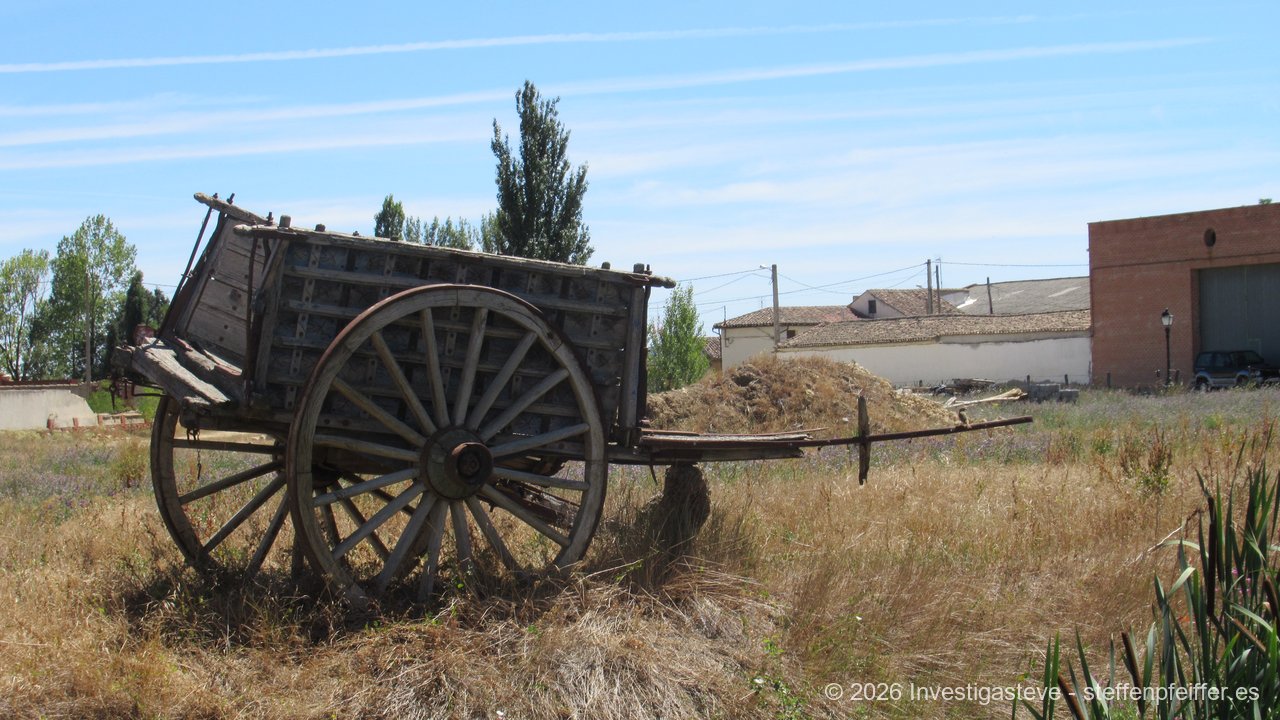
A new stage day – entering the stage
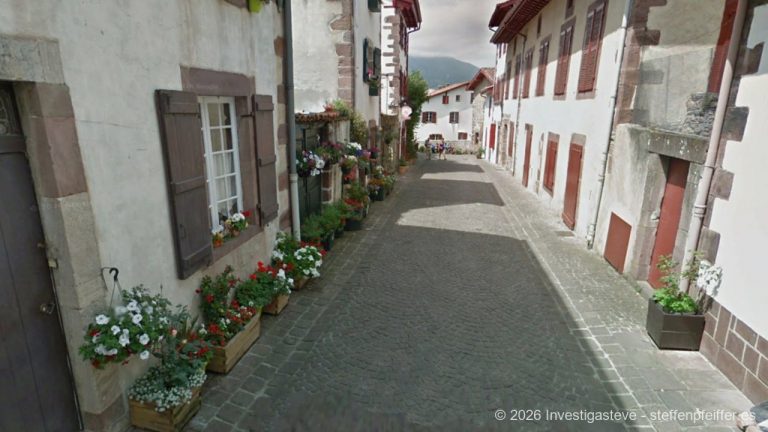
The morning in Castrojeriz begins with an almost tangible silence, broken only by the distant, rhythmic beating of the bells of Santa María del Manzano. When you leave the narrow alleys of this elongated village, a cool, almost damp veil of mist still lies over the Castilian plateau, bathing the ruins of the mighty castle on the mesa above you in a mysterious light. The air is clear and carries the pungent scent of dry limestone, mixed with the first smoke of chimney fires and the sweetish aroma of dew-fresh broom. It is a moment of caesura. As you leave the last stone of the town behind, you feel the massive presence of the “wall” that rises immediately before you – the Alto de Mostelares. Your gaze wanders up to the ridge, where the path seems to cut a vertical line into the sky, and you notice how your pulse already quickens in anticipation of the coming exertion.
This departure is a ritual entry into the heart of the Tierra de Campos. Your steps on the old cobblestones soon give way to the hard, dusty ground of the path that leads you relentlessly upwards. It is a haptic experience of resistance: the backpack presses with new weight on your shoulders, while your lungs greedily absorb the oxygen-rich morning air. Behind you, medieval Castrojeriz slowly sinks into the depths, and with every meter of altitude, not only the horizon expands, but also your understanding of the dimensions of this landscape. You feel the connection to the millions of pilgrims who, for over a thousand years, have gathered their courage precisely at this point to conquer the Meseta in its purest form. It is a path of decompression, a ritual shedding of urban confinement towards the absolute freedom of the plain.
Route and elevation profile
Distance: 24.7 km
Elevation gain: ↑ 240 m / ↓ 220 m
Difficulty: Moderate to Hard. The cold start with the 18% gradient to the Alto de Mostelares challenges physical fitness, while the subsequent flat stretch demands psychological endurance.
Special features: The notorious ascent to Mostelares, the historic crossing over the Río Pisuerga at the Puente de Itero, and the meditative riverside passage along the Canal de Castilla.
Today’s route can be divided into three dramaturgical acts that could not be more different. The first act is the physical shock: immediately after leaving Castrojeriz, we ascend almost vertically onto the high plateau of the Alto de Mostelares. In less than two kilometers, we overcome the majority of today’s elevation gain. Once at the top, the Meseta reveals itself as a perfect, almost abstract plain, where the wind sweeps unhindered over the barren fields. The descent is equally steep and leads us into the wide valley of the Pisuerga, where the ground changes from calcareous rock to reddish clay.
The second part of the stage leads us through the borderland between the provinces of Burgos and Palencia. We cross the flat alluvial land of the river, pass the lonely Puente de Itero, and head towards the Tierra de Campos. The terrain here is flat, almost without natural shade, characterized by endless agricultural tracks that allow the gaze to wander far into the distance. The third and final act is an engineering and landscape surprise: from Boadilla del Camino, we follow the Canal de Castilla. This passage is a balm for mind and body, as the path now runs completely flat along the water, lined with poplars that provide the first real shade of the day, until we finally reach the monumental lock staircase of Frómista.
Variants and small detours
On this stage, there are hardly any significant scenic variants, as the geography of the mesa and the canal largely dictates the route. Nevertheless, a small but fine decision offers itself to the attentive pilgrim in Boadilla del Camino. One can choose whether to cross the town by the direct route or take a small detour to the famous justice column, the “Rollo de Boadilla.” This short detour of a few hundred meters is no physical challenge, but a historical gain, as here you find one of the best-preserved testimonies of medieval jurisdiction in Castile.
Another subtle detour presents itself at the Hospital de San Nicolás directly at the Puente de Itero. Instead of crossing the bridge hastily, it is worth taking the small path down to the riverbank. Here, in the half-shade of the old bridge arches, you find a perfect silence far from the main path. It is a place of contemplation, where you can hear the rushing of the Pisuerga unfiltered before crossing the border into Palencia. These tiny deviations are what loosen the flow of the stage and allow the pilgrim to break out of the collective movement of the main stream for a moment.
Description of the path – with all senses
The path begins with a physical limit experience that demands your full attention. The “wall” of the Alto de Mostelares is a haptic challenge of the highest order. You feel your calf muscles tense, how the tendons work with every step on the loose limestone gravel. The ground beneath you is restless; small stones crunch and roll away under your soles as your body weight, at an 18% gradient, heavily taxes your strength. You hear nothing but your own heavy breathing and the rhythmic clicking of your hiking poles, marking your struggle against gravity like a metronome. The smell of dry dust and hot stone rises to your nose, mixed with the metallic note of sweat on your upper lip. It is an archaic effort that anchors you completely in the “here and now.”
Arriving at the top of the plateau, the visual force of the Meseta hits you. Suddenly, the vertical effort gives way to an infinite horizontal expanse. The wind, blowing with unexpected force up here, cools the sweat on your forehead and carries the distant scent of dry wheat and herbs. You stand on a rooftop of the world, from which Castrojeriz looks like a toy town in the depths. The silence up here is absolute, an auditory vacuum filled only by the whistling of the wind in your ears. The historical causality becomes tangible here: you stand on a strategic observation point that served as an orientation for Roman legionaries and medieval guards. The psychological metamorphosis is immense; the pain of the ascent gives way to a feeling of triumph and boundless freedom.
The descent leads you down into a world of ochre tones and red earth. You feel the heat now rising from the fields, as the path becomes narrower and more winding. In the distance, you see the Puente de Itero, a stone monument of constancy. When you cross the bridge, you feel the cool breath rising from the Río Pisuerga. Your hand glides over the rough, sun-warmed stone of the parapet, smoothed by centuries of weathering. Here it smells of damp mud, algae, and the freshness of flowing water – a rare olfactory luxury in the otherwise so dry Tierra de Campos. You cross the invisible border from Burgos to Palencia, a moment of geographic transformation reflected in the slightly changed color of the fields.
The Hospital de San Nicolás, immediately behind the bridge, offers a five-dimensional immersion into the world of medieval hospitality. You step out of the glaring sun into the cool darkness of the old chapel. The smell of beeswax, old wood, and cold stone envelops you like a protective blanket. You hear the soft murmuring of the hospitaleros and the distant ringing of a small bell. Here, the history of the Camino is not read, but felt. The water offered to you here tastes of iron and earth – it is the essence of refreshment. The psychological effect of this place is profound; you no longer feel like a wanderer in a foreign land, but like a returnee to an ancient tradition of care.
The path to Itero de la Vega and on to Boadilla del Camino is characterized by the meditative monotony of the Tierra de Campos. The ground beneath your feet is now flat and dusty, an endless track of reddish clay. You taste the fine dust on your lips, a salty mixture of earth and exertion. The acoustic backdrop is dominated by the distant hum of insects in the midday heat and the dry rustling of grain stalks at the wayside. It is a visual reduction to the essential: earth, sky, and the red thread of the path. Arriving in Boadilla, the architecture of stone breaks the monotony. The church of Santa María receives you with haptic splendor; you feel the coolness of the massive walls and admire the geometry of the Romanesque arches, standing like stone prayers in the heat.
Behind Boadilla begins the most peaceful section of the entire day: the Canal de Castilla. Suddenly, everything changes. The dry heat of the fields is replaced by the humidity and shade provided by the dense rows of poplars on the bank. You hear the rhythmic splashing of water against the banks and the polyphonic concert of birds seeking shelter in the trees. The smell of eucalyptus and damp grass hangs in the air, an olfactory redemption after the dusty kilometers of the Meseta. The ground beneath your feet is flat and soft here, a blessing for your tired joints. It is a phase of psychological decompression; the water acts like a mirror for your thoughts, and the kilometers pass in an almost trance-like lightness.
The approach to Frómista along the canal is a visual crescendo. You see the towers of the town appear on the horizon as you pass the spectacular lock staircase. You hear the roar of the water as it plunges over the monumental steps – a technical marvel from a time when they tried to bring the gold of Castile to the sea by waterway. The smell of iron and wet machinery mixes with the scent of nearby gardens. The historical causality here becomes clear in its industrial dimension: the canal was the lifeline of an entire region, and you now walk on the path of the former muleteers.
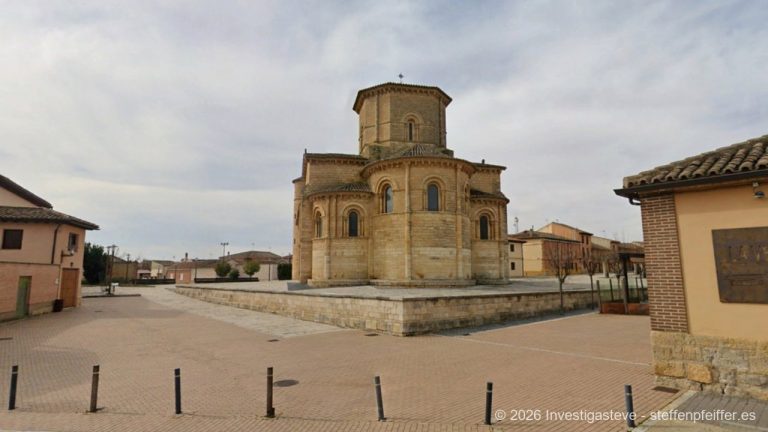
When you finally enter Frómista, the first encounter with the church of San Martín is a moment of aesthetic perfection. You stand before a building so perfectly proportioned that it seems almost unreal. Your hand glides over the finely carved limestone, which feels smooth and cool. You hear the distant ringing of the town’s bells and the murmur of people on the plaza. The smell of freshly baked bread and coffee from the nearby bars mixes with the sacred aura of the place. The psychological metamorphosis of the day is complete: from the painful struggle on the wall of Mostelares, through the meditative silence on the canal, to the intellectual and spiritual clarity of Romanesque perfection. You have arrived, exhausted, but filled with the sheer beauty of this transition.
Intermediate places & special features
Castrojeriz is a living monument of medieval settlement history. As the “longest village on the Camino,” it nestles at the foot of the mesa. The Colegiata de Santa María del Manzano houses significant works of art, but the true special feature is the atmosphere of a town completely oriented towards the flow of pilgrims. The ruins of the castle on the hill above tell of warlike times and offer one of the best viewpoints in the entire province of Burgos.
Alto de Mostelares is not a place, but a test. At 917 meters in altitude, this point offers a 360-degree view over the Tierra de Campos. Up here, you stand on the “roof of the Meseta.” The special feature is the absolute exposure – you are defenseless against the elements, making this place one of the most intense nature experiences of the Way. A simple cross marks the apex, where many pilgrims pause to breathe in the sheer expanse of the landscape.
Puente de Itero and Hospital de San Nicolás – This 11th-century bridge is more than just a river crossing; it is a symbol of connectedness. Here, the province of Burgos ends and Palencia begins. The Hospital de San Nicolás, run by an Italian brotherhood, is famous for its authentic pilgrim care. Traditional foot washing is still practiced here, and the evening community is an example of the “spiritual socialism” of the Camino.
Boadilla del Camino – This village is known for its artistic vein. The justice column (Rollo) on the plaza is a masterpiece of late Gothic and testifies to the former importance of the place. The church of Santa María houses a 13th-century baptismal font, one of the finest in the region. In Boadilla, one feels the transition from the barren high plateau to the irrigated land of the canal, which is also reflected in the vibrant garden culture of the hostels.
Canal de Castilla – This gigantic infrastructure project of the 18th century is now an ecological paradise. With a length of almost 200 kilometers, it was intended to connect Castile with the north. The stage follows one of the most beautiful sections, past old mills and weirs. The special feature is the microclimate: while it burns on the fields, a pleasant coolness prevails along the canal, making this section one of the most popular for meditative reflection.
Frómista – The “capital of Romanesque art” in Palencia. Frómista is an important junction where history and modernity meet. The absolute highlight is the church of San Martín de Tours, a prime example of High Romanesque. In addition, the church of San Pedro with its sacred museum impresses. The town is also famous for its four-level lock on the Canal de Castilla, the only one of its kind, which today still celebrates the engineering skills of past centuries as an architectural monument.
Dining, accommodation & supplies
The supply situation on this stage is excellent, which somewhat mitigates the hard start in the morning. After crossing Mostelares, you often find a small refreshment at the Hospital de San Nicolás before you can fully stop in Itero de la Vega.
Gastronomy: In Itero de la Vega and Boadilla del Camino, there are traditional bars specializing in pilgrim breakfasts and hearty daily dishes. In Frómista, you should definitely try the regional cheese specialties offered in the small delicatessens around the church of San Martín.
Accommodation: In Boadilla, the Albergue “En El Camino” offers a legendary garden with a pool, which for many is the salvation after the heat of the Meseta. In Frómista, there is a wide selection from the traditional municipal hostel to upscale hotels like “Estrela do Caminho.”
Public facilities: As a regional center, Frómista offers pharmacies, banks, and a health center. In Boadilla and Itero, supply options are limited to the essentials.
The special thing today
The absolute unique selling point of this day is the extreme contrast between the “wall” and the “water.” No other stage on the Camino Francés begins with such a brutal physical challenge as the Alto de Mostelares, only to transition a few hours later into the perfect horizontal calm of the Canal de Castilla. This contrast reflects the psychological journey of the pilgrim: the struggle against inner resistance on the mountain is rewarded with the flowing release on the water. It is a stage of extremes that shows that beauty often waits immediately behind the greatest effort.
A second special aspect is the Puente de Itero as a “bridge of peoples.” As it marks the border between two provinces and has been trodden by millions of people from all over the world for centuries, it has an almost mystical aura of unity. The Hospital de San Nicolás reinforces this feeling through its international staff. Here, the spirit of the “Confraternita” is lived, showing the pilgrim that the Camino is not a national, but a universal experience. The special thing here is deceleration: while the world outside becomes faster and faster, time seems to stand still at the Puente de Itero.
Finally, the Romanesque perfection of San Martín in Frómista is an aesthetic highlight that goes far beyond architecture. The fact that this building was almost a ruin in the 19th century and was restored to its original state through masterful restoration tells a story of appreciation and preservation. When you stand before the 281 corbels, each showing a different face or symbol, you grasp the infinite attention to detail of the medieval builders. The special thing about Frómista is this moment of enlightenment, when after the rough nature of the Meseta, you suddenly stand before a mathematical and artistic perfection.
Reflection at the end of the stage
When you sit on the plaza before San Martín in Frómista in the evening and watch the low sun bathe the stones of the church in a warm honey-yellow, you feel a deep gratitude. The day that began so painfully on the wall of Mostelares has gently led you to the bank of the canal and finally set you down here, in the center of Romanesque art. You realize that the effort of the morning was necessary to be able to appreciate the peace of the afternoon at all. The pain in your calves is now only a distant echo, overlain by fulfillment.
Frómista is a place of order and clarity. After the Meseta confronted you with its sheer force in the morning, this town offers you a spiritual home. You realize that the path has led you today through all states of being – from struggle through silence to wonder. In the reflection of the day, it becomes clear to you that the Tierra de Campos is not empty, but a space you have filled with your own experiences. You are ready for what is to come, because today you have learned that after every mountain, flowing water awaits, and after every effort, perfect beauty.
Camino of the Stars
This stage lies on the Camino Francés, on the stage from Castrojeriz to Frómista. The sequence of places is:
| Stage | Start | Destination | Distance (km) | Elevation gain | Difficulty | Intermediate places |
|---|---|---|---|---|---|---|
| 15 | Castrojeriz | Frómista | 24.7 | ↑ 240 / ↓ 220 | moderate | Alto de Mostelares → Puente de Itero → Itero de la Vega → Boadilla del Camino → Canal de Castilla |
Did you meet yourself on the wall of Mostelares? Was the Canal de Castilla a redemption for you or a meditative monotony? Which moment in Frómista touched your pilgrim heart most deeply after the long journey through the Meseta? Share your story of the mountain and the water with us – every star in the Camino sky has its own brilliance.
About the Author

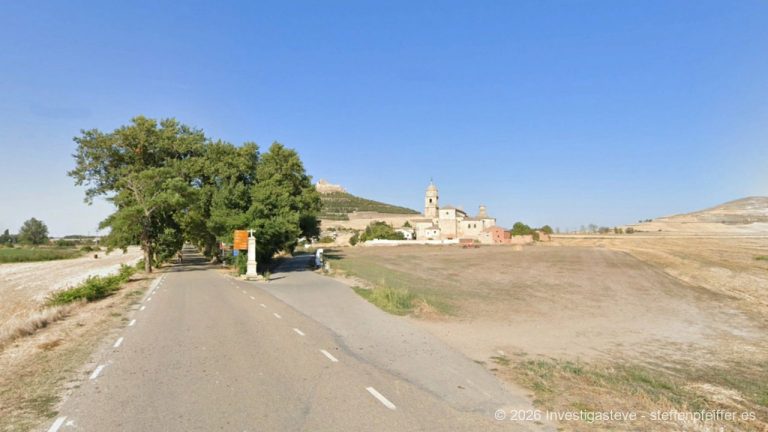
Castrojeriz – The Sleeping Castle Ruin at the Gateway to Infinity
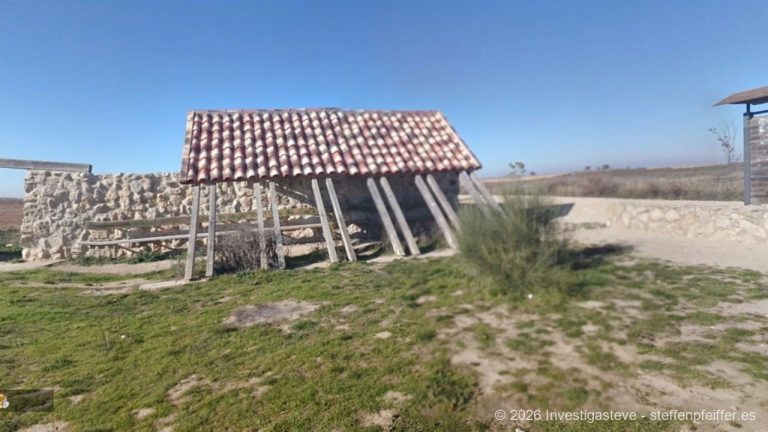
Alto de Mostelares – The Wall of Truth Above the Ocean of Gold
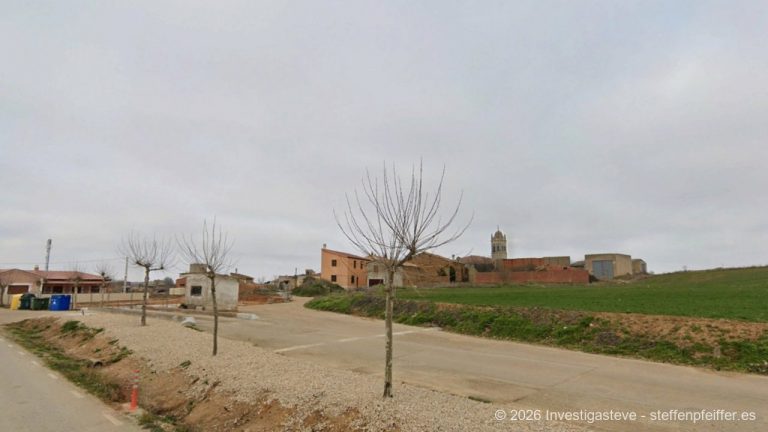
Itero del Castillo – The Stone Border Post of Meseta Dreams
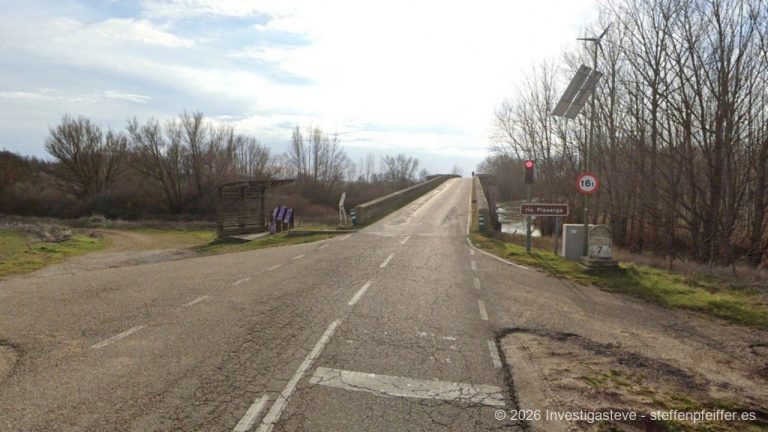
Puente Fitero – The Stone Gateway Between Kingdoms
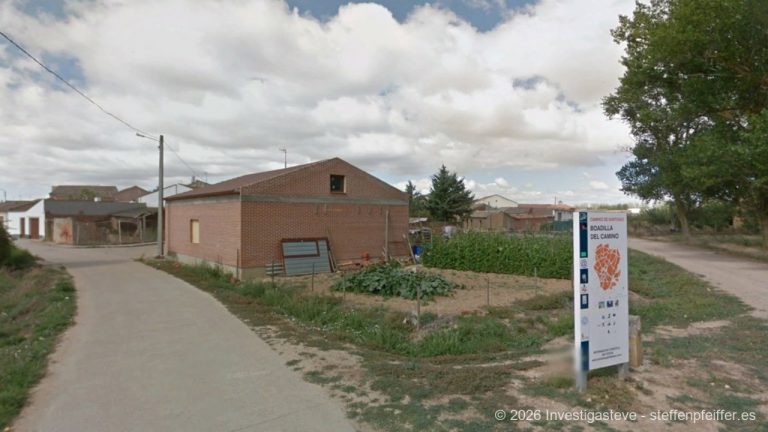
Boadilla del Camino – The Stone Promise of Freedom and Water