A First Glance – Introduction & Atmosphere
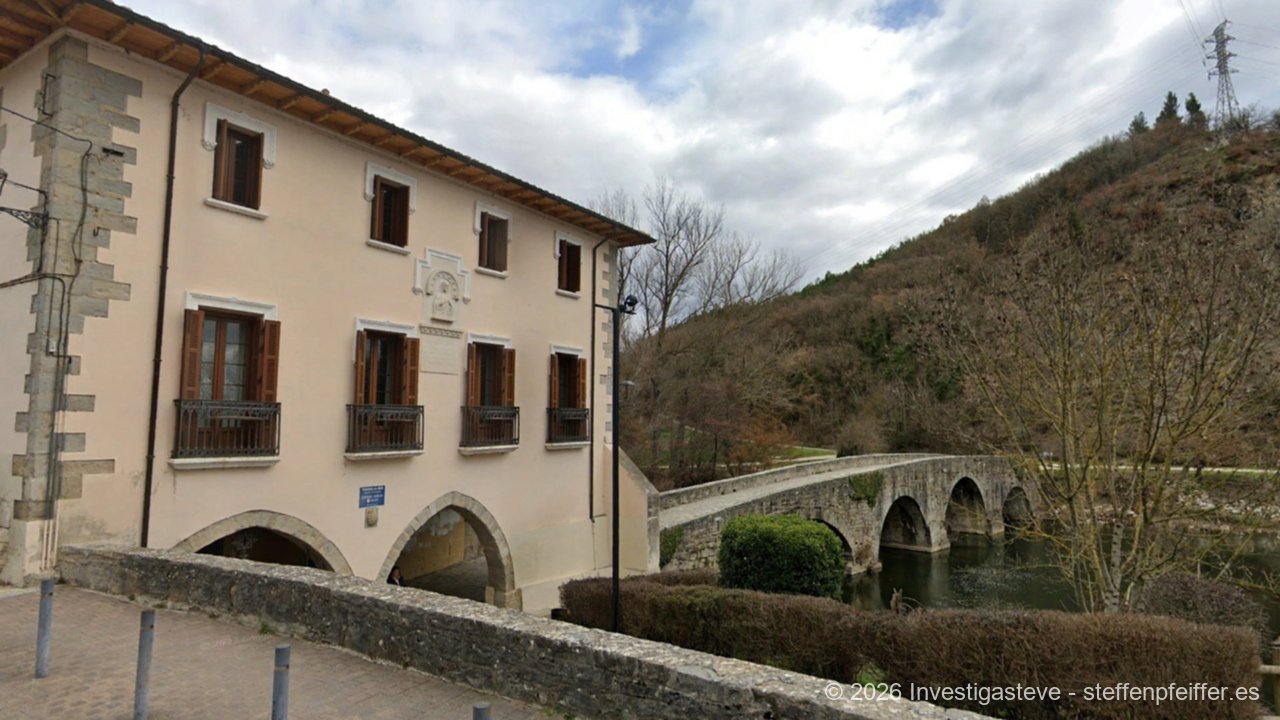
When you leave the shady paths of the Esteríbar Valley behind, where the dust of the Pyrenean foothills still clings to your boots, Arre does not announce itself with loud noise, but with a deep, archaic rumble. It is the sound of the Río Ultzama, which here marries the Arga, an auditory crescendo marking the transition from rural stillness to the pulsating vestibule of the capital, Pamplona. Arre is far more than just a geographic point; it is a sensory lock. As you approach the medieval bridge that spans the river like a stone spine, the air changes. It becomes more humid, cooler, and carries the sharp scent of flowing water, moss, and the distant, metallic breath of the nearby city. It is an olfactory signal for the pilgrim: one world ends, another begins.
The tactile experience of Arre is defined by the unyielding nature of the limestone. When you enter the Trinidad de Arre, that monumental complex of monastery, Hospital, and basilica, you feel the coolness breathing from the meter-thick walls. Even in high summer, when the Navarrese sun makes the asphalt of the nearby roads shimmer, this place preserves an almost unearthly freshness. Your fingers glide over the rough surfaces of the bridge piers, which have withstood the assault of floods and millions of pilgrim footsteps since the 11th century. It is an encounter with constancy that casts a psychological anchor. Here, on the threshold of Pamplona’s suburban belt, the pilgrim experiences an emotional metamorphosis. Pride in the conquered kilometers from Zubiri mixes with a reverent calm that emanates from this place.
Arriving in Arre means exchanging the verticality of the mountains for the horizontal density of history. The narrowness of the bridge forces you to concentrate; you hear the rhythmic clicking of your hiking poles on the ancient pavement, an echo that reverberates through the archways of the Trinidad. It is a moment of reflection before the modern suburbs of Villava and Burlada swallow you up. The psychological effect of this place is enormous: it offers protection and security, just as it did a thousand years ago. You are no longer in the forest, but not yet in the city – you are in the “in-between,” a stone waiting room of history that gently prepares you for the splendor of Pamplona’s cathedral.
What This Place Tells
Arre is a living archive of the Kingdom of Navarre. Its history is inextricably linked to the rise of the Way of St. James as a lifeline of Europe under Kings Sancho el Mayor and later Sancho el Sabio. The Trinidad de Arre, the heart of the place, was a strategic node of inestimable value even in the Middle Ages. Here, at the narrowest point of the valley, a historical causality was created that endures to this day: whoever wants to go to Pamplona must pass the protection of the Trinidad. The basilica, whose foundations date back to the 11th century, tells of the religious fervor and logistical mastery of the Augustinian canons who once ran the pilgrim Hospital here. The architecture is defensive, almost rugged, a tactile testament to a time when faith and defense went hand in hand.
Particularly fascinating is Arre’s role as a point of convergence. Here, two major streams of pilgrims meet: the classic Camino Francés, flowing down from Roncesvalles, and the Camino del Baztán, that mystical path from the north through the valley of the same name. Psychologically, this point of union is a powerful symbol of the universal brotherhood of the Way. In Arre, individual fates merge into a collective stream. The stones of the bridge have borne the weight of kings, beggars, knights, and saints. When you walk across these arches, you enter a historical causality that makes you part of a millennia-old epic. The monastery itself has survived wars, floods, and religious upheavals, teaching the pilgrim a lesson in humility and endurance.
Another chapter in Arre’s narrative is its close connection to the neighboring town of Villava. Although they now merge almost seamlessly, Arre preserves its own identity through its topographical location on the river. The Trinidad de Arre functioned for centuries as a kind of spiritual toll station and medical refuge. It is reported that the monks here not only shared bread and wine but also knowledge of medicinal herbs and the dangers of the next stretches of the path. This tradition of care and protection is stored in the walls; you feel it in the sacred silence of the cloister and in the simple elegance of the Romanesque apse. Arre is the place where nature was tamed by architecture to pave the way for man – a triumphant monument to human civilization on the edge of the wilderness.
Addresses & tips in Arre
Camino Distances
In Arre, the transition from rural seclusion into the urban fabric of Pamplona begins. The paths here are characterized by paved surfaces and a flat topography along the floodplains of the Ultzama.
| Previous Place | Distance (km) | Next Place | Distance (km) |
|---|---|---|---|
| Zabaldica | approx. 4.6 km | Villava | approx. 0.5 km |
Sleeping & Arriving
Arriving in Arre is a ritual act of immersion. Once you have crossed the medieval bridge and stand before the heavy gates of the Albergue Trinidad de Arre, you leave the modern world behind for a moment. The feeling of putting down your backpack in a building that has done nothing but receive wanderers since the Middle Ages is a psychological balm. The tactile experience begins upon entering the cool dormitory: the massive wooden beams on the ceiling emit a fine scent of old resin and floor wax, while the rough plaster of the walls breathes the history of centuries. Here, arrival is not a technical process, but a homecoming to tradition.
In the hostel of Arre, often run today by Marist brothers or volunteer hospitaleros, the auditory experience is characterized by a deep, reverent silence. You hear only the distant roar of the weir on the river and the soft whispers of pilgrims in the communal kitchen. It is an atmosphere that invites stillness. Smell plays a special role here – often a hint of incense drifts over from the adjacent chapel, mixed with the scent of freshly washed cotton and the earthy aroma of the nearby bank. Arrival here becomes a ritual purification: feeling the cold water from the old pipes on your dusty skin is a tactile luxury that revives the spirits.
The emotional metamorphosis is intensified by the community in the hostel. Here you meet pilgrims who have the hard ascent to Roncesvalles and the long descent to Zubiri in their bones. You share not only the space but also the blisters, the doubts, and the small victories. Psychologically, Arre offers a safe harbor before facing the challenge of the big city of Pamplona the next day. It is the calm before the storm, a place of collection where you learn that hospitality is not a service but a gift. Spending the night in Arre means placing yourself in the care of history for a night and feeling the protective power of the Trinidad.
For those who want to experience arriving in Arre even more intensely, an evening mass in the basilica is recommended. The light falling through the narrow Romanesque windows, making dust particles in the air appear like dancing stars, creates a visual magic that rounds off the day. Sitting on the hard church benches is a tactile contrast to the softness of modern life, a physical tribute to the simplicity of the Way. When the bells of the Trinidad ring in the evening, arrival becomes a spiritual conclusion. You are not just at another sleeping place; you are at a place that has polished your soul for the onward journey.
Eating & Drinking
The gastronomy in Arre is defined by the honest, down-to-earth cuisine of Navarre. Here, the taste of the earth reigns: meat from the nearby meadows of the Pyrenean foothills, vegetables from the fertile floodplains of the Ultzama, and of course the wine, which has an almost sacred significance here. In the small bars around the Trinidad, you can try the first “Pinchos,” the small works of art of Navarrese cuisine. The taste is intense – the spiciness of the chorizo, the saltiness of Serrano ham, and the freshness of local olive oil combine in an explosion of the senses. The texture of the crusty bread, still baked here traditionally, forms the perfect frame for these delicacies.
A typical “Menú del Peregrino” in Arre often offers a “Sopa de Ajo” (garlic soup), which works wonders after a long day’s walk. The smell of roasted garlic, paprika, and meat broth fills the room and awakens life forces you didn’t know you still possessed. Psychologically, communal eating on the Camino is the moment of strongest social cohesion. You share the bread, you pass the heavy wine jug around, and the laughter of table neighbors forms an auditory backdrop of joie de vivre. The tactile experience of holding a heavy glass of robust red wine grounds the wanderer and lets him forget the day’s exertions.
Particularly noteworthy is the regional trout, often prepared here with a slice of ham – “Trucha a la Navarra.” The combination of the delicate texture of the fish and the crispness of the ham is a feast for the palate. For dessert, “Cuajada” is a must, a sheep’s milk pudding traditionally served with honey and walnuts. Its cool, almost velvety texture forms the perfect finish for a hearty meal. Eating in Arre means tasting the historical continuity of the region; many recipes have been passed down through generations and already strengthened the pilgrims of the 12th century. It is a form of communication without words – the earth nourishes the wanderer, and the wanderer carries the appreciation for these gifts onward.
Supplies & Logistics
Although Arre is small, it offers the modern pilgrim a functional infrastructure precisely tailored to the needs of those passing through. The logistical causality of the place lies in its role as a filter before the city: here you find peace and everything necessary without the stress of the metropolis.
Shopping: There are small local shops and bakeries where you can buy fresh fruit, nuts, and the famous Navarrese bread for the next stage. The texture of the plump tomatoes and the scent of fresh flour early in the morning are an invitation to healthy fortification.
Gastronomy: Several bars around the monastery and in the adjacent streets offer everything from a quick “Café con Leche” to a hearty pilgrim breakfast. The tapas in particular are an affordable and tasty option.
Accommodation: The historic hostel Trinidad de Arre is the hub. Those seeking more privacy will find hostals and hotels of all price categories in the directly adjacent towns of Villava and Burlada.
Public Facilities: An ATM is available, as is a small pharmacy. This is especially important to replenish the travel pharmacy for blisters or joint pain before crossing the capital.
The logistical compactness of Arre supports the pilgrim’s psychological recovery. You don’t have to walk long distances here to satisfy your basic needs. Everything is within a few minutes’ walk, which spares the joints and muscles. The good signage guides you safely through the place, and the connection to regional bus services allows you to quickly get to Pamplona or back to Zubiri in an emergency. For the pilgrim, the logistics in Arre mean: less organization, more being. It is the perfect preparation for the coming stages, where the distances between places can become larger again.
Don’t Miss
Arre reveals its treasures only on a second look. Take the time for these five highlights that form the core of the place:
– The medieval bridge: A masterpiece of Romanesque engineering. Walk across it slowly, feel the vibrations of the river, and pay attention to the massive breakwaters on the piers.
– Basilica Trinidad de Arre: Admire the Romanesque portal and the sacred silence inside. The simplicity of the architecture is a visual pleasure and a balm for the overstimulated mind.
– The confluence of the paths: Pay attention to the markings at the entrance of the town. Here the Camino Francés and the Camino del Baztán meet – a historical and emotional point of convergence.
– The weir on the Río Ultzama: A special auditory experience. Sit on the bank and listen to the roaring water carrying the power of the mountains.
– The old monastery buildings: Walk around the complex and discover the various architectural styles that bear witness to centuries of use as a pilgrim hostel and Hospital.
Insider Tips and Hidden Places
Beyond the main street, Arre hides corners that only the attentive observer will find. One of these places is the narrow path that leads directly down from the monastery to the riverbank. Here, under the dense willows and poplars, you hear only the gurgling of the Ultzama and the distant chirping of birds. It smells of damp earth and river mint – an olfactory experience that makes you forget for a moment the proximity of the nearby industrial areas. It is a place of absolute psychological freedom, where you can wonderfully cool your feet and reflect on your own metamorphosis along the Way.
Another insider tip is the small, often overlooked chapel in the rear part of the monastery grounds. While most visitors focus on the basilica, this space offers an even more intimate atmosphere. The light falls particularly softly here through the old windows and creates a tactile warmth in the room. Here you often find small, handwritten notes from pilgrims from all over the world – emotional testimonies of gratitude and hope. It is a place of contemplative silence, where you feel the connection to the collective memory of the Camino.
Those with an eye for detail will find tiny, carved symbols in the walls of the bridge – old marks from the stonemasons or secret signs from pilgrims of centuries past. Touching these tactile traces of the past is like shaking hands with history. In a small garden not far from the hostel, there is also an old olive tree whose leaves glisten like silver metal in the wind. The psychological effect of such hidden oases is enormous: they give the pilgrim the feeling of having discovered a secret that belongs only to them. These hidden details are what transform Arre from a mere waypoint into a living, breathing piece of your personal pilgrimage journey.
Moment of Reflection
When you sit on the stone wall opposite the Trinidad in the evening and watch the last rays of sunlight gilding the arches of the bridge, a deep reflection arises. Arre is the place of union. Two paths that began in different places find unity here. In this silence, ask yourself: Which separate parts of my own life are seeking such a convergence? Where within me are there opposites that – like the Ultzama and the Arga – want to finally become a common stream? The constancy of the stones around you gives you the confidence that every journey, no matter how turbulent, finds a point of peace and unity.
The pilgrim’s psychological metamorphosis in Arre consists of acknowledging one’s own strength while maintaining humility before history. You have taken the first major hurdle after the Pyrenees, and the city before you is an opportunity, but also a test. The historical causality that made this place a Hospital reminds us that we all need protection and care to grow. Ask yourself: What do I leave behind here in Arre before I pass through the gates of Pamplona? Perhaps it is the fear of failure or the dust of old doubts. When you leave the bridge behind tomorrow, take the peace of this place in your heart. You are now part of a community that has felt the same wind and kept the same goal in sight for a thousand years.
Camino of the Stars
This place lies on the Camino Francés, on the stage from Zubiri to Pamplona. The sequence of places is:
Zubiri → Zubiri → Ilaraz → Larrasoaña → Zuriáin → Zabaldika → Arre → Villava → Burlada → Pamplona
Did you also feel that magical moment in Arre at the Trinidad, when the history of the Way of St. James became almost tangible? Did the roaring of the river calm you as much as it did us, or did you make a very personal discovery at the old bridge? Share your experiences, your thoughts on the union of paths, or your tips for the best rest in Navarre’s historical forecourt with us. Every story makes the Camino more vivid for all those who come after you!
About the Author