A First Glance – Introduction & Atmosphere
When you leave the busy market square of Estella behind and climb the gentle slopes towards Ayegui, the atmosphere of the path changes almost imperceptibly but steadily. The city noises fade, and in their place comes the rhythmic crunching of your step on the bright limestone gravel of Navarre. Then, like a monumental promise from a long-past era, the massive silhouette of the Monastery of Santa María la Real de Irache slides into your field of vision. It lies nestled in a green valley at the foot of Montejurra, that history-laden mountain that watches over the entire region like a sleeping giant. Here in Irache, time seems to possess a completely different consistency – it does not flow, it rests in the metre-thick walls of ochre-coloured sandstone that absorb the light of the Navarrese sun and release it again in a warm, almost golden aura.
The reception in Irache is an experience for all the senses. It is the moment when the pilgrim feels they have finally immersed themselves in the spiritual heartland of the Camino Francés. The air here is filled with a complex bouquet: it smells of damp stone, of the pungent scent of the nearby pine forests, and – very characteristic of this place – of the heavy, sweet-earthy aroma of fermenting grape must wafting over from the cellars of the neighbouring bodega. Acoustically, a deep, almost sacred silence dominates, interrupted only occasionally by the soft gurgle of water or the bright ring of a scallop shell when a fellow pilgrim adjusts their backpack. Tactilely, you feel the roughness of the centuries as your hand glides over the cool stone of the monastery walls. It is a place of total immersion that instantly forces you to shift your inner gear down and open your eyes to the bigger picture. Psychologically, Irache acts like an anchor; after the first physical exertion of the day, you find a stability here that goes far beyond the physical.
What This Place Tells
The walls of Irache are not dead stone; they are a stone palimpsest upon which the history of Navarre has been written with chisel and prayer for over a millennium. As early as the 10th century, Benedictine monks settled here, and under the aegis of Saint Veremundus in the 11th century, Irache rose to become one of the most significant spiritual and cultural centres of the kingdom. In that era, the monastery was not only a place of prayer but the first pilgrim Hospital on the Camino de Santiago in Navarre. One can hardly imagine historical causality more intensely: here the sick were cared for, the hungry fed, and the doubtful comforted, long before modern tourism discovered the Way. The monks of Irache understood the Camino as a chain of mercy, and this legacy resonates in every joint of the masonry.
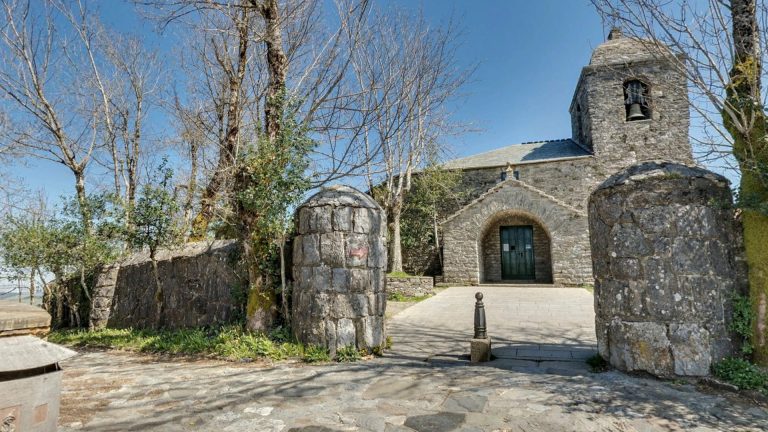
Architecturally, the monastery is a fascinating labyrinth of styles, reflecting the historical metamorphosis of the region. The church of Santa María shows the strict elegance of Romanesque, combined with the first, bold aspirations of Gothic. When you step inside, a coolness envelops you like a damp cloth on your sun-heated skin. The light falls only sparsely through the narrow window openings, drawing dusty rays into the twilight air. It is a space of absolute concentration. Yet Irache was far more than just a monastery; it at times housed a university, was the scene of political intrigues during the Carlist Wars, and even served as a field Hospital. Every century has left its scars and treasures – from the magnificent Plateresque style of the cloister to the Baroque opulence of later extensions. The stones tell of power, decay, and the unshakeable power of faith that repeatedly raised this place from the ruins of time.
Particularly fascinating is the connection between the monastery and nature. Montejurra in the background is not merely a geographical backdrop but a tactile memorial. It witnessed bloody battles and holy processions. This historical causality between the mountain as guardian and the monastery as refuge shapes the psychological profile of the place. Standing here, you understand yourself as part of a vast, timeless stream. You are not the first to pause here under the weight of your bundle, and you will not be the last. Irache teaches you humility before permanence. It is a place that shows you that true significance arises not through speed but through depth. In the quiet corners of the cloister, where the light conjures fantastic patterns on the floor, you feel the presence of the thousands of pilgrims who touched this same ground centuries ago. Their longings, their pains, and their hopes are preserved in the stone.
Addresses & tips in Irache
Camino Distances
The stage from Estella leads you through varied terrain, with Irache marking the first major resting point before heading into the more solitary hill country towards Azqueta.
Sleeping & Arriving
Arriving in Irache is a ritual act of deceleration. Since the monastery itself now serves as a museum and no longer houses a pilgrim hostel in the traditional sense, “arriving” usually takes place in the directly adjacent Ayegui or in the holiday facilities around the monastery. Yet the psychological effect remains the same: as soon as you step onto the monastery forecourt, the haste of the kilometres falls away from you. It is a tactile relief to set down the backpack on the cool stone slabs and let your gaze wander over the wide façade. You hear the rhythmic clicking of other pilgrims’ walking sticks as they move like ants across the broad square, all drawn by the magnetic power of this place.
The accommodations in the immediate vicinity, such as the hostel at Camping Iratxe or the guesthouses in Ayegui, offer modern comfort that forms an interesting contrast to the archaic silence of the monastery. Arriving here is characterised by a mixture of tourist infrastructure and pilgrim simplicity. In the dormitories or rooms, it often smells of freshly washed laundry drying in the light wind of the Pyrenean foothills. Tactilely, you experience the first real rest of the day – the feeling of running water over tired feet and the softness of a mattress after the hard kilometres on gravel and asphalt. The psychological metamorphosis from walker to guest takes place particularly gently here, as the monastery remains a constant, reassuring point of reference in the background.
The evenings in Irache have a quality all their own. When the day-trippers have departed and the sun bathes Montejurra in a deep violet, the true soul of the place returns. You might sit with other pilgrims on one of the walls, legs dangling, and watch the shadows of the cypresses grow longer. It is a time of reflection and exchange. The acoustic profile changes: the loud laughter of the day gives way to a muted murmuring, in which stories about blisters, encounters, and inner insights are shared. Arriving in Irache means entering a space that protects you without constricting you. It is a preparation for the solitude of the coming stages, a final collective breath in the shadow of history.
Especially for pilgrims who started in Estella, Irache is often the place of the first major rest. You feel the causality of the stage – the short ascent from the town has warmed up the body, the muscles are ready, and the mind craves nourishment. The spiritual atmosphere of Irache satisfies this hunger in a way no restaurant can. Those who stay overnight here, or even linger for a long time, carry a piece of Benedictine tranquillity into the next day. It is an arrival at oneself, supported by the monumental serenity of a place that has seen everything and yet receives every new pilgrim with the same silent dignity.
Eating & Drinking
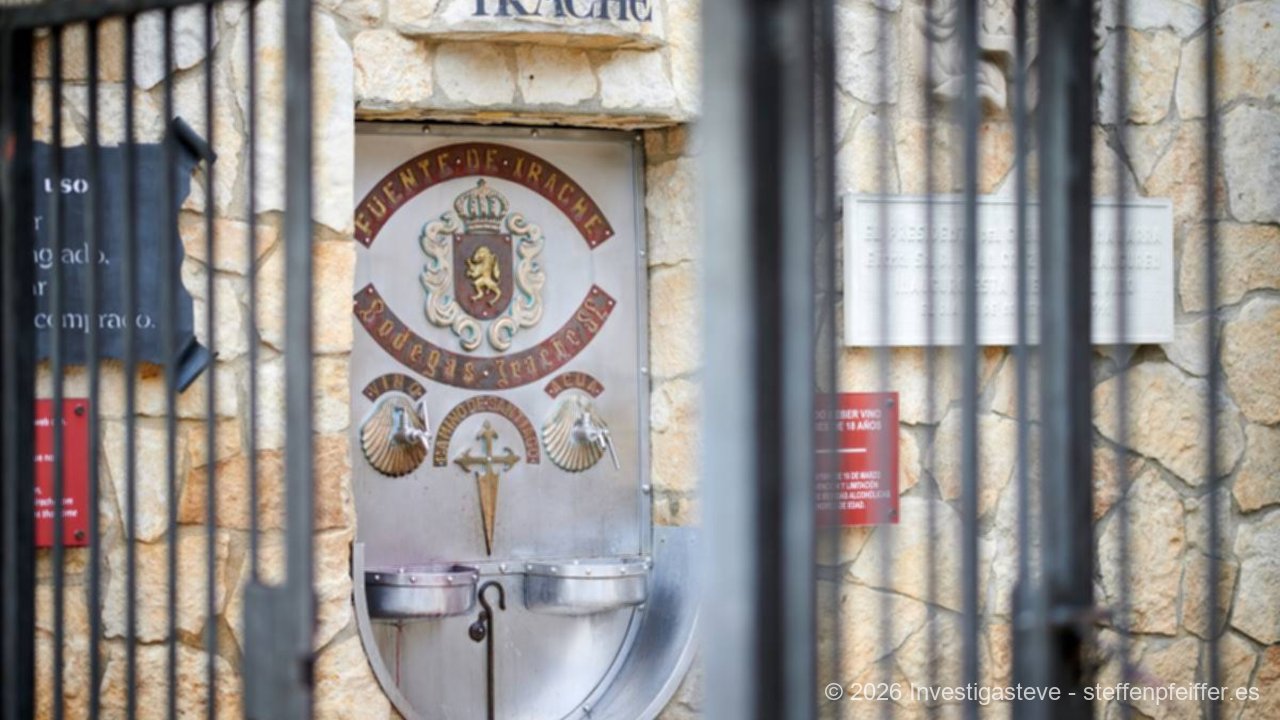
In Irache, physical sustenance becomes an almost sacramental experience, and this is mainly due to a globally unique institution: the Fuente del Vino, the wine fountain of the Bodegas Irache. Here, tactile pleasure and historical tradition meet in a way that has made the Camino legendary. When you stand before the metal wall with the two taps, you feel the anticipation in your fingertips. One tap dispenses ice-cold, clear water – a tactile blessing for the thirsty throat – but it is the other tap that makes pilgrims’ hearts beat faster: from it flows a robust, ruby-red wine from the region. It is a moment of total olfactory and gustatory immersion. The smell of the wine is intensely fruity, with a note of sun-scorched earth and oak.
The first sip from the scallop shell or cup is more than just drinking; it is a communion with the land of Navarre. The wine tastes of the heat of summer, of the hard work in the vineyards, and of the generosity of the people here. The causality is clear: the bodega continues the legacy of the monks, who already knew in the Middle Ages that a good wine awakens the spirits and strengthens the weary pilgrim for the long road ahead. Psychologically, this fountain acts as a symbol of the unconditional hospitality of the Camino. It costs nothing, it is given to you – a lesson in gratitude and moderation, for the sign reminds you admonishingly: “Pilgrim, if you wish to arrive in Santiago with strength and life, drink of this wine and toast to health, but do not drink too much.”
Beyond the wine fountain, the gastronomy in Ayegui and around the monastery offers a down-to-earth, honest cuisine. It smells of “Pimientos del Piquillo”, those small, red peppers often served here stuffed with meat or fish. Their smoky aroma mingles with the scent of olive oil and garlic to form a culinary signature of the region. The tactile experience of dipping a piece of crusty country bread into a spicy sauce while sitting in the shade of an old wall is the definition of pilgrim happiness. Eating and drinking in Irache means enjoying the treasures of the earth right where they grew. The causality between soil, climate, and plate becomes tangible with every bite. It is food that strengthens the body and warms the soul, a perfect preparation for the coming kilometres through the dusty paths of Navarre.
Supplies & Logistics
Logistically, Irache is a perfectly developed hub that marks the transition from the urban civilisation of Estella to the rural expanse. You notice at every corner that the region has been geared towards pilgrims for centuries. The infrastructure here is less a service than an organically grown support for the walker. Everything you need is within reach, yet the place retains its contemplative character. The paths between the historical monuments, the supply points, and the relaxation zones are short and well-signposted, providing physical relief for the pilgrim.
The supply of food and water is excellent. Besides the wine fountain, there are numerous public water points whose ice-cold water offers a tactile refreshment. Small shops in Ayegui carry everything the pilgrim’s heart desires – from fresh fruit to hiking accessories to the famous local wines in bottles. Psychologically, this seamless logistics gives a feeling of security: here you can replenish supplies, check equipment, and focus on the next section without worry. You feel the historical causality of a region that has learned that a well-supplied pilgrim is a happy pilgrim.
Shopping: In Ayegui, there are supermarkets and small speciality shops ideal for daily provisions.
Gastronomy: Numerous bars and restaurants offer pilgrim menus; the Bodega Irache has a sales room for wine and souvenirs.
Accommodation: A wide range is available, from the simple albergue to campsites to comfortable hotels.
Public Facilities: In Ayegui, you will find pharmacies, ATMs, and good connections to public transport towards Estella or Logroño.
The logistical conclusion of Irache is the beginning of freedom. When you have packed your bags and filled your water bottles, you stand at the threshold of one of the most beautiful sections of Navarre. The logistical security this place offers allows your mind to focus entirely again on the spiritual dimension of the Way. You leave Irache not only with a strengthened body but also with the certainty that everything is taken care of. It is this combination of historical depth and modern efficiency that makes Irache one of the most comfortable and simultaneously most inspiring stops on the entire Camino de Santiago.
Don’t Miss
In Irache, there are details that are easily overlooked if you only focus on the wine fountain. Take the time for these discoveries:
– The Romanesque church of Santa María: Pay attention to the capitals inside; they are masterpieces of medieval sculpture and tell biblical stories with an almost naïve intensity.
– The wine fountain (Fuente del Vino): A photo here is mandatory, but also take time to read the small sign with the pilgrim rules – it is the essence of Camino philosophy.
– The cloister (Claustro): The mix of Late Gothic and Renaissance creates a fantastic play of shadows on the columns; a place of absolute peace.
– The Benedictine museum: If it is open, it offers deep insights into the daily life of the monks who shaped this place for centuries.
– The view of Montejurra: Find a spot behind the monastery from which you can see the full size of the mountain in contrast to the monastery towers – a visual symbol of strength and protection.
Insider Tips & Hidden Places
A true insider tip for Irache is visiting the monastery at early dawn, before the first streams of pilgrims from Estella arrive. When the mist still hangs in the hollows of Montejurra and the stones of the monastery are darkened by the night’s moisture, the place unfolds an almost eerie, mystical power. You hear only the distant call of a bird and your own breathing. It is a moment of total psychological immersion, in which the boundaries between present and Middle Ages seem to blur. In this silence, the wine fountain smells even more intensely of metal and grapes, and the tactile feeling of the cold dew on the stone benches connects you with the harsh reality of the early walkers.
Another hidden place is the small path that passes sideways past the monastery into the vineyards. While most pilgrims stubbornly follow the yellow arrows, this small detour of only two hundred metres offers a completely new perspective on the architecture. From here, you see how the monastery braces itself against the mountain like a fortress. The ground here is particularly stony and tactilely challenging, yet the smell of wild rosemary and thyme growing between the vines is an olfactory revelation. It is the perfect place for a short meditation, far from the bustle of the fountain visitors.
Those who delight in small details should look for the stonemason’s marks in the cloister. These tiny scratches in the stone are the tactile fingerprints of the craftsmen of the 16th century. Each mark is an individual greeting from the past, a historical causality showing that this monumental work was created by human hands. Finding them requires patience and a sharp eye, but rewards with a deep feeling of connection with history. Such discoveries make the Camino a treasure hunt for the soul.
Finally, mention should be made of the small chapel often hidden in the shadow of the large church. It is often overlooked, but offers an acoustics that transforms even the softest whisper into an angelic song. When you pause there briefly, you feel the psychological relief through the spatial confinement and spiritual density. Here, it smells intensely of beeswax and old textiles – an olfactory portrait of popular piety. These hidden places are the true sources of power in Irache; they require no great attention, but give to those who seek them a deep inner peace and a new perspective on their own path.
Moment of Reflection
In Irache, you reach a point of inner maturity on your path. The wine fountain poses a subtle but powerful psychological question: How do you deal with the gifts that life offers you without return? The wine is a symbol of abundance, the water of necessity. Finding the balance between the two is the true art of pilgrimage and of life. Do you stand greedily at the tap, or do you enjoy the sip in gratitude, knowing that many will come after you? The historical metamorphosis of the place from university to museum also reminds you that knowledge is transient, but the human gesture of hospitality lasts forever.
In the silence of the cloister, ask yourself: What is my “wine” that drives me, and what is my “water” that keeps me alive? The monumental presence of Irache challenges you to examine your own foundations. Are you as steadfast as these Romanesque walls, or do you let every breeze from Montejurra unsettle you? The tactile and spiritual grounding you experience here is a gift that helps you master the coming challenges with serenity. Take this moment of reflection with you into your sleep; it will be the compass that guides you safely through the hills of Navarre tomorrow.
Camino of the Stars
This place lies on the Camino Francés, on the stage from Estella to Los Arcos. The sequence of places is:
Estella → Ayegui → Irache → Azqueta → Villamayor de Monjardín → Los Arcos
Did you experience the wine fountain of Irache as a welcome refreshment or as an almost sacred tradition? Or was it the silent sublimity of the cloister that moved you most? Share your very personal experiences, your photos from the foot of Montejurra, or your thoughts on this unique place of power in Navarre with us. Every story is another stone in the mosaic of the Camino and helps future pilgrims feel the magic of Irache even before they arrive!
About the Author