A First Glance – Introduction & Atmosphere
When you leave the busy, medieval alleys of Estella behind and take the first steps on the gently rising path towards the west, the world around you changes almost imperceptibly, but with profound consequence. The asphalt of the city gives way to a bright, calcareous ground that produces a rhythmic, almost meditative crunching under your boots. Before you rises Ayegui, a place that seems like a natural extension of the landscape, nestled against the foothills of Montejurra. The air up here is already a nuance clearer than in the Ega valley; it carries the pungent, spicy scent of sun-scorched earth, wild thyme, and the first, enticing aroma of the nearby wine fields. You feel how the wind, constantly sweeping down from the hills, tempers the heat on your skin, while your eyes linger on the massive silhouette of the mountain that watches over everything like a stone guardian.
Ayegui welcomes the pilgrim with an atmosphere of expectation. It is no longer the urban dynamism of Estella, but a rural distinction that breathes through the thick walls of the old noble houses and the quiet squares. Acoustically, your path here is accompanied by the distant melody of church bells and the deep rustling of the old trees lining the avenues. Tactilely, you perceive the change in terrain – every muscle group in your legs is challenged as you approach the spiritual core of the place. Psychologically, Ayegui marks a moment of inner gathering. Here, you definitively leave the noise of civilisation behind and step into a space that has been geared for centuries towards physically strengthening and mentally centring walkers. It is a place of transition, where the anticipation of what lies ahead – whether the famous wine fountain or the solitude of the Navarrese high plain – hangs almost tangibly in the air.
What This Place Tells
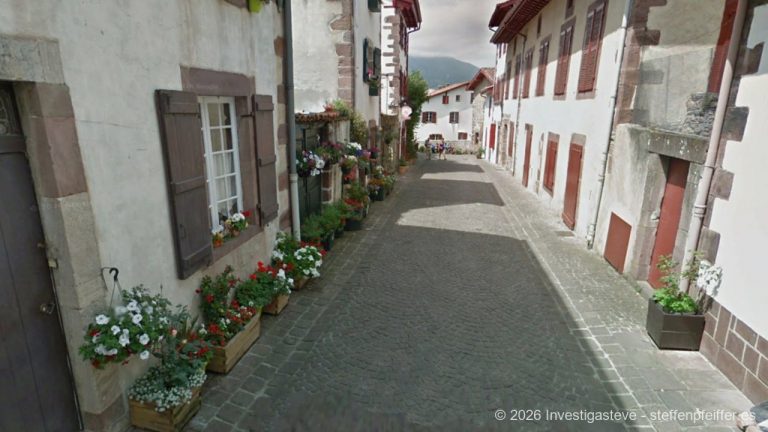
The history of Ayegui is inseparable from that of the monastery of Irache, yet the place itself possesses its own proud identity, deeply rooted in the historical causality of Navarre. Originally founded as a royal fief, Ayegui served for centuries as the secular counterpart to the spiritual power of the Benedictines of Irache. The historical metamorphosis of the place is legible in the stone façades of the Calle Mayor, where coats of arms of families who once controlled the wine-growing and trade of the region are displayed. Each house tells of a time when wealth was measured not only in gold, but in fertile soil and strategic location. Walking through these streets, you feel the weight of history; it lies in the massive archways and the narrow windows that once served to keep out both the cold of winter and the curiosity of strangers.
A central chapter of the narrative is the role of Montejurra, the sacred mountain of Ayegui. For the pilgrim, it is a landmark; for the local, however, it is a symbol of resistance and tradition. In the 19th century, this mountain was the scene of bloody battles during the Carlist Wars. This historical causality has shaped the psychological profile of the inhabitants: a mixture of deep pride, religiosity, and a certain reserve towards superficial changes. The stones of Ayegui have absorbed the blood of soldiers and the sweat of generations of winegrowers. These layers of time lie like an invisible net over the village. When you stand today at the church of San Cipriano, you are not just looking at an 18th-century building, but at the heart of a community that has learned to survive between two powers – the crown of Navarre and the crozier of the abbot of Irache.
Yet Ayegui also tells a story of innovation within tradition. The founding of the Bodegas Irache at the end of the 19th century marked the transition from monastic self-sufficiency to modern, global marketing of Navarrese wine. This economic metamorphosis saved the place in times of agricultural crises and created that unique institution known today by every pilgrim. The historical causality here is almost poetic: what once began as an act of mercy by the monks – offering a cup of wine to the weary walker – became a globally recognised gesture of hospitality. Ayegui is thus not a museum, but a living organism that breathes its past while welcoming modernity with open arms and filled glasses. The connection of aristocratic Baroque, peasant work ethic, and monastic silence makes this place a complex mosaic of human existence.
Addresses & tips in Ayegui
| Accommodation | 3 |
| Bars & Cafés | 5 |
| Shopping | 3 |
| Health | 5 |
| Sights | 1 |
| Services | 3 |
Show all 20
Camino Distances
Ayegui lies immediately behind Estella and serves many pilgrims as a first short rest or as a quieter place to stay away from the urban hustle.
| Previous Place | Distance (km) | Next Place | Distance (km) |
|---|---|---|---|
| Estella | ca. 1.5 km | Irache (Monastery & Wine Fountain) | ca. 0.6 km |
Sleeping & Arriving
Arriving in Ayegui is a process of conscious deceleration. When you come over from Estella, the way is still short, yet the psychological effect of the change of place is enormous. You leave the narrow, shady ravines of the city and step out into a more open, light-flooded environment. Arriving here is often defined by checking into one of the hostels such as the Albergue Municipal “San Cipriano”. It is a tactile experience of reduction: the backpack slides from the shoulders, the sweat dries in the light mountain wind, and the cool water from the fountain on the square in front of the church feels like a first, small baptism for the new stage section. The hostels here radiate a functional tranquillity aimed at giving the pilgrim the space for inner contemplation that the loud hostels of the big cities often lack.
Psychologically, Ayegui offers a special luxury: the choice between the community of pilgrims and the solitude of the mountain. Those who stay overnight here often feel a deep connection with nature, especially when dusk bathes Montejurra in an almost unreal, deep violet. The acoustics of the evening are characterised by the distant ringing of grazing animals and the soft murmuring of conversations on the terraces of the accommodations. It smells of freshly cut grass and the unmistakable aroma of the vines, which release their moisture in the cooling nights. Arriving in Ayegui means exchanging the identity of the walking stick for that of the resting one, sinking onto a mattress that smells of clean laundry and wind, and finding the causality of your own exertion in the deep regeneration of sleep.
For those seeking a more nature-oriented experience, Camping Iratxe on the edge of the village offers a completely different dimension of arrival. Here, pilgrim existence combines with the feeling of freedom under the open sky. You hear the chirping of the crickets and the rustling of the trees more intensely than within the stone walls of the village centre. Tactilely, you experience the texture of the ground, the grass under your feet, and the coolness of the night air penetrating the tent flysheet or providing restful sleep in the bungalows. The psychological metamorphosis is even clearer here – you are no longer a guest in a house, you are part of the landscape. This arrival in nature prepares you mentally for the coming, often lonely kilometres through the fields of Navarre, where the sky will be your only roof.
Particularly noteworthy is the hospitality of the private hostels in Ayegui. Here, arrival is often celebrated with a personal gesture – a glass of local wine, a kind word from the hospitalero who recognises the exhaustion in your eyes. The historical continuity of pilgrim care becomes palpable on a human level here. You are not a number, you are a story on legs. The thick stone walls of the old buildings, now serving as guesthouses, offer a tactile security reminiscent of the old pilgrim hospitals. When you look out the window in the evening and see the silhouette of Estella glowing in the valley, you grasp the distance you have already covered, not only in kilometres, but in your inner peace.
Eating & Drinking
In Ayegui, eating becomes a feast for the senses, shaped by the deep connection to the soil. You are in the heart of Navarre, a region known for its excellent agriculture and its honest, powerful cuisine. The smell emanating from the kitchens of the local bars and restaurants like the Kirol is a temptation of garlic, olive oil, and slowly braised meat. A classic pilgrim menu here often begins with “Espárragos de Navarra”, the famous white asparagus, whose tactile tenderness and fine flavour reflect the purity of the earth. It is an olfactory revelation when the scent of fresh vegetables mingles with the heavy note of a local stew.
Wine, however, is the undisputed king of the table in Ayegui. A visit to the Bodegas Irache is a sensory duty. Tasting the wine, you taste the mineral power of Montejurra and the intensity of the Navarrese sun. The first sip of a Tempranillo or Garnacha lies tactilely like a heavy velvet on the tongue, followed by an aftertaste of dark berries and a hint of oak. The historical causality is present in every glass: the wine is pressed on the same soil where the monks of the 11th century already tended their vines. Psychologically, this enjoyment is grounding and connecting. You share the bottle with fellow pilgrims, and the communal meal becomes an act of community that momentarily pushes the hardships of the way into the background.
Those who prefer it simpler will find the ingredients for a perfect picnic in the small shops of the place. The bread in Ayegui has a crusty, almost woody rind that gives a characteristic crack when broken – a tactile and acoustic pleasure. It is accompanied by a piece of “Queso de Idiazábal”, a smoky sheep’s cheese whose aroma recalls the campfires of the shepherds on Montejurra. Eating here is not a quick satiation, but a conscious act of energy intake. The causality between the hard work in the fields and the richness on the plate becomes tangible for every pilgrim here. When you sink into your bed after a hearty meal and a last glass of wine, you feel the warmth in your body and the contentment in your mind – a five-dimensional confirmation that you are in the right place.
Supplies & Logistics
Logistically, Ayegui is an ideal base for pilgrims who wish to use the advantages of modern infrastructure without accepting the anonymity of a big city. The place is so compactly designed that all important facilities are within a few minutes’ walk, which is an invaluable relief for tired legs. You feel the historical causality of a settlement that grew organically along the pilgrim route; the paths are logical, orientation is easy. The proximity to Estella also offers the security of being able to access larger medical or technical services in an emergency, while enjoying the tranquillity in Ayegui itself.
The supply of everyday necessities is excellent. In the small supermarkets and speciality shops, you find everything necessary for the next stage. Psychologically, this seamless logistics gives a deep feeling of security. You do not have to worry about basic needs and can focus your mind entirely on the spiritual journey. The tactile component of logistics is experienced when packing your backpack: the fresh supplies, the filled water bottles, and the certainty that your equipment is ready. Ayegui functions here as a kind of “checkpoint” before setting off into the more sparsely populated hinterland of Navarre.
Shopping: Several well-stocked grocery stores and bakeries offer everything from hiking provisions to regional delicacies.
Gastronomy: A variety of bars and restaurants consistently offer pilgrim fare and local specialities; the Bodega Irache is also an important point of contact for wine connoisseurs.
Accommodation: Capacities are diverse, from the municipal albergue to private hostals to the spacious campsite.
Public Facilities: Pharmacies, ATMs, and good connections to local transport to Estella ensure smooth logistics.
Ayegui’s logistical strength lies in its function as a bridgehead. Here you sort out your finances, wash your clothes, and mentally prepare for the coming challenges. It is a place that has your back. The historical metamorphosis from the monastery’s supply village to a modern pilgrim station is palpable in every service. Those who leave Ayegui usually do so with a feeling of completeness – physically satiated, logistically equipped, and psychologically strengthened for the path that continues westwards behind Montejurra.
Don’t Miss
In Ayegui, there are highlights that go far beyond the ordinary. Pay attention to these special features:
– The wine fountain (Fuente del Vino): A globally unique place where you can draw water from one tap and wine from the other – a tactile must for every pilgrim.
– Monasterio de Santa María la Real de Irache: Visit this monumental monastery; the blend of Romanesque and Renaissance will overwhelm you architecturally.
– Iglesia de San Cipriano: The 18th-century parish church houses impressive Baroque altarpieces that testify to the deep popular piety of the place.
– Hiking up Montejurra: If you have the time, the ascent offers a panoramic view over all of Navarre; tactically demanding, but visually unrivalled.
– The wine museum of the Bodegas Irache: A fascinating journey through the history of winegrowing with impressive exhibits of historical pressing techniques.
Insider Tips & Hidden Places
A true insider tip in Ayegui is the small, almost forgotten path that climbs a stretch up the slope of Montejurra behind the cemetery. While the streams of pilgrims usually hurry directly to the wine fountain, you will find an oasis of absolute silence here. It smells intensely of pine resin and dry earth. When you sit on one of the rocks, you feel the warmth of the stone that has stored the midday sun. From here, you have a view of Ayegui that shows it in its entire medieval compactness. The acoustics up here are so fine that you perceive the distant clicking of walking sticks in the valley like a rhythmic heartbeat. It is a place of total psychological immersion where, for a moment, you forget time.
Another hidden treasure is the small vegetable garden of a former monk, located near the monastery of Irache. It is not publicly signposted, but those who walk with open eyes see the lovingly tended rows of artichokes and beans. Here it smells of fertile humus and fresh water. The tactile experience of feeling the coolness of the leaves or inhaling the scent of mint growing wild at the edge is a wonderful grounding. This place recalls the historical causality of monastic self-sufficiency and shows that the old wisdom of the monks still bears fruit today.
Those interested in the darker, more mystical side of history should look out for the small stone memorial crosses scattered on the lower slopes of Montejurra. They commemorate the fallen of the Carlist Wars. It is a tactile experience to run your fingers over the weathered inscriptions and feel the historical weight of these events. Psychologically, these places act as a memorial to the fragility of peace and the permanence of the landscape. These silent witnesses challenge you to view your own path with a new seriousness and gratitude.
Finally, mention should be made of the small square behind the Bar Kirol, where locals often gather in the evening for “Pacharán”. It is not a classic tourist spot, but the true social heart of Ayegui. Here you hear the lively Basque and Spanish of the residents, smell the smoke of the cigarillos, and feel the unpretentious joy of life in Navarre. Those who dare to start a conversation are often rewarded with stories that are in no guidebook. The psychological experience of this human warmth is the most valuable insider tip Ayegui has to offer – a tactile embrace by a community that has accepted the pilgrim as part of its own history for centuries.
Moment of Reflection
In Ayegui, the pilgrim often reaches a point of inner examination. The temptation here is tactilely graspable: the wine fountain confronts you with the moral question of moderation. Psychologically, this is a lesson in self-discipline. How much of the gifts of the way do you accept without losing sight of your goal? Montejurra, towering over the place, additionally challenges you to think about your own endurance. It is a symbol of struggles – both external and internal. The historical metamorphosis of the place from a military frontline to a peaceful rest stop may reflect your own development: from fighting against pain and exhaustion to acceptance and enjoyment of silence.
In the coolness of the monastery or in the shade of the vines, ask yourself: What truly drives me? Is it the goal of Santiago, or is it the quality of each individual step I take here in Ayegui? The tactile tranquillity of the old walls gives you the strength to answer these questions honestly. Take this feeling of centring with you into your sleep; it will be the basis on which you continue tomorrow. Ayegui teaches you that true strength arises from the connection of groundedness and spiritual openness. Those who pause here find not only wine and water, but a piece of their own soul in the unshakeability of Montejurra.
Camino of the Stars
This place lies on the Camino Francés, on the stage from Estella to Los Arcos. The sequence of places is:
Estella → Ayegui → Irache → Azqueta → Villamayor de Monjardín → Los Arcos
Did you experience the wine fountain of Irache as a welcome refreshment or as an almost sacred tradition? Or was it the silent sublimity of the shadow of Montejurra that moved you most in Ayegui? Share your very personal experiences, your photos from the foot of the sacred mountain, or your thoughts on this unique place of power in Navarre with us. Every story enriches the community of pilgrims and keeps the magic of Ayegui alive for everyone!
About the Author