A new stage day – entering the stage
The morning in Estella begins with an almost solemn weight, which lies like a fine, cool veil over the magnificent Romanesque facades of the city. While the first rays of sunlight bathe the towers of San Pedro de la Rúa in a pale, almost ethereal gold, the cool, incense-laden breath of the night still lingers in the narrow alleys of the old town, mixed with the distant, rhythmic murmur of the river Ega. It is a moment of absolute caesura: The echo of your own footsteps on the smoothly polished cobblestones reminds you that the “City of the Stars” now lies behind you and you are entering a land where the earth is redder and the horizon wider. You feel the hard stone beneath your soles, which here in Estella possesses an almost royal smoothness, polished by millions of feet over the centuries, and you realize that today’s departure marks a new quality of pilgrimage – away from the urban density of Navarre, into the meditative emptiness of the agricultural landscape.
The departure from the city leads you past the massive remains of the city wall, while the rhythmic clicking of your hiking poles on the asphalt of the suburbs acts like a metronome, pulling you out of the trance of recent days. You leave the shelter of medieval architecture and step out into the open wine landscape, where nature is already beginning to breathe in the morning sun. The air suddenly becomes sharper, clearer, and already carries the dusty, pungent scent of the distant grain fields and olive groves. A slight tingling in your fingertips – a mixture of anticipation for the upcoming wine miracle and respect for the coming “logistical desert” – accompanies you as you watch the silhouette of Estella dissolve behind you in the morning mist. Today is the day of transition, on which you learn that the path consists not only of stones, but of the rhythm of your own breath in a landscape that offers no hiding places.
Route and elevation profile
Distance: 21.3 km
Elevation gain: ↑ 410 m / ↓ 450 m
Difficulty: Moderate. The physical challenge is manageable due to the moderate inclines, but the psychological burden of the 12-kilometer passage without shade or supplies after Villamayor de Monjardín is considerable.
Special features: The legendary wine fountain of Irache, the steep ascent to Villamayor de Monjardín, and the absolute sensory reduction in the subsequent solitude.
Today’s route is a dramaturgical composition in two acts that could not be more different. The first part leads you in an almost playful way through the cultural heart of Navarre. After leaving Estella, you walk on well-paved paths through the valley, pass the monumental monastery of Irache, and ascend gently through the vineyards. Here, the ground is still alive, characterized by agricultural activity and small settlements like Azqueta. The elevation profile shows a steady but manageable upward curve that reaches its apex at Villamayor de Monjardín, where the terrain reveals a dramatic expanse.
The second act is the true test of the day. As soon as you have left Villamayor behind, you plunge into a landscape often referred to as a “logistical desert.” On the remaining 12 kilometers to Los Arcos, there is no settlement, no fountain, and no significant shade. The path transforms into a dead-straight gravel track that cuts through endless fields of grain and sunflowers. The elevation profile here is almost flat, which intensifies the visual monotony. The surface of light limestone gravel reflects the sunlight and sends small shocks through the joints with every step. It is a stretch that challenges not through its steepness, but through its relentless linearity, forcing the pilgrim to find their own source of strength within.
Variants and small detours
On this stage, the Camino offers a charming, almost poetic variant that touches the heart of Rioja culture. Shortly after Estella, in Ayegui, the pilgrim faces a choice: The official route leads directly past the monastery of Irache, while an alternative route guides through the green hinterland. This variant is scenically more appealing, as it delves deeper into the wooded slopes and avoids contact with the asphalt of the main road. It is a balm for the senses, especially in the early morning hours when the scent of pine needles and damp earth still hangs in the valleys.
Another subtle detour presents itself shortly before Los Arcos. Instead of taking the most direct route across the open plain, there are small paths that follow the historical irrigation canals of the region. These tiny detours are not a physical challenge but a historical gain, as they offer insights into the centuries-old agricultural culture of the region. The choice between the fast, functional gravel track and the slow, reverent approach via the historic field paths determines whether you experience arrival in Los Arcos as a mere stage destination or as a ritual entry into a new landscape phase.
Description of the path – with all senses
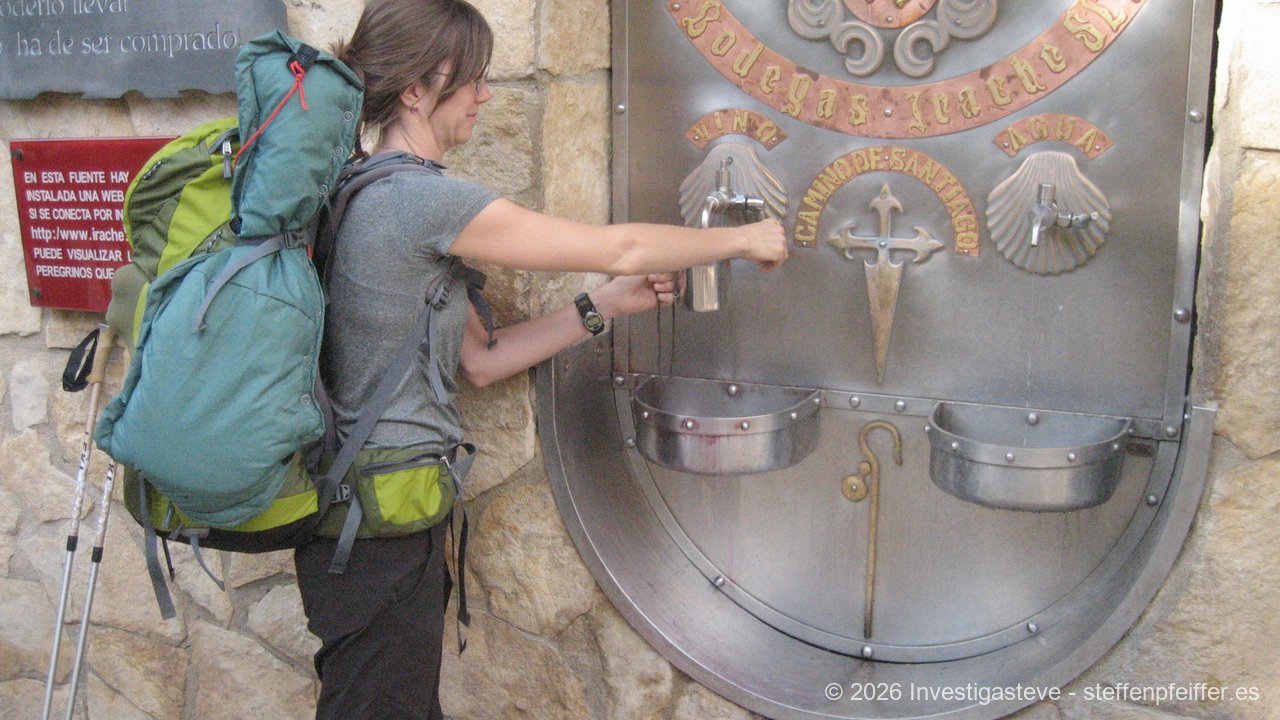
The path out of Estella begins with an acoustic metamorphosis. As you walk through the outskirts of Ayegui, you hear the distant ringing of the monastery bells of Irache, a deep, resonant tone that acts like an anchor in history. But as soon as you approach the legendary wine fountain, this sacred sound is replaced by an almost profane but highly welcome metallic gurgling. You hear the wine flowing rhythmically into your scallop shell or your cup – a liquid promise of Navarre. It is a haptic experience of stickiness: the dried wine on the edges of your drinking vessel leaves a fine patina that will accompany you over the next kilometers. You smell the pungent, almost fermented scent of the wine casks, an olfactory memory of the harvests of past decades, deeply stored in the monastery walls.
Behind Irache, the texture of the path changes radically. You enter an undulating terrain of red earth and light limestone. The ground beneath your feet is restless; with every step, the loose gravel crunches and sends fine vibrations up to your knee joints. You feel the heat now rising from the ground, a dry, tangible heat that shimmers and blurs the contours of the hills of Monjardín. The smell changes: the aroma of wine gives way to the scent of dry hay and wild rosemary growing along the wayside. When you place your hand on one of the old olive trees, you feel the rough, almost leathery bark, tanned by the relentless sun of Navarre. It is a moment of absolute presence in nature.
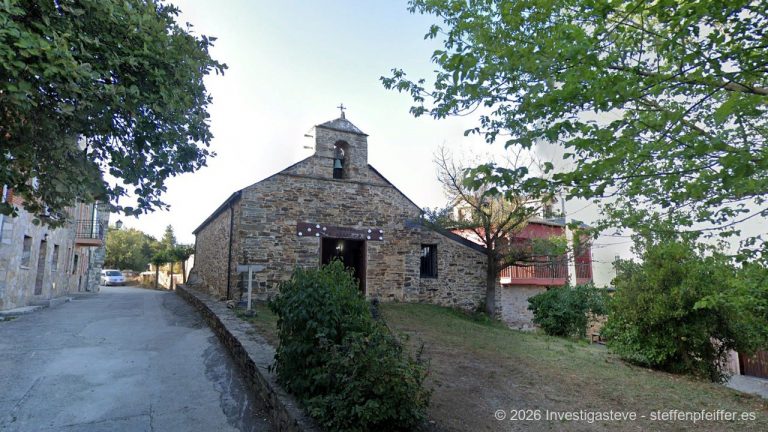
In Azqueta, you encounter the architecture of silence. The narrow alleys swallow the wind, and you hear only the rhythmic clicking of your own poles on the hard pavement. You smell the scent of freshly baked bread and the aroma of olive oil wafting from the open kitchen windows of the small houses. It is a psychological comfort that prepares you for the coming ascent. Here in Azqueta, you may encounter the legacy of Pablito, the legendary pilgrim helper, and feel the historical causality of hospitality that has shaped this place for centuries. The haptic experience of the cool water from the village fountain on your wrists is like a baptism before the coming exertion.
The ascent to Villamayor de Monjardín is a physical provocation. Your lungs work hard, your breath becomes shallower, and you taste the salt on your lips. You hear the rhythmic “panting” of your own body, an honest sound of exertion. But arriving at the top, at the foot of the castle ruins of San Esteban de Deyo, the visual metamorphosis takes place. You stand on a platform of light and wind. The panoramic view over the Ebro Basin takes your breath away for a moment. You feel the wind, sweeping unhindered over the summit up here, cools the sweat on your temples and carries the distant scent of pine needles. You feel exalted, almost weightless, after the confinement of the valleys.
But then the descent into the “desert” begins. As soon as you leave Villamayor, the acoustics become static. The wide whistling of the wind is replaced by a constant, monotonous crunching on the gravel track. There is no more village, no barking of a dog, no ringing of a bell. Only you and infinity. The psychological burden of these 12 kilometers is materially tangible. You see your destination shimmering on the horizon, yet it seems not to move a millimeter. The visual world reduces to the eternally same play of ochre and faded blue. In this phase of sensory deprivation, a purification takes place. Everything superfluous falls away from you as you follow only the rhythm of your own steps for hours.
You feel the relentless sun on your forearms, a burning heat that forces you into introspection. The color gold becomes an obsession here – it is in the wheat, in the dust, and in the pale light. Your thoughts begin to wander, dig up old memories, and rearrange them, while your feet mechanically devour kilometer after kilometer. It is a haptic experience of hardness; the limestone gravel beneath your soles is relentless and challenges every single bone in your arch. The smell is now purely mineral: hot stone and dust. It is the most honest phase of the path, where no architecture and no culture can distract you from yourself anymore.
Shortly before Los Arcos, the atmosphere changes again. You hear the first distant hum of a tractor, a sign of approaching civilization that gently pulls you out of your meditative trance. The smell changes: the dry minerality is replaced by the scent of irrigated fields and the first gardens of the suburbs. The psychological relief at the sight of the baroque tower of the cathedral of Los Arcos is like an emotional dam breaking. You feel a new energy in your legs, an anticipation that almost instantly makes you forget the pain of the last 12 kilometers.
When you finally pass through the gates of Los Arcos, the haptics of the ground change for the last time today. You step onto the cobblestones of the Calle Mayor, and the uneven stone massages your tired soles in an almost painful but welcome way. The air becomes cooler, protected by the massive walls of the houses. You smell the scent of garlic, pimentón, and olive oil wafting from the kitchens. The historical density of the city is tangible; you traverse spaces that have welcomed pilgrims since the Middle Ages.
Arrival at the Plaza Santa María is a feast for the senses. Suddenly, you are surrounded by the lively murmur of people, the clatter of dishes in the cafés, and the majestic ringing of the church bells. You feel the sudden coolness when you step into the shadow of the mighty cathedral. The massive walls radiate a calm that immediately soothes your senses. You feel dusty, exhausted, but inwardly more composed than rarely before. Arrival is not merely the end of a hike, but the reaching of a safe harbor after a journey through the void.
The historical causality of Los Arcos as a strategic border town becomes materially tangible here. Your hand glides over the smooth granite of the portals. You notice how your rhythm has changed over the last hours – you have become slower, more deliberate, but more powerful. The psychological metamorphosis is complete: from the exhausted wanderer of the “desert,” you become the amazed visitor of a baroque wonder world. In Los Arcos, the day finds its crowning conclusion in the combination of architectural splendor and human warmth.
The evening reflection, as you sit on a bench on the plaza and watch the setting sun bathe the tower of the cathedral in a warm red, is marked by deep gratitude. Your body is tired, your feet burn, but your mind is as clear as the Castilian sky. The 21 kilometers have purified you; they have washed the noise of the world from your head and made room for the silence of the stones. You realize that the “desert” in the afternoon was necessary to be able to appreciate the fullness of the evening at all. The dust on your skin is not dirt, but the visible memory of a path that pushed you to your limits.
Intermediate places & special features
Estella (Lizarra) – The starting point of the stage is a city known in the Middle Ages as “Estella la Bella.” Founded on the banks of the Ega, it was an important trading center and seat of the Navarrese kings. The architecture is characterized by Romanesque style, especially the church of San Pedro de la Rúa with its famous cloister. Estella breathes history on every corner; the palaces and bridges tell of a time when this city was the cultural center of the Camino. Whoever sets out from here carries the splendor of the “City of the Stars” as an inner light for a long time.
Ayegui and Monastery of Irache – Only two kilometers behind Estella lies this monumental ensemble. The monastery of Irache, one of the oldest in Navarre, served as a Hospital for pilgrims for centuries. The absolute highlight, however, is the “Fuente de Irache,” the wine fountain. The fact that a winery donates free wine for pilgrims here is a homage to the medieval tradition of refreshment. Irache is a place where the sacred architecture of the Cistercian monastery merges with the earthy joy of life of the wine region. It is a ritual fixed point that no pilgrim misses.
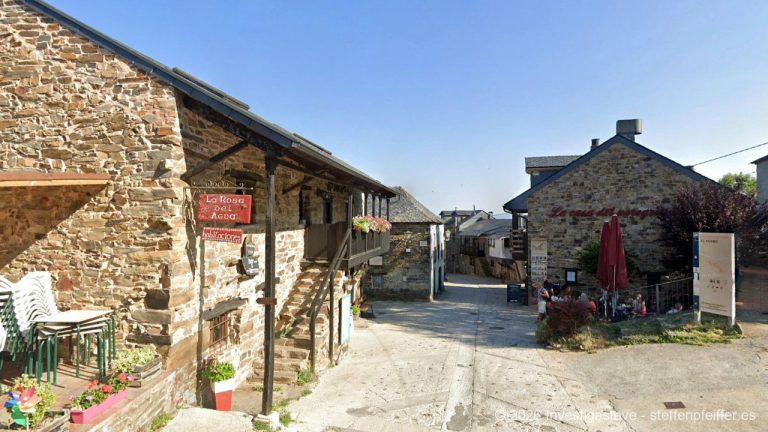
Villamayor de Monjardín – This village towers like a guardian over the plain. It is dominated by the castle of San Esteban de Deyo, a former fortress of the Banu Qasi, later reconquered by the Christians. The architecture of the village is defensive and rustic. Particularly worth seeing is the Romanesque church of San Andrés with its magnificent tower and the silver processional cross. Monjardín marks the geographical and emotional apex of the stage – here the familiar hilly landscape ends and the great emptiness begins.
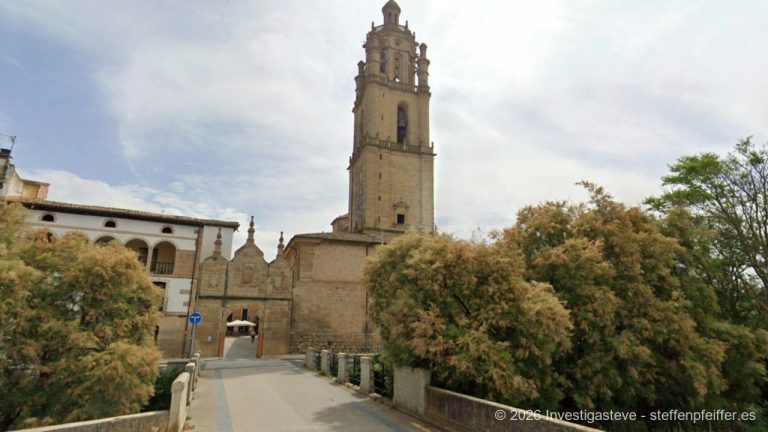
Los Arcos – The stage destination impresses with its monumental plaza and the cathedral of Santa María. In the 18th century, the city experienced an economic boom reflected in the opulent Baroque furnishings of the church. Los Arcos was historically an important market town on the border between Navarre and Castile. The atmosphere is lively and hospitable. Particularly noteworthy is the magnificent golden altarpiece in the cathedral, which receives the pilgrim with almost overwhelming splendor after the barren hours on the gravel track.
Dining, accommodation & supplies
The supply situation on this stage is divided and requires clever planning. Up to Villamayor de Monjardín, there are excellent opportunities for refreshment in every village.
Gastronomy: In Ayegui, a visit to the Bodegas Irache is obligatory. In Villamayor de Monjardín, there are traditional bars offering a hearty second breakfast – here you should definitely fill up your water supplies, as the following 12 kilometers offer no fountains. In Los Arcos, the restaurants on the plaza lure with hearty Navarrese cuisine, especially meat dishes and the famous red peppers.
Accommodation: Los Arcos offers a wide range of accommodations. The Albergue Casa Alberdi is known for its warm atmosphere, while the municipal hostel stands out for its central location. For those who prefer something more exclusive, there are hostels in Villamayor de Monjardín housed in former ecclesiastical buildings, radiating a deep calm.
Public facilities: Estella and Los Arcos have pharmacies, ATMs, and all necessary supply facilities. In the small villages in between, services are limited to the essentials.
The special thing today
The absolute unique selling point of this stage is the “wine miracle of Irache.” It is unique worldwide that a commercial winery provides free wine to pilgrims from a fountain in the wall. This small detail along the wayside is more than just refreshment; it is a living symbol of the unconditional hospitality of the Camino. The special thing here is the social interaction: at the wine fountain, people from all over the world meet, share their cups and their stories. It is a moment of lightness that shows that the Camino consists not only of renunciation, but also of celebrating life.
A second special aspect is the 12-kilometer-long “desert” after Monjardín. In a time when almost every kilometer of the Camino is developed for tourism, this section offers a radical confrontation with solitude. The special thing here is sensory deprivation. It is a stage for long-distance hikers and meditators. The realization that one can cover 12 kilometers without external help greatly strengthens self-confidence. Here, the path becomes a mirror of one’s own inner self – one learns to understand boredom not as an enemy, but as a space for insight.
Finally, the Baroque splendor of Los Arcos is a special phenomenon. The fact that a relatively small town has a church of such cathedral-like dimensions testifies to the immense wealth of the region in the 18th century. The special thing is the aesthetic shock upon entering the church of Santa María. The gold and the attention to detail of the Baroque form the perfect contrast to the barren, dusty landscape of the afternoon. It is a moment of transcendence that shows the pilgrim that at the end of every deprivation awaits a reward that exceeds all expectations.
Reflection at the end of the stage
When you walk through the narrow alleys of Los Arcos in the evening, with the cathedral bathed in a warm gold as the swallows circle around the tower, you feel a deep metamorphosis. Today’s stage was not a hike, but a mental marathon through all states of the pilgrim soul. You notice how your perception has changed. The glittering gold of the altarpiece weighs heavier than the dust on your boots. In the quiet of the evening hours, surrounded by the massive architecture, you become aware that you have passed a test of will today.
Los Arcos is a place of arrival and pause. Here, in the shadow of Baroque splendor, the effort of the day is put into perspective. You realize that the Camino is a constant alternation between giving and receiving – the wine in the morning was the gift, the solitude at midday the work, and the splendor in the evening the fulfillment. In the reflection of the day, it becomes clear to you that the “logistical desert” was necessary to clear your mind. You are ready for the coming days towards Logroño, because today you have learned that true fullness is often born from perfect silence.
Camino de las Estrellas
This stage lies on the Camino Francés, on the stage from Estella to Los Arcos. The sequence of places is:
| Stage | Start | Destination | Distance (km) | Elevation gain | Difficulty | Intermediate places |
|---|---|---|---|---|---|---|
| 06 | Estella | Los Arcos | 21.3 | ↑ 410 / ↓ 450 | moderate | Ayegui → Monastery of Irache → Azqueta → Villamayor de Monjardín |
Did you feel the moment when the wine of Irache cooled your throat and gave you new strength for the coming solitude? Was the 12-kilometer gravel track a torment for you or a meditative liberation? Share your moment of transformation with us – every story is another star in the sky of the pilgrim community.
About the Author

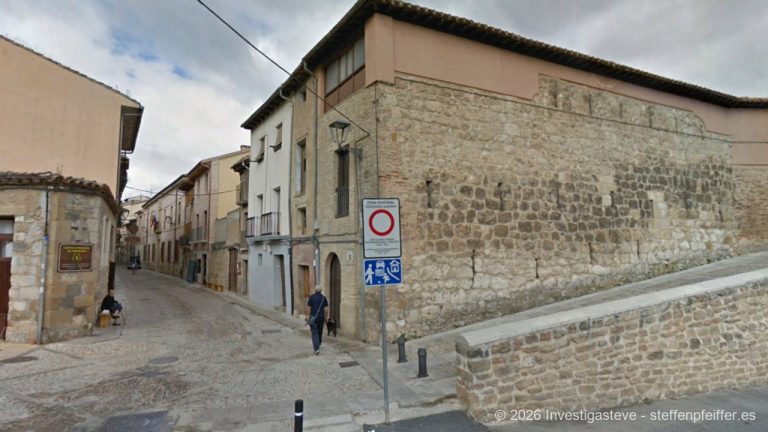
Estella-Lizarra – The Noble Beauty on the Rushing Ega
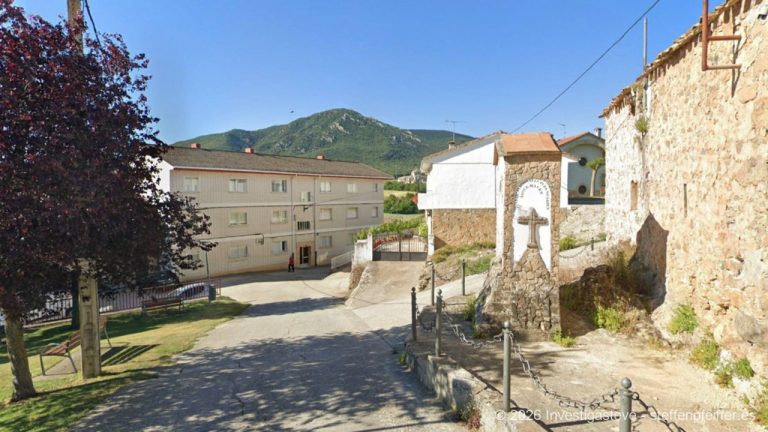
Ayegui – The Gate to Wine and the Sacred Shadow of Montejurra
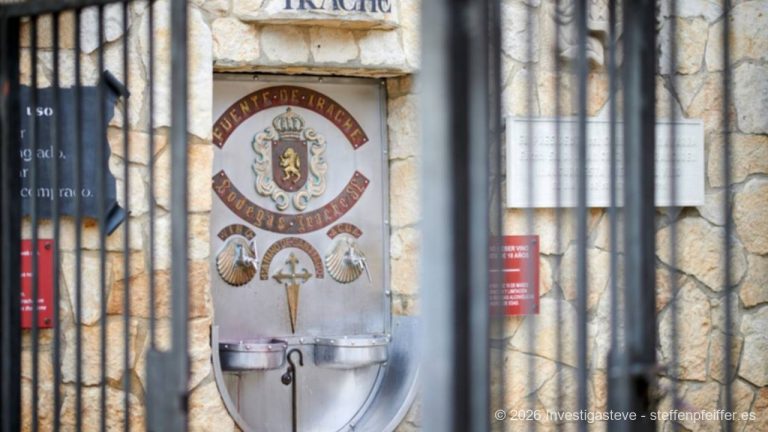
Irache – The Stone Heart of Navarre and the Source of Eternal Pilgrim Joy
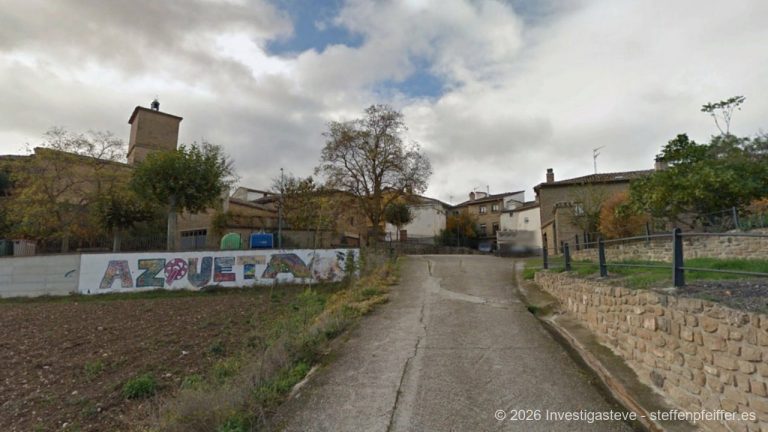
Azqueta – The Stone Refuge of Wayfarers
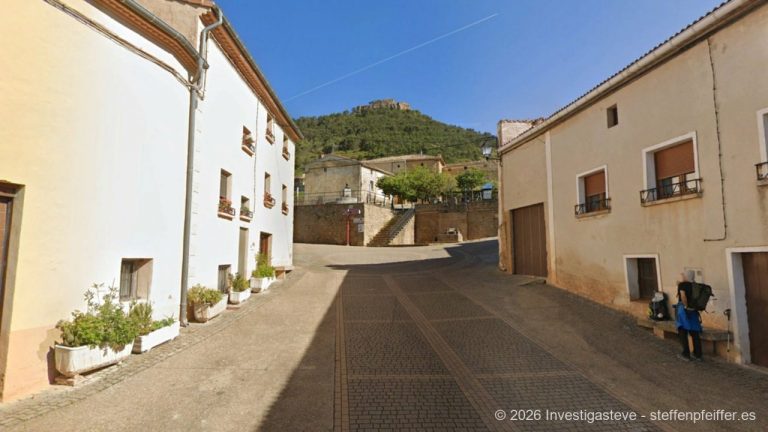
Villamayor de Monjardín – The Stone Crown Above the Vineyards of Navarre