A First Glance – Introduction & Atmosphere
When the pilgrim leaves the wide, often windswept plains behind Belorado and the path loses itself among the gentle, ochre-colored hills of the Burgos region, Villambistia does not announce itself with monumental towers or loud clamor. It is rather a gentle gliding into a world in which time has exchanged its usual speed for the rhythm of nature. Situated at an altitude of about 800 meters, this small place receives one with an almost palpable melancholy, which, however, radiates not sadness but a deep, archaic peace. The ground beneath the boots often changes here from hard asphalt to a fine, bright dust that crunches softly with every step and settles on the clothing like a protective film. The air smells of dry straw, of the tart spice of wild thyme, and if you listen closely, the wind carries the distant murmur of a hidden watercourse.
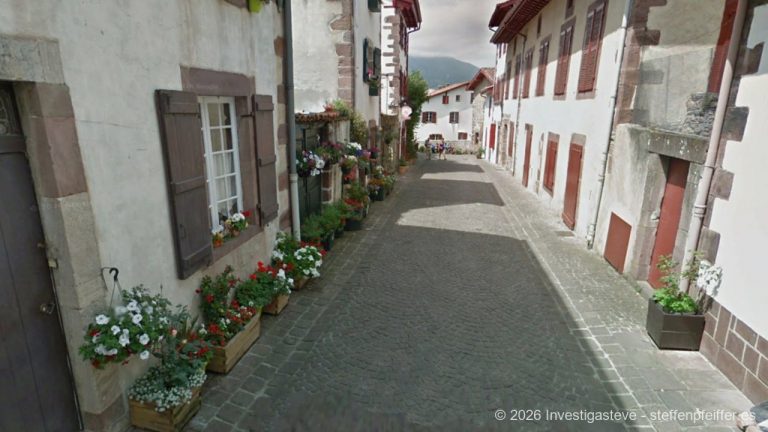
The psychological moment of arriving in Villambistia is characterized by a sudden deceleration. While the preceding kilometers were often dominated by the vastness of the landscape, here the gaze narrows to the tactile details of Castilian architecture. The houses of rough limestone and earth-colored half-timbering appear as if organically grown from the ground. You feel the coolness emanating from the thick walls, even when the midday sun burns mercilessly on the village. It is an atmosphere of pausing, a brief respite before the challenges of the nearby mountains – the Montes de Oca – become visible on the horizon. Those who stroll through the only main street may hear the clatter of a window shutter or the distant barking of a dog, but the dominant presence remains the silence, underscored only by one’s own breathing and the rhythmic click of hiking poles. It is a place that forces the pilgrim to question their own speed and surrender to the simplicity of being.
What This Place Tells
The history of Villambistia is inseparably interwoven with the fate of the Way of St. James and the eventful past of Castile. Already in the Middle Ages, the place was mentioned in chronicles, often in connection with the strategic importance of the region for the Reconquista. Yet Villambistia is not a place of great battles, but a place of silent wonders and deep popular piety. Legends tell of a time when the surrounding forests were still full of dangers and Villambistia was considered a safe anchor point for those who dared the long journey to Santiago. Historical causality shows itself here in the architecture of the Iglesia de San Esteban, a church from the 16th century that rests on the foundations of much older structures. Its massive walls tell of a time when faith and defense went hand in hand.
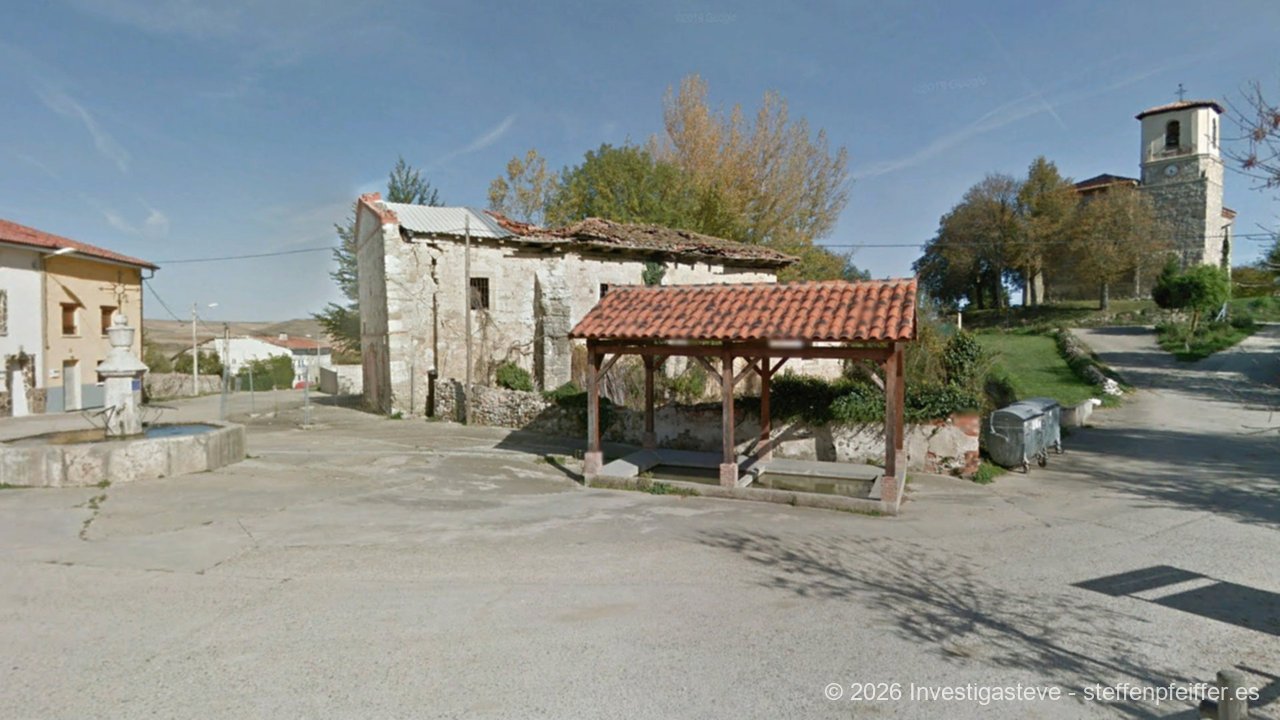
The heart of local tradition, however, is without a doubt the “Well of Wishes.” Historically, water was the most precious commodity in this often dry plateau. Legend has it that pilgrims who arrived in Villambistia completely exhausted found new vitality through the water of the well. It is said that one must wet one’s head with the ice-cold water to be freed from the fatigue of the path. Psychologically, this tradition reflects the human need for purification and new beginnings. Touching today the smoothly polished stones of the well, you connect haptically with millions of hands that did the same centuries ago. The smell of damp stone and moss surrounding the well forms a strong contrast to the dry heat of the surrounding fields and marks a turning point in the pilgrim’s sensory perception.
Villambistia was also the scene of a steady demographic metamorphosis. Once a flourishing village with several hundred inhabitants and a significant small-scale textile production, the rural exodus of the 20th century has left its marks. The empty houses with their half-ruined roofs appear like stone witnesses of a bygone era. Yet it is precisely in this decay that an aesthetic force lies. The light breaks in the broken window panes, and the wood of the old doors, tanned by wind and weather, feels as rough and honest under the fingers as the history of the place itself. Those who linger here understand that Villambistia does not shine through what it is today, but through what it has endured. It is a monument to constancy in an ever-changing world, a place where the spirits of the past seem to whisper in every shadow.
Addresses & tips in Villambistia
| Accommodation | 2 |
| Bars & Cafés | 1 |
| Sights | 4 |
| Services | 1 |
Camino Distances
The route in this section is particularly pleasant as it runs largely away from the major national roads, allowing the pilgrim to focus fully on the landscape.
| Previous Place | Distance (km) | Next Place | Distance (km) |
|---|---|---|---|
| Tosantos | ca. 4.5 km | Espinosa del Camino | ca. 1.6 km |
Sleeping & Arriving
Arriving in Villambistia has a quality often lost in the large cities of the path. Here, you are not received as a number in a dormitory, but as a guest in a community that sees the pilgrim as an essential part of its identity. The hostels of the place, such as the well-known Casa de los Deseos, are usually lovingly restored residential buildings in which the wooden ceiling beams smell of old resin and history. When you cross the threshold and slip the heavy boots from your burning feet, you feel the cool pavement or the smooth wood beneath your socks – a tactile pleasure that immediately lets the exertion of the day be forgotten.
The atmosphere in the accommodations is marked by a deep intimacy. You hear the muted murmuring of fellow pilgrims in the kitchen, the clatter of dishes, and the distant ringing of church bells ushering in the evening. The psychological effect of this environment is immense: the stress of the kilometers gives way to a deep gratitude for the simple roof over one’s head. In the communal areas, the scent of freshly brewed coffee mingles with the cool evening air streaming in through the narrow windows. There is no luxury here in the material sense, but a wealth of human warmth and time. The night in Villambistia is marked by a silence that is almost physically palpable; only the creaking of the timber as the house cools after the heat of the day interrupts the peace.
Those who spend the night in Villambistia consciously choose silence. It is a place for those who want to use the evening to write in their journal or simply gaze at the sky, which here, due to the lack of light pollution, is so clear that the Milky Way seems to hang like a silver path over the village. The feeling of lying in a bed that may have already housed generations of wanderers before you creates a connection to history that is both tactile and emotional. The texture of the often handwoven bed linen in the more private accommodations, the rough surface of the stone walls, and the soft glow of candles or small bedside lamps create a cocoon feeling that protects the pilgrim and strengthens them for the next day.
Eating & Drinking
The culinary experience in Villambistia is a return to the roots of Castilian cuisine. Here, the honesty of the product reigns over the sophistication of preparation. When the scent of “Sopa de Ajo” – the traditional garlic soup – wafts through the village in the evening, it is an olfactory promise of home and warmth. The soup, made from dry bread, plenty of garlic, olive oil, and a hint of Pimentón de la Vera, tastes of the fire over which it is often metaphorically still cooked. The first spoonful, hot and spicy, dispels the coolness of the evening and revives the spirits. It is served with the crusty, dark country bread, broken with the hands – a tactile act reminiscent of the biblical pilgrims breaking bread.
Another highlight is the local wine of the Burgos region, shimmering heavy and dark in the glass. Its aroma of dark berries and a hint of oak wood perfectly combines with the hearty dishes. You hear the clinking of glasses, the laughter of pilgrims from different nations, and feel how language barriers fall through the shared meal. The psychology of sharing is most strongly palpable here. Often, large platters of “Chorizo” and local cheese are placed in the center of the table. The consistency of the cheese, sometimes creamy-mild, sometimes hard and spicy, offers a varied mouthfeel. The meal usually ends with a simple “Café Solo” or a homemade dessert like “Arroz con Leche,” whose cinnamony sweetness forms the perfect contrast to the hearty soup. In Villambistia, you do not eat just to get full; you eat to become part of the earth that carries you.
Supplies & Logistics
The logistical structure of Villambistia is reduced to the essentials, which is precisely what makes the place so attractive for many. There is no large supermarket, but the small shops or the reception desks of the hostels offer the bare necessities for a walker’s daily needs.
Shopping: A small shop in the village supplies pilgrims with basic foodstuffs, seasonal fruit, and regional specialties such as honey or olive oil. The selection is manageable, but the quality of the local products is excellent.
Gastronomy: The bar of the hostel often functions as the social epicenter of the village. Here, in addition to the pilgrim menu, you can also get smaller snacks (tapas) and drinks. Opening hours are strongly oriented to the rhythm of the Camino.
Accommodation: In addition to the well-known albergue, there are small guesthouses and private rooms, often housed in historic buildings. A reservation is advisable in the high season, as bed capacity is limited.
Public Facilities: In Villambistia, there is a small square with benches, a public fountain, and the church, which can be visited during prayer times or by arrangement. An ATM or a pharmacy is only found again in the larger towns such as Belorado or Villafranca Montes de Oca.
Overall, Villambistia is a place of self-sufficiency in the best sense. You learn here to make do with what is there and to reduce the logistics of the path to a minimum. This reduction has a psychologically liberating effect: those who have fewer options have fewer decisions to make and can concentrate more on the experience of walking. The simplicity of the supply reminds the pilgrim that they actually need very little to be happy – a roof, a soup, and a peaceful night.
Don’t Miss
– The Well of Wishes (Fuente de los Deseos): Dip your head into the ice-cold water and feel how the fatigue falls away from you instantly – a tactile experience of the highest order.
– Iglesia de San Esteban: Admire the simple beauty of the Renaissance altar and let the cool, sacred silence work on you.
– The Panorama of the Hills: Find a spot at the edge of the village during sunset, when the light turns the surrounding fields into liquid gold.
– The Old Wine Cellars (Bodegas): Pay attention to the small hills with ventilation shafts at the edge of the village – they testify to the deeply rooted wine tradition of the region.
Insider Tips & Hidden Places
Beyond the main path, Villambistia hides small treasures that only reveal themselves to the seeker. One of these places is a small, almost forgotten alley that leads steeply upward behind the church. There, you find a bench of weathered wood from which you have a view over the roofs of the village that reaches to the distant peaks of the Sierra de la Demanda. In the stillness of the early morning, when the mist still hangs like a fleeting ghost in the valleys, this is a place of absolute contemplation. You hear only the distant ringing of a flock of sheep and the rustling of the leaves of the old poplars. The wood of the bench feels rough and sun-warm, a witness to countless hours of rest.
Another insider tip is visiting the old cemetery, located somewhat off to the side. The inscriptions on the weathered stones tell of family names that have been connected with Villambistia for centuries. It is a place that makes the historical causality of the village haptically tangible – the smooth surfaces of the newer graves in contrast to the porous, lichen-covered stones of the past. The smell of boxwood and damp earth gives this place a peaceful gravity. It is not a sad place, but one that reminds the pilgrim of finitude and at the same time of the continuity of life, which psychologically often leads to a deep inner peace.
Those who dare should also look for the remnants of the old bodegas, those earthen cellars where wine was once stored. Sometimes a door is open, and you can glimpse into the cool darkness smelling of damp clay and sweet wine residue. The echo of your own steps on the stamped earth creates an acoustic depth reminiscent of the roots of Castilian culture. These hidden places are the true storytellers of Villambistia; they speak of hard work, of the joy of the harvest, and of the unshakeable patience of the people in this region.
One final tip: Pay attention to the small details on the house doors – you often find hand-forged door knockers in the shape of shells or hands. Feeling the cool metal under your fingers while imagining how many travelers have already knocked on these doors is a tactile connection to the hospitality of the Camino. Villambistia does not reveal its innermost to everyone; one must approach it with curiosity and slowness to grasp the true magic of the hidden places.
Moment of Reflection
In Villambistia, the pilgrim often reaches a point of inner metamorphosis. The initial euphoria of the start has usually faded, and the routine of walking has set in. In the silence of this place, reflection on the “why” of the journey begins. The Well of Wishes is more than just a physical destination; it is a symbol of the hope that drives us all. When the cold water runs over the forehead, it is a moment of total presence. You feel the pounding of blood in the temples and the cold on the skin – an intense tactile experience that catapults the mind out of the carousel of everyday thoughts back into the here and now.
You recognize here that the path does not consist of the big cities, but of the small, dusty in-between spaces like Villambistia. Psychologically, this is the phase of acceptance: you accept the fatigue, you accept the simplicity, and you accept the silence. The solitude you may feel in the alleys of the village is not isolation, but a necessary cleansing of the mind. Here, under the wide sky of Castile, things rearrange themselves. The worries of the past seem as distant as the horizon, and the challenges of the future are reduced to the next step. Villambistia teaches us that every wish we carry within us already exists in ourselves – the place merely gives us the space and the water to make it visible.
Camino of the Stars
This place lies on the Camino Francés, on the stage from Belorado to San Juan de Ortega. The sequence of places is:
Belorado → Tosantos → Villambistia → Espinosa del Camino → Villafranca Montes de Oca → Puerto de la Pedraja → San Juan de Ortega
Did you visit the Well of Wishes in Villambistia and feel the ice-cold water on your skin? Was it a moment of refreshment for you, or perhaps even of spiritual renewal? Share your impressions of this quiet jewel by the wayside with us. Perhaps you had a special encounter at the Casa de los Deseos or discovered a secret corner we don’t yet know? We look forward to your story and your photos!
About the Author