A First Glance – Entry & Atmosphere
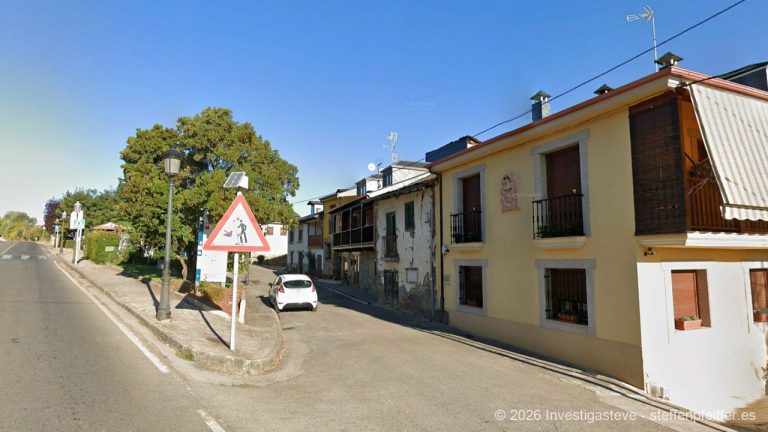
When you have left the picturesque Lires behind you and the gentle curves of the Galician country road lead you deeper into the hilly hinterland, you reach, with Frixe, one of those places that feels like the landscape’s deep, long exhale. It is a hamlet that doesn’t impose itself through monumental splendor, but captivates through its archaic authenticity. Here, on stage CFM 4 of the Camino Fisterra y Muxía, you encounter a world where modern haste simply seems to bead off the massive granite walls of the houses. The first impression is dominated by an almost sacred green – lush Galicia shows itself here from its most fertile side. There’s an intoxicating smell of a mixture of damp ferns, the tart aroma of eucalyptus leaves, and the unmistakable, earthy scent of freshly plowed fields, which hangs heavy in the often misty morning air. The “orballo,” that fine, almost invisible Galician drizzle, settles on your skin like a cool veil and makes the colors of the lichen on the old stone walls glow in brilliant yellow and deep gray.
In Frixe, you are greeted by a silence that is so substantial it feels almost like an independent being. Only the distant, metallic ringing of cowbells, echoing up from the valleys, and the rhythmic clacking of your trekking poles on the asphalt interrupt nature’s quiet. You feel the resistance of the ground beneath your boots; the road here is firm, but it leads you relentlessly upward, away from sea level, toward the outposts of the Facho de Lourido. It is a haptic experience to run your fingertips over the rough, cold surface of the hórreos that sit like little temples of permanence on the roadside. In Frixe, time doesn’t seem to flow; rather, it seems to rest in the deep pores of the granite, a psychological vacuum that gives you the space to process the past kilometers before the physical effort of the next ascent demands your full concentration. This place is the gateway to a different perception, a place where you learn to understand the fine nuances of the wind and the quiet crackling of dry gorse as a form of communication from the earth.
What This Place Tells
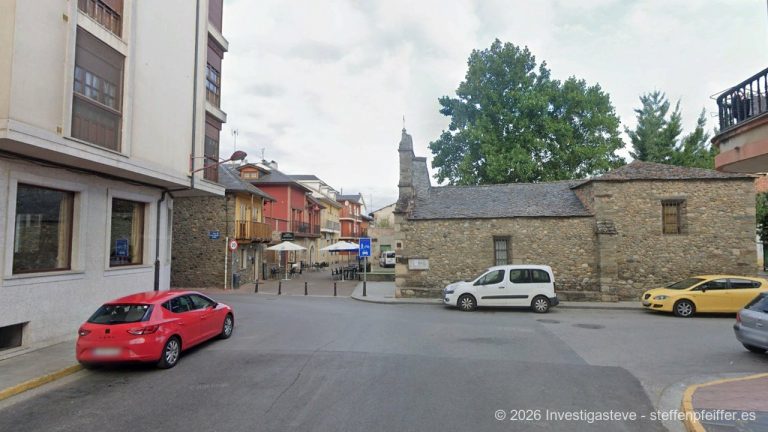
Frixe, or more precisely the parish of Santa Leocadia de Frixe, carries a story deeply woven into the Christian and pre-Christian identity of Galicia. The center of the place is the Church of Santa Leocadia, a building whose simple grandeur testifies to centuries of piety by the local farmers. Although the current structure is marked by Baroque elements, the massive foundations and architectural severity whisper of Romanesque roots going back to the heyday of medieval pilgrimage. Saint Leocadia herself, a martyr from Toledo, is venerated here in a setting that seems as far from the Castilian plateau as possible. This shows the far-reaching network of saint veneration along the Ways of St. James, which connected even the remotest corners of the Costa da Morte with the rest of the Christian world.
The historical causality of Frixe lies in its role as an agricultural center of the region. Here, for generations, survival was secured through the “minifundio” system – tiny plots of land, painstakingly maintained and defended against the adversities of the Atlantic climate. The numerous hórreos that characterize the village are stone monuments to this subsistence economy. Each hórreo tells a story of hard work, of the fear of poor harvests, and of the clever engineering of ancestors who learned to protect their supplies on stone stilts from the dampness of the ground and from rodents. When you walk through the lanes of Frixe, you walk on paths once dominated by farmers and herders, long before the yellow arrows of the Camino brought a new kind of wanderer into this silence. The place has preserved its identity; it is not a museum, but a living, if quiet, example of Galician rural culture.
Strategically, Frixe has always been the last significant outpost before entering the wilder, forested zone that leads to the summit of the Facho de Lourido. Here, travelers gathered their strength, replenished their supplies at the wells, and mentally prepared themselves for the challenges of the altitude. The geographical location, at about 100 to 150 meters above sea level, marks the transition from the lovely coastal atmosphere of Lires to the rougher, more exposed mountain world. In local folklore, Frixe is considered a place of protection. Stories were told of pilgrims who lost their way in the fog and were guided safely into the hamlet by the ringing of the bells of Santa Leocadia. This spirit of care still hovers over the place today, manifested in the discreet friendliness of the inhabitants and the almost ritual calm that envelops every walker who is ready to engage with the pace of Frixe.


Camino Distances
After about 2.2 kilometers of steady walking on the narrow asphalt road from Lires, lined with green meadows and isolated stone houses, you reach the center of Frixe.
| Previous Place | Distance (km) | Next Place | Distance (km) |
|---|---|---|---|
| Lires | approx. 2,2 km | Guisamonde | approx. 2,0 km |
Staying Overnight & Arriving
Arriving in Frixe is an experience of radical reduction. Don’t expect magnificent hostels or hotels with wellness areas; the place is a refuge of simplicity that invites you to put aside the comfort demands of the modern world for a moment. The village does not offer dedicated sleeping facilities for pilgrims directly in the center. It is a place of passing through, a psychological stopover where you learn that true arrival often happens in the mind and not in checking into a room. The few houses grouped tightly around the church, in their gray granite splendor, often seem closed, yet they exude a permanence that gives the pilgrim a deep sense of security.
The atmosphere upon entering Frixe is marked by an almost tangible isolation. You feel that you are in one of the more remote parts of Galicia, where the infrastructure follows the rhythm of nature and not the other way around. When you arrive here, you should take the opportunity to sit on one of the old stone benches and let the surroundings sink in on you. Arriving in Frixe is a silent act – no cheering over a reached goal, but the acknowledgment of a waypoint that brings you a bit closer to your own inner self. The haptics of the place are defined by hard stone and soft moss; opposites that make the experience in Frixe so unique.
Those planning an overnight stay must be aware that Frixe is a “blind spot” on the map in this regard. The nearest possibility for accommodation is either Lires, which you have just left, or the hostels further north in Muxía. However, this gap in the tourist infrastructure preserves Frixe from the fate of many other places on the Camino: it remains authentic, quiet, and unspoiled. It is a place for those who see solitude not as a deficiency but as a gift. The feeling of isolation becomes a resource here, enabling you to approach the coming kilometers to the Facho de Lourido with a clarity that would be lost in the hustle and bustle of bigger cities.
The psychological impact of Frixe should not be underestimated. It is the place where you realize that the path is now seriously going uphill. The anticipation of the destination in Muxía mixes here with respect for the physical effort. When you stand in Frixe, you are at the turning point between the coastal romanticism and the alpine challenge of the Costa da Morte. Take the time to endure this tension; it is the fuel that will carry you over the mountain. Arriving in Frixe means accepting the silence and integrating it as a part of your own pilgrimage.
Food & Drink
Culinarily, Frixe is a place of modern curiosities in an ancient setting. While there are no traditional bars or restaurants in the classic sense, “Vending Frixe” has established itself as an institution that has become a saving anchor point for many pilgrims. In a small room, you will find machines that provide you with the bare essentials: coffee, cold drinks, and snacks. It is a fascinating contrast – state-of-the-art vending machine technology in the middle of a village that otherwise seems to be built entirely of ancient stone. The smell of fresh coffee, streaming from the machine at the push of a button, mixes here with the cool, salty air of the Atlantic and creates a feeling of small, modern coziness in the middle of nowhere.
A picnic near the Church of Santa Leocadia is one of the most beautiful ways to enjoy Frixe. If you have your own supplies with you – perhaps a piece of Galician cheese or a rustic bread you bought in Lires – it tastes particularly intense here in the silence. The water from the local wells is often cool and refreshing, a blessing after the first ascent. Remember, though, that Frixe is not a place for extended meals; it is a place for quick, strategic fortification. The anticipation of the lavish seafood platters in Muxía is your constant companion here, but the simple snack against the church wall remains in the memory as a moment of humility.
The agricultural surroundings of Frixe provide the visual stimuli for the hunger of the spirit. The small gardens with their cabbage, potatoes, and cornfields speak of an honest, down-to-earth cuisine that you will hopefully taste in the evening in Muxía. In Frixe itself, however, you are largely on your own or dependent on the grace of the machines. It is an ascetic experience that directs focus onto the quality of one’s own provisions and gratitude for small refreshments. A cold drink from the machine can take on the value of a festive meal here when the sun burns mercilessly on the asphalt.
Supplies & Logistics
Logistically speaking, Frixe is a small triumph of improvisation over remoteness. While larger towns shine with supermarkets and pharmacies, Frixe concentrates on the absolutely essential. The aforementioned vending system is the central pillar of supply for travelers. It is an autonomous service that works around the clock and shows how even the smallest Galician hamlets can adapt to the needs of the modern pilgrim without selling their soul. Here, you can briefly top up your energy reserves before the path releases you back into total nature.
The rest of the infrastructure is spartan. There are no ATMs and no medical facilities directly on site. Pilgrims should therefore ensure they have sufficient cash and a well-stocked first-aid kit before reaching Frixe. In emergencies, you depend on the help of the locals, who are known for their quiet but warm willingness to help. The logistical challenge of Frixe is also an exercise in personal responsibility. Here, you learn to plan ahead and allocate your resources (water, energy, time) wisely, as the next comprehensive supply station only awaits you in Muxía.
Shopping: No stores; basic supplies only possible through the vending machines.
Gastronomy: No bars or restaurants; self-catering or snacks from the machines.
Overnight Stay: No hostels or hotels in the village; next accommodations in Lires or Muxía.
Public Facilities: No significant buildings apart from the church; strategically important location for the onward journey.
In summary, Frixe is logistically a little oasis of self-service. It offers just that ounce of comfort necessary not to be completely discouraged, while simultaneously preserving the rugged independence of a Galician coastal hamlet. It is the perfect logistical preparation for the wild, unserviced kilometers that will now lead you over the Facho de Lourido to Muxía.
Don’t Miss
Church of Santa Leocadia: Take a look at the portal and the plain facade of this Baroque-style sacred building. It is the spiritual heart of Frixe and a place of deep tranquility.
Vending Frixe: An almost ritual stop for modern pilgrims. Treat yourself to a brief moment of refreshment at this unusual self-service spot.
The Historic Hórreos: All over the village, you will find beautiful examples of these traditional granaries. Pay attention to the craftsmanship details on the stone stilts.
A Look Back at the Valley: Shortly after the exit from Frixe, it’s worth looking back. The view of the gentle hills of Galicia is of a soothing vastness.
The Old Stone Wells: Look for the small wells in the village; their water is often ice-cold and a haptic delight for heated faces.
The Flora by the Wayside: In the surroundings of Frixe, wild thyme and other herbs often grow, their scent will accompany you on the next kilometers.
Secret Tips and Hidden Places
Beyond the main path, Frixe conceals small treasures that only become apparent to those willing to let their gaze wander. One such place is a small, weathered cruceiro (a stone wayside cross), standing a little away from the church in a niche of ferns and ivy. These crosses often mark ancient places of power or crossroads and are a haptic experience – lay your hand on the rough, lichen-covered granite and feel the cool weight of the centuries. Here, away from the yellow arrows, a silence prevails that is even deeper than in the center of the village, an ideal place for a private prayer or a short meditation.
Another secret tip is observing the architecture of the houses in the side lanes. You can often spot carved dates or family crests above the door lintels, reaching far back into the 18th century. These details tell of a time when Frixe was a more prosperous farming community than one might assume today. When the afternoon light falls at a shallow angle on the gray walls, the mica content in the granite begins to sparkle, as if tiny diamonds were embedded in the stone – a magical moment of visual poetry only experienced by those who don’t hurry through the place.
Near the vending station, there is a small path leading to a hill from which, in clear weather, you can already glimpse the distant Cape Vilán. It’s a “sea-view window” that only opens for a brief moment before the eucalyptus trees block the view again. Search for this outlook – it is like a visual reward for the ascent so far and a reminder that the ocean is your constant, though often invisible, companion.
A final tip concerns the small house chapels or altars found in some gardens. These lovingly tended miniature sanctuaries show the deep, popular religiosity of the Galicians, who integrate their saints directly into their daily lives. It is an invitation to open your senses wide and perceive the small wonders along the wayside, which often say more about the soul of Galicia than the large monuments in the cities.
Moment of Reflection
In Frixe, you stand on the threshold of a new dimension of your journey. You have left the lovely valleys behind and now look toward the coming ridges. This place asks you the question about your own inner stability: “What carries you when the path gets steeper and the shade disappears?” The unshakeable tranquility of the Church of Santa Leocadia offers you a mirror for your own condition. Here, in the isolation of the hamlet, the small everyday worries of the path – the blister on your foot, the heavy shoulder – become relative. In Frixe, you understand that strength grows not from noise, but from silence.
The rhythm of your breath in Frixe adjusts to the slow heartbeat of this ancient landscape. You feel a deep connectedness with all those who stood here before you, drank at the same wells, and felt the same wind on their faces. The psychological effect of Frixe lies in its permanence. While everything in your life might be in upheaval, this hamlet stands like a rock in the surf of time. This realization can have a profoundly calming effect: the path continues, the stones remain, and you grow with every step you take out of the silence of Frixe and into the vastness of the mountains. It is the place where you learn to trust the silence.
Camino of the Stars
This place is located on the Camino Fisterra y Muxía, on the stage from Fisterra via Lires to Muxía. The sequence of places is:
Fisterra → San Martiño de Arriba → Hermedesuxo → San Salvador de Duio → Buxán → Castrexe → Lires → Frixe → Guisamonde → A Canosa → Morquintián → Xurarantes → Muxía
Did you also experience that special moment of pause in the stillness of Frixe, or did the coffee from the vending machine give you the needed kick for the ascent to the Facho? Share your personal impressions and perhaps even a photo of the Church of Santa Leocadia or one of the ancient hórreos with us. Your experiences make this guidepost come alive for all pilgrims!
About the Author