A First Glance – Introduction & Atmosphere
When you have left the gentle descent from Mañeru behind you and your gaze sweeps over the undulating landscape of central Navarre, shaped by vineyards and olive groves, an apparition rises before you that appears equally defiant and inviting. On the peak of a striking limestone hill sits Cirauqui, a place whose name in Basque, “Zirauki”, means something like “viper’s nest”. But do not be afraid – what was once conceived as an impregnable fortress against uninvited guests today welcomes the modern pilgrim with a timeless, almost archaic majesty. Even from afar, you perceive the shimmering light breaking on the bright façades of the tightly packed houses, while the hill itself stands like a stone guardian over the valley of the Valdeiga.
The path there is a tactile experience of a special kind. The dust of the Navarrese earth, fine as icing sugar and heated to white heat by the sun in summer, crunches under your boot soles, while the smell of dry thyme, rosemary, and the pungent aroma of the nearby vineyards hangs in the air. It is an olfactory crescendo that announces the transition from the plain up into the vertical labyrinth of the village. The closer you come, the more clearly you hear the distant ringing of the bells of San Román, carried by the wind and mingling with the rhythmic clicking of your walking sticks. It is a moment of psychological metamorphosis: the pilgrim leaves the vastness behind and prepares to immerse himself in the protective narrowness of a medieval core that has scarcely changed its face for over a millennium.
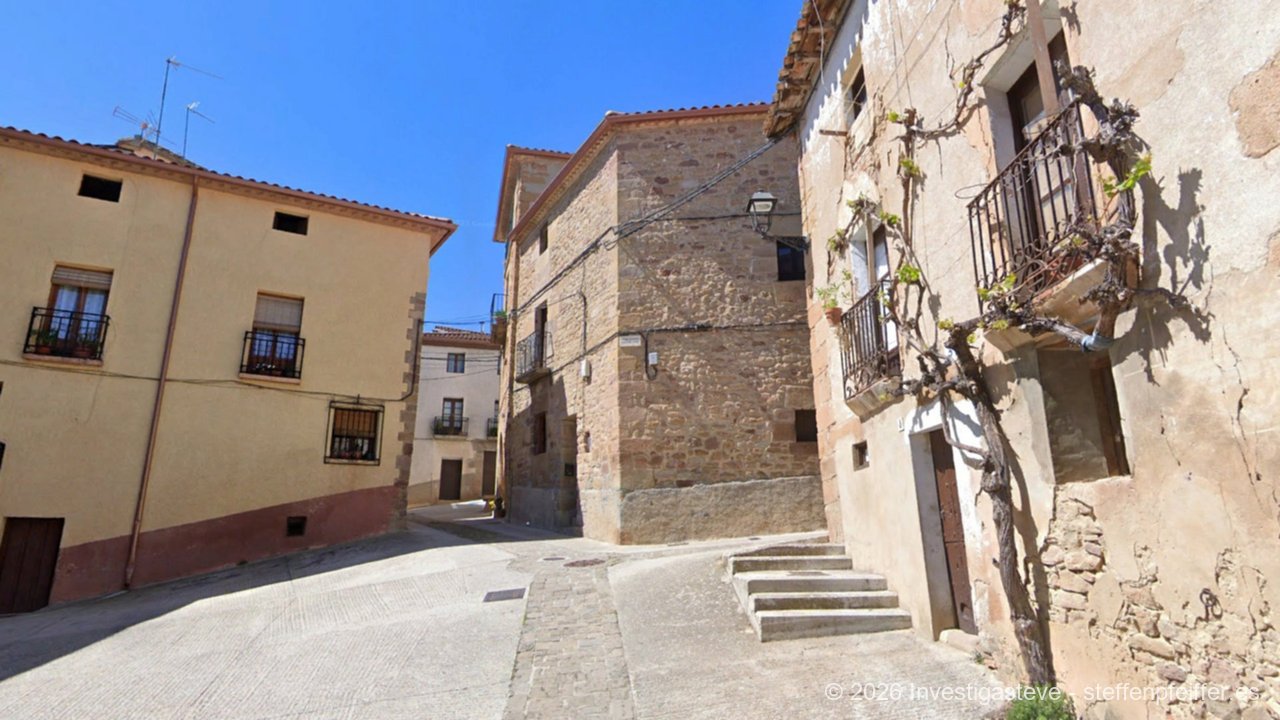
Arriving in Cirauqui, you immediately feel the vertical challenge. The alleys are steep, paved with ancient stones polished smooth by millions of steps. Up here, the wind seems to speak a different language – it whistles through the narrow passageways, the “Portales”, and brings with it the coolness of the nearby Lóquiz mountain range. It is a place that forces you to slow your pace, tilt your head back, and admire the architectural mastery with which the inhabitants have nestled against this inhospitable rock. Cirauqui is not a place you simply pass through; it is a stage on which the history of the Camino Francés comes alive in every crevice of the wall.
What This Place Tells
Cirauqui is a history book of Navarre made stone. Its strategic location was no coincidence, but a necessity in a time when the Kingdom of Navarre had to defend its borders against Castile and the Moors. The etymology of the name “Zirauki” points to a pre-Roman settlement, yet the place experienced its true flowering in the Middle Ages, when the Camino de Santiago under kings Sancho el Mayor and later Sancho el Fuerte became the lifeline of Europe. Passing through the “Puerta de Santa María” today, one of the best-preserved medieval town gates in the region, you cross an invisible boundary between times. You feel the coolness of the massive stone blocks and the historical causality: without this rampart, Cirauqui could not have withstood the storms of the centuries.
The architecture of the place is a textbook example of medieval urban planning. The rows of houses form a closed ring spiralling around the highest point of the hill, where the church of San Román sits like a crown. This church, whose portal was created in the 13th century in the transitional style between Romanesque and Gothic, tells of the religious fervour and artistic wealth of the Camino. The tactile quality of the stonework – the filigree arches that appear almost arabesque – testifies to a cultural exchange that extended far beyond the borders of Navarre. It is rumoured that the stonemasons who worked here also left their mark on the great cathedrals of Santiago and Toulouse.
A special chapter of the narrative is written by the Roman road that begins at the foot of the hill and leads the pilgrim out of the place. This “Calzada Romana” is one of the most significant archaeological testimonies of the Camino. The large, flat stones laid by Roman legionaries two thousand years ago feel different under your feet than modern asphalt – they are hard, unyielding, and radiate a permanence that humbles the pilgrim. Here the paths of history cross: the Romans built them for war and trade, the pilgrims used them for the search for salvation. When you cross the Roman bridge, whose foundations still defy the waters of the Valdeiga, you become aware that you are part of a chain that has never been broken. You are not just a walker; you are the heir of a civilisation that chose this hill as its throne.
Addresses & tips in Cirauqui
Camino Distances
This place lies in the transition zone between the fertile gardens of Puente la Reina and the historic hills before Estella. The distances are moderate, but the undulating profile demands full attention.
Sleeping & Arriving
Arriving in Cirauqui means replacing the vertical effort of the ascent with the psychological peace of protection. The place offers a handful of hostels distinguished by an almost family-like atmosphere, far from the mass operations in the larger towns. The “Albergue de Cirauqui” is a prime example of the hospitality along the Way. Housed in a carefully restored stone building, you immediately feel the thick walls upon entering, keeping the summer heat out and providing a pleasant coolness inside. It smells here of freshly washed linen and the scent of woodsmoke often wafting from the communal kitchen.
The tactile experience of such accommodation is formative: the rough masonry, the creaking oak floorboards, and the narrow windows that release the view over the roofs of the village to the horizon. Here, arriving is a conscious process of shedding – not only the heavy backpack, but also the haste of the day. In the communal areas, pilgrims from all over the world meet, and the murmuring of different languages mingles with the clatter of dishes. It is an auditory backdrop of peace that acts like balm after the exertions of the hike.
Another recommended address is the “Albergue Casa Maralotx”. It stands out for its location directly on the pilgrim path and often offers the opportunity to watch the sunset over Navarre from a small terrace. When the light sweeps golden-yellow over the vineyards and the shadows of the church towers grow longer, the pilgrim experiences that moment of deep contentment for which he has covered hundreds of kilometres. The facilities are functional but designed with great attention to detail – a place where the history of the building is respected while modern needs are not neglected. Arriving in Cirauqui is thus always also an immersion in a world where time has a different dimension.
Eating & Drinking
The gastronomy in Cirauqui is, like the place itself, down-to-earth, honest, and deeply rooted in the tradition of Navarre. Here the cuisine of the earth reigns: meat from the nearby pastures, vegetables from the gardens of the Valdeiga, and of course the wine, which holds an almost sacred significance here. In the small bars like the “Bar-Restaurante El Castillo” or the meeting point on the main square, you can try the famous “Pinchos”, often topped here with regional cheese or the spicy “Chorizo de Navarra”. The taste is intense – the spiciness of the paprika, the saltiness of the ham, and the freshness of the local olive oil combine in an explosion of the senses.
Particularly noteworthy is the “Menu del Peregrino”, often prepared with special care in Cirauqui. You should definitely try the “Alubias” (bean stew), which simmer here for hours until they reach a creamy consistency. The smell of garlic, bay leaves, and smoked meat fills the room and awakens vital spirits you did not know you still possessed. Served with it is a robust red wine from the region, often a Tempranillo or Garnacha, which has stored the warmth of the Navarrese sun in every drop. The glass in hand, the gaze on the medieval wall – that is the tactile connection to the culture of the land.
For dessert, the “Cuajada” must not be missed, a sheep’s milk pudding traditionally served with honey and walnuts. Its cool, almost velvety texture forms the perfect conclusion to a hearty meal. Eating in Cirauqui means tasting historical continuity: many of the recipes have been passed down through generations and already strengthened the pilgrims of the 12th century. It is a form of communication without words – the earth nourishes the wanderer, and the wanderer carries the memory of these gifts onwards.
Supplies & Logistics
Although Cirauqui is small, it offers the pilgrim everything necessary to continue the journey safely. The logistics of the place are entirely oriented towards the central square and the main alley.
Shopping: There is a small “Tienda de Comestibles” where you can buy fresh fruit, bread, and water for the next stage to Estella. The prices are fair, and the quality of local products such as cheese or dried meat is excellent.
Gastronomy: Several bars offer complete meals in addition to snacks. Especially at lunchtime, the central square is a lively place of encounter.
Accommodation: In addition to the above-mentioned hostels, there are also smaller guesthouses for those seeking a little more privacy.
Public Facilities: A pharmacy is available, which is essential for treating blisters or minor ailments. A cash machine is also located in the village centre.
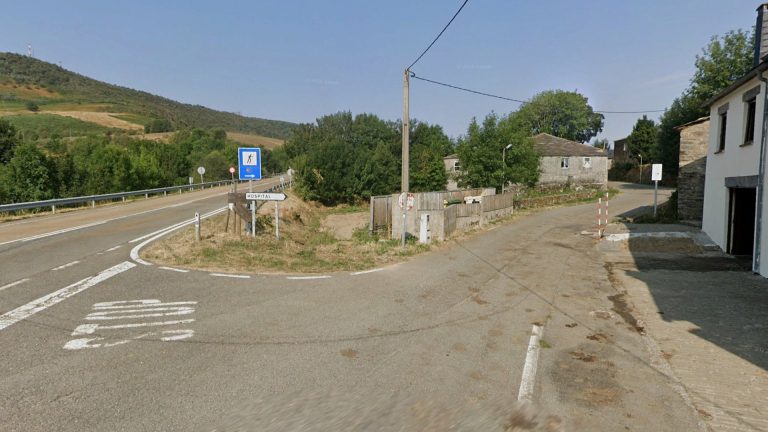
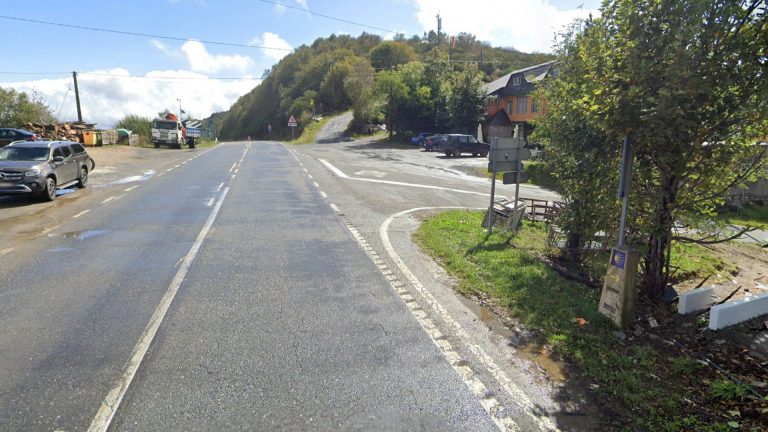
Cirauqui is accessible via the national road NA-1110, which runs parallel to the Camino. For pilgrims who need a break or wish to use the place as a starting point, daily buses run between Pamplona and Logroño, stopping at the foot of the hill. The ascent to the village centre, however, must always be managed under one’s own steam – a final tribute to the defensive past of this proud place.
Don’t Miss
Cirauqui is a place that wants to be discovered in detail. Take the time to absorb the following points:
– Iglesia de San Román: The magnificent portal with its multifoil arches is a masterpiece of stonemasonry. Inside, a sacred silence prevails, broken only by the distant wind outside.
– The medieval town wall and gates: The “Puerta de Santa María” in particular is an impressive testament to defensive architecture. Feel the coolness of the stone as you pass through it.
– Roman Calzada and bridge: The path out of the village leads you over the original Roman stones. It is a tactile bridge across two millennia of history.
– The view from the church square: From up here, you have a 360-degree view over Navarre. You see the path you have come and the one that still lies ahead.
– The Basque inscriptions: Pay attention to the embedded coats of arms and inscriptions on the old houses, telling of the long history of families in “Zirauki”.
Insider Tips & Hidden Places
Beyond the main route, Cirauqui conceals corners that only the attentive observer finds. One of these places is the small path running below the western town wall. While most pilgrims follow the marked path directly to the Roman bridge, this narrow path offers a perspective on the massive construction of the foundation on which Cirauqui rests. Here grow wild fennel and wild roses, and the scent is particularly intense when the morning dew still lies on the leaves. It is a place of absolute silence, where you hear only the rustling of lizards in the dry grass – an auditory experience of deceleration.
Another insider tip is the visit to the wine cellar of a local producer, should the opportunity arise. Some of the old houses have deep, rock-hewn vaults where the wine matures at constant temperatures. The tactility of the damp, cool rock walls and the smell of fermented grape juice and old oak barrels is a sensory journey into the underworld of the village. Here you become aware that Cirauqui is not only built on rock, but also lives from the power of the soil that produces the wine.
When you leave the place at sunset to walk a stretch to the Roman bridge, pay attention to the play of light in the abandoned winegrowers’ huts, the “Chozos”. These small stone huts once served the winegrowers as shelter. Inside, an almost solemn darkness reigns. It is a place for a brief moment of pause, far from the modern world, only you and the stones of Navarre. These small, inconspicuous places are what complete the pilgrim’s emotional metamorphosis.
Moment of Reflection
When you stand at the top by the church of San Román and let your gaze sweep over the roofs of Cirauqui, a psychological parallel to your own pilgrimage journey almost inevitably imposes itself. The ascent here was steep, arduous, and demanded your full concentration. Every step on the smooth paving was a struggle against gravity. But now, on the summit, effort gives way to a deep clarity. Cirauqui teaches us that the most beautiful views and the safest refuges are often only attainable through effort.
In this moment, ask yourself: What is my own “hill” that I want to climb in life? Which “walls” do I need for my protection, and which gates should I open to let new things in? The permanence of the stones around you, which have defied wind and weather for centuries, gives you the answer: it is endurance that counts. Cirauqui is a symbol of the human ability not only to assert itself in a harsh environment, but to create beauty and order. When you leave this place and descend over the Roman road, you carry a piece of this stoic calm within you. You recognise that the path consists not only of kilometres, but of the heights you overcome within yourself.
Camino of the Stars
This place lies on the Camino Francés, on the stage from Puente la Reina to Estella. The sequence of places is:
Puente la Reina → Mañeru → Cirauqui → Lorca → Villatuerta → Estella
Did you also feel that moment during the ascent through the narrow alleys of Cirauqui when the world seemed to sink beneath you and only the history of the viper’s nest mattered? Could you feel the coolness of the Roman bridge, or were you enchanted by the play of light in San Román? Share your impressions, your thoughts during the ascent, or your very personal insider tips from this stone labyrinth with us. Every experience enriches the way of those who will come after you!
About the Author