A new stage day – entering the stage
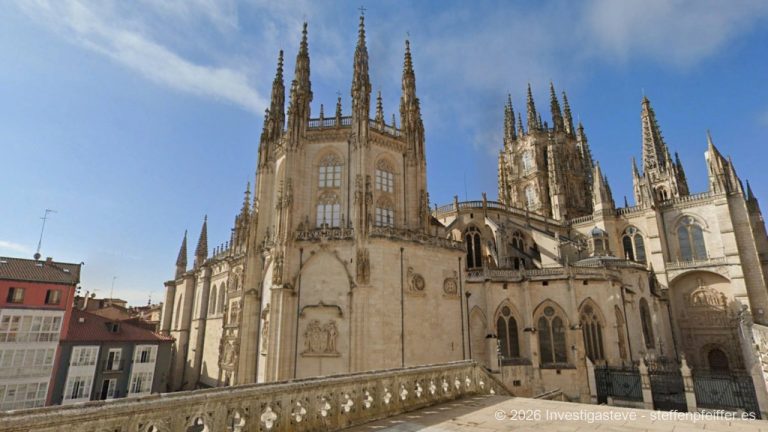
The morning in Burgos begins with a cool, almost tangible weight, which lies like a fine veil over the monumental granite facades of the old town. While the first rays of sunlight bathe the delicate spires of the cathedral in a pale, almost ethereal gold, the damp, incense-laden breath of the night still lingers in the narrow alleys of the Rúa de San Juan. It is a moment of absolute caesura: The echo of your own footsteps on the smoothly polished cobblestones reminds you that the shelter of the city walls now ends. You feel the hard stone beneath your soles, which here in Burgos possesses an almost imperial smoothness, and you realize that today’s departure has a new quality. It is the farewell to the vertical splendor of Gothic and the ritual entry into the horizontal infinity of the Castilian plateau.
As you leave the monumental Arco de Santa María behind and cross the bridge over the Arlanzón, the smell of fresh river water mingles with the aroma of roasted coffee wafting from the awakening cafés of the city. Yet this urban comfort is fleeting. Your gaze wanders westward, where the silhouette of the town slowly dissolves in the haze, making way for a landscape that offers no hiding places. The air becomes clearer, sharper, and already carries the dusty, pungent scent of the distant fields. You feel a slight tingling in your fingertips – a mixture of awe and determination. Today is the day the Camino shows its true face, a face of light, wind, and relentless expanse. The journey into the “Purgatory” of the Meseta has begun, and with every step out of the city, you shed the mask of the tourist to find the skin of the pilgrim.
Route and elevation profile
Distance: 21.0 km
Elevation gain: ↑ 180 m / ↓ 150 m
Difficulty: Moderate. Physically, the stage is manageable due to the moderate inclines, but the psychological burden of sensory reduction and exposure to the elements requires high mental discipline.
Special features: Lengthy urban exit through parks and industrial areas; steep ascent onto the Páramo plateau behind Rabé de las Calzadas; absolute lack of shade on the last ten kilometers.
Today’s route is a dramaturgical sequence of compression and expansion. The first part leads us for almost eight kilometers through the urban and suburban fabric of Burgos. We walk through the shady El Parral park, pass the historic university, and fight our way through the functional, almost brutal edges of the city at Villalbilla. Here, the ground is firm, asphalted, and unyielding, challenging the joints and testing the mind with the constant noise of nearby highways. The elevation profile remains flat here at first, almost stagnant, as the city only reluctantly loosens its grip.
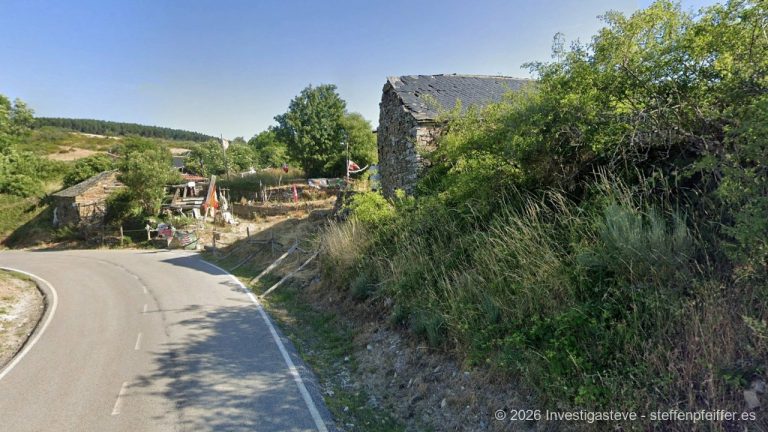
Behind Villalbilla and Tardajos, the character of the path changes radically. We finally leave the river valley of the Arlanzón behind and enter the rolling hills before Rabé de las Calzadas. The surface changes here to a mixture of reddish earth and light limestone, which intensely reflects the sunlight. The decisive moment is the ascent behind Rabé: on a short but intense ramp, we climb onto the plateau of the Meseta. Once at the top, the topography reveals itself as an almost perfect horizontal at just under 900 meters in altitude. The path here becomes a dead-straight line of white dust, cutting through infinity until it finally drops into a sudden depression towards Hornillos del Camino.
Variants and small detours
On this stage, there are no significant scenic variants, as the route is fixed by the geography of the plateau and the historical alignment. Nevertheless, a psychological choice offers itself to the pilgrim when crossing Villalbilla de Burgos. One can follow the official path, which often runs close to the main road, or seek out the small, unofficial paths at the edge of the parks to minimize contact with asphalt. It is less a question of geography than of inner focus: Do you want to leave the city behind quickly, or do you use the exit as a slow, meditative decompression?
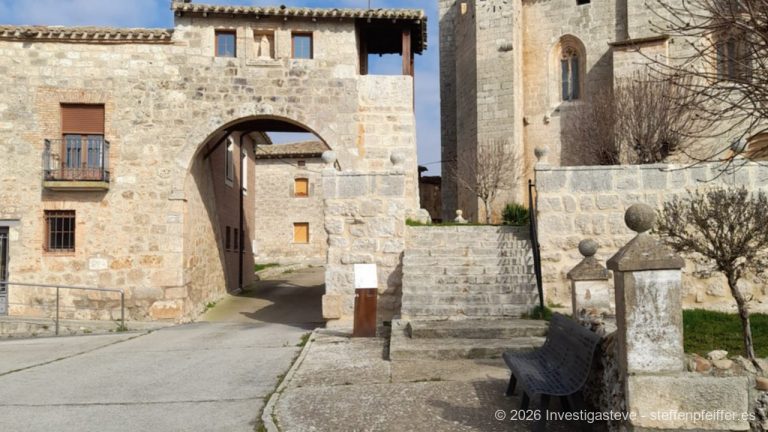
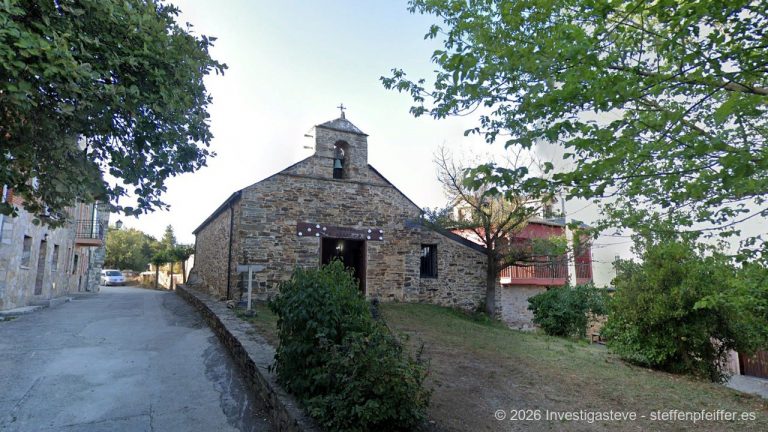
A small but rewarding detour presents itself in Rabé de las Calzadas. Instead of crossing the village by the quickest route, it is worth pausing for a moment at the church of Santa Marina. This tiny deviation from the direct path allows you to absorb the archaic tranquility of the place before surrendering to the absolute solitude of the high plateau. There are also reports of alternative paths leading through the fields shortly before Hornillos, but these are often weather-dependent and, after rainfall, barely passable due to the sticky clay soil. The official route remains the standard here, as it best reflects the historical causality of the path.
Description of the path – with all senses
The path begins with an acoustic metamorphosis. In the early morning hours in Burgos, you hear the distant ringing of the cathedral bells, a deep, resonant tone that acts like an anchor in history. But as you traverse El Parral park, this sacred sound is slowly replaced by the profane sounds of modernity. The rhythmic clicking of your hiking poles on the asphalt of Villalbilla mixes with the distant roar of the highway. It is a haptic experience of resistance: your knees feel the hardness of the ground, while your lungs breathe in the still cool, but already slightly dusty air of the suburbs. You smell the metallic scent of industry and exhaust fumes, a necessary sacrifice to reach the heart of Castile. Yet amidst this urbanity, wild oleander blooms on the fences, whose sweetish scent reminds you like an invisible companion that nature is only waiting to reclaim the space.
Behind Villalbilla de Burgos, the space widens. You feel how the wind blowing down from the plateau becomes steadier and stronger. It carries the smell of dry hay and freshly plowed earth – an olfactory promise of the coming freedom. In Tardajos, the texture of the path changes again. Your feet now tread on old stone and compacted clay. You hear the splashing of small irrigation canals, a bright, lively sound that stands in stark contrast to the static heat of the day. The historical dimension becomes tangible here: you are walking on a route used by Romans and Celts. The haptic experience of the old bridge arches beneath your hands, cool and rough, connects you with the generations who tasted the same dust before you.
The path to Rabé de las Calzadas is characterized by a gentle, almost soporific wave motion. The fields at the wayside glow in an intense ochre that burns in the eyes. You feel the sun on your neck, a dry, almost tangible warmth that forces you into introspection. The acoustic backdrop reduces to the hum of insects and the distant ringing of a sheep bell. In Rabé itself, time seems caught in a deep, afternoon slumber. The smell of adobe walls, that earthy scent of sun-dried clay and straw, is ubiquitous here. It is a haptic retreat into a world without plastic and glass – rough, honest, and enduring.
Then follows the ascent onto the Páramo plateau. It is a physical shock after the relative flatness of the suburbs. Your calves burn, your breath becomes shallower, and sweat mixes with the fine limestone dust of the path to form a grey patina on your skin. But in the moment you reach the edge of the plateau, the psychological metamorphosis takes place. The visual impact of the absolute horizontal takes your breath away for a moment. There is no more tree, no wall, no shelter. Only the path, stretching like a white thread through the golden sea of grain fields. Up here, the wind takes command. It is no longer just a breeze, but an auditory phenomenon – a constant, deep roar that swallows all other sounds and envelops you in a bubble of silence and motion.
In this five-dimensional immersion of the Meseta, you lose your sense of distance. Time seems to stretch. You taste the salt on your lips, hear your own pulse in your ears, and feel the infinite vastness of the sky above you. It is a phase of psychological purification. Everything superfluous falls away from you as you head for hours towards the horizon, which seems not to move a millimeter. The light up here is different: harsher, more unadulterated, almost divine in its relentlessness. The historical causality here becomes a spiritual experience: you are now in the “Purgatory,” that place where the pilgrim must confront themselves because there is nothing left outside to distract them.
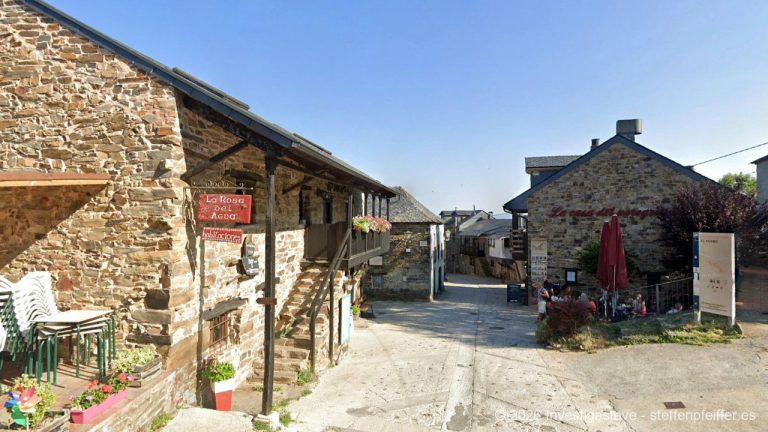
The approach to Hornillos del Camino is a visual paradox. The village is completely invisible until you are directly in front of it. It lies buried deep in a fold of the plateau, as if hiding from the wind and infinity. Suddenly, the path descends, and the grey of the slate roofs and the ochre of the clay houses emerge from the earth. The smell of wood fires and livestock farming hits you – an archaic, calming scent signaling the end of today’s trial. The acoustics change abruptly: the wide silence of the plateau is replaced by the concentrated echo of the village street, where the voices of other pilgrims sound like music in your ears.
During the descent into Hornillos, you feel the relief in your tendons. The ground beneath your feet becomes coarser, stonier again. You pass the first gardens, where grapevines hang heavily on the fences. You hear the clatter of dishes from an open window and the distant ringing of the church bell welcoming you. The haptic experience of the cool shade greeting you in the narrow alleys of Hornillos is like an embrace after the relentless exposure of the plateau. You feel heavy, dusty, but inwardly more composed than rarely before.
Arriving in Hornillos, you enter a world born from the dust of the path. The adobe houses seem to have grown directly from the ground. You run your hand over the rough surface of a wall and feel the stored warmth of the day. It smells of freshly baked bread and the pungent aroma of the Meseta. Your senses come to rest, while your mind still carries the vastness of the horizon within itself. Arrival is not merely the end of a stage, but the reaching of a safe harbor in the midst of a stormy sea of stone and light.
The reflection of the day usually takes place in the silence of the hostel or on the small plaza before the church of San Román. You hear the murmur of different languages merging here in the confines of the village. You taste the first sip of regional wine, which tastes strong and honest of this earth. The psychological metamorphosis is complete: from a citizen of the city of Burgos, you have become a nomad of the Meseta. Today, you have learned that silence is not emptiness, but a space you must fill with your own thoughts. The path to Hornillos has stripped you bare, only to lead you on tomorrow with a new form of clarity.
Intermediate places & special features
Villalbilla de Burgos – This suburb marks the moment when the Camino loses its urban elegance and shows its functional, almost harsh side. Between highway access roads and industrial plants, the pilgrim must find their inner silence here. It is a place of contrasts, where modern logistics centers meet the ancient route of the Camino. For many, Villalbilla is the psychological low point of the day, but it is precisely here that the test of determination begins. Whoever masters this section is ready for the solitude of the fields.
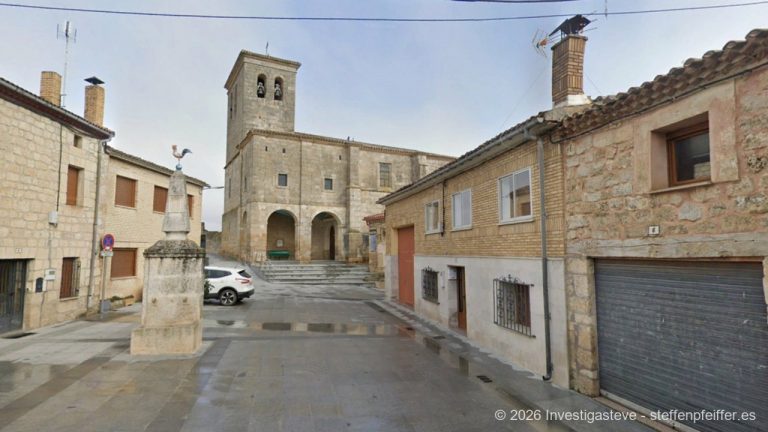
Tardajos is a place of enormous historical depth. Founded on the remains of the Roman settlement Deobrigula, it has always been an important junction. The architecture is characterized by massive stone houses and a defensive church. Here, you feel the weight of the centuries. Particularly noteworthy is the strategic location at the confluence of the Arlanzón and Urbel, which made Tardajos a prosperous trading center in the Middle Ages. Today, it offers the first real resting place away from the urban bustle of Burgos.
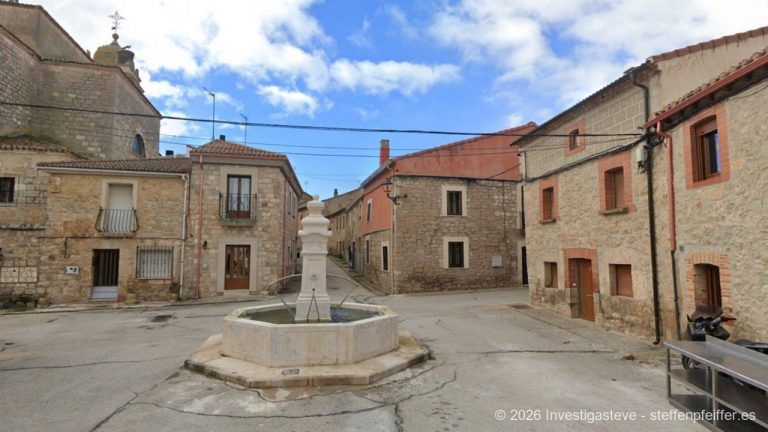
Rabé de las Calzadas is the gateway to the actual Meseta. The place radiates an almost melancholic calm. The narrow alleys and the simple beauty of the church of Santa Marina prepare the walker for the coming sensory reduction. There is a local saying that goes: “In Rabé de las Calzadas, the women are more beautiful than the streets.” Indeed, the warmth of the inhabitants is legendary. Rabé is the last place of security before the path rises relentlessly to the high plateau.
Hornillos del Camino – A classic street village of the Camino Francés. Hornillos nestles so deep in a depression that it is almost invisible from the plateau. The architecture of adobe and stone is a prime example of adaptation to the extreme climate of Castile. The village consists almost exclusively of the Calle Real, which leads the pilgrim directly to the imposing church of San Román. Hornillos is a place of absolute concentration on the essential – here there is nothing but the path, the hostel, and the community of seekers.
Dining, accommodation & supplies
The supply situation on this stage is excellent up to Rabé de las Calzadas, but after that follows a stretch of approximately ten kilometers without any infrastructure. This requires careful planning, especially in high temperatures.
Gastronomy: In Tardajos and Rabé, there are excellent bars specializing in the “pilgrim breakfast.” Be sure to try the local “Morcilla de Burgos” (blood sausage), often served with fresh country bread, providing the necessary energy for the ascent to the plateau. In Hornillos, the communal dinner in the hostels is the social highlight.
Accommodation: Hornillos offers a mix of traditional municipal hostels and lovingly managed private accommodations. The Albergue Municipal is the base for purists, while places like the “Meeting Point” are known for their international atmosphere. For those who prefer it quieter, “Casa del Abuelo” in Rabé de las Calzadas offers a charming alternative.
Public facilities: Pharmacies and banks are plentiful in Burgos, then limited again in Tardajos. Hornillos has no bank but offers minimal basic medical care.
The special thing today
The absolute unique selling point of this day is the “entry into infinity.” No other stage on the Camino Francés symbolizes the transition from civilization into the wilderness of the mind as drastically as the ascent behind Rabé de las Calzadas. It is the moment when the vertical world of cities (churches, high-rises, industry) is replaced by the total horizontality of the Meseta. This visual phenomenon affects many pilgrims like a shock – it is the confrontation with one’s own insignificance in the face of immense nature. The special thing today is not a single building, but the absence of everything that normally distracts us.
A second special aspect is the adobe architecture of Hornillos del Camino. This millennia-old technique of building with unfired clay bricks is a testament to ecological sustainability and historical continuity. When you stay overnight in Hornillos, you feel the microclimate of these walls: they cool during the day and warm at night. The village itself seems like an organism that has burrowed into the earth to withstand the wind of the Meseta. This physical closeness to the earth changes the pilgrim’s perception – you no longer feel just a walker on the land, but a guest of an ancient system born of dust.
Finally, the psychological significance of the “Purgatory” must be emphasized. On the section between Rabé and Hornillos, many pilgrims report a kind of trance-like state. The monotonous movement and lack of stimuli cause the brain to switch into a meditative mode. It is the place of “purification.” Everything you have carried in emotional baggage from Burgos is burned away in the heat and wind of the high plain. The special thing today is the chance for radical introspection, made possible only by the sheer monotony of this landscape.
Reflection at the end of the stage
When you sit on the stone steps before the church of San Román in Hornillos in the evening and watch the setting sun bathe the adobe walls in a deep, glowing red, you feel a form of exhaustion that feels completely right. It is not the hustle of the city that is in your bones, but the honest weight of the kilometers covered. You look back at the plateau you have just descended and realize that you have crossed an invisible boundary today. You are no longer a tourist visiting a sight; you have become part of the Meseta.
In the silence of Hornillos, while the wind still whistles softly over the edge of the plateau, it becomes clear to you that today’s stage was a necessary filter. Burgos with its splendor now lies worlds away, even though it is only 21 kilometers. You have learned that you can survive with little water, much sun, and your own thoughts. This realization is the true gift of the day. The dust on your shoes is not dirt; it is the color of your transformation. You are ready for the coming days of emptiness, because today you have discovered that in this emptiness lies the greatest fullness.
Camino of the Stars
This stage lies on the Camino Francés, on the stage from Burgos to Hornillos del Camino. The sequence of places is:
| Stage | Start | Destination | Distance (km) | Elevation gain | Difficulty | Intermediate places |
|---|---|---|---|---|---|---|
| 13 | Burgos | Hornillos del Camino | 21.0 | ↑ 180 / ↓ 150 | moderate | Villalbilla de Burgos → Tardajos → Rabé de las Calzadas |
Did you feel the moment when behind Rabé the world suddenly became flat and only the wind spoke to you? How did your mind react to the first true emptiness of the Meseta – was it freedom or oppression? Share your first step into infinity with us, for every story is another star in the sky of the pilgrim community.
About the Author