A First Glance – Introduction & Atmosphere
When you leave the dense, almost mystical forest behind Zubiri, where ferns cover the ground like an emerald carpet and the air is still heavy with the moisture of the Pyrenean foothills, the Esteríbar Valley opens up in a way that makes the pilgrim breathe deeply. Amidst this undulating environment, shaped by gentle hills and wide pastures, lies Larrasoaña. From afar you perceive the village as a harmonious fabric of light limestone and dark tiled roofs, nestling like a protective cocoon against the banks of the Río Arga. It is that moment of the pilgrimage when the archaic wilderness of the mountains gives way to an almost maternal sense of security. The air here is softer, saturated with the breath of the river, which tirelessly sings its song against the stones.
The auditory experience when approaching Larrasoaña is characterized by a deep, almost sacred silence, broken only by the steady, rhythmic gurgling of the Arga. It is a deep bass that vibrates through the ground up into the soles of your feet, making the clicking of your hiking poles on the hard, dusty ground seem like a metronome of time. You hear the distant bleating of sheep on the surrounding slopes and the rustling of the wind in the rows of poplars lining the riverbank. This orchestral interplay of nature works psychologically like a remedy; the stress of the past kilometers, the effort of the ascent to Roncesvalles, and the dust of the first hours seem to fall away from you here, at the gateway to the Esteríbar Valley.
Tactilely, you experience Larrasoaña first through the change in the ground. The soft forest floor gives way to the unyielding stone of the medieval bridge, the legendary “Puente de los Bandidos.” When you place your hand on the rough, sun-warmed walls of the houses, you feel the stored warmth of Navarre resting in the meter-thick walls. It is a feeling of constancy and protection. Olfactorily, the place welcomes you with a mixture of dry grass, a subtle note of wild thyme, and the cool, almost metallic smell of the river water. Larrasoaña is not a place for the hasty; it is a place of preparation, a gateway through which you step to clear your soul for the challenges ahead. Here begins the pilgrim’s emotional metamorphosis, the realization that the goal lies not only in the distance but in every breath on this riverbank.
What This Place Tells
Larrasoaña is a memory set in stone of the Esteríbar Valley. Its history is inextricably linked to the strategic importance of the Arga, which since the Middle Ages served as a lifeline for pilgrims, merchants, and kings. The historical causality that led to the founding of this place was the necessity of safely crossing the river at one of its critical points. The bridge of Larrasoaña is thus far more than just a structure; it is the origin of the place. As early as the 10th century, a monastery was established here, around which the village developed. When you walk today across the “Puente de los Bandidos” – the Bridge of the Bandits – you traverse an invisible membrane of time. The name recalls darker epochs when pilgrims were ambushed here, yet today the massive piers radiate only security.
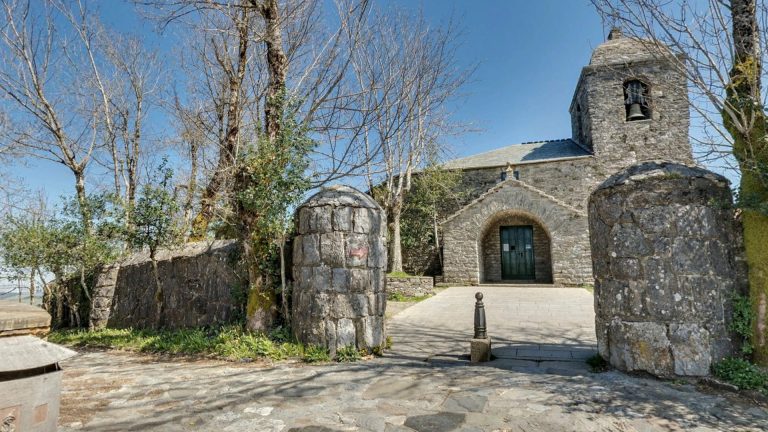
The architectural heart of the village is the church of San Nicolás de Bari. Although it appears simple, it tells a story of deep, peasant piety and artisanal mastery. Its 13th-century walls stand like a bulwark against transience. The simple Gothic style, expressed in the window arches and solid masonry, reflects the psychological state of the people of that time: a life between hard work in the fields and unwavering hope for divine protection. The interior of the church preserves a silence so dense that you think you can still hear the prayers of centuries of pilgrims whispering in the rafters. The smell of old stone and incense here is an olfactory anchor directly connecting you to the medieval world.
Larrasoaña, however, also tells of the economic metamorphosis of the region. Once an important “Villa,” protected by royal privileges, the place has today transformed into an oasis of tranquility. The houses, often proud manor houses with massive portals and stone coats of arms, bear witness to a former prosperity secured by the protection of the Crown of Navarre. In the Codex Calixtinus, the place was already mentioned as an important station, underscoring its historical causality as an anchor point on the Camino Francés. Every crevice in the wall, where wall peppers and small ferns now grow, is a witness to constancy. The pilgrim learns here that history consists not only of great battles but of the tireless continuation of the everyday. In Larrasoaña, the causality of hospitality is paramount – a legacy that extends from the monks of the Middle Ages to today’s hostel keepers.
Addresses & tips in Larrasoaña
Camino Distances
Larrasoaña is nestled in the gentle hills of Navarre and marks an important resting point on the path between Zubiri and the capital, Pamplona. Conditions here are characterized by a moderate gradient along the Arga river course.
Sleeping & Arriving
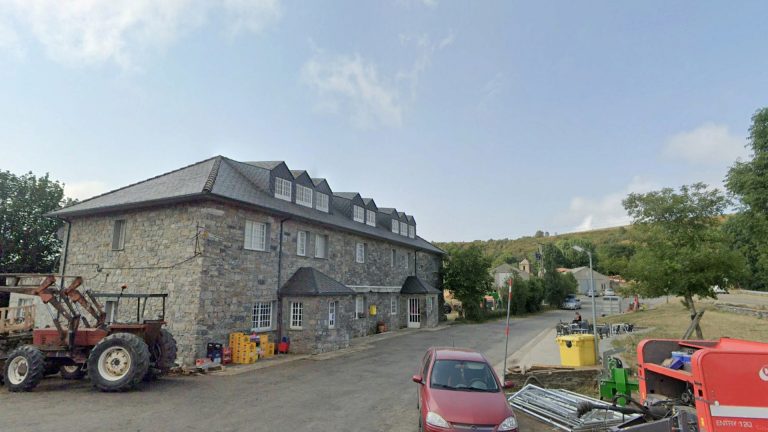
Arriving in Larrasoaña is a ritual act of letting go. As soon as you reach the first houses and the clicking of your poles echoes on the asphalt of the village street, you feel a psychological relief. The dust of the Pyrenees seems to finally fall from your clothes. A special place of refuge is the municipal hostel or private pensions like “Pensión El Peregrino.” These houses are more than just accommodation; they are emotional refuges. Housed in often carefully restored old stone buildings, they welcome the pilgrim with an atmosphere situated somewhere between monastic calm and familial warmth. The tactile experience begins upon entering the cool hallway, where the thick walls magically keep out the summer heat of Navarre.
In the dormitories and communal rooms, you feel the history of the building in every creaking wooden floorboard. The smell of freshly washed linen, mixed with the aroma of homemade stew often wafting from the kitchen, creates an olfactory backdrop of security. Psychologically, Larrasoaña offers the pilgrim a decompression zone before the hustle of Pamplona. Here you are not one among thousands, but a guest whose story matters. The auditory level of arrival is characterized by quiet conversations in various languages, mingling with the distant rushing of the Arga – a soothing background noise that promotes the sleep of the just. You can almost feel your muscles relaxing as you sit on the heavy wooden benches in the courtyard, watching the evening sun.
The tactility of arrival is completed by small rituals: setting down the heavy backpack, the feeling of cool water on burning soles, and the first glass of wine in the communal gathering. You sit there, gaze at the mountains, and recognize the emotional metamorphosis you have undergone in the past days. In Larrasoaña, arrival is a conscious transition from “doing” to “being.” The hospitality of the hospitaleros here is not a service sector but a lived tradition of sharing. Anyone who stays here chooses against the anonymity of the big city and for the intimacy of a place that for centuries has done nothing but give walkers a home for a night. It is the certainty that here, far from the hustle of daily life, you can find yourself again.
The architecture of the accommodations in Larrasoaña respects the historical substance. Often you sleep under heavy oak beams that could have already seen pilgrims at the time of the Reconquista. This historical continuity gives the pilgrim a deep psychological security. At night, the silence here is so absolute that you feel as if you are listening to time itself flowing. You wake up the next morning regenerated, not only physically by the cool sheets and fresh mountain air, but also spiritually by the certainty of being part of an eternal chain of travelers. Larrasoaña is the place where the path pauses briefly to look you deep in the eyes and strengthen you for the onward march.
Eating & Drinking
The gastronomy in Larrasoaña is a homage to the fertile soil of Navarre. Here, the taste of the “Huerta,” the vegetable gardens that stretch through the Arga Valley, reigns. When you sit down in the small bar or dining room of the hostel, you are immediately enveloped by the scent of roasted peppers and hearty stews. The texture of the crusty bread, still baked here according to old tradition, forms the perfect contrast to the tender, almost melting textures of the regional vegetables. The taste is honest, unadorned, and deeply nourishing – exactly what the body craves after the day’s exertion. It is a cuisine that knows no arrogance, only celebrates the quality of its ingredients.
Particularly noteworthy is the “Menestra de Verduras,” a vegetable garden on a plate, often prepared in Larrasoaña with a special finesse. Asparagus, artichokes, peas, and broad beans merge into a symphony of freshness that tastes equally of sun and rain. Psychologically, this food acts like a remedy; it gives the pilgrim the feeling of directly absorbing the power of the earth. It is usually accompanied by a robust red wine from the region, often a Tempranillo or Garnacha, whose dark ruby gleams in the glass and whose aroma smells of blackberries and a hint of oak. The heavy glass in hand and the rhythmic clatter of cutlery form the auditory backdrop for a moment of perfect enjoyment.
For dessert, “Cuajada” is a must, a sheep’s milk pudding traditionally heated with a hot stone, which gives it a subtle smoky note. The cool, creamy texture is a tactile pleasure that, together with local forest honey and walnuts, forms the perfect finish. Eating in Larrasoaña means tasting the historical causality of the region – many of the recipes have been passed down unchanged through generations. It is a form of communication without words: the earth nourishes the pilgrim, and the pilgrim carries the memory of these gifts onward in their heart. You leave the table not only satiated but with a deep gratitude for the simplicity and abundance of life along the way.
Supplies & Logistics
Logistically, Larrasoaña is a place of minimalism, which can be a salutary lesson in renunciation for the modern pilgrim. As the place is small, the infrastructure is compact and reduced to the essentials, which promotes psychological calm as there is no sensory overload.
Shopping: In Larrasoaña there is a small grocery store where you can buy the essentials for the next day. The selection is limited, but the quality of local products like cheese and ham is excellent.
Gastronomy: Catering is concentrated on the hostel restaurants and a small bar on the main square. Here, hearty pilgrim menus are offered, known for their down-to-earth quality.
Accommodation: Besides the municipal hostel, there are several private pensions. A reservation in the high season is recommended, as capacity is manageable.
Public Facilities: You will look in vain for ATMs here; the next larger banking infrastructure is only found in Pamplona. Basic medical care is available in an emergency through the local health center.
The logistical causality of Larrasoaña lies in its function as a strategic rest stop. Anyone who stops here consciously chooses against the hustle and for deceleration. The good signage guides the pilgrim safely through the place, and the Arga serves as a constant geographical compass. For the pilgrim, this means: Larrasoaña is the place where you replenish your stores of inner strength while aligning your physical logistics for the coming stages in the city. It is an exercise in trust – trust that the path provides for everything you truly need, as long as you are willing to limit yourself to the essentials.
Don’t Miss
Take the time to regard Larrasoaña not merely as a transit point, but as a small universe of details. Here are the visual and tactile anchor points of your stay:
– Puente de los Bandidos: The medieval stone bridge is the iconic landmark of the place. Walk across it slowly, feel the vibrations of the water, and pay attention to the massive piers that defy the forces of the Arga.
– Church of San Nicolás de Bari: Admire the solid masonry and the sacred silence inside. The simplicity of the architecture is a visual balm for the overstimulated mind and a place of deep reflection.
– The noble coats of arms on the facades: As you stroll through the village, pay attention to the facades of the houses. Many still bear the original family coats of arms, telling of a proud and defensible past.
– Riverside path along the Arga: Find a spot right by the water under the shady trees. The auditory experience of the flowing water and the feeling of cool river pebbles under your fingers are an invaluable form of nature meditation.
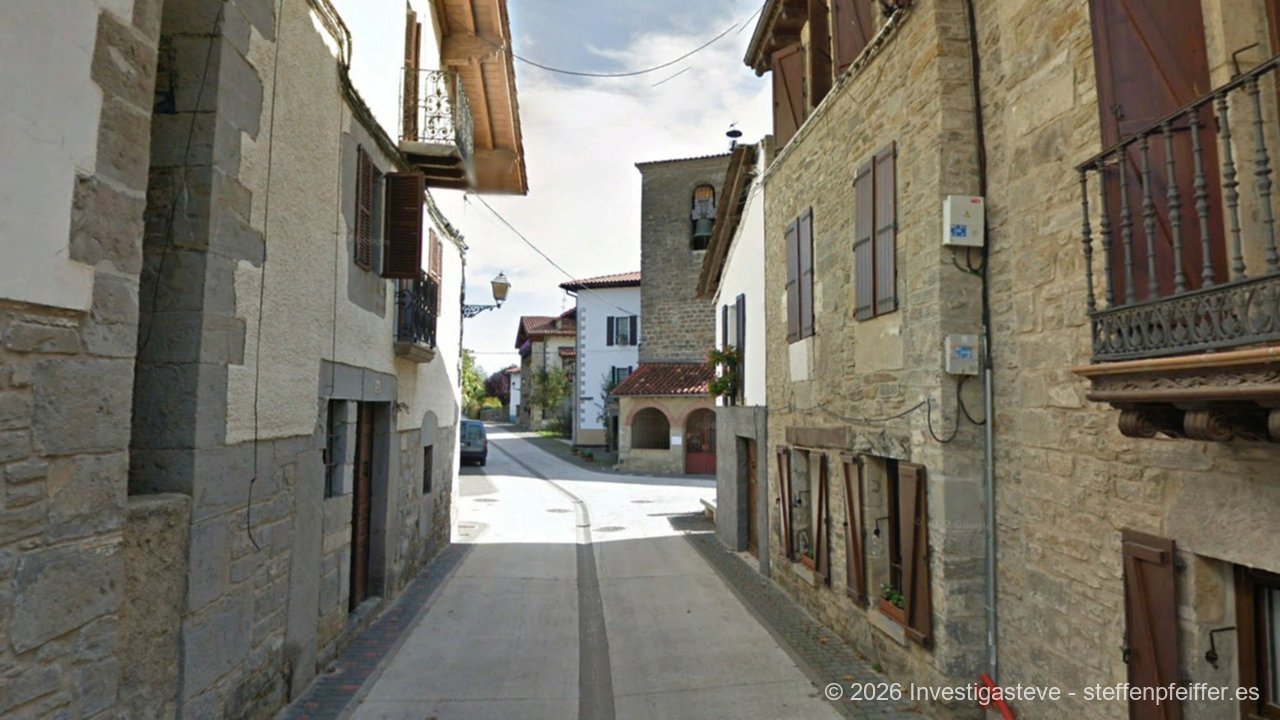
– Calle San Nicolás: The main street of the village with its typical Navarrese houses offers wonderful photo opportunities and conveys the feeling of walking through a living open-air museum.
Insider Tips and Hidden Places
Beyond the main street, Larrasoaña hides corners that only the attentive pilgrim finds. One of these places is the narrow path leading from behind the church directly down to the riverbank, away from the official bridge. Here, far from the clicking of hiking poles, you hear only the gurgling of the Arga and the distant ringing of church bells. It smells of damp earth and river mint – an olfactory experience that makes you forget the world of odometers for a moment. It is a place of absolute psychological freedom, where you can wonderfully cool your feet and reflect on your own emotional metamorphosis. The tactile feeling of cold water on heated skin at this point of the journey is like a second baptism, a purification from the burden of the past days.
Another insider tip is visiting the old communal washing place, if you find the inconspicuous turn-off. Here, the village women used to wash clothes and exchange stories. Today, an almost eerie silence reigns there, broken only by the dripping of water. The texture of the cool stone and the special acoustics under the roof make this place a small temple of everyday life. It is a place for reflection on the work and life of past generations who tilled the same soil. The smell of damp stone and moss is particularly intense here and connects you directly with the archaic structure of Navarre. It is a silent communication with the past that needs no words.
Those with an eye for detail will find tiny, carved symbols in the walls of some barns – protective marks of the medieval stonemasons that you can trace with your fingertips. In a small garden on the edge of the village, there is also an ancient fig tree, whose shade in the midday heat feels like a sacred space. The scent of ripe fruit and the rustling of the large leaves are a sensory gift from nature. These hidden details are what transform Larrasoaña from a mere point on the map into a living, breathing piece of your personal pilgrimage journey. They turn physical movement into an emotional journey of discovery that will resonate long after your return, showing you that the greatest treasures often lie hidden.
Moment of Reflection
Larrasoaña is the place of great stillness before the urban fabric. When you sit on the stone wall at the bridge in the evening and watch the shadows of the poplar trees grow longer while the Arga flows ceaselessly beneath you, a deeper reflection arises. You stand at a threshold. Behind you lie the lonely paths of the valley, ahead the promise and the noise of Pamplona. Psychologically, Larrasoaña challenges you: how much of the silence you found here by the river can you preserve within yourself when the world grows louder again? The “Bridge of the Bandits” becomes a metaphor: which inner bandits – fears, doubts, haste – do you wish to leave behind here on the bank?
The constancy of the medieval bridge beneath you gives you the confidence that every journey needs a solid foundation. The historical causality that made this place a point of passage reminds us that we are never truly alone on our path; we walk in the footsteps of millions who carried the same worries and hopes. The pilgrim’s emotional metamorphosis in Larrasoaña consists of understanding one’s own vulnerability as strength. In the silence of the river begins the understanding that the Way is not made of kilometers, but of moments when the heart beats in harmony with the landscape. When you leave Larrasoaña tomorrow, take the rushing of the Arga with you in your memory. It is your inner compass that will guide you through the streets of the world, no matter how loud they may be.
Camino of the Stars
This place lies on the Camino Francés, on the stage from Zubiri to Pamplona. The sequence of places is:
Zubiri → Ilarratz → Larrasoaña → Akerreta → Zuriáin → Zabaldica → Arre → Villava → Burlada → Pamplona
Did you also feel that tingle of history when crossing the “Bridge of the Bandits” in Larrasoaña, or were you deeply moved by the silence in the church of San Nicolás? Perhaps you found a moment of clarity on the banks of the Arga that you would like to share with us? We look forward to your personal stories, your photos of the old coats of arms, or your very own insider tips from this stone refuge in the Esteríbar Valley. Your story brings the Camino to life for everyone!
About the Author