A First Glance – Introduction & Atmosphere
When you leave the bustling activity of Zubiri behind, that place which often acts like a swirling funnel for pilgrims from all over the world, the Camino Francés leads you into a world with its very own, almost sacred pace. The path to Akerreta is not mere progress; it is an immersion into the green lung of Navarre. As soon as you step onto the first meters of the narrow trail that hugs the forested slopes of the Esteríbar Valley, the auditory panorama changes radically. The distant echo of civilization fades, replaced by the orchestral rustling of the wind in the crowns of beeches and oaks. It is a deep, soothing bass that mingles with the rhythmic crunch of slate and dry earth beneath your boot soles. Here, in the dense embrace of the forest, the psychological metamorphosis of the day begins: the pilgrim leaves the noise of the masses behind and becomes part of an archaic silence.
The tactility of this stretch is defined by the wildness of nature. You feel the cool, humid air resting like an invisible veil on your skin as you wander through passages where ferns stand so tall they almost brush your hands. The ground here is often padded with moss, cushioning every step and conveying a feeling of gentle grounding. Olfactorily, Akerreta welcomes you with a captivating composition of decaying wood, the sharp, fresh scent of wet rock, and a sweetish note of wild herbs thriving in shady niches. When you finally climb the small hill on which the hamlet sits like a forgotten jewel, the light breaks through the leaves in a way that bathes the gray limestone facades in a mystical silver. It is a sight that immediately calms the eye and expands the heart.
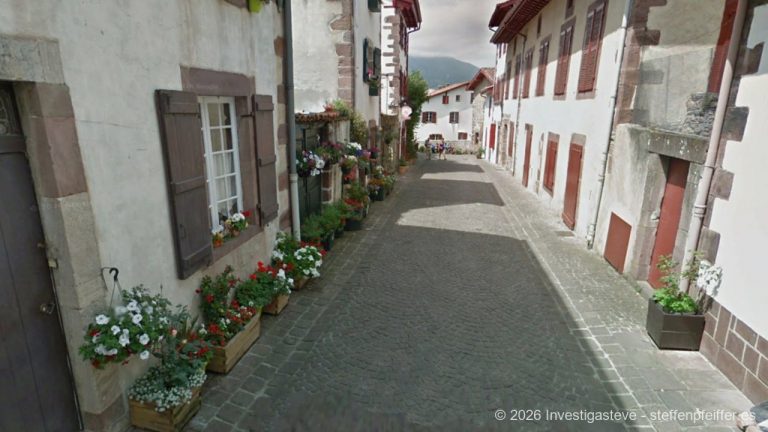
Akerreta is not a place of grand gestures, but of deep presence. With only a handful of inhabitants, this hamlet radiates an exclusivity based not on wealth, but on undisturbed time. You stand on the central square, which is barely more than an extension of the path, and feel the historical causality in every crack in the wall. The houses have stood here for centuries, defiant and solid, as if they had sworn not to yield a millimeter to the rushing course of the world. Psychologically, this first glimpse of Akerreta offers the pilgrim a refuge of introspection. Here there is no distraction, no small talk. Only you, the stone, and the eternal breath of the forest. It is the pure essence of the Camino, captured in a small cluster of granite and wood, waiting to whisper its story to those ready to listen.
What This Place Tells
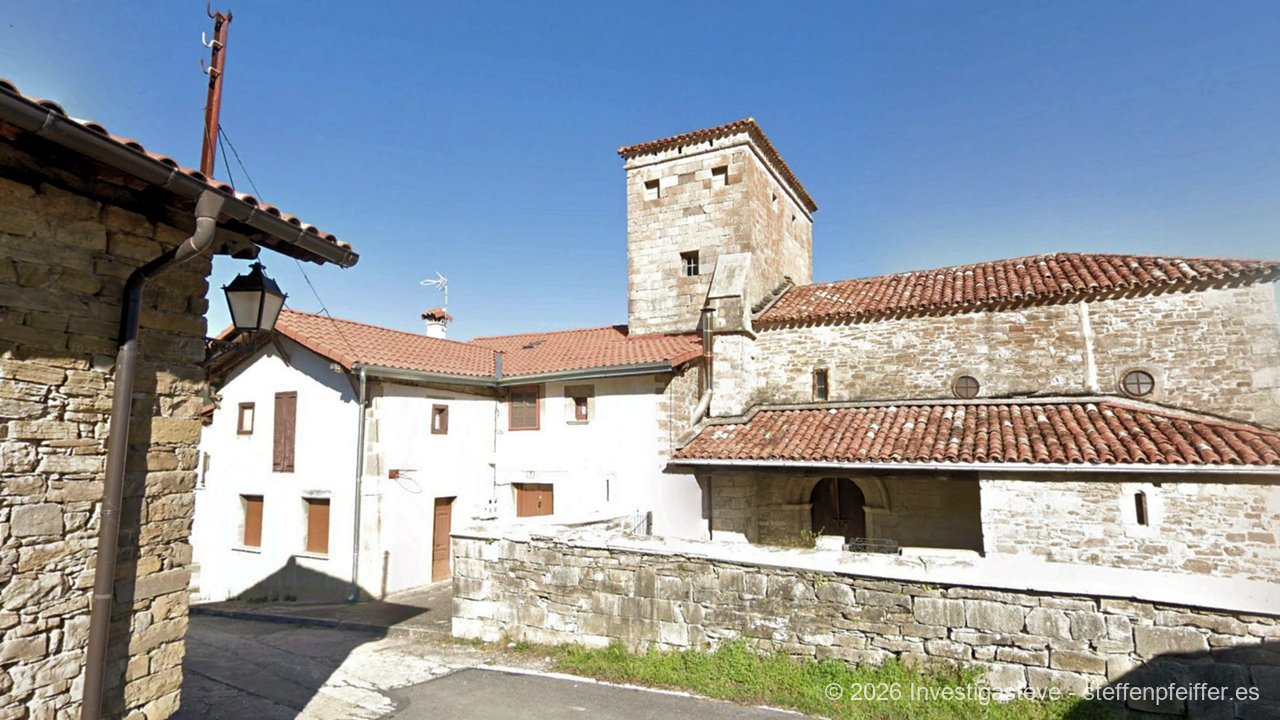
The history of Akerreta is the tale of a survivor in the shadow of the Pyrenees. For over 1200 years, people have passed by this point, yet the place itself has preserved an almost uncanny constancy. Architecturally, Akerreta is a textbook example of the Navarrese mountain village structure of the 17th and 18th centuries. The houses, massive and built from locally quarried limestone, appear like small fortresses. Their heavy wooden gates, often reinforced with iron, tell of a time when the house was not only living space but also a refuge against the adversities of nature and the marauding bands of centuries past. When you look at the facades, you see the craftsmanship of the stonemasons who, without modern tools, moved blocks that still defy every storm today.
A central chapter in the place’s narrative is written by the church of San Vicente. Although it appears simple and almost ascetic, it is the spiritual anchor of the valley. Its massive bell tower has looked down on the flocks of pilgrims for generations. The historical causality is tangible here: the church was never just a place of worship, but a landmark in the dense sea of forests of the Esteríbar Valley. Whoever saw the tower knew that civilization was near. The tactility of the old church walls, covered with lichen and moss, connects you directly with the Middle Ages. It is a place that needs no great inscriptions to explain its significance; its sheer presence is the testimony of 1200 years of uninterrupted pilgrim tradition. Here, the paths of kings, beggars, and knights crossed, all united by the desire for a safe shelter.
In more recent history, Akerreta has experienced a worldwide renaissance inextricably linked to the film “The Way.” The Hotel Akerreta, a splendid manor house from 1723, served as one of the most prominent filming locations. This media metamorphosis has added a new layer of narrative to the place. Today, pilgrims walk not only in the footsteps of the saints but also in the footsteps of the fictional characters, underscoring the psychological relevance of the place for modern pop culture. Yet despite the fame, Akerreta has not frozen into a museum. It remains a working, living village, where the sound of grazing sheep and the distant chopping of firewood form the auditory backdrop. It tells of the harmony between man and landscape, a symbiosis that seems almost an anachronism in our fast-paced times. Akerreta is the memory of Navarre set in stone, reminding us that true meaning lies not in size, but in the depth of roots.
Addresses & tips in Akerreta
| Accommodation | 1 |
| Sights | 1 |
Camino Distances
Akerreta lies strategically just after Zubiri and offers a first, almost intimate resting opportunity before the path continues down into the Esteríbar Valley. The route here is characterized by dense forest passages and moderate inclines.
Sleeping & Arriving
Arriving in Akerreta is a ritual act of letting go. When you have mastered the short but intense ascent from the Arga Valley and reach the first houses of the hamlet, you feel an immediate physical relief. The noise of the road has long since vanished, and the atmosphere is dominated by an almost palpable stillness. The main destination for many pilgrims is the Hotel Akerreta, a place that elevates the definition of hospitality to a new level. Upon entering the house, you are enveloped by a scent that immediately evokes memories of a long-gone era: a mix of old oak, beeswax, and the distant aroma of burning beech wood in the fireplace. The coolness of the meter-thick stone walls is a tactile blessing after the hike under the Navarrese sun.
In the rooms of this historic manor house, you experience a psychological grounding that has become rare. The massive beams on the ceiling, still bearing the marks of the axe, and the simple yet high-quality furnishings create a space of total presence. There is no television, no small talk – only the soft creaking of floorboards beneath your feet. The auditory experience in Akerreta is silence itself. At night it is so quiet that you hear the blood rushing in your own ears, interrupted only by the distant, melancholy call of an owl in the forest. This arrival is an emotional metamorphosis: you shed the status of walker and become a resident of a historical monument for a night.
The communal spaces, where you meet with other pilgrims, foster a form of communication often lost in larger hostels. You sit on heavy wooden chairs, hands on the cool surface of stone tables, and share stories that gain a special depth through the atmosphere of the house. It is a place that invites reflection, away from the stress of mileage. Arriving in Akerreta also means becoming aware of one’s own privilege – being allowed to stay in a place that has endured time for centuries. The tactile experience of the heavy linen bed linen and the absolute darkness of the night ensure a sleep deeper and more regenerative than almost any other point on the Camino.
For those who stay overnight in Akerreta, breakfast in the old kitchen or on the terrace is a sensory highlight. The morning sun bathes the surrounding hills in soft light, while the smell of freshly roasted coffee and artisan bread awakens the spirits. Here, arrival is not a technical process, but an invitation to deceleration. You feel the constancy of the surroundings and draw from it the psychological strength for the coming kilometers to Pamplona. Anyone who rests in Akerreta does so not out of exhaustion, but out of a longing for authenticity. It is the certainty of having arrived at a place that has not sold its soul, but carefully guards it for those who have undertaken the long journey.
Eating & Drinking
Eating in Akerreta means tasting the culinary soul of Navarre in its purest, most unadulterated form. There are no fast-food chains or anonymous pilgrim menus off the shelf. The catering is closely linked to the tradition of the house and the region. The culinary experience often begins with a “Menestra de Verduras,” a vegetable stew that tastes so freshly of the soil of the Esteríbar Valley that you almost feel the Navarrese sun in every bite. The texture of the crusty, dark bread dipped into the golden, locally pressed olive oil is a tactile revelation – the combination of crunch and the velvety texture of the oil is fuel for the soul.
Particularly noteworthy is the quality of the meat in the region. Lamb from the nearby mountains, often slow-cooked for hours at low temperature, melts on the tongue like butter. The olfactory appeal of garlic, rosemary, and thyme fills the room and connects you sensorially with the landscape you have just traversed. This is usually accompanied by a robust red wine from the region, often a Tempranillo or Garnacha, whose dark ruby gleams in the glass. The first sip, which rolls cool over the lips and then spreads a pleasant warmth in the stomach, is the ultimate reward for every drop of sweat of the day. Psychologically, this meal is a ritual act of community; you share not only the food but the experience of deprivation and enjoyment.
For dessert, Akerreta often offers “Cuajada,” a sheep’s milk pudding traditionally served with honey and walnuts. Its cool, almost velvety texture forms the perfect finish to a hearty meal. Eating in Akerreta is a lesson in gratitude. You taste the historical causality of agriculture that has sustained this barren valley for centuries. It is an honest meal without frills that not only physically satiates the pilgrim but emotionally roots them in the soil of Navarre. The auditory finale of the meal is the contented murmur of the pilgrims and the soft clatter of heavy ceramic dishes – a sound of peace and satiety that prepares the spirit for the stillness of the night.
Supplies & Logistics
Logistically, Akerreta is a challenge of reduction. Since the place is extremely small, there are no supermarkets, no pharmacies, and no ATMs here. Anyone who comes here must be aware of the logistical causality of the rural space: supplies are only available where you stay overnight.
Shopping: In Akerreta itself, there are no shopping facilities. The pilgrim should ensure that they have replenished supplies (especially water and small snacks) in Zubiri. The next real shopping opportunity is only found again in the suburbs of Pamplona.
Gastronomy: Catering is almost exclusively tied to the Hotel Akerreta or private rentals. There is no public bar in the classic sense that is open all day. You are dependent on half-board or what you have brought with you.
Accommodation: The only notable accommodation is the Hotel Akerreta. As the bed capacity in the hamlet is extremely limited, the iron rule applies here: anyone wanting to sleep in Akerreta must reserve in advance. An unplanned arrival often means having to continue to Zuriáin.
Public Facilities: None available. In an emergency, you must rely on the infrastructure of Zubiri (about 1.1 km back) or medical care in Pamplona.
However, the logistical compactness of Akerreta supports psychological regeneration. You don’t have to worry about anything because there is nothing to “worry” about. Everything concentrates on the house where you sleep. The water from the village fountains is of excellent quality – tactilely cool and refreshing. For the modern pilgrim, the logistics in Akerreta mean an exercise in self-sufficiency and trust. You learn to get by with what is in your backpack and appreciate the quality of the service in the hotel all the more. It is the logistical silence before the stormy Pamplona, a place where the rhythm of nature is still the only valid logic.
Don’t Miss
Take the time to perceive Akerreta not just as a sleeping place, but as a total work of art of history. Here are the points you should grasp with all your senses:
– The church of San Vicente: Admire the Romanesque foundation and the defiant tower. The silence inside has a special quality, almost as if you could stop time.
– The Hotel Akerreta (House No. 1): Even if you don’t stay there, the facade of this manor house from 1723 is an architectural pleasure. Pay attention to the coats of arms and the massive door thresholds.
– The filming location of “The Way”: If you know the film, you will immediately recognize the perspectives. It is a tactile bridge between fiction and reality.
– The village square: Sit on the stone bench and simply observe the shadows of the old trees. It is an auditory and visual moment of total relaxation.
– The old house coats of arms: Many facades bear stone inscriptions and coats of arms that tell of the genealogy of the families in the Esteríbar Valley. A tactile pleasure to view the weathered reliefs.
Insider Tips and Hidden Places
Away from the two main streets of the hamlet, Akerreta hides corners that only the attentive observer discovers. One of these places is the small path that leads steeply down behind the church of San Vicente into a wooded gorge. Here, far from the pilgrim streams, you hear only the gurgling of a small stream winding through the ferns. It smells of damp moss and river mint – an olfactory experience that makes you forget the world of odometers for a moment. It is a place of absolute psychological freedom, where you can wonderfully cool your feet and reflect on your own emotional metamorphosis. The tactility of the ice-cold water on heated skin at this point of the journey is like a second baptism.
Another insider tip is visiting the old communal bread oven, if it is accessible to visitors. The texture of the soot-blackened stones and the smell of old smoke and grain tell of a time when survival in winter was a community task. Here you realize that Akerreta is not just a backdrop, but a place of hard peasant labor. In the crevices of some barns, you will also find tiny, carved symbols – protective marks of medieval stonemasons that you can trace with your fingertips. Touching these tactile traces of the past is like shaking hands with history.
Those with an eye for detail will often find rare orchid species in the surrounding meadows, thriving in the untouched nature of the Esteríbar Valley. The sight of these delicate blossoms amidst the rugged mountain landscape is a visual contrast that illustrates the complexity of nature. There is also a small viewpoint on the southern edge of the village, from which, in clear weather, you can see as far as the suburbs of Pamplona. The psychological effect of this view is enormous: you see the distant goal of civilization while still firmly rooted in the archaic silence of Akerreta. These hidden details are what transform Akerreta from a mere point on the map into a living part of your personal pilgrimage journey. They turn physical movement into an emotional journey of discovery that will resonate long after your return.
Moment of Reflection
When you sit on the stone wall opposite the church of San Vicente in the evening and watch the shadows of the beeches grow longer as the sun slowly sinks behind the peaks of the Esteríbar Valley, a deeper reflection arises. Akerreta is the place of reduction. Here, where there are no shops, no noise, and hardly any people, you are thrown back to the essentials. Psychologically, Akerreta challenges you: how much of your daily baggage do you really need? The constancy of the stone walls around you raises the question of what in your own life is as solid as this Navarrese limestone.
The historical causality that has kept this hamlet alive for centuries reminds us that we are part of a long chain of wanderers. The pilgrim’s emotional metamorphosis in Akerreta consists of understanding silence not as emptiness, but as fullness. In the stillness of the forest begins the understanding that the Way is not made of kilometers, but of moments when the heart beats in harmony with the landscape. In this silence, ask yourself: What am I actually running away from, and what have I already found here, in the solitude of Akerreta? The tranquility of the place gives you the confidence that every change needs time and a solid foundation. When you leave Akerreta tomorrow, take the whispering of the forest with you in your memory. It is your inner compass that will guide you through the loud alleys of the world.
Camino of the Stars
This place lies on the Camino Francés, on the stage from Zubiri to Pamplona. The sequence of places is:
Zubiri → Larrasoaña → Akerreta → Zuriáin → Zabaldika → Arre → Villava → Burlada → Pamplona
Did you also feel that moment in the silent alleys of Akerreta when time seemed to stand still for a beat? Perhaps you sensed the spirits of the film “The Way” in the Hotel Akerreta or discovered a hidden path in the forest meant only for you? Share your experiences, your photos of the old stone coats of arms, or your very personal thoughts on the silence of Navarre with us. Every story enriches the path for all those who come after you!
About the Author