A First Glance – Introduction & Atmosphere
When you take the dusty path from Torres del Río underfoot, you already sense that this section of the Camino Francés will give you nothing for free. The sun often beats down with an unrelenting directness on the cracked soil of Navarre, while the wind, constantly sweeping over the open hilltops, sings a dry melody in the withered thistles and low scrub. Your breath comes heavier, the rhythmic clicking of your walking sticks on the rough limestone becomes the timekeeper of your ascent. And then, almost like a mirage in the shimmering midday heat, it appears on the horizon: the Ermita del Poyo. It sits up there on its ridge like a lonely guardian, waiting for centuries for the weary figures on the horizon to take shape and reveal themselves as pilgrims.
It is a moment of absolute, almost sacred silence that greets you as you conquer the last metres to the height. The wide sky over Navarre seems here to take on a deep, rich blue that stands in sharp contrast to the ochre of the earth and the pale green of the olive trees. It smells of dry earth, of thyme and rosemary, releasing their essential oils into the air under the heat of the day. The sweat on your forehead begins to dry in the wind, and for a brief moment, time seems to stand still. You are up here alone with yourself, the wind, and this small, humble chapel of sand-coloured stone, which is so much more than just a building – it is a promise of peace, a place of pause on a stage that challenges your body and tests your spirit.
What This Place Tells
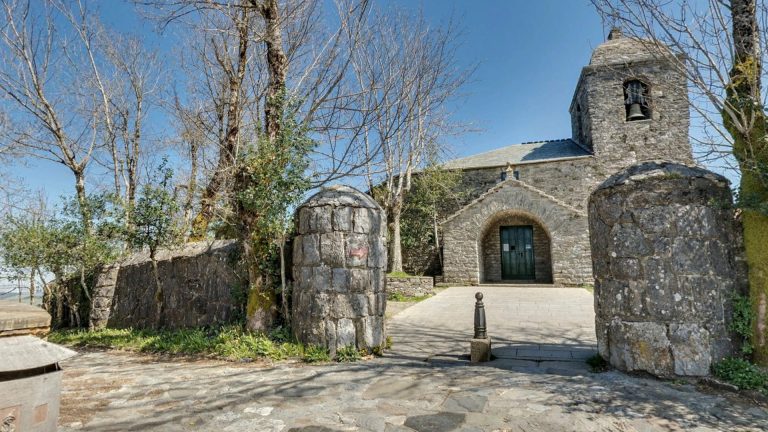
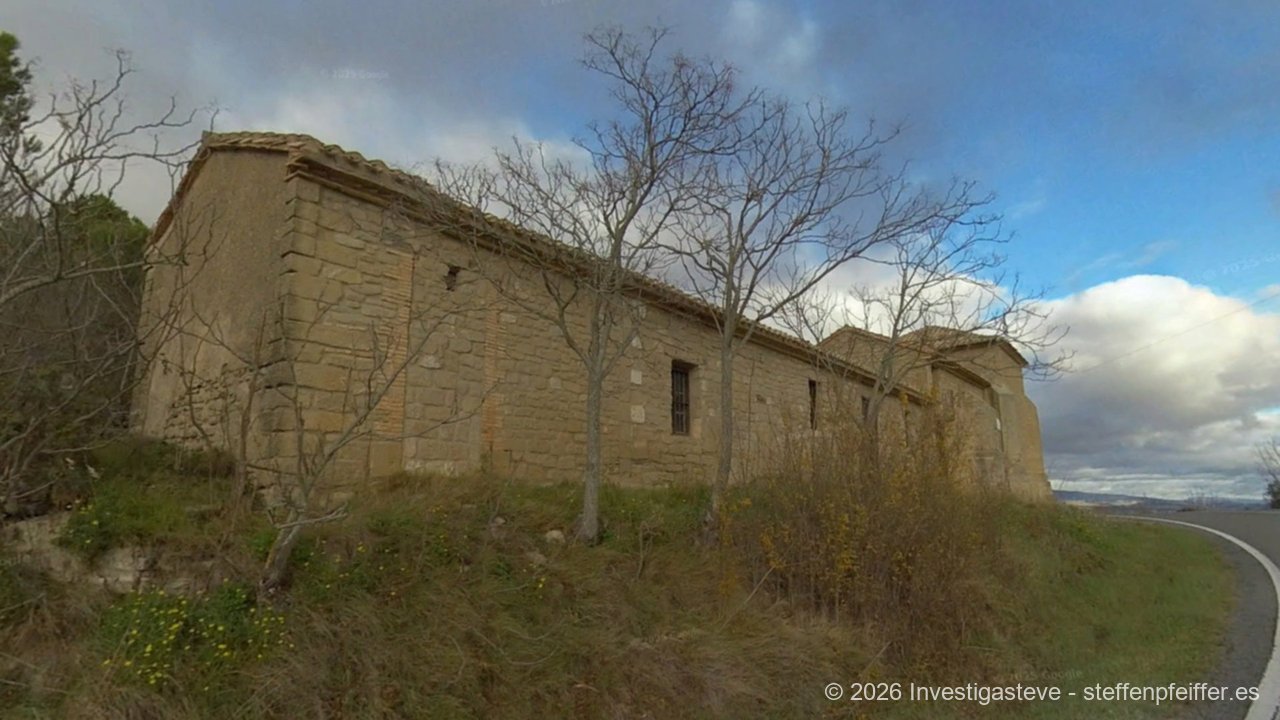
The Ermita del Poyo, often lovingly called Ermita de la Virgen del Poyo, is not a place of great cathedral splendour, but a monument of quiet, deeply rooted popular piety. Its walls breathe the history of generations who sought comfort and protection up here. It was built in the 16th century, at a time when the border between Navarre and the rising Castile was not merely a political line on a map, but a tactically tangible space full of tensions and cultural encounters. The architecture is simple, almost severe Baroque, as is typical for the rural chapels of this region. The stone from which it was built comes directly from the surroundings – it is part of the landscape, grown from it, and now firmly woven into the crest of the hill.
When you look at the façade, you feel the roughness of time. The surface of the stone is tanned by the weather, small lichens have settled in the pores, forming a filigree pattern of grey and pale yellow. In the 19th century, the chapel underwent a comprehensive renovation, giving it the present appearance we value today. But at its core, it remained what it always was: a pilgrim chapel. It was never intended to house a large congregation; it was always for the individual, for the solitary walker who briefly sets down the heavy load of his backpack – and perhaps also of his worries. Inside, it preserves a Baroque aesthetic that impresses through its simplicity and directs the gaze to the essential.
Historically, this place marks a strategic point. From up here, movements in the valley could be monitored, and the border with nearby La Rioja, marked by the mighty Ebro river just a few kilometres to the south, was always present. But for the pilgrim, this strategic significance is secondary. For him, the Ermita del Poyo tells a story of constancy. While empires fell and wars swept across the land, this chapel stood firm. It saw the pilgrims of the Middle Ages pass by in their rough cloaks just as it sees modern walkers with their high-tech equipment. It is a constant in a world of change, a stone witness to the human longing for transcendence and a goal that lies far beyond the horizon.
Addresses & tips in Ermita del Poyo
Camino Distances
Amidst the hilly landscape of Navarre, the Ermita is an indispensable point of orientation. The stage between Los Arcos and Logroño is known for its continuous ascents and descents, which has earned it the nickname “Rompepiernas” – leg-breaker – among pilgrims. Here are the exact distances for your planning:
| Previous Place | Distance (km) | Next Place | Distance (km) |
|---|---|---|---|
| Torres del Río | ca. 2.7 km | Viana | ca. 7.8 km |
Sleeping & Arriving
At the Ermita del Poyo, you will find no bed and no hostel opening its doors for the night. This place is not a destination for sleep, but a destination for awareness. Those arriving here have usually completed the hard ascent from Torres del Río and are not looking for a mattress, but for a shady spot. The chapel stands alone on its height; there are no houses and no settlement in the immediate vicinity. Administratively, the place belongs to the municipality of Bargota, but the people live further down in the valley. Up here, solitude reigns.
Arriving at the Ermita is nevertheless a profound experience. It is the physical relief when you sit down on the stone bench on the south side. You feel the warmth of the stone through your trousers while your feet pulsate in their dusty footwear. It is a place where you do not “check in”, but where you simply “are”. The silence up here is so intense that the distant ringing of the bells from Viana sounds almost like a thunderclap carried across the hills. There is no reception, no stamp (unless a willing soul happens to be present), only the vastness and you.
Should you actually be in an emergency situation, the chapel offers some shelter from the wind in its portal area during bad weather, but for overnight accommodation, you must either head back to Torres del Río or tackle the remaining almost eight kilometres to Viana. Most pilgrims use the Ermita as a mental anchor point. It marks the moment when you realise that the difficult climbs of Navarre will soon be behind you and the gentler terrain of the Rioja draws nearer. It is an arrival in the here and now, a deep breath before the path carries you onward.
Eating & Drinking
Those arriving hungry or thirsty at the Ermita del Poyo should have already replenished their supplies in Torres del Río. There is neither a café nor a bar nor even a vending machine here. The Ermita is a purist place. When you rest here, you open your backpack and take out what you packed kilometres before. Perhaps it is an apple, whose sweetness now tastes twice as intense, or a simple piece of bread with some cheese. The water from your bottle, which may have already taken on the warmth of the day, becomes the most precious elixir up here.
There is almost something of a Last Supper quality to taking your simple meal in the shade of the chapel. The taste of the food merges with the smell of the surrounding fields. Depending on the season, the scent of ripe grain or the pungent aroma of the nearby vines hangs in the air. You eat more consciously, chew more slowly, while your gaze sweeps over the valleys. It is a nourishment of the soul that takes place here. The logistics of the Camino teach you in such places to make do with what you have and to appreciate the value of a simple break.
If you are lucky, you may occasionally encounter a “Hospitalero” or a local who, out of pure charity, offers water or some fruit for a small donation, but you should not rely on it. The Ermita del Poyo demands self-sufficiency. It reminds you that ultimately you are responsible for your own progress and well-being on this path. The next place with full gastronomic facilities is Viana, a stretch that demands full concentration and energy once more. So use the spiritual nourishment of this place to recharge your inner batteries for the final sprint of the stage.
Supplies & Logistics
Logistically speaking, the Ermita del Poyo is a “dead point” in a positive sense. There is no public infrastructure, no toilets, no rubbish bins, and no electricity. Everything you bring here, you must also take away. That is part of the unwritten law of the Camino de Santiago, which takes on special significance up here. The absence of services makes the place an oasis of unadulterated authenticity. You depend on your equipment working and your water supply being sufficient.
Shopping: The nearest shopping opportunity is in Torres del Río (approx. 2.7 km back) or in Viana (approx. 7.8 km ahead). Plan your supplies so you can cover the distance between them without running short.
Gastronomy: In Viana, you will find a wealth of restaurants and bars, such as the well-known Palacio Pujadas, which offers pilgrim menus. At the Ermita itself, only the picnic from your backpack remains.
Accommodation: Accommodations are available again only in Viana, where numerous hostels and hotels await tired pilgrims.
Public Facilities: Pharmacies, banks, and medical care are also found only in Viana.
The only logistical support this place offers is the shade of the chapel walls and the certainty that you have reached the highest point of this stage section. It is a place of logistical reduction that forces you to rely on your own strength and preparation. For many pilgrims, this is precisely a valuable experience: to realise how little one actually needs to be content.
Don’t Miss
Although the Ermita del Poyo is a small place, there are details you should not pass by carelessly:
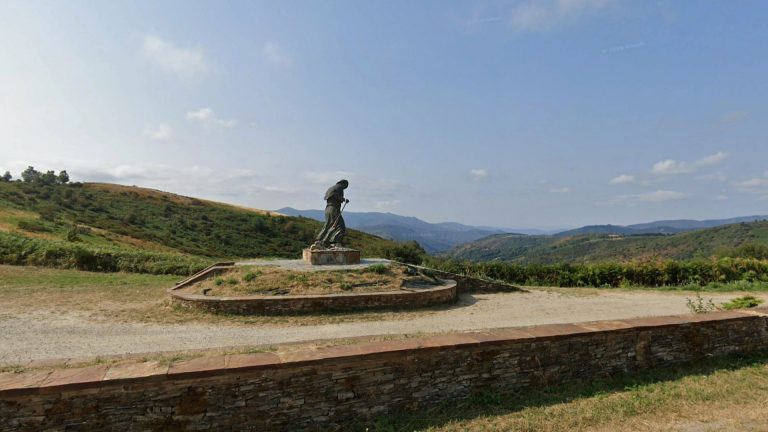
– The panoramic view: Take time to enjoy the panoramic view over the western Estella region. In clear conditions, you can see the first foothills of the Sierra de Cantabria to the north and the wide plains of the Rioja to the south.
– The south bench: The stone bench directly against the chapel wall is the best place for meditation. The wall protects you from the often strong north wind while you can use the full power of the sun (or its shade).
– The architectural details: Observe the portal and the small window openings. The way the stone was hewn testifies to the craft artistry of the 16th century.
– The silence inside: Should the chapel be open, step inside. The cool air and the twilight atmosphere offer a strong contrast to the outside world and invite a moment of prayer or inner contemplation.
– The border symbolism: Become aware that you are located at a historical border here. It is the transition from the rugged hills of Navarre into the gentler, wine-shaped land of the Rioja.
Insider Tips & Hidden Places
A little insider tip for this place is the visit in the early morning hours. When the first rays of sunlight creep over the hills and bathe the Ermita del Poyo in an almost unreal, golden light, it unfolds a magic that can scarcely be recreated during the day. At this time, usually no other pilgrims are yet on the move, and you have the hill entirely to yourself. The blue of the sky in these moments is so deep that it almost hurts, and the air is still fresh and unused. It is the best time to truly feel the connection between earth and sky at this spiritual place.
Another hidden aspect is the small level area behind the chapel. While most pilgrims focus on the bench at the front, the area behind the building often offers even more peace and a slightly different perspective on the descending slopes. Here you can sit in the dry grass and observe the tiny movements of nature – lizards darting over the stones, or birds of prey circling in the thermals. It is a place of total immersion in the landscape of Navarre.
Also pay attention to the small inscriptions or scratches in the stones around the chapel. Often, over the centuries, pilgrims have left tiny marks – a cross, initials, or a date. These silent testimonies are like messages in a bottle from the past and connect you with all those who stood here before you and experienced the same pains and joys of the Way. It is a tactile connection to the history of the Camino that you will only find if you look very closely and let your fingertips glide over the rough rock.
Moment of Reflection
At the Ermita del Poyo, the pilgrim’s journey often reaches a psychological turning point. Behind you lies the strenuous part of Navarre; before you lies the promise of the Rioja. In this moment of pause on the height, a deep question often arises: What do I leave behind up here, and what do I take with me into the new land that stretches out before me? The physical height corresponds with a mental clarity. The wide view seems to disentangle thoughts and reorder priorities.
Up here, you may perhaps feel a deep gratitude – for your legs that have carried you, for your body that works despite the heat and the pain. It is a moment of humility before the greatness of nature and the constancy of history. The chapel reminds you that we are all merely walkers who pass over this hill for a short time. What remains is the stone, the wind, and the spiritual trace we leave within ourselves. Take this moment of reflection before you begin the descent – it is often more valuable than every kilometre you will still cover today.
Camino of the Stars
This place lies on the Camino Francés, on the stage from Los Arcos to Logroño. The sequence of places is:
Los Arcos → Sansol → Torres del Río → Ermita del Poyo → Viana → Logroño
Did you also feel the moment of absolute silence at the walls of the Ermita del Poyo as so powerful, or did the heat on the way there almost defeat you? Share your experiences of this special place of power in Navarre with us. Perhaps you have a photo of the wide view or a very personal story about your pause at the chapel? We look forward to hearing from your journey!
About the Author