A First Glance – Introduction & Atmosphere
When you approach Villafría, the texture of your journey changes with an almost brutal consistency. Behind you lie the gentle hills of Orbaneja Riopico, that last bastion of rural peace, where the distant ringing of sheep bells set the rhythm. But now, as you cross the invisible boundary into Villafría, the panorama is dictated by the horizontal dominance of Burgos Airport and the incessant roar of the N-1 national highway. The air here no longer smells of damp earth or wild thyme; it carries the heavy, almost metallic note of kerosene and heated asphalt, mixed with the fine, bright dust that the Castilian sun burns from the marl ground. The monotonous hum of tires on the nearby roadway becomes the new, urban soundtrack of your path – an auditory proof that the solitude of the Meseta must, for a moment, yield to the logistical efficiency of modernity.
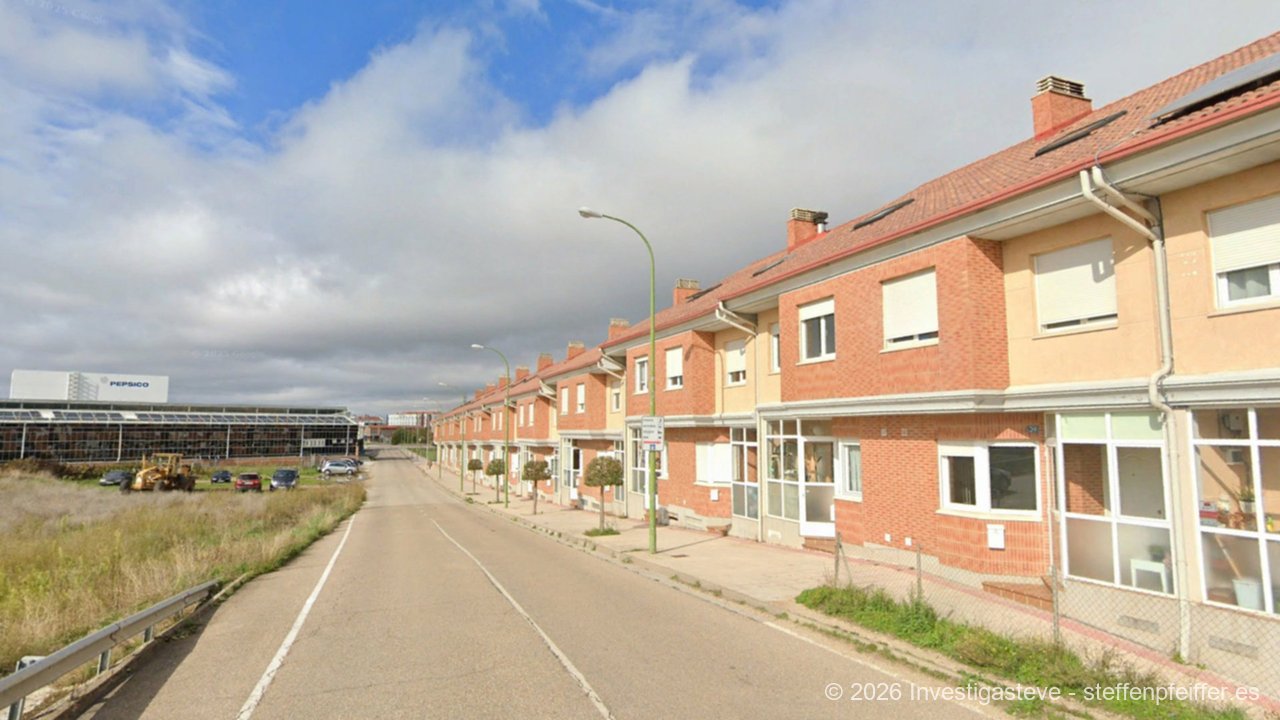
Villafría does not welcome you with medieval romance, but with the rough honesty of a periphery. You feel the tactile shock beneath your boot soles: the soft, yielding ground of the field paths is replaced by the unyielding hardness of concrete and asphalt. This change in ground texture sends a clear message to your joints – the city is near. Psychologically, this is a moment of trial. Impatience grows, the longing for the Cathedral of Burgos pulls you forward, while Villafría forces you to linger in the here and now of the suburb. The light here breaks on the glass facades of the industrial halls and on the fences of the airport, creating an almost sterile, cool atmosphere that stands in stark contrast to the organic warmth of the preceding villages. Walking here means accepting the metamorphosis from nature hiker to urban pilgrim.
Yet those who look closely recognize in the apparent desolation of the suburb its own, brittle aesthetic. The eye lingers on the geometric lines of the runways, which point like stone fingers into the infinity of the plain. You hear the rhythmic click of your hiking poles on the hard pavement, a sound that finds a new resonance in the narrowness between the walls of the industrial estates. Villafría is a place of thresholds. It is the “Cold Village,” as its name whispers, and indeed a sharp wind often blows here over the plateau, reminding you that you are at over 860 meters elevation. The tactile cold of the wind on your face contrasts with the physical effort of the last kilometers. In Villafría, anticipation begins to transform into tangible tension; the city lies like a promise behind the next horizon, yet this place demands that you appreciate its own, harsh character.
What This Place Tells
The history of Villafría is a narrative of transformation and strategic integration. Long before the engines of airplanes made the air vibrate, this patch of earth was known as “Villa Frida,” as documented in writing as early as the year 931. The name itself is an etymological fossil that leads us back to a time when the settlement was considered a cold, exposed outpost on the edge of the Urbel basin. In the Middle Ages, Villafría was an independent hamlet whose identity was deeply rooted in the agrarian structure of Castile. The historical causality here is fascinating: what is perceived today as an industrial suburb was once an important stop on the Via Aquitana, that Roman artery connecting the north with the heart of the peninsula. The stones over which you now walk on the asphalt rest on the foundations of a millennia-old history of movement.
In 1969, Villafría lost its administrative independence and was incorporated as a “Barrio” into the growing urban area of Burgos. This step marked the final transition from rural idyll to the industrial engine of the region. Psychologically speaking, Villafría is a victim of its own location; its flat topography made it the ideal site for Burgos Airport, which began as a military base in the 1920s and today functions as a civilian hub. As you walk along the fences, you feel the historical weight of this development. It is the story of the “España Vaciada” that took a different turn here: not depopulation, but total transformation through infrastructure became the fate of Villafría. The old houses still found sporadically in the village center appear like lost relics in a sea of modernity.
The church of San Esteban, the spiritual heart of Villafría, tells a quieter but more enduring story. Despite the roaring planes and the noise of traffic, this sacred building has preserved its dignity. It stands as a symbol of the spiritual resilience of a place that refuses to lose its soul to the asphalt. In the walls of the church, the sighs and prayers of generations of pilgrims who paused here shortly before Burgos are stored. The historical depth of Villafría reveals itself to those willing to look behind the scenes of the industrial estate. It is a place that teaches that progress always comes at a price, and that the past never entirely disappears but merely allows new layers to settle upon it. The causality between the old “Villa Frida” and the modern suburb is the story of Castile in fast-forward – from the harsh settlement of the Reconquista to the globalized logistics of the present.
Addresses & tips in Villafría
| Accommodation | 2 |
| Bars & Cafés | 3 |
| Health | 1 |
| Sights | 1 |
Show all 7
Camino Distances
🗺️ After the lonely crossing of the plateau, Villafría marks the entry into the urban catchment area of Burgos.
| Previous Place | Distance (km) | Next Place | Distance (km) |
|---|---|---|---|
| Orbaneja Riopico | ca. 3.6 km | Burgos (center) | ca. 7.8 km |
Sleeping & Arriving
Arriving in Villafría is marked by a peculiar psychological tension. Most pilgrims see this place merely as an annoying obstacle on the way to the magnificent Cathedral of Burgos, but those who decide to linger here are rewarded with an authenticity often lost in the tourist centers. “Arriving” here does not take place in front of a monumental facade, but often in the shadow of a warehouse or at the counter of a plain workers’ bar. It is a tactile experience of reduction. When you put down your backpack and the heavy load slides from your shoulders, you feel the vibrations of the passing traffic in the ground – an auditory monument of movement. The atmosphere is not spiritually charged, but pragmatic; it is the calm before the storm of urban bustle.
In the few accommodations of Villafría, which often have more of the character of guesthouses or functional hostels, a tone of honest hospitality prevails. Here it does not smell of incense, but of cleaning agents and the strong aroma of Café Solo. Psychologically, staying overnight in Villafría is a conscious decision for deceleration. While other pilgrims rush the eight kilometers to the center of Burgos in a final effort, you allow yourself one last night on the periphery. The emotional metamorphosis takes place in the realization that every place along the way has its raison d’être. When you sit on the terrace of a bar in the evening and watch the lights of the airport begin to dance in the twilight, you experience a strange form of peace. It is the peace of the suburb, the silence between two pulses of modernity.
The tactile feeling while resting in Villafría is shaped by the massive construction of the houses, built against the constant wind and the noise of the N-1. In the rooms, there is often a surprising silence, an acoustic vacuum that allows your mind to rest. You hear only the distant, muffled roar, which acts like white noise and lulls you to sleep. Those who stay here overnight witness the “real” side of Spanish life, far from the museum-like old towns. The night in Villafría gives you the strength you need for tomorrow’s entry into Burgos. It is a phase of regeneration, in which the body processes the hardness of the asphalt and the mind prepares for the cultural richness of the city. Arriving here means shedding the masks of pilgrimage for a moment and simply being an observer of time.
Eating & Drinking
The cuisine in Villafría is a homage to the hearty, unpretentious cooking of the Castilian working class. Here you will find no menus for gourmets, but honest meals designed to satisfy the body after hard work – or a long march. The scent of freshly fried chorizo and heavy, dark wine wafts from the kitchens of the local mesones. A classic is the “Menu del Día,” often shared by truck drivers and airport employees. When you sit down with them, you become part of a social texture as firm and unyielding as the land itself. The taste of Sopa de Ajo, the traditional garlic soup, which is particularly strongly spiced with paprika here, burns itself pleasantly tactilely into your memory.
Particularly noteworthy is the bar “Casa Álvaro,” a place that becomes the last culinary refuge before the city for many pilgrims. Here it smells of freshly ground coffee and the sweet aromas of freshly baked tortas. An auditory delight is the lively chatter of the locals, a quick, Castilian singsong echoed back by the tiled walls. The portions here are generous, the bread is crusty and has that firm core perfect for soaking up the hearty sauces of the meat stews. The wine, often a simple but characterful Vino de la Tierra, tastes of sun-dried berries and the rough earth of the plateau. It is an olfactory and gustatory experience that grounds you and shows you that luxury on the Camino often lies in the simplicity of a well-prepared meal.
Those who eat in Villafría participate in a ritual exchange. You share the space with people for whom the Camino is everyday life, not an exception. This psychological grounding is important before diving into the often overloaded gastro-scene of Burgos. The taste of grilled meat prepared over a wood fire – a smell often drifting through the streets of Villafría – reminds you of the archaic roots of Castile. The tactile feeling of breaking a piece of bread with greasy fingers, while the radio blares the news from the distant capital in the background, is the purest form of immersion in Spanish life. Here, food tastes of reality, of work, and of the constancy of a place that does not bend for tourism.
Supplies & Logistics
Logistically speaking, Villafría is a highly modern anchor point in the apparent emptiness of the Castilian highlands. As part of the metropolitan region of Burgos, this district offers services that are sought in vain in the small mountain villages. Here you feel the efficiency of the infrastructure. The N-1 national highway and the nearby airport make Villafría a hub of movement. For the pilgrim, this means: this is the point where you can finally prepare for the urban stay in Burgos. You feel a psychological relief, knowing that medical help, post offices, and ATMs are now within easy reach. Logistics here no longer means scarcity management, but an abundance of possibilities.
Shopping: Several supermarkets and specialized small shops in the village center offer everything from fresh fruit to hiking supplies. It is the last opportunity to stock up at prices away from the tourist centers.
Gastronomy: The density of bars and restaurants along the main traffic axis is high. They often offer hot food continuously, which is a blessing especially for pilgrims arriving late.
Accommodation: In addition to functional pilgrim accommodations, there are also hotels for business travelers here, often offering a higher standard of comfort. A reservation is rarely necessary here, but advisable during peak times.
Public Facilities: Villafría has its own health center and is connected to the center of Burgos by an excellent bus service (Line 1) every 20 minutes. A blessing for pilgrims with injuries or exhaustion.
In summary, Villafría forms the perfect logistical bridge. You should use the time here to check your equipment and perhaps send unnecessary weight ahead by post before the strenuous march through the city begins. The psychological security created by the good supply allows you to look relaxed at the coming kilometers. Villafría takes away your worries about basic needs, allowing you to focus entirely on the cultural and spiritual experience that awaits you in Burgos. It is a place that shows that the Camino is also a journey through the organization of the modern world, in which every gesture and every bus line is part of the larger whole.
Don’t Miss
– Iglesia de San Esteban: A simple but dignified sacred building that serves as a calm oasis in the midst of industry. Pay attention to the late Gothic elements and the cool silence inside, which forms an auditory contrast to the outside noise.
– Burgos Airport (Aéroport de Burgos): Even if you do not enter it, the view through the fences onto the runways is a tactile experience of vastness. Feel the draft of the departing planes if you pass by at the right time.
– Village center of Villafría: Seek out the old stone houses that stubbornly hold their ground between the modern buildings. They are the tactile witnesses of the original “Villa Frida” and tell of the constancy of village life.
– The view of Burgos: From the slightly elevated points in Villafría, you can already make out the towers of the cathedral in the distance. A psychological moment of anticipation that makes the last kilometers easier.
– Casa Álvaro: A visit to this traditional bar is a must for anyone who wants to feel and taste the real Castilian suburban life. The coffee there is considered one of the best on the periphery.
Insider Tips & Hidden Places
A true insider tip in Villafría is the small, often overlooked park area on the edge of the airport grounds, where the path briefly leads away from the main road. Here there is a spot where you can sit on an old wall while planes descend overhead. It is an auditory and tactile threshold moment: the immense energy of the engines vibrates in the air and in the stone beneath you, while you simultaneously feel the absolute solitude of the fields. It is the perfect place to reflect on the causality of speed and slowness – the contrast between people who cross continents in minutes and you, who takes weeks for the same path.
Another hidden place is the small niche at the back of the church of San Esteban, where one can find remains of an old fountain. This place is an olfactory wonder; while the exhaust fumes of the N-1 dominate at the front, here it smells of damp stone, moss, and cool water. It is a miniature oasis of tranquility, where you can set down the psychological burden of the suburb for a few minutes. The tactile experience of touching the cool stones of the fountain connects you directly with the medieval history of the place, when water was still the most precious commodity for the wanderer. Here you feel the hidden soul of Villafría, which escapes the fleeting eye.
Pay attention to the small graffiti artworks on the walls of the old underpasses. Some of them were left by pilgrims and tell of the impatience and exhaustion that this section often provokes. It is a modern form of tactile communication, a silent conversation between travelers across generations. These hidden messages give the industrial area a human touch and make Villafría a place of urban archaeology. Here you find traces of hope and humor that stand in stark contrast to the functional architecture.
Finally, there is a viewpoint at the western end of Villafría, just before the path transitions into the industrial area of Gamonal. From there, at sunset, you have a spectacular view of the city skyline of Burgos. The light breaks in the clouds over the Meseta and bathes the city in an almost otherworldly purple. It is a psychological highlight of the journey; you are still in the dust of the suburb, but your goal is already visually within reach. This moment of anticipation, undisturbed by tourist masses, is the most valuable insider tip that Villafría holds for the patient pilgrim.
Moment of Reflection
Do you stand in Villafría to complain about the noise and the asphalt, or do you recognize that even this place is part of your necessary purification? Villafría is the mirror of our modern world – functional, loud, sometimes off-putting, and yet deeply rooted in a history much older than ourselves. The place challenges you to shed your prejudices about “beautiful” and “ugly” sections of the path. It asks you: Can you preserve the silence within yourself when the world around you rages? The historical causality of Villafría shows us that everything is in flux, and that constancy often means adapting to the new without losing one’s roots.
Perhaps you recognize here, on the edge of the airport, that the Camino is not a museum, but a living organism that moves through time. The hardness of the asphalt in Villafría is just as real as the mud in the mountains. It forces you to be present. When you see the Cathedral of Burgos tomorrow, you will only feel its splendor so deeply because you walked through the sobriety of Villafría today. This moment of reflection is the psychological bridge between asceticism and the coming cultural abundance. Villafría teaches you humility before the everyday and recognition of the human achievement that created this infrastructure. Are you ready to accept the Cold Village as your teacher of patience?
Camino of the Stars
This place lies on the Camino Francés, on the stage from San Juan de Ortega to Burgos. The sequence of places is:
San Juan de Ortega → Agés → Atapuerca → Villalval → Cardeñuela Riopico → Orbaneja Riopico → Villafría → Burgos
Did the contrast between the industry of Villafría and the approaching Cathedral of Burgos also make you so pensive, or was it the unexpected peace in the church of San Esteban that touched you? Perhaps you experienced a very special moment of Castilian hospitality in the bar Casa Álvaro? Share your experiences, your thoughts, and your photos from this threshold place with us via the contact form – we look forward to your story, in whatever language of the way!
About the Author