A First Glance – Introduction & Atmosphere
When the endless, straight-as-an-arrow horizon of the Castilian high plateau gradually seems to condense, and the shimmering heat of the Meseta makes the contours of the distant clay buildings dance like a mirage, you approach a place that embodies the essence of the Camino in its roughest and yet most heartfelt form. Reliegos does not greet the walker with opulent cathedrals or green parks, but with the honest, dusty aesthetics of the Tierra de Campos. The smell of dry grain, mixed with the cool, earthy note of the underground wine cellars, hangs heavy in the air, while the steady crunch of hiking boots on the calcareous ground sets the rhythm of arrival. It is a place that appears inconspicuous at first glance, a linear village stretching along the old national road, yet whoever pauses and turns their gaze away from the path discovers a soul deeper-rooted than the ancient vines of the region.
You feel a strange timelessness here, a deceleration that becomes almost physically tangible when you pass the first houses of adobe and brick, whose cracked façades tell of the harsh winters and merciless summers of the province of León. The tactile experience of the place is characterized by the roughness of the walls and the fine layer of dust that inevitably settles on clothing and skin – a badge of honor for those who have left the solitude of the fields behind. In the stillness of the afternoon, when only the wind whistles softly through the narrow alleys, Reliegos seems to whisper: of the legions of Rome that once marched here, and of the millions of pilgrims whose steps have compacted the ground over the centuries. It is the vestibule to the destination of León, a place of last deep breaths before the urban hustle, an oasis of simplicity that clears the mind and opens the heart for the encounters along the wayside.
What This Place Tells
The history of Reliegos is inextricably linked to the stone and dust of the Via Trajana, that mighty Roman artery that once connected Italy with Gaul and whose foundations still rest beneath the modern pilgrim paths. In antiquity, the place was known as Pallantia, a strategically important way station where messengers changed horses and travelers sought protection from the adversities of the wide plain. This historical heritage is not a dead memory in books in Reliegos, but a living presence; you walk here literally in the footsteps of history, with the historical causality palpable in every curve of the Calle Mayor. The epithet “de las Matas,” which the village once bore, refers to a time when the landscape was still characterized by dense scrubland and low forests, before the massive clearing for grain cultivation created the present-day, almost ascetic vastness of the Meseta.
In the Middle Ages, Reliegos transformed into an indispensable link in the chain of the Camino Francés, a place that, despite its small size, bore an enormous spiritual and logistical weight. The architecture of the village tells of a hard life, shaped by agriculture and the constant care of passing souls. Particularly fascinating are the “Bodegas,” the wine cellars dug into the earth like small hills or hobbit holes, whose narrow chimneys protrude from the ground like stone fingers. They are stone witnesses to a centuries-old wine culture and served not only for storage but also as social retreats where stories were shared and pacts forged. When you stand before the church of San Cornelio y San Cipriano, whose bell tower greets far across the plain, you recognize the architectural modesty so typical of this region: it is not about pomp, but about constancy and protection against the elements.
Reliegos has demonstrated remarkable resilience over the centuries, a pride expressed in the preservation of traditions and the warm openness towards strangers. The psychological effect of the place on the pilgrim is profound; after the often monotonous kilometers through the endless grain fields, arrival here feels like an emotional metamorphosis. The contrast between the existential solitude of the path and the primal community in the village triggers a form of relief that often leads to deep conversations or moments of silent reflection. Here, history is not consumed; it is inhaled and lived, as you become aware that you are only a tiny link in an infinite chain of walkers, all of whom have stirred up the same dust and sought the same fountains.
Addresses & tips in Reliegos
| Accommodation | 6 |
| Restaurants | 1 |
| Health | 1 |
| Sights | 4 |
Show all 12
Camino Distances
Reliegos is strategically located and serves many pilgrims as the last bastion of tranquility before the provincial capital. The stage is characterized by the vastness of the Castilian high plateau.
| Previous Place | Distance (km) | Next Place | Distance (km) |
|---|---|---|---|
| El Burgo Ranero | approx. 13.0 km | Mansilla de las Mulas | approx. 6.0 km |
Sleeping & Arriving
Arriving in Reliegos often feels like coming home to a village you have never visited before, yet whose rhythm immediately feels familiar. When you leave the last meters of the dusty path behind and reach the first solid streets of the place, the weight of the backpack subjectively lightens a little. The accommodation in Reliegos is characterized by a familial, almost rustic atmosphere, far removed from the anonymity of large cities. There are several private hostels (Albergues) here, often housed in lovingly restored old village houses, where the thick clay walls maintain a natural coolness in summer and retain warmth in winter. The tactile experience of placing your hand on the cool adobe masonry after a long march is a small but unforgettable moment of grounding.
In the dormitories and communal areas, the soft whispering in various languages mingles with the sound of unpacking hands and the rustling of maps. The psychological component of staying overnight in such a small place as Reliegos should not be underestimated; here you are not a number, but are often greeted with a hearty “¡Bienvenido!” and a glass of local wine. A community quickly forms among the pilgrims, gathering around the large wooden tables to exchange the day’s experiences. The feeling of security and comfort that these simple accommodations radiate is a stark and healing contrast to the infinite, exposed vastness of the Meseta traversed all day long.
The sanitary facilities are usually simple but functional and clean, with the first warm water on the skin after the dusty stage often felt as the greatest luxury in the world. Many hostels have small inner courtyards or gardens where you can put your feet up and let your gaze wander into the wide sky of León, which often cloaks itself in spectacular shades of violet and orange at dusk. The acoustic panorama of the evening is characterized by the distant barking of a dog, the ringing of church bells, and the contented sighs of fellow pilgrims. It is this simple perfection of the necessary that makes Reliegos such a valuable stopping point on the way.
However, one should bear in mind that Reliegos is a small place and capacities are limited, which can lead to a certain shortage, especially in the summer months. Nevertheless, the place has developed its own dynamics to often accommodate even late-arriving walkers somewhere. Those who stay here consciously decide against the hustle of the larger stage destinations and for a night full of authenticity. The rustling of bed linen and the gentle snoring from the neighboring bed become part of the nocturnal symphony that gently rocks you to sleep, as the body processes the exertions of the past kilometers and prepares for the final march towards León.
Eating & Drinking
The gastronomic landscape of Reliegos is as honest and unpretentious as the village itself. Here, the traditional cuisine of the province of León reigns, based on high-quality, local products and designed to compensate the pilgrim for their physical exertions. The smell of homemade “Cocido Leonés,” a hearty stew with chickpeas, various meats, and vegetables, often wafts through the alleys as early as the afternoon, making your mouth water. In the local bars and restaurants, the pilgrim menu is served with a warmth often missed in more touristy areas. It is a culinary experience that appeals to all the senses: the warmth of the plate, the robust aroma of the smoked meat, and the full-bodied taste of the regional wine from the D.O. Tierra de León.
Particularly noteworthy is the culture of tapas, celebrated here as throughout León. With every drink, a small delicacy is often offered, whether it be a piece of spicy chorizo, a portion of “Tortilla de Patatas,” or the famous “Cecina de León,” an air-dried beef with a fine smoky note. The wine of the region, often pressed from the Prieto Picudo grape, impresses with its fruitiness and pleasant acidity, which pairs perfectly with the hearty dishes. Drinking in Reliegos is also a social act; you gather at the bar counters, exchange tips for the next day, and enjoy the simple joy of being. The acoustics of these places, a mix of clinking glasses, loud laughter, and the murmuring of the locals, form the perfect soundtrack for a relaxed evening.
Supplies & Logistics
Although Reliegos is a small transit place, it offers everything necessary to replenish supplies or fix minor equipment issues. The logistics are tailored to the needs of pilgrims, though one should keep the limited size of the place in mind.
Shopping: A small village shop supplies walkers with basic foodstuffs, fresh fruit, and water. The selection is manageable, but absolutely sufficient for the next stage.
Gastronomy: Several bars and restaurants offer hot meals and pilgrim menus throughout the day. They are particularly lively meeting points at lunchtime and in the evening.
Accommodation: There is a good selection of private hostels (Albergues) and a few guest rooms in pensions, usually with a very personal touch.
Public Facilities: An ATM is available (often at the village entrance or in the center), as are public fountains with drinking water, which are especially vital on hot days.
Medical care in the village is only rudimentary; for larger problems, one must rely on nearby Mansilla de las Mulas or directly on León. Nevertheless, hostels often have small first-aid kits for the usual pilgrim ailments like blisters or muscle soreness. Connection to public transport is provided by buses linking Reliegos with León and the surrounding villages, allowing for flexible planning should you wish to take a rest day or shorten a stage.
Don’t Miss
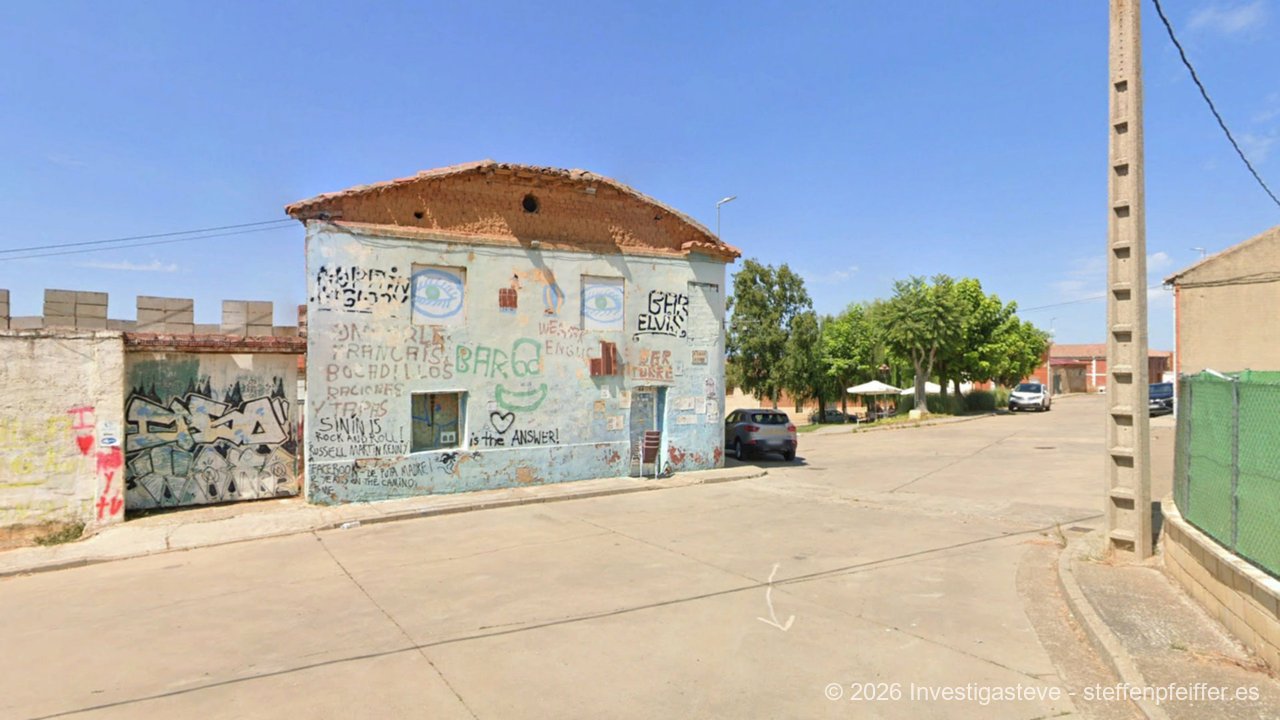
1. Bar La Torre: A legendary spot on the Camino, famous for its walls covered in messages and graffiti. Over decades, the history of thousands of pilgrims has manifested here; it is almost obligatory to pause here for a moment and absorb the atmosphere.
2. Sinín’s Graffiti Wall: The former owner of Bar La Torre, Sinín, is a local legend. His wall of messages from all over the world is a visual testament to the universal connection on the Camino.
3. The Bodegas: A walk to the wine cellars on the edge of the village is worthwhile. The distinctive clay hills with their small chimneys are an architectural curiosity of the region and offer fantastic photo opportunities.
4. Church of San Cornelio y San Cipriano: The parish church of the place is a retreat of silence. Its simple beauty and the cool air inside offer the perfect setting for a short prayer or meditation.
5. The sunset over the Meseta: Find a spot on the western edge of the village. When the sun sinks as a fiery ball behind the wide horizon and bathes the Tierra de Campos in golden light, you feel the true magic of Castile.
6. Local Prieto Picudo wine: Be sure to try a glass of this characterful wine directly from the producer or in one of the rustic bars – a sip of León’s liquid history.
7. The historic milestone: Pay attention to remnants of the Via Trajana along the wayside; sometimes they are only inconspicuous stones, yet they speak of the millennia-old significance of this path.
Insider Tips & Hidden Places
Beyond the main street, Reliegos conceals small treasures that only the attentive walker discovers. One such place is the less frequented Bodegas in the rear part of the village. While the cellars at the village entrance often serve as photo motifs, further up the slope you find old facilities, some still actively used. The smell there is enchanting: a mix of moist earth, old wood, and the sweetish aroma of fermenting must. If you are lucky, you will meet a local who willingly opens the heavy wooden door and grants a glimpse into the cool depths, where time seems to stand still and the temperature remains constant throughout the year. It is a tactile experience to descend the roughly hewn steps and touch the centuries-old tools passed down from generation to generation.
Another hidden spot is the small square behind the church, where the older village residents often gather for evening chats. Here you can listen to the authentic sound of the Leonese dialect, whose melodic flow reveals so much about the history of this border region. It is a place of psychological recovery, far from the typical pilgrim bustle. Those who simply sit here on a bench and watch the village settle into evening will learn more about the real Spain than in any metropolis. The silence here is only broken by the distant rattle of a tractor or the chirping of swallows performing acrobatic flights around the church tower in summer.
For those seeking a spiritual connection, there is a small, almost forgotten path leading slightly off the official route through the fields, offering a wide view back over the traversed Meseta. Up here, where the wind can sweep unhindered across the plain, you feel both small and great. It is a place that invites contemplation, far from conversations about blister plasters and hostel occupancy. You feel the historical causality almost physically: beneath you lies the Roman road, above you the wide sky that already fascinated the Celts and Romans, and within you the change that the path inevitably triggers.
A true insider tip is also a visit to Bar La Torre early in the morning, shortly before you leave the place. While there is often bustle in the evening, the bar offers an almost sacred tranquility in the morning. The light falls obliquely through the windows and illuminates the thousands of messages on the walls in a way that makes each individual message appear important. It is an olfactory experience of fresh coffee and old paper, a place that sends you on your way with a mix of melancholy and anticipation for the next stage. Leaving a last message here is like planting a seed in the garden of pilgrim history.
Moment of Reflection
Reliegos challenges the pilgrim to find beauty in the inconspicuous. After the long, often perceived as monotonous kilometers through the flat Meseta, where the mind begins to rebel against the emptiness, this small village acts like an anchor in reality. It is a place of psychological caesura; you recognize that the path consists not only of peaks and monuments but of perseverance on the plain and the joy of a simple bench in the shade. The reduction to the essentials that Reliegos embodies mirrors the inner process of many walkers: you leave the unnecessary ballast of everyday life in the dust of the Via Trajana and discover the power that lies in simplicity.
In the stillness of the evening, when you run your hand over the cracked walls of the houses or let your gaze wander over the vineyards, the question often arises: What do I really need to be happy? Reliegos gives the answer with every gesture of the locals and every meal prepared with love. It is the realization that community and authenticity are more valuable than any modern comfort. This emotional metamorphosis, the acceptance of harsh conditions and finding peace in the dust, is one of the most important lessons of the Camino. Those who leave Reliegos usually do so with a lighter heart, strengthened by the honest hospitality and ready for the grand finale in León.
Camino of the Stars
This place lies on the Camino Francés, on the stage from Sahagún to León. The sequence of places is:
Sahagún → Bercianos del Real Camino → El Burgo Ranero → Reliegos → Mansilla de las Mulas → Puente Villarente → Arcahueja → León
Did you leave your own message on the legendary wall of Bar La Torre in Reliegos, or did you deeply absorb the cool stillness of one of the ancient Bodegas? Share your experiences with us in the comments! Perhaps you even met Sinín himself or discovered a very special corner that isn’t in any guidebook? We’re curious about your story!
About the Author