A First Glance – Introduction & Atmosphere
When you leave Villarente and tackle the gentle but steady ascent onto the plateau of La Sobarriba, a subtle metamorphosis of the landscape takes place that puts your senses to a severe test. Arcahueja lies at an elevation of about 850 meters and receives you with a vastness that seems almost intimidating after the floodplains of the Porma. You feel the tactile resistance of the ground, which here transitions from the fertile sediments of the valley into a hard, reddish marl interspersed with fine quartz gravel. Each of your steps produces a dry, almost metallic crunch that carries far in the silence of the plateau. The air up here is thinner, sharper, and carries the tart scent of dry broom, wild thyme, and the distant dust of the nearby provincial capital León. It is the moment when the Meseta unfolds all its archaic power one last time before the urban world takes hold of you again.
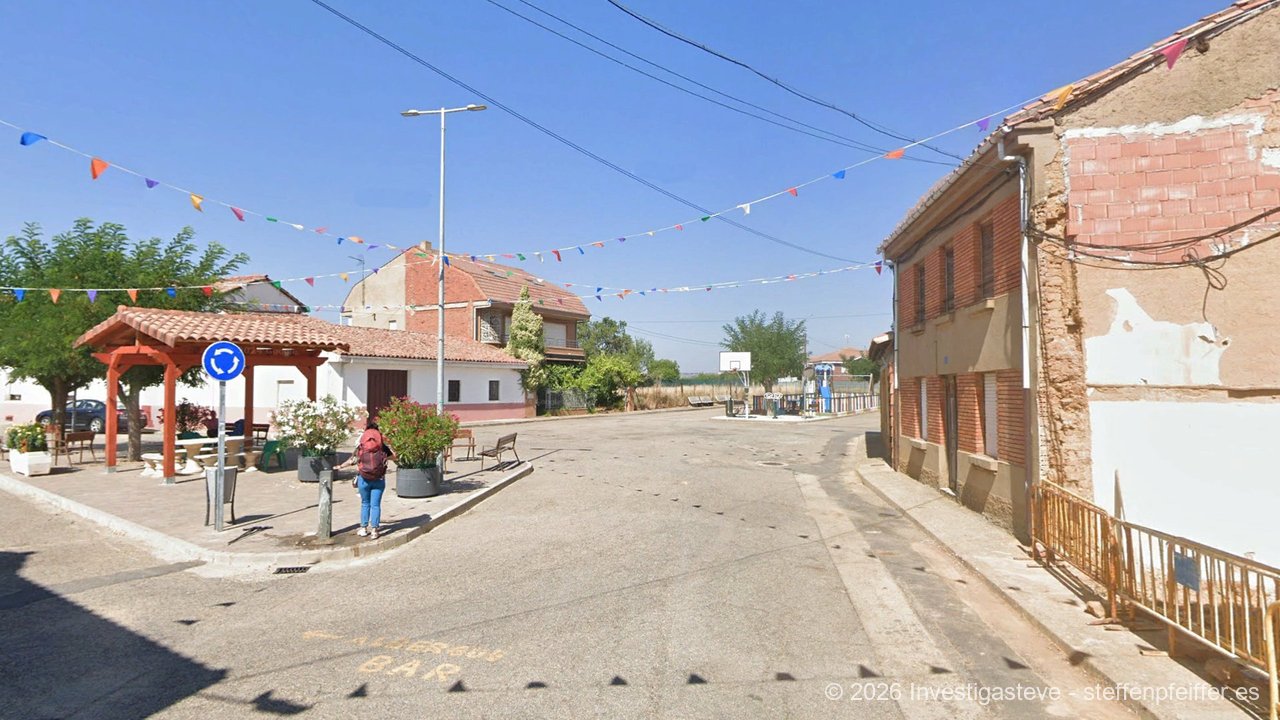
Arriving in Arcahueja, you immerse yourself in an atmosphere marked by a stoic, almost defiant tranquility. The houses of the village huddle into the rolling topography, as if seeking shelter from the unhindered wind that often appears here as a constant companion. You hear the distant, rhythmic clattering of stork beaks on the tower of the parish church, an auditory anchor reminding you that you are still in the rural heart of Spain. Psychologically, Arcahueja marks for the pilgrim a decisive threshold: you are close enough to León to almost feel the promise of the great cathedral, and yet far enough away to experience the deep solitude of the path once more in its purest form. It is a place of threshold experience, where the anticipation of the city mingles with a quiet melancholy over the end of rural silence. The walls of the traditional adobe houses feel rough and sun-warm, a tactile testament to a way of life that has adapted to the rhythm of nature for centuries.
What This Place Tells
The history of Arcahueja is inextricably linked to the historical causality of protection and care on the Camino. The name of the place, which often appeared in the Middle Ages as “Archaueia” or “Arca Hueja,” points to a deep rooting in the repopulation policies of the Leonese kings. The decisive historical narrative, however, is the presence of the knightly Order of St. John. Here, at this strategically important point before the gates of León, the Knights of San Juan de Acre maintained a significant pilgrim Hospital. When you walk through the streets today, you stand on ground saturated by the hope and pain of millions of wanderers. The psychological weight of this place stems from the fact that Arcahueja was the last bastion of safety for centuries before one reached the often dangerous outskirts of the city. You can almost physically feel the historical immersion when you imagine the heavily armed order knights keeping watch here, while the tired pilgrims tended their wounds in the shelter of the Hospital.
Architecturally and spiritually, the parish church of Santa María is the center of the village’s memory. Even though the current building is simpler in nature, it preserves within it a silence that bridges back to the 12th century. Olfactorily, the church receives you with the classic scent of cold limestone, old wood, and the distant echo of incense. The historical significance of the place also manifests in the connection to the Comarca La Sobarriba, which means something like “above the bank.” This geographical designation is a key to understanding local identity: Arcahueja was always the place that looked down upon the city and the valley, an observation post of history. You feel the tactile power of the thick walls that ward off the cutting cold of the Páramo in winter and offer a cool refuge in summer. This architecture of necessity tells of a life that wears no masks but stands honestly and robustly against the elements.
The metamorphosis of the place from a knightly enclave to a quiet farming village and finally to a valued rest stop for modern pilgrims shows the constancy of the Camino Francés. The historical causality here is a living current: where once the Hospitallers were active, today walkers from all over the world find in the private hostels a form of hospitality that has remained unchanged in its essence. In the evening hours, you hear murmuring in various languages, an auditory testament to the universal appeal of this place. Arcahueja reminds you that history does not only take place in great monuments like the Cathedral of León, but in the small intermediate stations where the humanity of the path is most tangibly felt. Here, on the red clay of La Sobarriba, you recognize that every stone tells a story of protection and endurance as old as the pilgrimage itself.
Addresses & tips in Arcahueja
| Accommodation | 1 |
| Bars & Cafés | 2 |
| Services | 1 |
Camino Distances
The path now leads you over the plateau of La Sobarriba, with the distance to León already coming within reach.
| Previous Place | Distance (km) | Next Place | Distance (km) |
|---|---|---|---|
| Villarente | approx. 4.5 km | Puente Castro | approx. 4.5 km |
Sleeping & Arriving
Arriving in Arcahueja means making a conscious decision against the anonymity of the big city. While many pilgrims march all the way to León in a final burst of energy, an overnight stay in Arcahueja offers the possibility of psychological decompression. The Albergue de Arcahueja is a place that celebrates this tranquility. When you enter the garden of the hostel, you are often enveloped by the scent of flowering herbs and damp grass, an olfactory redemption after the dry dust of the plateau. You feel the tactile liberation when you take off your heavy boots and your bare feet touch the cool, soft green. It is a moment of absolute grounding that reminds you that the path consists of matter and sensation.
The atmosphere in the hostels of Arcahueja is characterized by an intimate community. Since the place is small, there is no mass processing here. You hear the soft clatter of walking sticks parked in the stands and the rhythmic hiss of the coffee machine – sounds that convey security and structure. Psychologically, the overnight stay here is a strategic advantage: you can enjoy the splendid entry into León early the next morning, when the light has just begun to make the cathedral glow, rather than arriving exhausted and annoyed by the suburbs in the late afternoon. The tactile quality of the beds and the cleanliness of the facilities in these small hostels offer a regenerative protective shell that strengthens you for the upcoming stages in the Maragatería.
A special aspect of arriving in Arcahueja is the hospitality of the private hostel owners, who often were pilgrims themselves. They know about the psychological rollercoaster of the last kilometers before a big city. In their eyes, you see understanding for your exhaustion, and in their firm handshake, you feel the solidarity of the path. You often sleep deeper here than in urban centers, accompanied by the distant rustling of the wind in the rows of poplars at the edge of the village – an auditory balm for overstimulated senses. The knowledge that León is only a short march away lets you sink into sleep with relaxed anticipation. Arcahueja is the safe harbor before you venture again into the current of modern civilization.
Eating & Drinking
Culinarily, Arcahueja offers the first true foretaste of the opulent Leonese gastronomy, but in a significantly more rural and unadulterated setting than in the nearby city. In the small bars and hostels, the midday smell of the legendary Sopa de Ajo, the Leonese garlic soup, is often present. The tactile warmth of the clay bowl in your hands and the first spoonful of the hot, spicy soup, in which the old bread slowly dissolves, are a comfort for the body often chilled by the wind of the plateau. The intense flavor of garlic, olive oil, and the deep red Pimentón de la Vera forms the basis for a meal that wears no masks. It is an honest meal that directly replenishes your body’s energy reserves and gives you a feeling of deep satiety.
Another highlight is the local Cecina de León, the air-dried beef, often served here as a tapa. The tactile texture of the thinly sliced, dark meat is firm, almost silky, and as you chew, a smoky, deep aroma unfolds, telling of the vastness of the high pastures. This pairs excellently with a wine from the region, perhaps a Prieto Picudo, whose powerful structure and mineral notes carry the essence of the stony earth of La Sobarriba. The clinking of glasses and the laughter of the locals, who often meet here after work, form an acoustic backdrop of great authenticity. You eat here not as a tourist, but as a guest at the table of the province of León.
For dessert or as valuable trail provisions, you should look out for the artisanal Mantecadas, which are already offered here in the shops. These small butter cakes smell of lemon and vanilla and have a tactile consistency that is at once crumbly and moist. They offer those quick calories needed for the last ascent before Puente Castro. Eating in Arcahueja is a ritual act of incorporating the landscape; you taste the sun, the wind, and the hard work of the people. This culinary immersion helps you maintain the psychological connection to the land while the urban silhouette of León already beckons on the horizon.
Supplies & Logistics
Logistically, Arcahueja is a functional anchor point that offers exactly what is essential for the final jump to León. Although the place is small, it has infrastructure specialized for pilgrims’ needs. There are small shops where you can stock up on fresh fruit, nuts, and water. The smell in these Tiendas is a nostalgic mix of fresh pastries, cleaning products, and the spicy aroma of hanging hams. It is a tactile pleasure to choose the plump apples or the firm country bread that will accompany you through the coming day. The shopkeepers are often here for generations and have a friendly word for every pilgrim.
The place is also well-connected infrastructure-wise, which in an emergency allows for quick connections to León. There is no large pharmacy, but the hostels usually carry the most important first-aid items, and the staff are experienced in treating blisters and tendonitis. The psychological security provided by this basic supply is invaluable to the pilgrim. ATMs are more likely to be found in León, but in Arcahueja, you can easily pay by card in most establishments. The connection to public transport is provided by regular bus connections, which offers a logistical fallback option should your strength ever wane.
Shopping: A small, well-stocked village shop offers everything for the daily picnic and basic supplies before entering the city.
Gastronomy: Two to three bars and hostel restaurants serve hearty pilgrim menus and regional tapas like Cecina.
Accommodation: One public and several private hostels offer space in a quiet, rural atmosphere away from the urban bustle.
Public Facilities: Regular bus connections to León and postal service in the hostels ensure logistical security.
In conclusion, logistics in Arcahueja are characterized by a pleasant efficiency. Everything is designed to make your stay as smooth as possible, so you can fully concentrate on your inner journey and the challenge of the final ascent before León. Arcahueja is the place where you check your gear one last time, fill your water bottles, and set off with the certainty that you are well equipped for the urban labyrinth. Use this last rural bastion to maximize your material and mental reserves.
Don’t Miss
1. The parish church of Santa María: A place of silence and devotion that reflects the historical continuity of the village.
2. The view from the plateau: Enjoy the panoramic view over La Sobarriba as far as the mountains of León on the horizon.
3. The traditional adobe houses: Pay attention to the construction of clay and straw, perfectly adapted to the thermal extremes of the high plateau.
4. The stork nests: Observe the bustling activity of the Cigüeñas on the church tower, a visual symbol of nature’s constancy.
5. A glass of Prieto Picudo: Try this characterful wine from the region in one of the local bars and feel the power of the Leonese earth.
6. The stone bench at the village entrance: An ideal place for a short rest to let your gaze sweep once more over the wide plain.
7. Taste local Sopa de Ajo: Experience the unadulterated taste of this traditional fortifier in a village hostel.
8. The old irrigation canals: Stroll along the edge of the village and discover the traces of historical water management.
9. A conversation with the hostel parents: Use the opportunity to hear stories about the Camino from a local perspective.
10. The sunrise over the Páramo: When the first light bathes the plateau in glowing red – a magical moment of tranquility before setting out for León.
Insider Tips & Hidden Places
Beyond the marked pilgrim paths, Arcahueja conceals small corners that are often overlooked but possess their own magic. One such place is the small “Garden of Contemplation” behind the church. Here, away from the main path, you find a bench under an ancient oak. You hear only the rustling of leaves and the distant hum of bees. It is a tactile retreat where you can feel the rough bark of the tree against your back and simply take a deep breath. Here it smells of dry wood and freedom. Psychologically, this place is a gift; it allows you to sort the impressions of the last few days before finally stepping through the portal to the big city.
Another insider tip is a small dirt road leading north from the village towards the hills of Valdefresno. There you find an old stone bench, probably built from remnants of a medieval structure. When you settle there, you feel the cold of the stone that has occupied the same spot for centuries. It is an encounter with historical causality – you sit on the ruins of the past while seeking your personal future. The view from here over the entire plateau of La Sobarriba is particularly spectacular in the late afternoon, when the light softens and the wide landscape is bathed in a mystical blue.
Tucked away on one of the side streets is also a small, inconspicuous Bodega, whose owner is often willing to grant pilgrims a look into his private wine cellar. The tactile coolness emanating from the cellar dug into the ground is a sensory revelation on hot days. It smells intensely here of moist earth, old wood, and the sweet aroma of fermenting grapes. It is an encounter with the real, unadulterated culture of the region, far from the polished tourist façades. Here you experience the true spirit of Arcahueja – down-to-earth, hospitable, and deeply connected to the soil.
Finally, a look at the old inscriptions on the walls of some private residential buildings near the church is worthwhile. These engravings, some centuries old, tell of the people who walked this path here before us. You can trace the tactile structure of the engraved stone with your fingers – a direct connection to the generations that made Arcahueja what it is today. These hidden details tell of the constancy of life in a place that has already seen knightly orders and modern walkers. They are small, hidden monuments of everyday life amidst the great history of the Camino Francés.
Moment of Reflection
Arcahueja challenges you to think about the concept of the “last rest.” In a world often characterized by speed and goal orientation, this place invites you to pause once more shortly before reaching a major stage destination. Psychologically, Arcahueja is the place where you can decide how you want to enter León: as a rushed tourist or as a conscious pilgrim. The wide silence of the plateau is a mirror of your inner state. When you rest here, ask yourself: What do I want to find in the city, and what do I want to preserve from the solitude of the fields? The historical causality of the place shows you that protection and contemplation are often found in the most inconspicuous places.
Feel the tactile reality of your exhaustion and transform it in Arcahueja into a new form of strength. Just as the Hospitallers once supported the weak here, the tranquility of La Sobarriba gives you the psychological foundation for the entry into the royal city. Take the time to let the vastness of the horizon affect you. In the simplicity of the adobe walls and the crunch of the reddish soil, you find a truth that no cathedral in the world can surpass. Arcahueja is not just a place on the map; it is a state of mind – solid, humble, and ready for the great radiance of León. Continue with the awareness that you are now finally crossing the threshold to the next phase of your journey.
Camino of the Stars
This place lies on the Camino Francés, on the stage from Sahagún to León. The sequence of places is:
Sahagún → Bercianos del Real Camino → El Burgo Ranero → Reliegos → Mansilla de las Mulas → Villarente → Arcahueja → Puente Castro → León
Did the stoic calm on the plateau of Arcahueja impress you as deeply as it did us, or did you find a very personal answer for your path in the encounter with the old adobe houses? Share your experiences from this silent guardian place of La Sobarriba with us – tell us about your moment in the Garden of Contemplation, the taste of the Sopa de Ajo, or the silence behind the thick walls. Your story inspires other pilgrims to discover the treasures of this often underestimated place with all their senses!
About the Author