First Glance – Introduction & Atmosphere
When your lungs are burning and every breath in the thinning mountain air of the Bierzo region becomes a conscious effort, La Laguna de Castilla – often simply called La Laguna – announces itself as an almost unreal apparition on the horizon. You have left the exhausting ascent from La Faba behind you, that passage where the dense oak and chestnut forests gradually give way to barren, windswept broom and wide mountain meadows. Here, at a proud 1,180 meters altitude, the world seems to take on a different texture. The ground beneath your boots is no longer the dusty clay of the Meseta, but a mixture of dark earth, slate rock, and a permanent humidity that seems to hang in the air even on sunny days. The wind, sweeping unhindered over the ridges of the Sierra de Ancares up here, carries the distant, rhythmic ringing of cowbells to you – a metallic echo that sets the tempo for your final steps before reaching this tiny hamlet.
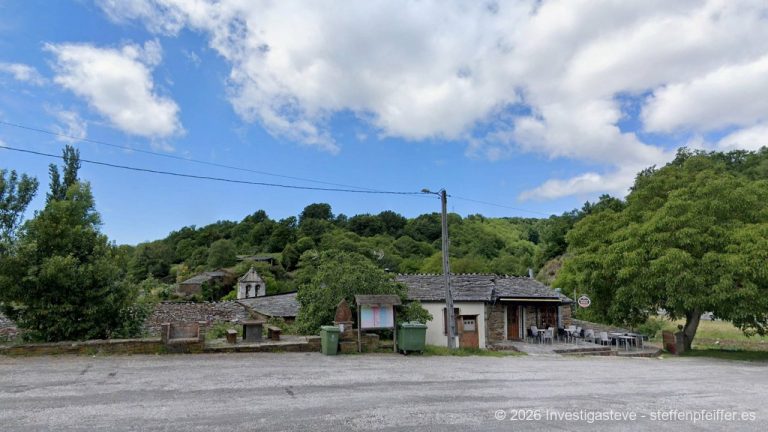
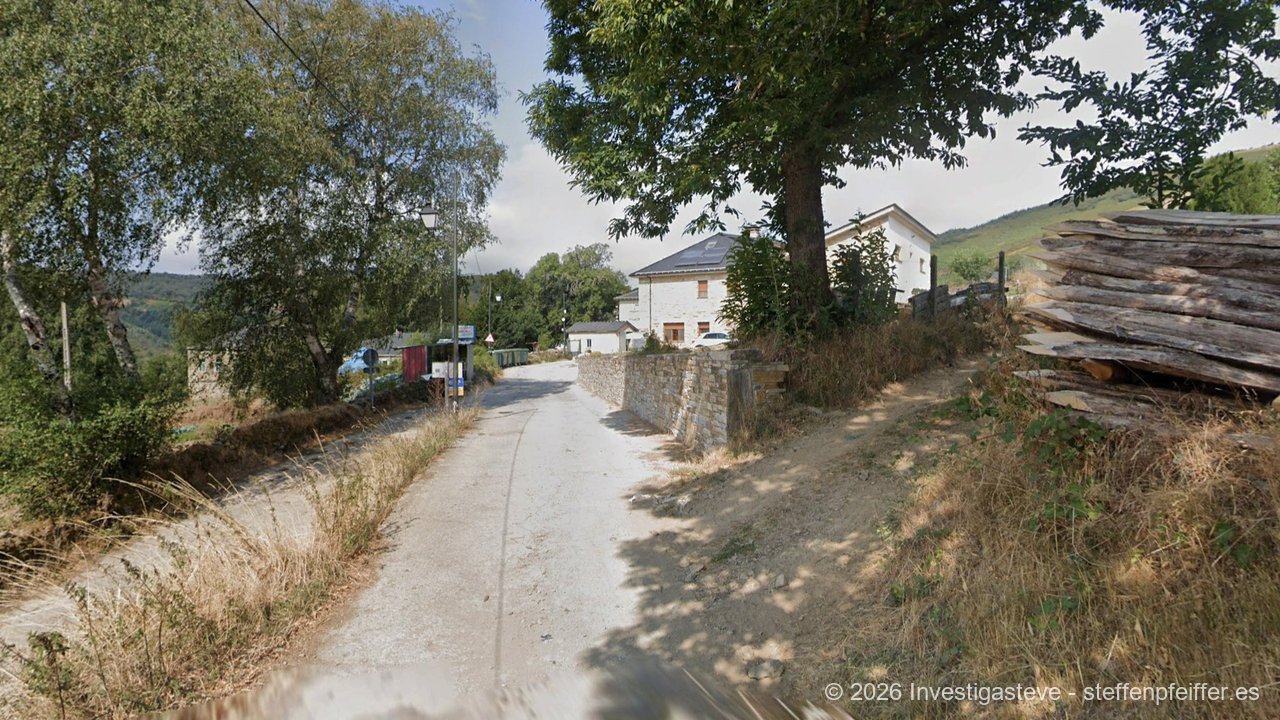
La Laguna welcomes you with an archaic silence, broken only by the whistling of the wind through the cracks of the roughly hewn granite walls. The houses huddle deep into the slope, as if seeking shelter from the forces of nature that can strike here in winter with unbounded harshness. The roofs are covered with heavy, dark slate that glistens metallically in the pale light of the mountain sun or shimmers deep black in the rain. It smells up here of burning birch wood, the tart aroma of damp fern, and the unmistakable, earthy scent of livestock farming, inextricably linked to survival at this extreme altitude. It is a place of thresholds: you physically feel how the dry heat of Castile finally gives way to the Atlantic humidity of Galicia, already tangible in the wisps of cloud that often sink deep into the village’s alleys, blurring the contours of the world.
What This Place Tells
La Laguna de Castilla bears a nickname that brings a smile to both pilgrims and locals alike: “The Village of Two Lies.” The first lie hides in the name “Laguna,” because anyone looking for a mirror-smooth mountain lake here will be disappointed – the body of water that once gave the place its name has long since silted up or exists only in the damp hollows of the surroundings during snowmelt. The second lie concerns the belonging to “Castilla.” Although administratively the place still lies in the province of León and thus in the region of Castile and León, every fiber of its architecture, the harsh sounds of the local dialect, and the culinary aromas wafting from the kitchens already scream “Galicia.” The border here is not a political construct, but a lived ambiguity. For centuries, the inhabitants of this place have defied the isolation of the high mountain location, their history closely intertwined with the protection and care of pilgrims who faced the last great obstacle before their goal in Santiago: the pass of O Cebreiro.
Historically, La Laguna was always the outpost where pilgrims of the past gathered their last strength before crossing the final border into Galicia. The architecture of the houses with their low entrances and thick walls testifies to a time when humans and animals often lived under one roof to keep each other warm. You wander here through a living museum of the will to survive. The stones from which the walls are built have survived the wars of the Reconquista, the Napoleonic invasions, and countless harsh winters. It is a story of hard granite and unyielding slate, a narrative of people who learned to wrest everything from the barren soil. In La Laguna, time becomes viscous; the hustle of the modern world penetrates only as a faint murmur up here, filtered through the mighty mountain ranges that surround the place like guardians.
Addresses & tips in La Laguna
Camino Distances
In this table you will find the distances to the immediate neighboring villages. Please note that conditions can vary greatly due to the steep terrain and weather conditions at this altitude.
| Previous Location | Distance (km) | Next Location | Distance (km) |
|---|---|---|---|
| La Faba | approx. 5.5 km | Border (Castile/Galicia) | approx. 1.0 km |
| Las Herrerías | approx. 8.2 km | O Cebreiro | approx. 2.5 km |
Sleeping & Arriving
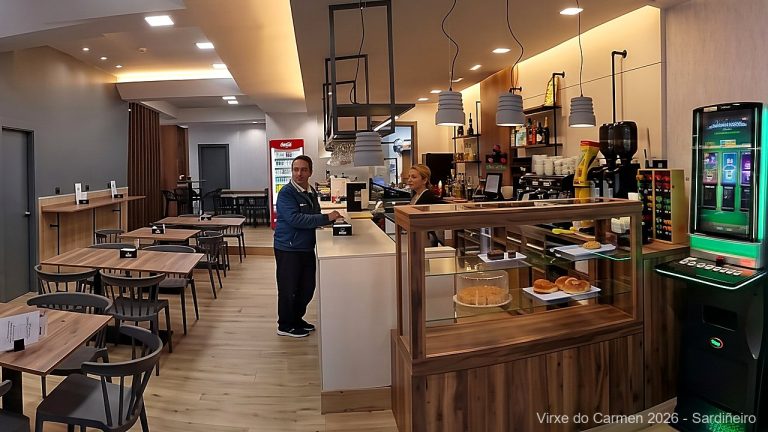
Arriving in La Laguna is a haptic experience of a special kind. When you push open the heavy door of the Albergue La Escuela, the biting mountain wind instantly gives way to a pleasant, almost motherly warmth. This hostel, housed in the former village school, is far more than just a place to sleep; it is a refugium spiritus. You feel the rough wood of the floorboards under your socks, hear the soft crackling of a stove, and perceive the smell of freshly brewed tea and dried hiking gear. In the eyes of the hospitaleros, there is often reflected a deep knowledge of the condition of the pilgrims who have just completed the ascent from Las Herrerías – a mixture of pride in what has been achieved and the exhaustion that now settles into their limbs.
Accommodation in La Laguna offers a strategic peace that you rarely find in the often overcrowded O Cebreiro, only 2.5 kilometers further on. Up here, you are part of a small, close-knit community of hikers who consciously chose against the hustle of the summit village. The feeling of lying in a dormitory while the fog presses against the windowpanes outside creates a deep psychological security. It is that moment of metamorphosis when the pain in the muscles turns into deep contentment. The beds are simple, but the sheets smell of the clear mountain air, and the silence of the night is accompanied only by the distant howl of the wind, which lulls you to sleep like a lullaby. La Laguna is the place where you learn that luxury on the Camino does not consist of golden faucets, but of a dry spot and a kind word after a hard ascent.
Eating & Drinking
The cuisine in La Laguna is an honest homage to mountain farming. Here begins the gastronomic transition: in the pots of the local taverns, Caldo Gallego is already simmering, that nutritious stew of white cabbage, potatoes, beans, and a piece of bacon or chorizo that warms the soul and returns spent electrolytes. The taste is intense, earthy, and unadulterated. You sit at heavy wooden tables, hands cupped around a steaming bowl, and feel the warmth slowly returning to your fingertips. The bread up here is dark, firm, and has a crust baked in a stone oven – perfect for soaking up the last of the rich broth.
Particularly noteworthy is the local cheese, often made from a mixture of cow’s and goat’s milk. It has a creamy texture and a fine acidity that harmonizes excellently with the heavy red country wine served here in simple glasses. It is a meal for border crossers. Often, the famous Queimada is offered for dessert, a ritual Galician brandy that is set alight under incantations – even if we are still officially in Castile, the spirit of Galician witches and myths is already omnipresent at the table. Every bite in La Laguna tells of the need to stock up on calories for the next day and of the hospitality of the mountain people, who know that a fed pilgrim is a happy pilgrim.
Supplies & Logistics
The logistical infrastructure in La Laguna is reduced to the essentials, which is part of the charm of this place. There is no supermarket with glittering shelves, but small sales points within the hostels or bars that provide the basics: blister plasters, sunscreen, dry socks, and simple foods like nuts, chocolate, or fruit. This requires a certain foresight from the pilgrim, but rewards him with the realization of how little one actually needs to survive. Drinking water fountains here are fed by the clear springs of the Sierra, and the water tastes as fresh and mineral-rich as only possible at this altitude.
For those traveling with luggage transport services, La Laguna is a fixed stop, but delivery here is often under difficult conditions due to the narrow, steep access roads. It is advisable to carry cash, as the modern world of card payment sometimes reaches its technical limits within the massive stone walls. Those needing medical attention should bear in mind that the nearest pharmacy or larger health center is several kilometers away. La Laguna forces you to slow down and refocus on your own resources – a logistical lesson in modesty that fits perfectly with the philosophy of the Way of St. James.
Don’t Miss
- The border stone to Galicia: Only about a kilometer behind the village, a simple stone marks the transition between the regions. It is an emotional moment for every pilgrim to set foot on Galician soil.
- The Albergue La Escuela: A place with soul, where you can still feel the history of the former village school within the walls.
- The view back into the valley: In clear weather, the heights around La Laguna offer a breathtaking panorama of the Valcarce Valley – visual proof of the immense altitude you have overcome under your own power.
- The village’s slate roofs: Notice the hand-laid slabs, arranged like fish scales, that perfectly channel water away – a masterpiece of local architecture.
- The cowbells in the morning: An auditory experience that marks the departure into the new day and radiates an almost meditative calm.
- The local hórreos: Although the classic Galician granaries are rarer here, you find initial signs of this construction style, symbolizing the climatic transition.
- The chapel of La Laguna: A small, modest sacred building that invites a short moment of reflection and gratitude for the safe ascent.
- The smell of wood fire: In La Laguna, heating is often still traditional; this scent is the epitome of security in the mountain wilderness.
Insider Tips & Hidden Places
Away from the main route that winds through the village, small paths hide that lead to the higher mountain meadows. If you take the time after arrival and walk a few hundred meters uphill, you will often find lonely spots where you are completely alone with the elements. Up there, where the heather blooms in deep violet, you can watch the eagles circling over the ridges. A special insider tip is the rear area of the Albergue La Escuela at dusk; from there you can observe how the shadows of the mountains slowly devour the valley, while the peaks of the Ancares still shine in the last gold of the sun.
Another hidden place is a small, almost overgrown spring on the western edge of the village, whose water is valued by the locals as particularly pure. It is said that whoever drinks from it will master the last kilometers to Santiago with ease – a nice local superstition that underlines the spiritual charging of this landscape. In the early morning hours, when the fog still stands in the alleys, it is worth looking into the old stables, some of which are still in operation; there you experience the unfiltered reality of rural life in the mountains, far away from any pilgrim romance.
Moment of Reflection
In La Laguna, you stand at a decisive psychological threshold. The ascent here was a physical test, a catharsis through effort. As you sit in the silence of this mountain village, you look not only back at the valley you have left behind, but also within yourself. Many pilgrims report that exactly here, just before reaching Galicia, they feel a profound change. The noise of the Meseta, the heat of the vast plains, and the doubts of the first weeks seem to fall away in the cool mountain air of La Laguna like an old skin.
It is the moment of the threshold: you are not quite at the goal yet, but the most difficult topographical obstacle lies behind you. The “lies” of the village name challenge you to also question your own truths. What on the Camino is real, and what are mere constructs we have created for ourselves? La Laguna teaches you that names and borders are often secondary; what matters is presence in the moment. The feeling of grandeur that overcomes you up here is the reward for every drop of sweat you shed on the way from Las Herrerías. It is a place of pausing before the final descent towards Santiago begins – a breather for the soul at 1,180 meters above sea level.
Camino of the Stars
This place lies on the Camino Francés (French Way), on the stage from Villafranca del Bierzo to O Cebreiro. The sequence of locations is:
Villafranca del Bierzo → Pereje → Trabadelo → Ambasmestas → Vega de Valcarce → Ruitelán → Las Herrerías → La Faba → Laguna de Castilla → O Cebreiro
Did you feel the silence in La Laguna that only a mountain village at this altitude can offer? Perhaps you tried the Caldo Gallego and for the first time felt that you had truly arrived in Galicia, even though the border stone still lay ahead of you? Share your experiences of this special threshold place with us. Was it the two lies that made you think, or was it the warm heartiness in the old village school? We look forward to your story of the ascent!
About the Author