First Glance – Introduction & Atmosphere
When the Camino Francés, after the wide, often dusty kilometers of the Bierzo, gradually nestles into the narrowness of the Valcarce Valley, the pilgrim reaches a place whose name already reveals its purpose: Ambasmestas. It is a place of encounter, not only of people but of natural forces. Here, at a moderate altitude of about 640 meters, a spectacle unfolds that imperceptibly changes the rhythm of your walking. The first thing that captivates you in Ambasmestas is the acoustic backdrop. It is not a simple roaring, but a polyphonic canon.
According to the principle of etymological derivation, the meaning of the name ‘Ambasmestas’ can be interpreted as a fascinating symbiosis: it combines the (Old) Galician or Celtic root Ambas (derived from Ambe for water or river) with the Latin Ambi (for ‘two’ or ‘both’). Added to this is Mestas, which goes back to the Latin mixtas and means ‘mixed’ or ‘united’ in the Spanish-Leonese context. In toponymy, Mestas stands specifically for a confluence. Thus, Ambasmestas can be aptly interpreted as the place of the ‘two converging waters’.
The Río Balboa and the Río Valcarce flow together here, and the meeting of these two mountain streams creates a vibration that you can feel down to the soles of your hiking boots. It is a deep, soothing rumble that does not break the silence of the valley but fills it with life.
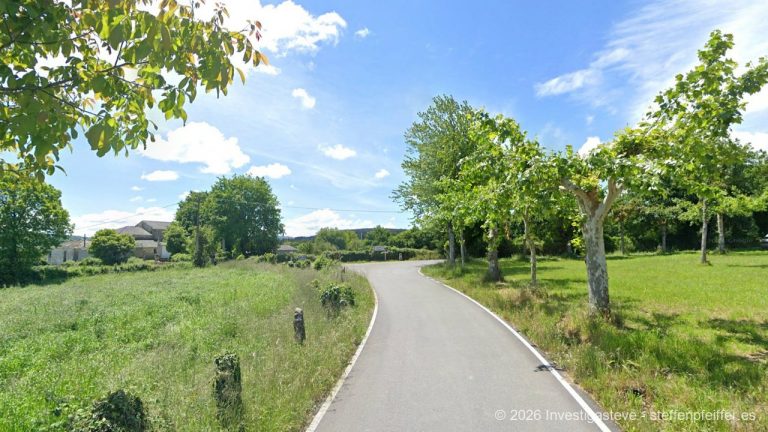
The air in Ambasmestas has a texture all its own. It is heavier than on the plain, saturated by the humidity of the rivers and the breath of the dense chestnut and oak forests that surround the steep slopes like a heavy, green velvet cloak. You smell the freshness of the flowing water, paired with the earthy, slightly sweet aroma of damp fern and the pungent scent of old stone. Haptically, the place is an experience of coolness and resistance. When you place your hand on the moss-covered walls by the riverbank, you feel the moisture that has deeply penetrated the rock. The sun often only makes it over the ridges late in the narrow valley, bathing Ambasmestas in a soft, diffuse light that makes the colors of the slate roofs change from a deep anthracite to a shiny silver-gray. Psychologically, this place marks a caesura: the lightness of the flat path ends here. You feel the physical presence of the mountains towering left and right like guardians, and within you sprouts the awareness that the “gate to Galicia” is now wide open.
What This Place Tells
The name Ambasmestas derives from the Latin “Ambas Mestas,” which means something like “both mixed.” This etymological root leads us deep into the history of settlement development in the Bierzo. Since the Middle Ages, this place was a strategic point for shepherds and wanderers alike. Not only the waters met here, but also the paths of transhumance. The Mesta, that powerful medieval organization of sheep breeders in Spain, used such natural hubs to gather and count their herds. In Ambasmestas, every stone breathes the history of these ancient migratory movements. The historical causality is tangible here: where water comes together, life arises, trade arises, and a place of rest arises.
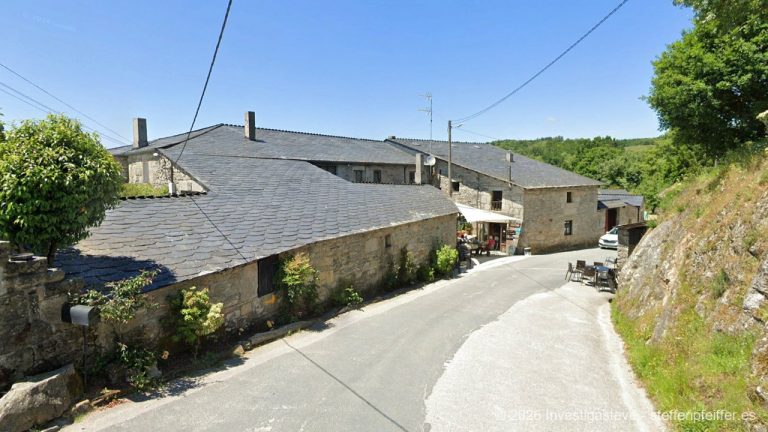
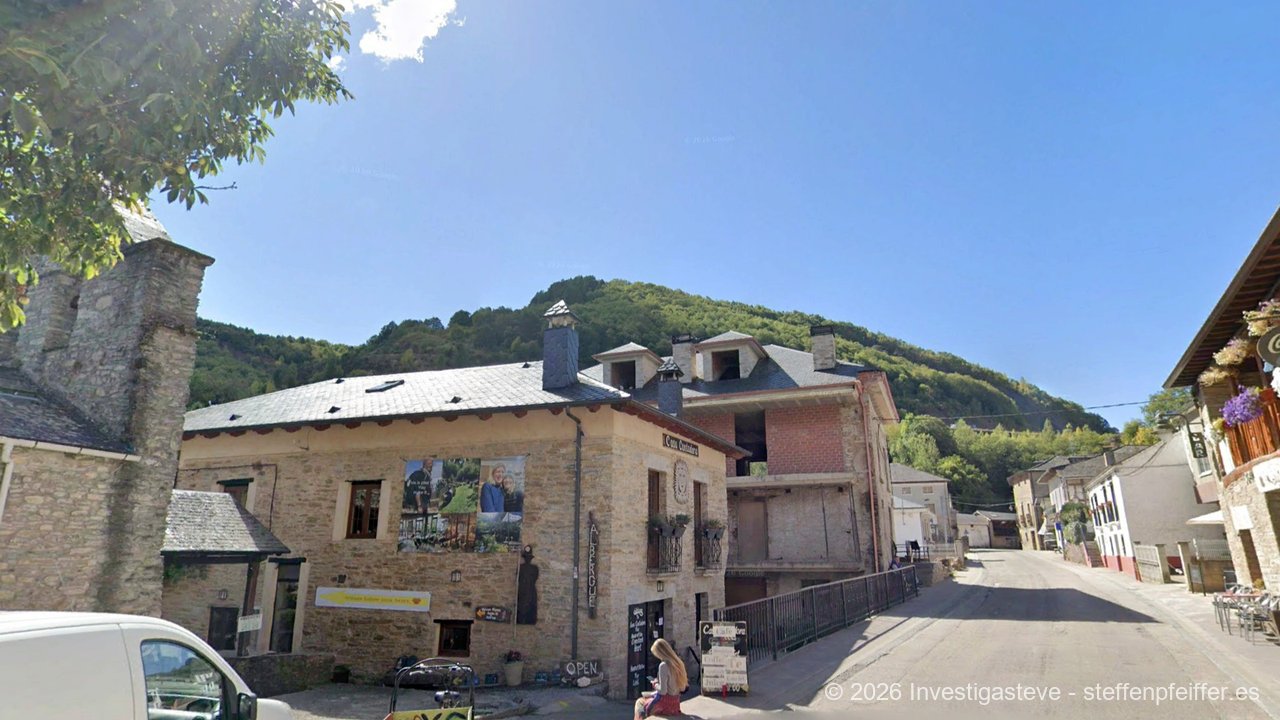
Architecturally, Ambasmestas is a prime example of human adaptation to the topographical constraints of the highlands. The houses huddle closely along the single main street that runs through the village like a lifeline. The construction is defiant: thick walls of rough fieldstone, small window openings that keep out the icy cold of the mountains in winter, and the characteristic roofs of black slate that lie on top of each other like fish scales. You can imagine the scene centuries ago, when pilgrims sought shelter in simple hospices here while the rivers outside swelled into raging beasts after heavy rains. In local tradition, Ambasmestas is considered the “antechamber of the Ancares,” that wild mountain region that is now a biosphere reserve.
The small church of San Pedro, the spiritual center of the village, tells of the constancy of faith in a barren environment. Its simple bell tower has guided generations of pilgrims. It is a story of modesty. In Ambasmestas, there were no opulent palaces; here, survival and hospitality for those who still had the hard ascent to O Cebreiro ahead of them counted. The place has always been a transit space, a bottleneck through which everything had to flow that made its way from Castile to Galicia. As you walk through the alleys today, you feel this historical weight – it is a place that pretends nothing but offers in its rough honesty exactly what the pilgrim needs: a moment of grounding before the great leap into the heights.
Addresses & tips in Ambasmestas
Camino Distances
The distances from Ambasmestas are deceptively short. While the kilometers pass quickly on the plain, every meter in the now beginning Valcarce section weighs twice as heavy.
| Previous Location | Distance (km) | Next Location | Distance (km) |
|---|---|---|---|
| Trabadelo | approx. 3.5 km | Vega de Valcarce | approx. 1.8 km |
| Pereje | approx. 9.3 km | Ruitelán | approx. 3.3 km |
Sleeping & Arriving
Arriving in Ambasmestas has something of a homecoming to a time when hospitality was still a sacred good. When you pass the village sign after the strenuous kilometers from Villafranca del Bierzo, the tension gives way to a feeling of security. The Albergue de Peregrinos Camynos is more than just a place to sleep here; it is a place of psychological regeneration. When you enter the building, you are often enveloped by the smell of freshly baked bread or a hearty soup simmering in the communal kitchen. The haptic experience of putting the heavy backpack in the corner and feeling the burning feet on the cool stone floor is one of the purest joys of the Camino.
In the accommodations of Ambasmestas, such as the family-run Casa Cantadora, the pilgrim is received not as a number but as a person. The hospitaleros know the worries of the hikers: Will the weather hold at O Cebreiro? Will my strength be enough for the ascent? The soft creaking of the beds at night and the gentle murmur of the rivers outside the window form an acoustic blanket that envelops you in a deep, dreamless sleep. It is that special silence of a roadside village that becomes quiet at night when only the distant barking of a dog or the call of a little owl can be heard. The pilgrim’s metamorphosis often begins here in conversation with others at the dinner table, where the experiences of the day are shared.
For those seeking a more private atmosphere, the local guesthouses offer rooms with thick walls that keep out the heat of the day. You feel the age of the houses in every detail – in the crooked door frames, the massive wooden beams on the ceiling, and the coolness of the bed linen, which is often still dried up here in the fresh mountain air. Arriving in Ambasmestas also means reducing yourself to the essentials. There is no unnecessary luxury, but everything the soul needs to find peace. You don’t feel like a tourist here, but like part of a centuries-old chain of seekers who have found their peace in this valley for a night.
Eating & Drinking
The cuisine in Ambasmestas is a mirror of the rugged but warm environment. When you sit down at one of the massive wooden tables in the local bars, the first sensory impression is often olfactory: the scent of Pimentón de la Vera, garlic, and slowly stewing meat hangs in the air. Here begins the culinary transition to Galicia. Caldo Gallego, a hearty stew of cabbage, potatoes, and white beans, is often already served here and tastes of home and warmth. The first spoonful of this hot liquid is a balm for the stomach; the taste is earthy, honest, and deeply satisfying.
A must for every gourmet is the trout from the Río Valcarce. Freshly caught, often only turned in flour and fried in olive oil with a little ham, it offers a mineral aroma that reflects the purity of the mountain rivers. The texture of the fish meat is firm and tender at the same time, a haptic pleasure on the palate. It is accompanied by a robust red wine from the Bierzo, a Mencía, whose dark, almost violet color in the glass seems to capture the depth of the valleys. The wine is tart, with notes of wild berries and a hint of slate, which pairs perfectly with the hearty meat dishes.
In Ambasmestas, eating is often celebrated communally. It is an act of ritual strengthening. For dessert, there are often chestnuts in various variations – whether as puree or roasted – which recall the vast forests through which you have just walked. The nutty, slightly sweet taste is the perfect end to a meal that not only satisfies the body but also warms the soul. When you drink a glass of homemade Orujo after the meal, you feel the warmth of the alcohol slowly flowing through your limbs, releasing the last tension of the day. In Ambasmestas, you taste the landscape in every bite.
Supplies & Logistics
The logistical infrastructure in Ambasmestas is focused on the core of pilgrim life. There are no glittering shopping centers here, but the honest basic supply of a small mountain village. The pilgrim finds everything necessary here to equip his backpack for the great ascent. In the small shops or directly in the hostels, the most important utensils are kept: blister plasters, sunscreen, and nutritious snacks like nuts or dried fruits. It is a logistics of short distances. You feel the experience of the locals, who know exactly what a hiker needs who is about to enter the Galician highlands.
The water supply in Ambasmestas is of outstanding quality. The fountains in the village carry crystal-clear, ice-cold water directly from the springs of the Ancares. It is a haptic pleasure to fill your drinking bottle in the stream and feel the tingling of the cold on your hands. This water is the best medicine against exhaustion. For pilgrims using luggage transport, Ambasmestas is a reliable stop. The coordination between the transport services and the accommodations works smoothly here, relieving the hiker of the psychological burden of organization.
Shopping: A small shop for basic foodstuffs and pilgrim supplies covers daily needs.
Gastronomy: Several bars and hostel restaurants offer hearty pilgrim meals and local specialties.
Accommodation: The range extends from the communal hostel to cozy private guesthouses.
Public Facilities: A small medical practice is available for emergencies; ATMs are only found again in neighboring Vega de Valcarce.
In summary, Ambasmestas is the last functional bastion before the path winds into the almost uninhabited heights. Those who check their supplies and sort their gear here do so with the certainty that the place offers everything crucial for the success of the next stage. The logistical simplicity promotes concentration on the path itself.
Don’t Miss
– The confluence (La Unión): Go down to the bank where the Balboa and Valcarce meet. The roar of the water is a meditative experience not to be missed.
– The church of San Pedro: A simple building that impresses with its silence and centuries-old stone walls. A place for a moment of thanks.
– The old bridge: A historic crossing that has carried pilgrims over the water for generations. Feel the vibration of history under your feet.
– The chestnut groves on the edge of the village: Walk a few hundred meters out of the village and admire the gigantic, gnarled trunks of the ancient trees.
– The local vegetable gardens: Observe the care with which the locals tend their gardens by the riverbank – a testament to a deep connection to the earth.
– The slate roofs in the evening light: When the sun is low, the roofs of Ambasmestas shine in a magical silver tone.
– The “sound of the valley”: Sit by the window in the evening and listen to the mixture of water murmur and wind – a natural symphony.
Insider Tips & Hidden Places
Off the main road, where a narrow path behind the church of San Pedro leads steeply upward, a small viewpoint hides that most pilgrims overlook in their haste. If you take ten minutes and climb the path, you will be rewarded with a view that reveals the entire strategic location of Ambasmestas. From up here, you see how the village nestles protectively into the valley fold, while the two rivers flow together, gleaming silver. It is a place of total auditory immersion: the roar of the water becomes a gentle hum up here, and you feel the majesty of the mountains surrounding Ambasmestas like a natural fortress.
Another hidden treasure is a small, almost overgrown access to the riverbank, about two hundred meters behind the last hostel heading west. There are flat stone slabs that lie directly in the water. It is the perfect place to dip your burning feet into the ice-cold stream – a haptic shock therapy that instantly revives the spirits. It smells of wild mint growing on the bank, and you are completely alone with nature. Those who look closely often find small, hand-carved symbols in the crevices of the old barn walls, left there by the shepherds of times past. In these details, Ambasmestas reveals its true, mystical soul, which goes far beyond the function of a simple passage place. It is also worth daring the ascent to the neighboring village of Balboa early in the morning when the mist still hangs deep in the valley, where an old Celtic pallozza and a castle ruin await explorers – a small detour that underscores the historical depth of this region.
Moment of Reflection
In Ambasmestas, you stand at a psychological threshold. The union of the two rivers is a powerful metaphor for your own journey. Just as water from different sources comes together to find its way to the sea together, so too have different experiences, fears, and hopes mixed within you in recent weeks. Here in the valley, you become aware that everything you have experienced so far – the heat of the Meseta, the silence of the monasteries, the conversations by the wayside – now merges into a single force that will carry you over the mountain.
The narrow valley of Ambasmestas can feel oppressive at first, but it also offers incredible focus. You are now definitively in the “tunnel” to Santiago. The historical causality of your being here – millions of pilgrims before you have passed exactly this point – gives you a deep humility. You recognize that you are not alone, even if you walk physically alone. The metamorphosis you undergo here is the transition from the doubter to the knower. You now know that the path will be hard, but you also know that you carry the strength of a mountain stream within you. In Ambasmestas, you learn not to fight resistance but to use it as a source of energy. When you listen to the flow of the water in the evening, you understand that stagnation is not an option. Everything in this village strives forward, toward the sea and your goal. Absorb this rhythm.
Camino of the Stars
This place lies on the French Way, on the stage from Villafranca del Bierzo to O Cebreiro. The sequence of locations is:
Villafranca del Bierzo → Pereje → Trabadelo → La Portela de Valcarce → Ambasmestas → Vega de Valcarce → Ruitelán → Las Herrerías → La Faba → Laguna de Castilla → O Cebreiro
Did you also feel that moment of calm before the storm in Ambasmestas? Was it the murmur of the two rivers that gave you the answer to a question you had been carrying around for weeks? Share your experiences of this special place of meeting with us. Perhaps you have an insider tip for a particularly welcoming hostel or a dish that saved you? We look forward to your story of the gateway to the Valcarce Valley!
About the Author