A First Glance – Introduction & Atmosphere
When the dense, almost impenetrable fog wraps itself like a shroud over the valleys of O Pino in the early morning, the pilgrim begins the arduous ascent to Cimadevila. It is that moment of the stage between O Pedrouzo and Santiago de Compostela when the physical exhaustion of the past weeks meets the growing, almost painful anticipation of the destination. The path winds up from O Amenal, a steep trail that demands your lungs and makes your heartbeat hammer in your temples. Beneath your soles crunches the typical Galician granite grit, mixed with the soft, damp forest floor that smells of rotting leaves and wet ferns. Cimadevila does not greet you with fanfares or ornate gates, but with an archaic, almost intimidating silence broken only by the distant, dull roar of planes approaching the nearby Lavacolla airport – a surreal contrast between the 1,200-year tradition of the foot pilgrim and the technological modernity.
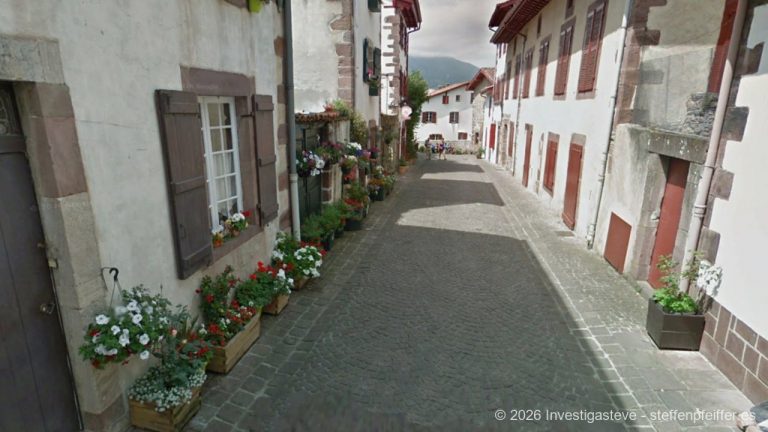
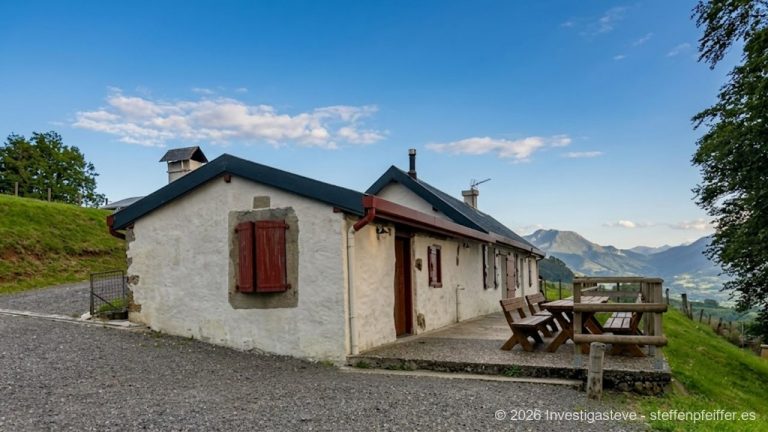
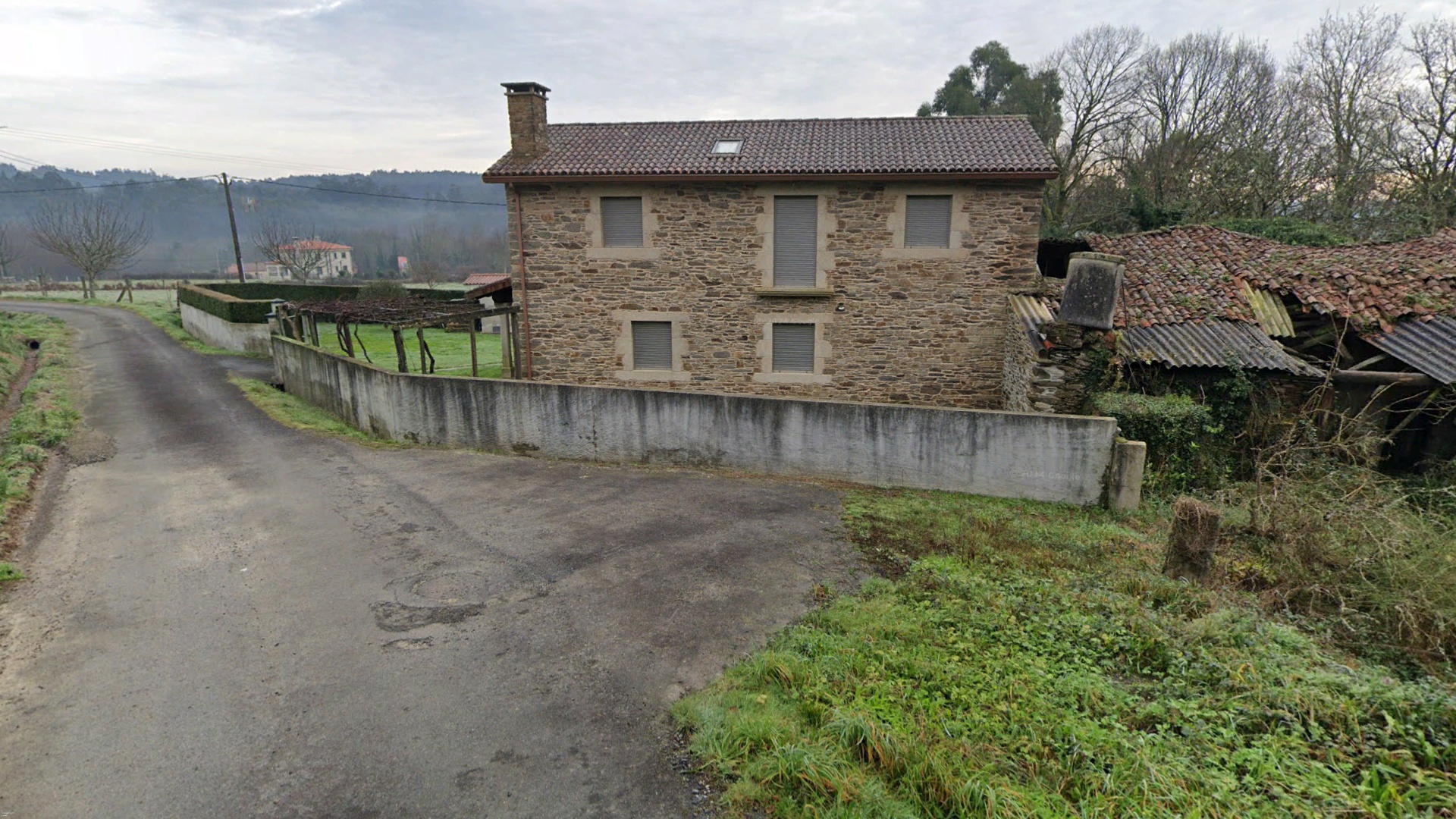
The hamlet itself seems lost in time, a microscopic cluster of stone houses whose walls are covered with thick, emerald-green moss carpets and silvery lichens. Up here, on the ridge of the hill, the wind seems to speak a different language; it whistles through the cracks of old barns and carries the spicy, ethereal scent of the surrounding eucalyptus forests. It is a place of transition, a psychological milestone where you feel that the wilderness of Galicia is gradually giving way to the suburbs of the holy city. Cimadevila is not a place to stay, but a place to pause, a place where you wipe the sweat from your brow and look west, where beyond the next valley the longed-for destination awaits. The haptic heaviness of the air, saturated with the moisture of the Atlantic, lays itself like a protective film on your skin and lets you feel the physical reality of this last great ascent with every fiber of your being.
What This Place Tells
The name Cimadevila derives from Galician and simply means “up in the village” or “the summit of the settlement.” This designation is not only topographically precise but carries a deep symbolic weight. For centuries, this point was the last great obstacle for the crowds of pilgrims before the descent into the valley of Lavacolla. Historically, Cimadevila marks the administrative boundary of the Concello de O Pino; whoever passes through this hamlet leaves the rural seclusion and enters the territory of Santiago de Compostela. In the annals of the Camino de Santiago, Cimadevila is often mentioned as the place where pilgrims tidied their clothes and mentally prepared for the arrival. It is a documented transition point that appears in the official stage descriptions of the Fundación ONCE as a crucial waypoint for accessibility and route guidance, because the steep ascent here puts the physical resilience of the walkers to a final test.
The architecture of the place tells of a life of hardship in harmony with the harsh nature. The few hórreos – the traditional Galician granaries on their stone mushroom supports – that can still be seen here are silent witnesses to an agricultural past in which every harvest had to be painfully wrested from the stony ground. Psychologically, Cimadevila acts as a filter: the hustle and bustle of larger hostel towns like O Pedrouzo falls away here, and pilgrims are thrown back on their own essence. You feel the presence of the millions who have walked the same path before you; their hopes and fears seem stored in the roughly hewn stones of the walls. There are no magnificent churches or palaces here, only the honest, bare existence of a Galician hamlet that defies the forces of nature. This place teaches the pilgrim humility before the goal – a final lesson in patience before the towers of the cathedral appear on the horizon.
Addresses & tips in Cimadevila
| Accommodation | 1 |
| Bars & Cafés | 1 |
Camino Distances
At Cimadevila you are at a point where every meter counts. The distances are short, but the elevation gain makes them felt.
Sleeping & Arriving
Anyone arriving in Cimadevila looks in vain for the brightly lit signs of an albergue or the comfort of a hotel. The place is absolutely reduced in its pilgrim infrastructure – or better said: non-existent. This lack of any commercial accommodation forces the pilgrim to make a conscious decision: continue walking or stay in the previous town of O Amenal or O Pedrouzo. Arriving in Cimadevila is therefore not a physical laying down of the backpack, but a mental arrival in the final phase of the journey. You reach the highest point of the stage at about 396 meters above sea level and feel how the weight of the past kilometers becomes heavier, while at the same time the motivation is spurred on by the proximity of the destination. It is a rough welcome, marked by the solitude of a place that was not built to host strangers, but to offer a meager home to farmers and shepherds.
The haptic experience of arrival here is shaped by the nature of the path. When you leave the last meters of the ascent behind and reach the flat plateau, the rhythm of your steps changes. The tension in your calves subsides, and for a brief moment there is a deceptive relief. But the lack of benches, fountains or shady spots makes it clear that Cimadevila is not a place to rest. It is a place of passage. Pilgrims who hoped to find a quick refreshment or a bed here must face the harsh reality of the Galician hinterland. This infrastructural emptiness, however, has a purifying effect; it frees the mind from the distractions of consumption and focuses it on the essentials: the path. Arriving here means accepting your own self-sufficiency and mobilizing your energy reserves for the remaining kilometers to Santiago.
Eating & Drinking
In Cimadevila there are no bars, no cafeterias and no vending machines. If you arrive here hungry or thirsty, you have to rely on what you carry in your backpack. This culinary asceticism is an integral part of the experience. The olfactory impression of the place is not determined by the smell of freshly brewed coffee or fried pimientos de Padrón, but by the aromas of nature. It smells of damp earth, of the sweet-sharp scent of the eucalyptus trees and occasionally of the heavy, animalistic smell of livestock from nearby stables. Pilgrims often use the short moments of stillness to drink a sip of lukewarm water from their bottles – a haptic experience in which the plastic of the bottle or the cool metal of the hydration bladder reminds you of your own preparation.
The psychological effect of this supply gap is not to be underestimated. In a world of constant availability, Cimadevila is a provocation. It forces the walker to act with foresight. If you didn’t provide enough provisions in O Pedrouzo, you will feel the consequences here. You might share an apple with a fellow pilgrim or pass on a handful of nuts – small gestures of solidarity that gain importance in this barren environment. The absence of gastronomy makes Cimadevila a place where you reflect on your inner resources. Thirst here becomes a symbol for the longing for the destination, and the simplicity of the food you bring corresponds with the simplicity of the surroundings. It is a return to the core of pilgrimaging: walking, breathing, and simply being, without the luxury of service.
Supplies & Logistics
The logistical situation in Cimadevila is quickly summarized: it is reduced to the absolute minimum that nature provides. There are no shops, no pharmacies and no public telephones. The place is an administrative no-man’s-land for the modern consumer.
Shopping: There are no shopping opportunities in Cimadevila. Pilgrims must stock up on everything necessary in O Pedrouzo or at the latest in O Amenal.
Gastronomy: There is no gastronomic offering whatsoever; neither a restaurant nor a bar nor a kiosk is available. The next opportunity for refreshment is only about 2.4 km away in San Paio or in Lavacolla.
Accommodation: There are no pilgrim hostels or private accommodations in Cimadevila. The place serves only as a waypoint on the route.
Public Facilities: There are no administrative facilities, health services or post offices. In an emergency, the general emergency number 112 must be called, bearing in mind the remote location.
Logistically, Cimadevila is the point where the forest path briefly meets civilization in the form of the A-54 motorway, only to then dive back into wooded areas. If you find here that your equipment is failing or your strength is waning, there are hardly any options for immediate remedy. The nearest bus stop is only in Lavacolla, which means you have to manage the next kilometers under any circumstances. This inevitability gives the place a strategic seriousness. It is a logistical filter that only lets those pass who are physically and materially ready for the final sprint.
Don’t Miss
- The steep ascent from O Amenal: A physical experience that makes the arrival in Cimadevila worthwhile and prepares the body for the final stage.
- The historic boundary marker: Pay attention to the moment when you leave the Concello de O Pino and feel the psychological relief of now being officially in the territory of Santiago.
- The panorama at the highest point: From up here, if the weather is clear, you have a wide view over the Galician mountain ranges, which lie like soft, green waves in the haze.
- The archaic stone walls: Study the hand-laid granite walls that line the fields and tell of the centuries-old tradition of Galician agriculture.
Insider Tips and Hidden Places
Away from the marked pilgrim path that cuts almost straight through Cimadevila, there are small, hidden corners that escape the hurried walker. One of these places is a small hollow behind a group of ancient chestnut trees, about two hundred meters off the main route. Here, where light only penetrates filtered through the dense canopy, you will find a deep, almost mystical silence. The ground is particularly soft here, covered with a thick carpet of chestnut husks and moss, which makes every step soundless. It is an ideal spot for a short, meditative break, far away from the conversations of other pilgrims. The scent of old wood and damp stone is particularly intense here, and you can hear the soft cracking of branches, which in the wind-protected valley sounds like a whisper from the past.
Another insider tip is to observe the light conditions in the late afternoon hours, if you start the stage later. When the sun is low, the crooked houses of Cimadevila cast long, dramatic shadows across the path, and the gray granite begins to glow in a warm, almost golden tone. It is that moment when the place sheds its brittle offensiveness and reveals an almost melancholic beauty. In the crevices of the old barns, you can often discover tiny ferns and rare species of lichen, bearing witness to the extraordinarily high humidity and the purity of the environment. Discovering these small natural wonders requires a patient eye and a willingness to slow down. Cimadevila rewards those who not only keep their eyes on the destination of Santiago, but who appreciate the subtle details of the Galician landscape. You will find no souvenir shops here, but you will find moments of absolute authenticity that are not in any guidebook.
Moment of Reflection
Cimadevila is the place of great inner contemplation. In the silence of this hamlet, high above the valleys, a psychological metamorphosis begins. The pilgrim realizes that the journey that began weeks or months ago is now irrevocably drawing to a close. It is a moment of melancholy, mixed with a deep pride in what has been achieved. When you sit on the stones and observe your own breath, you become aware of the transience of the moment. The planes in the sky are symbols of a world that moves much faster than the world of your own steps. In Cimadevila you learn to understand slowness as a privilege. The pain in your joints, the rubbing of your socks against your skin, the hunger – all of this becomes part of a larger narrative, a narrative of endurance and faith in your own path.
You reflect on the encounters of the past days, on the people you have met, and on those you have left behind. In the solitude of this place, you ask yourself: Who will I be when I enter the cathedral? Cimadevila offers no comfort through convenience, but through truth. The rugged beauty of the place mirrors your own inner state: battered, but steadfast. It is the calm before the storm of emotions that awaits you in Santiago. Up here, on the border between yesterday and tomorrow, you find the strength for the last kilometers. You feel that the path has shaped you, just as rain and wind have shaped the stones of Cimadevila. It is a sacred moment of silence before the world becomes loud again.
Camino of the Stars
This place lies on the Camino Francés, on the stage from O Pedrouzo to Santiago de Compostela. The sequence of locations is:
O Pedrouzo → San Antón → O Amenal → Cimadevila → San Paio → Lavacolla → Vilamaior → San Marcos → Monte do Gozo → Santiago de Compostela
Did you perceive the steep ascent to Cimadevila as a final trial, or was it for you a moment of longed-for peace before the hustle and bustle in Santiago? Which sounds or smells particularly stand out in your memory at this lonely crossing point? Share your personal experiences and thoughts with us – every perspective enriches the collective story of the Camino de Santiago and helps other pilgrims understand the significance of this silent guardian.
About the Author