A First Glance – Entry & Atmosphere
You set foot in Sarela da Baixo – and immediately feel the monumental weight of Santiago de Compostela’s cathedral yielding to a new, whispering rhythm. Just barely two kilometers beyond the Praza do Obradoiro, where the echo of pilgrim streams still resonates in your ears, this tiny hamlet welcomes you like a green lock. It is the moment when the city asphalt finally breaks away beneath your soles and makes way for the first true forest floor. You stand at the Ponte Sarela, an old bridge spanning the river of the same name, and suddenly everything changes: the air becomes cooler, saturated with the moisture of the water and the tart, almost minty scent of the eucalyptus trees that stand here like guardians at the edge of the valley.
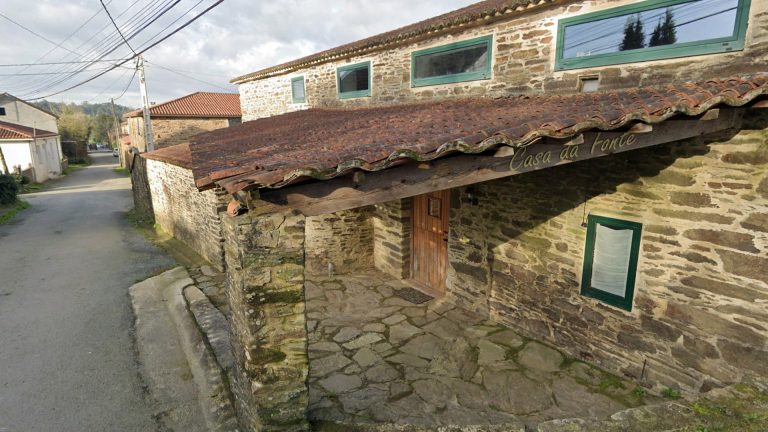
The light breaks differently here; it seems softer, filtered through a dense canopy of oaks and chestnuts, while the distant ringing of Santiago’s bells drifts over to you as only a gentle memory. Sarela da Baixo is not simply a place; it is a psychological threshold. Here, between the walls of gray granite, covered with lush moss and fern-like lichens, you realize that your path is not over, but entering a new, more intimate phase. It smells of wet earth, of the sweetish aroma of gorse, and of the freedom that only the flowing water of a Galician river can exude.
The ground beneath your feet in Sarela da Baixo tells of contrasts. The hard pavement of the suburbs gives way to a path that nestles like a narrow ribbon through the river valley. You hear the rhythmic clicking of your trekking poles, still sounding hard and metallic on the stone slabs of the bridge, only to become almost silent seconds later on the dampening forest floor. Sarela da Baixo is the place where, for the first time since your arrival in Santiago, you breathe deeply again and feel the “Morriña,” that sweet Galician melancholy that simultaneously makes you look back at the cathedral and pulls you with irresistible force westward, toward the ocean.
What This Place Tells
Sarela da Baixo is the quiet guardian of an industrial and agricultural past that kept Santiago de Compostela alive for centuries. While pilgrims prayed at the shrine in the upper town, work was being done down here in the valley. The Sarela River was the city’s lifeline, a tireless worker that powered the wheels of numerous mills and tanneries. The ruins of the old “Fábricas de Curtidos,” the tanneries that you can still discover today in the surroundings of Sarela da Baixo, tell of a time when leather from Compostela was renowned throughout Europe. These historical causalities are physically tangible here: the granite of the bridge, the massive foundations of the mills, and the terraced gardens are witnesses to a deep human symbiosis with nature.
The parish of San Paio, to which Sarela da Baixo belongs, was an important supply point since the Middle Ages. Here, the fruits of the earth were grown, which were later sold in the markets at the edge of the city walls. The Ponte Sarela itself, although appearing modest today, was a strategic junction of the “Camiño Real,” the Royal Road to Fisterra. Whoever left Santiago heading west had to pass this crossing. It is a moving feeling to walk over these stones and know that as early as the 12th century – as described in the Codex Calixtinus – travelers paused here to gather themselves once more before the first real climb of the stage.
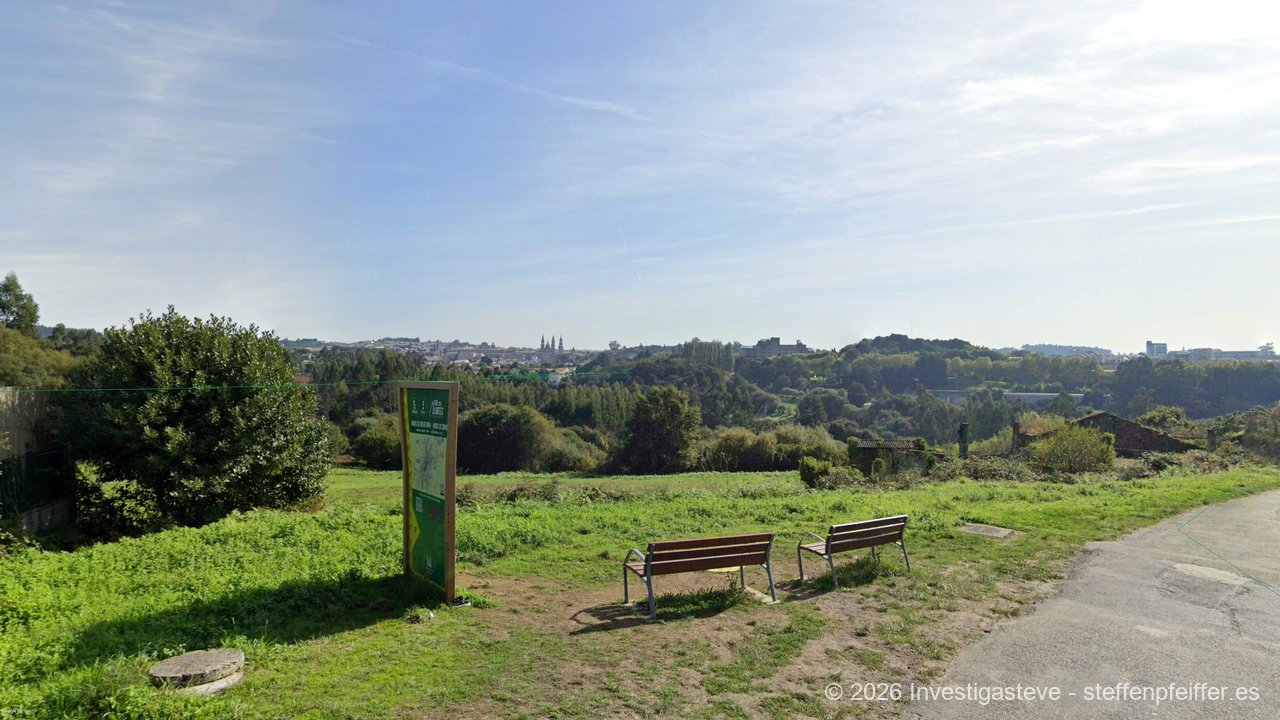
What makes Sarela da Baixo so special today is its location as a “Mirador of the Soul.” When you climb the narrow path after crossing the bridge and pause at the Costa do Cano, one of the most iconic views in Galicia reveals itself to you: the three towers of the cathedral rise majestically above the sea of houses, framed by the lush green of the valley. It is a farewell view whose literary and spiritual depth can hardly be surpassed. Sarela da Baixo tells you that everything is in flux – like the water under the bridge – and that every farewell carries the seed of a new beginning within it. Here, the archaic power of the Galician earth merges with the sacred aura of the city to form a narrative of constancy.
Camino Distances
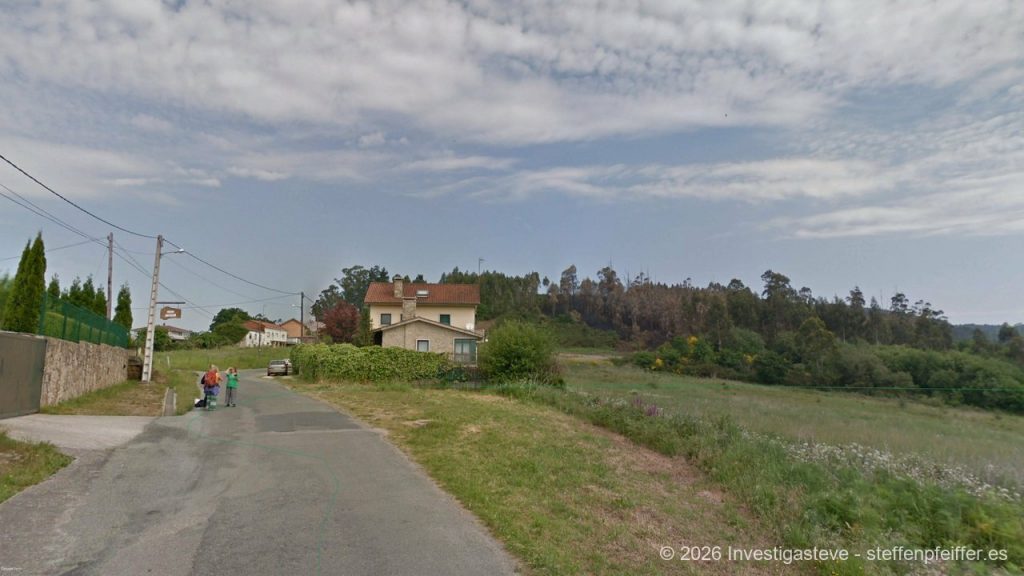
🗺️ After about two kilometers of slow distancing from the cathedral, past the gardens of Galeras, the gate to the wild nature of Galicia opens in Sarela da Baixo.
| Previous Location | Distance (km) | Next Location | Distance (km) |
|---|---|---|---|
| Santiago de Compostela | approx. 2.0 km | Villestro | approx. 3.5 km |
Addresses & tips in Sarela da Baixo
Show all 12
Staying Overnight & Arriving
Arriving in Sarela da Baixo means learning the first lesson in humility. There are no glittering hotels or huge pilgrim hostels here. The place is so small that it almost seems like a secret, discovered only by those traveling on foot. Most pilgrims leave Sarela da Baixo behind as a fleeting moment of beauty, but those who take the time for a short rest here feel a very unique quality of welcome. The few houses radiate a calm that almost recalls the timelessness of a monastery. In the air lies the smell of damp stone and the smoke of small wood-burning ovens, which are sometimes lit even in summer to drive the moisture out of the thick walls.
Since the official infrastructure for overnight stays in Sarela da Baixo is minimal, the actual “arriving” takes place on an emotional level. You sit down on one of the low walls by the Ponte Sarela, let the backpack slide from your shoulders, and feel how the weight of your new chapter in life – the path to the sea – takes shape. The texture of the rough granite under your hands grounds you. It is not a place to sleep, but a place to awaken. The silence here is not empty; it is filled with the gurgling of the river and the rustling of the leaves, an acoustic balm for the senses still saturated from the city’s bustle.
Those seeking accommodation here will usually find it in the nearby suburbs or back in Santiago, but the feeling of having arrived in Sarela da Baixo remains. It is the awareness that you have left the safety of the walls behind you. At dusk, when the mist rises from the Sarela Valley and softens the outlines of the houses, the hamlet seems like a refuge of silence. The atmosphere in the narrow lanes is marked by a deep, almost shy hospitality of the residents, who greet you with a quiet “Bo Camiño” while they tend their gardens. Sarela da Baixo is the ideal point to tighten your backpack straps one last time and let the anticipation rise within you.
Eating & Drinking
Culinarily, Sarela da Baixo is an ode to the rustic and unadulterated. Although there are no large restaurants in the core of the hamlet, the surrounding area is famous for its “Muíños,” the old mills, some of which have been converted into charming inns. Here, you will find no standardized tourist menus, but honest Galician cuisine that tastes of home. In the cooler months, a hearty Caldo Galego steams in the bowls, whose aromas of kale, beans, and the typical “Unto” (cured fat) awaken the spirits. The scent of freshly baked bread, whose crust is as hard as the Galician soil and whose interior is as soft as the morning mist, fills the dining rooms.
A special pleasure is to try a portion of “Empanada de Atún” or “Polbo á Feira” in one of the nearby restaurants on the riverbank, while the water of the Sarela rushes by just a few meters away. The texture of the octopus, perfectly cooked and refined with a pinch of coarse sea salt and smoky pimentón, combines with the mineral taste of a cool Albariño to create an experience that makes you forget all the exertions of the first day. In Sarela da Baixo, you learn that eating on the Camino is more than calorie intake; it is a ritual celebration of the region.
Often, it is the little things that remain in your memory in Sarela da Baixo: an apple reaching over a stone wall, or the taste of clear spring water at one of the old fountains. The place teaches you the asceticism of pleasure. A simple coffee, drunk standing up in a small bar at the edge of the path, tastes more intense here because it marks the transition into the wilderness. The culinary world of Sarela da Baixo is as rugged and honest as the landscape itself – a promise of the days to come, when the palate will discover the diversity of Galicia beyond the beaten paths.
Supplies & Logistics
In terms of logistical supplies, Sarela da Baixo is a place of conscious transition. There is no supermarket and no pharmacy here. This “supply desert,” however, is not a deficiency, but part of the initiation on the Fisterra Way. Pilgrims should ensure their water bottles are filled before leaving Santiago, but the strategically important location of the hamlet still offers final opportunities. Near the bridge, there are often small, mobile stalls or cafés in the converted mills that offer the dusty wanderer a cool drink or a strengthening snack.
Infrastructurally, Sarela da Baixo is a place of renunciation, teaching you to get by with what you carry. There are no banks or post offices. The next opportunity for comprehensive errands is only offered by the more distant Roxos or Negreira. Nevertheless, the Fonte da Sarela, a small fountain by the wayside, is a reliable point for cool drinking water. It is a haptic experience par excellence to feel the ice-cold water on your heated skin and quench the first real thirst of the stage.
For medical emergencies or larger errands, you are still entirely dependent on the proximity to Santiago, which makes Sarela da Baixo a kind of “safety net.” You are far enough away to feel nature, but close enough to turn back in an emergency. This psychological security makes the start so pleasant. Sarela da Baixo teaches you self-sufficiency – a valuable lesson just before the end of your journey through the hinterland. Here you tighten your shoes once more, check the fit of your hat, and leave the comfort zone of civilization with the knowledge that the path will provide for you.
Don’t Miss
Ponte Sarela: The historic bridge over the Sarela River is the landmark of the place. Pause in the middle and listen to the water – it is the heartbeat of your new path.
The View Back: As you climb the hill after Sarela da Baixo, turn around. The view of the cathedral is as private and majestic here as in few other places.
Ruins of the Tanneries (Curtidurias): Pay attention to the overgrown stone walls along the river. They are silent witnesses to a time when Santiago was the leather city of Spain.
Senda del Sarela: A narrow nature path parallel to the Camino, leading you directly along the water through dense vegetation – a green labyrinth full of discoveries.
The Old Mills (Muíños): Some of the buildings still show the channels and wheelworks that once ground the region’s grain.
Insider Tips and Hidden Places
Beyond the marked yellow arrows, Sarela da Baixo reveals little treasures that only the attentive pilgrim notices. One such place is the small “Rego do Bar,” a stream that flows into the Sarela. If you deviate just a few meters from the main path at the Ponte Sarela, you will discover a tiny Pontella – a stone bridge made of just one slab – almost sinking into the ferns. It is a place of absolute silence, where the light dances on the water’s surface in greenish reflections. Here, you can forget the hustle of the world for a moment and feel the archaic pulse of the Galician earth under your feet.
Another hidden spot is the old connecting road to the Costa do Cano. When the afternoon light falls at a flat angle on the mica particles in the granite of the houses, the whole village begins to sparkle, as if countless tiny diamonds were embedded in the stone. It is a magical moment that only those who do not rush past the stones will experience. Also, the “Homenaxe ás Lavandeiras” (Monument to the Washerwomen) on the riverbank is a quiet place of reflection. It recalls the women who once performed the hard work here – a haptic memorial to the harsh realities of life in Galicia, which is often overlooked.
In the gardens of Sarela da Baixo, you can also often find old “Hórreos” (traditional granaries), which are not in the spotlight but captivate with their simplicity. When you pass by one of these structures and smell the scent of dry wood and old stone, you feel the deep rootedness of the people in this landscape. It is these small, unhurried details that make Sarela da Baixo a true insider tip for those pilgrims who seek and appreciate true silence.
Reflection Moment
In Sarela da Baixo, you reach a critical, almost sacred turning point on your path. You have already reached the supposed destination – Santiago – yet now the question arises: why are you continuing? In this small hamlet, relief at what has been achieved mixes with a deep-seated curiosity for the unknown. When you look back and see the towers of the cathedral slowly disappearing behind the hills, you literally feel the burden of expectations lift from your shoulders.
The psychological effect of the coastal landscape begins here, although the sea is still far away. The Sarela River teaches you that everything flows and that no path is ever truly at an end. Are you ready to leave the “safety” of the pilgrim destination behind you? In Galicia, they say that the path to Fisterra cleanses the soul. Sarela da Baixo is the washhouse for your spirit. Here you decide whether you are a tourist of history or a pilgrim of infinity. The rhythm of your breathing adapts to the murmur of the water, and you realize: the path is a mirror, and in Sarela da Baixo, you see your true face for the first time without the splendor of the cathedral.
Camino of the Stars
This place lies on the Camino a Fisterra y Muxía, on the first stage from Santiago de Compostela to Negreira. The sequence of locations is:
Santiago de Compostela → Sarela de Abaixo → Roxos → Augapesada → Trasmonte → Ponte Maceira → Negreira
Did you feel the moment when Santiago disappeared behind the hill of Sarela da Baixo and the forest fully enveloped you for the first time? Share your personal impressions of the Ponte Sarela or your discoveries in the old mills with us. Perhaps you have a photo of the farewell view of the cathedral? We look forward to your story, which brings this hidden place to life!
About the Author