A First Glimpse – Arrival & Atmosphere
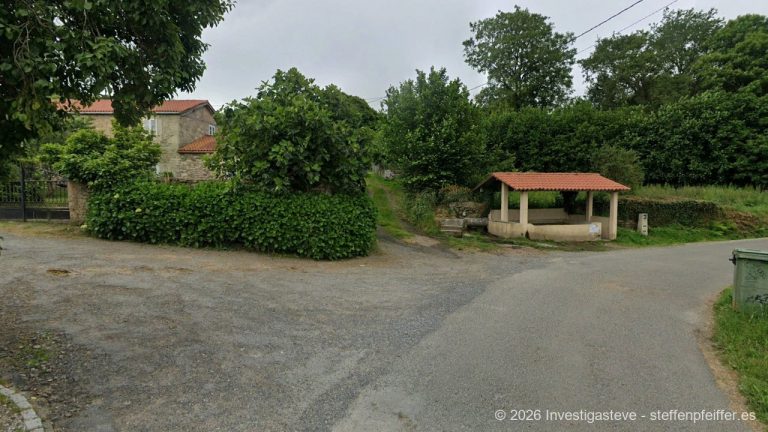
There are moments on the Way of St. James when the topography of the journey changes suddenly and radically. When you have left the gentle, rolling hills behind the Monastery of Moraime and take the path down into the valley of the Río Negro, you enter a different world. Os Muiños doesn’t welcome you with the wide, often merciless horizon of the Galician high plateaus, but with a protective, almost maternal embrace of deep green. Here, just a stone’s throw from the roaring Atlantic, a very unique, almost sacred acoustics prevails. The first thing you perceive is not the visible, but the audible: A polyphonic orchestra of rippling water rushing over moss-covered stones, mixed with the distant, deep growl of the surf on the nearby Praia de Area Maior. It is a sonic duality that immediately calms the mind.
The air in Os Muiños is heavy and saturated with a humidity that settles on your skin like velvet. It is that typically Galician mix of the salty sharpness of the Costa da Morte and the sweet-earthy aroma of damp ferns, ancient alders, and the musty scent of stones that have been kissed by the river for centuries. As you wander along the Paseo Fluvial, the wooden walkway that winds like a twisted ribbon through the dense riparian woods, you feel the trembling of the wood beneath your boots each time the water pushes against the pillars below you. Here, time seems to have a different consistency – it doesn’t flow linearly, but circles like the water in the old mill basins. In Os Muiños, you realize that you are standing on a threshold: Behind you lie hundreds of kilometers of overland route, ahead of you lies the infinity of the ocean in Muxía. This place is the filter that washes the dust of the road away before you reach the sanctuary of the Virxe da Barca.
What This Place Tells Us
The name “Os Muiños” is a statement in Galicia; it simply means “The Mills.” But behind this simple designation lies a centuries-old cultural history that once made this small hamlet the economic heartbeat of the region. A total of 17 watermills once lined the short course of the Río Negro before it flows into the sands of Area Maior. These mills were not isolated buildings, but social hubs. The rural population met here to have their grain – mostly corn or rye – ground into fine flour. While the heavy millstones sang their dull, rhythmic song inside, stories were exchanged outside, marriages were initiated, and political news was spread. The mills were the newspapers of that era, powered by the pure force of nature.
The architecture of these mills is a masterpiece of pragmatic folk art. Built of massive granite, they have defied the damp climate for generations. Many of them follow the type of the “Muiño de Rodicio,” where the water is directed through a channel (Caldeira) onto a horizontal waterwheel. Anyone standing today before these ruins or the lovingly restored examples can almost still smell the flour in the air and empathize with the haptic experience when the warm, freshly ground substance slipped through the millers’ fingers. These mills were under the indirect influence of the powerful Monastery of San Xulián de Moraime, which exercised spiritual and secular sovereignty over this valley for centuries. It was a symbiosis of monastic administration and peasant diligence that gave Os Muiños its identity.
Today, however, the stones of Os Muiños also tell a story of change. Where once the clatter of the mills dictated the rhythm of village life, a contemplative silence now reigns, interrupted only by the footsteps of pilgrims. Nature has reclaimed many of the old buildings; ivy wraps around the chimneys, and ferns grow from the cracks in the wheel chambers. But it is precisely this process of decay and simultaneous preservation that makes the place so worth telling. Os Muiños is a living museum of pre-industrialization, a place where you understand how closely human destiny was linked to the river’s course and the harvests. It is the story of a valley that has learned to live in the rhythm of the water – a lesson that is invaluable for the modern hiker, who often hurries to the beat of their digital watches.
Camino Distances
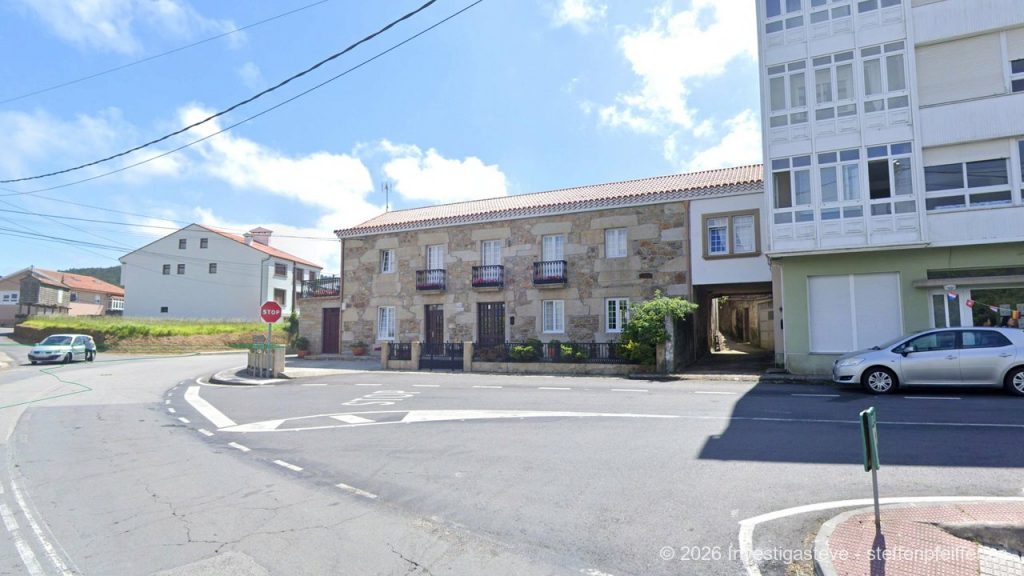
In the following table, you will find the distances for the current stage on the Camino Fisterra y Muxía (Variant CFM 3b):
| Previous Location | Distance (km) | Next Location | Distance (km) |
|---|---|---|---|
| Moraime | approx. 1.3 km | Muxía (center) | approx. 6.3 km |
Addresses & tips in Os Muiños
Accommodation & Arrival
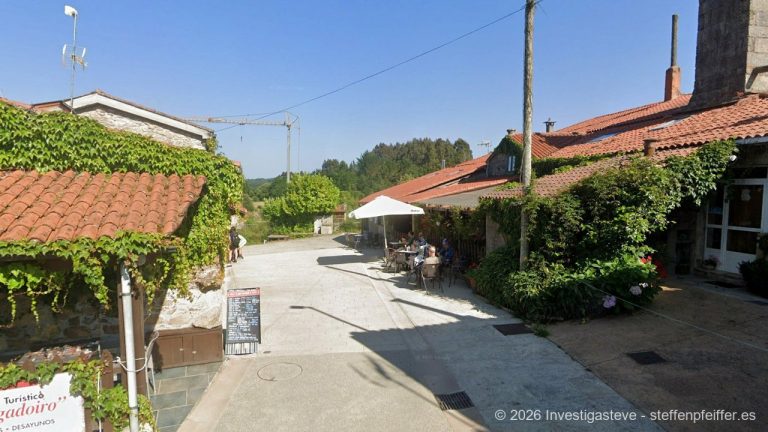
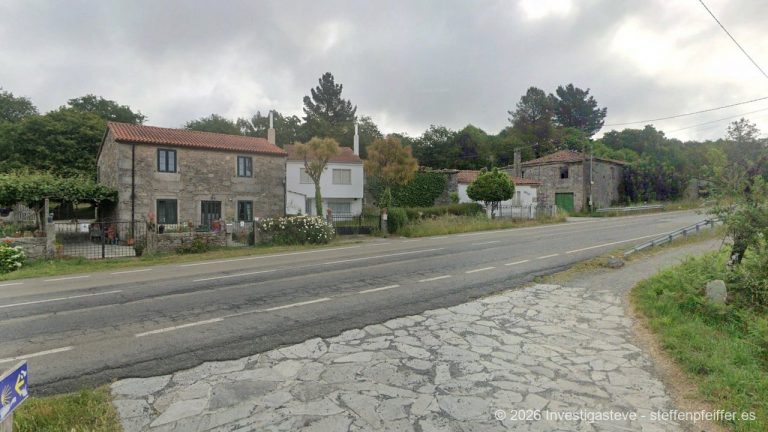
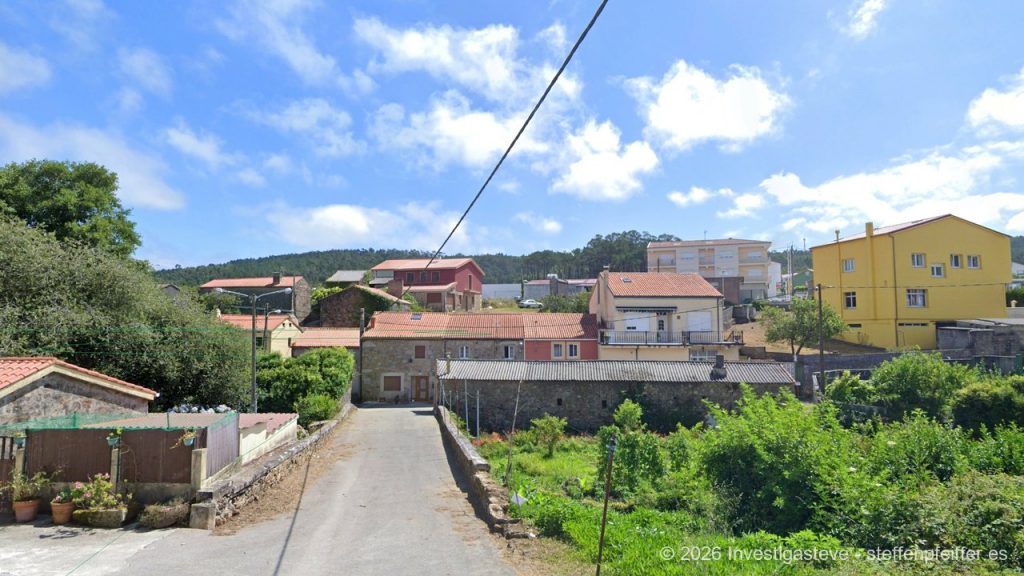
Arriving in Os Muiños is a gentle event. There is no striking tower to greet you from afar, and no town gate to pass through. Instead, you realize you are there when the light under the canopy of the river valley suddenly brightens and the first gray granite gables of the Aldea appear between the trees. It is an arrival for the senses: The coolness of the valley gives way to a pleasant warmth, and the path levels out. Those who decide to stay overnight here, instead of pushing the last kilometers to Muxía in one go, are rewarded with a tranquility that is often lost in the larger stage destinations.
The accommodation situation in Os Muiños is manageable but of high quality. The Albergue-Pensión Cabo da Vila is a prime example of Galician hospitality. Arriving here means entering a house that breathes the history of the region but offers modern comfort. The feeling of putting your heavy boots on the stone floor after a long march and taking off your backpack is intensified here by the family atmosphere. In the evening, you often sit together in the small garden or in the common room, and while the Galician fog – the Brétema – creeps into the valley outside, you share a simple meal and the stories of the day. It is a place where you find not only a bed, but a space for your own reflection.
A special aspect of staying overnight in Os Muiños is the proximity to the sea with the simultaneous security of the inland. At night, you hear the rustling of the forest and the quiet murmur of the Río Negro, but you know that only a short walk away the waves of the Atlantic are lashing against the sand of Area Maior. This geographical hybrid position ensures a deep, restful sleep. You wake up in the morning when the first birds in the riverside bushes begin their concert, and feel a freshness that optimally prepares you for the final destination of Muxía. Arriving in Os Muiños means finally shedding the hectic pace of chasing kilometers and concentrating on the essentials: Your breath, your step, and the silence.
Food & Drink
The cuisine in Os Muiños is down-to-earth, honest, and deeply rooted in the tradition of the Comarca de Muxía. There are no starred restaurants here, but instead dishes that taste of home and hard work. In the small bars and inns of the hamlet, what the garden and the sea have to offer is often served. An absolute classic that you should try here is the homemade bread. Given the place’s history as a mill valley, the bread here is more than just a side dish; it is a homage to the past. The crust is often strong and dark, the inside moist and with an aroma that reminds you of freshly ground grain – a haptic and flavorful experience that has become rare in modern bakeries.
Those who decide to have a picnic by the river – which is almost mandatory in Os Muiños – should stock up on local cheese, the famous Queso de Tetilla, and a hearty Empanada. The Empanada, a filled pastry, is the ultimate pilgrim food in Galicia. In this region, it is often filled with tuna, onions, and peppers, which goes perfectly with the salty air drifting over from the nearby beach. Add a sip of a simple Ribeiro wine from a Cunca, the typical ceramic bowl, and the moment of rest becomes a small ceremony of gratitude. You sit on one of the stone walls by the river, let your legs dangle, and feel the energy returning to your body through the honest food.
A secret tip for those with a sweet tooth is the search for local almond cakes or homemade “Filloas,” a kind of Galician crêpe, often served with honey or sugar. In Os Muiños, everything tastes a little more intense, perhaps because you know that the ingredients often come from the immediate neighborhood. The gastronomy here is a deceleration for the palate. You take your time, you chew more slowly, and you enjoy the simplicity. It is the “food of the millstones” – powerful, enduring, and nourishing for body and soul.
Supplies & Logistics
Although Os Muiños is a small, tranquil place, the logistical supply for pilgrims is surprisingly well organized. You can feel that the place has learned to grow with the needs of the hikers without losing its character as an agricultural village. There is a small pharmacy, which is an important point of contact especially for the treatment of blisters or joint pain – a blessing for those whose bodies are showing the first signs of fatigue shortly before the destination in Muxía. There are also small shops for daily needs, where you can find everything you need for a hiking meal or to supplement your first-aid kit.
The paths within the village are short and well signposted. The Paseo Fluvial is not only a sight but also a functional connecting path that links the various parts of the settlement together. Those who need logistical support with luggage transport will find the usual services here that bring backpacks to the next station in Muxía or back to Santiago. Os Muiños functions as a kind of small hub where you can take another deep breath and check your equipment before starting the last stage to the coast.
Shopping: Small Tiendas in the village offer basic food and hygiene items. For larger purchases, Muxía is recommended.
Gastronomy: Few, but authentic bars and a guesthouse with catering offer honest Galician cuisine.
Accommodation: The choice is limited (Albergue/Guesthouse), so a reservation is advisable in high season.
Public Facilities: A pharmacy is available; for medical emergencies, one must go to Muxía (approx. 6 km).
The atmosphere of supply in Os Muiños is characterized by a calm efficiency. You are not treated like a number here, but are often welcomed with a personal greeting and a smile. It is this human component of logistics that makes the place so pleasant. Here, supply is not a stress factor, but a part of arriving.
Don’t Miss
The Paseo Fluvial: Walk along the Río Negro on the wooden walkways and discover the remains of the 17 watermills – a meditative path full of history.
Praia de Area Maior: Visit this wild, wide sandy beach where the river flows into the sea. The dune landscape is of rugged beauty and offers the first real view of the vastness of the Atlantic.
Fonte da Tella: A historic fountain by the wayside, whose clear water has refreshed pilgrims for generations. An ideal place for a short rest.
Capilla de San Tirso: A small, simple chapel nearby that offers peace and space for a silent prayer, far from the tourist bustle.
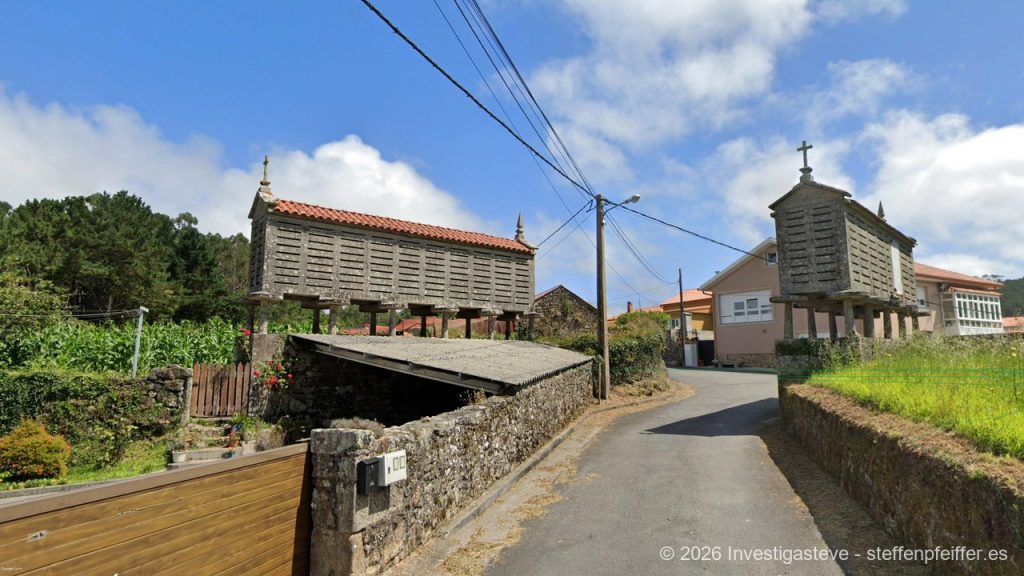
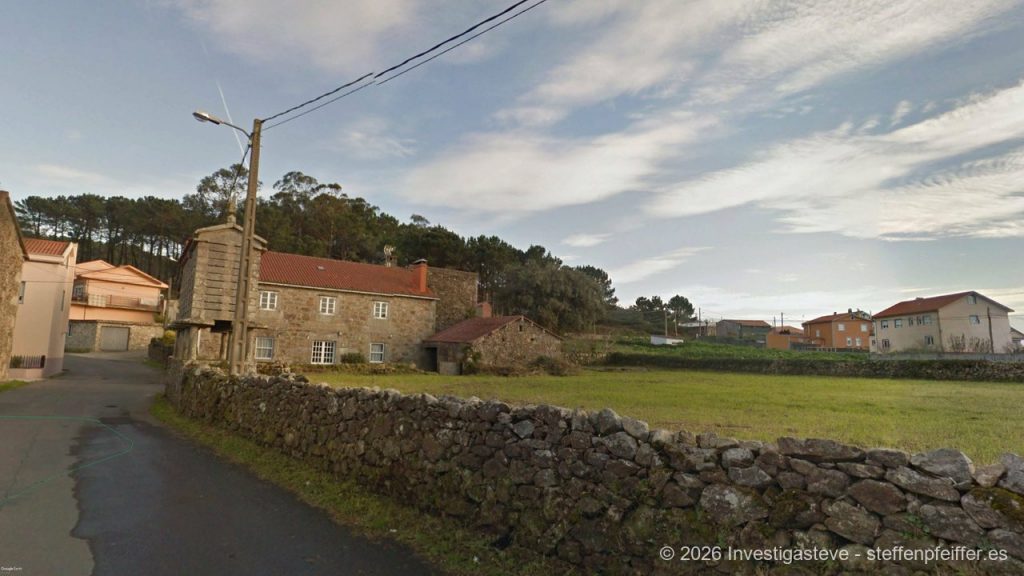
The Hórreos of Os Muiños: Pay attention to the stone corn granaries in the village; they are among the best-preserved examples in the region and are fascinating testimonies of Galician architecture.
Secret Tips and Hidden Places
Off the official Paseo Fluvial, there are small paths in Os Muiños that lead deep into the thicket of the riparian forest. If you briefly leave the main path and follow one of the narrow trails upstream, you often come across completely overgrown mill ruins that are not in any travel guide. Here, nature has completely taken over. The millstones often still lie half in the water, covered by a dense carpet of bright green moss, while ferns protrude from the window openings like green cascades. It is a place of almost eerie silence, where you can physically feel the presence of the past. Sitting here and listening to the whisper of the water is one of the most intense experiences you can have in Os Muiños.
Another hidden place is the small viewpoint above the dunes of Area Maior, which you can reach via an almost invisible path behind the village. From here, you have a panoramic view over the entire valley to the cape of Muxía. Especially at dusk, when the light of the setting sun bathes the granite roofs of the village in a warm gold and the fog rises from the sea, this place unfolds a magical attraction. It is the perfect spot to feel the “Morriña” – that specifically Galician longing that you only understand once you have stood here.
Those who keep their eyes open often find small, carved symbols or crosses in the walls of the old houses, telling of the deep religiosity and superstition of the former inhabitants. They are protective signs against evil spirits or blessings for the harvest. Discovering these tiny details is like a treasure hunt through history. Os Muiños is not a place that shouts its secrets loudly; you have to bend down, look closely, and listen to the whisper of the stones. Only then does the true soul of this valley reveal itself.
A Moment of Reflection
When you sit on the bank of the Río Negro in Os Muiños and watch the water flow tirelessly over the stones, a question inevitably arises: What are the “millstones” in your own life? We all carry burdens around with us – worries, expectations, disappointments – that weigh on our shoulders like heavy granite blocks. The Way of St. James is often a process of grinding. With every step you take, a little of the hardness of these worries is worn away until they become fine dust that the wind can carry away. Os Muiños is the place where this grinding process reaches its symbolic peak.
The mills teach us something about the power of constancy. The water always flows, the stones turn, and in the end, something new, nourishing, is created. Perhaps your journey so far has been a hard struggle against resistance. Here, in the green silence of the valley, you may entrust yourself to the river. You may allow time and nature to work on you. Being in Os Muiños means recognizing that friction not only means wear and tear, but also refinement. The grain must be broken to become bread. Perhaps some of your stuck ideas also had to be broken on this path so that something new could grow in you.
Do you feel the pressure easing as you listen to the rhythm of the water? Muxía is near, the goal is tangible, but here, in Os Muiños, you are allowed to be completely in the “in-between” once more. It is the acceptance of the process. You don’t have to be perfect, you just have to stay in motion, like the waterwheel. When you depart from here, you take the lightness of the washed stone with you. You no longer go against the resistance, but with the flow of your own destiny. The millstones of your heart are now lighter, and the way to the sea is just one last, liberated flowing out.
Camino of the Stars
This place is located on the Camino Fisterra-Muxía (Variant CFM 3b), on the stage from Olveiroa/Dumbría to Muxía. The sequence of locations is:
Olveiroa → Hospital → Dumbría → Trasufre → Senande → Quintáns → Moraime → Os Muiños → Muxía
Did you feel the healing power of the water in Os Muiños, or experience a moment of absolute timelessness at the old mill ruins? Perhaps the view over Area Maior touched you as deeply as it did us? Share your personal experiences, your photos of the moss-covered millstones, or your very own reflection on this special place with us. Your story makes this guide a living companion for all the pilgrims who follow. Write us a comment!
About the Author