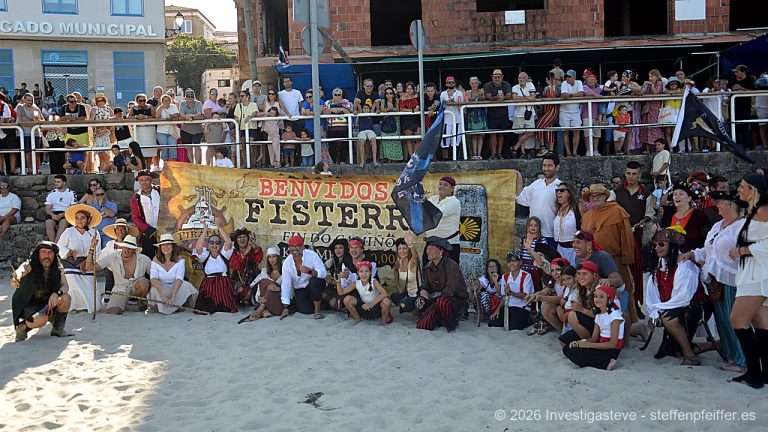
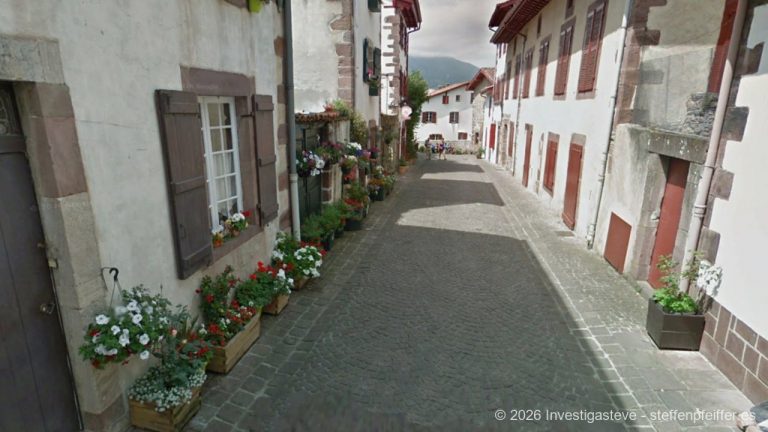
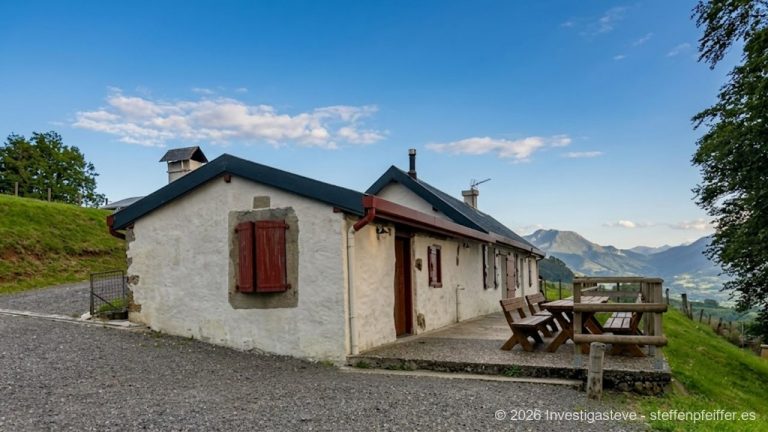
A First Glance – Entry & Atmosphere
When you leave the wide, often windswept plains behind Olveiroa and the path gradually descends into the green basin of the Rego do Hospital, the atmosphere of your journey changes fundamentally. You enter the terrain of Dumbría, a place that is far more than just another dot on the map of Galicia. Here, at a moderate altitude between 200 and 0 meters above sea level, the landscape seems to breathe deeply. Lush, almost jungle-like vegetation, typical of the region’s humid Atlantic climate, welcomes you: Mighty oak forests, called “Robledale” here, alternate with ancient beech stands and shady chestnut groves, whose canopy filters the light into a thousand shades of green. The air in Dumbría is heavily saturated with the moisture of the nearby river valley and carries the earthy, soothing scent of moss, ferns, and wet granite.
The auditory experience upon your arrival is characterized by a subtle but powerful natural symphony. You hear the constant, meditative babbling of the Rego do Hospital, mingling with the polyphonic bird concert in the early morning. But over this idyllic tranquility lies a psychological tension that grips every pilgrim in Dumbría. It is the place of the great decision. Behind you lies the fork at Hospital, and in Dumbría, the choice manifests: Do you take the direct path to the cape at Fisterra, or do you take the route to Muxía? This feeling of setting the course practically vibrates in the air. The silence of the place is only occasionally interrupted by the hollow clatter of hiking boots on the asphalt or the distant ringing of cowbells in the surrounding pastures. Dumbría is a place of inner contemplation, a strategic anchorage that forces you to pause before you finally approach the coast and the “end of the world.”
What This Place Tells
The history of Dumbría is a chronicle of care that goes back over eight hundred years and makes the place one of the holiest bases for pilgrims. The heart of this narrative is the legendary Hospital de O Logoso, considered the first documented pilgrims’ Hospital on the entire route between Santiago, Finisterre, and Muxía. It was founded at the beginning of the 13th century, more precisely between 1200 and 1209, by the presbyter Esteban de Ulgoso. In a solemn document from 1209, he bequeathed the Hospital to the cathedral chapter of Santiago de Compostela for the express purpose of “refectione pauperum transeuntium” – the care of passing poor people. This deep root of charity shapes the identity of Dumbría to this day; the people here see themselves in a direct, unbroken line to those medieval hospitaleros.
But the history of the place is also marked by dramatic turning points. The ruins and the now reconstructed structures of the old Hospital tell of the dark years of the Napoleonic Wars. Between 1808 and 1814, the region became the scene of fierce battles, particularly at the Battle of the nearby Ponte Olveira. The French invasion left a trail of destruction, to which the historic Hospital and large parts of the neighboring villages fell victim. Almost two centuries of economic decline and rural exodus followed, during which Dumbría was almost forgotten. Only with the modern pilgrim boom of the 2000s did the place awaken from its slumber. Private initiatives and targeted investments by the municipality transformed the ruined landscape back into a vibrant center of hospitality.
Today, Dumbría tells a story of resurrection. The locals are proud of their heritage and have managed to harmoniously embed modern architecture and infrastructure into the historic landscape. When you walk across the Baroque bridge Ponte Olveira, you feel the weight of history under your feet – a granite monument that has outlasted wars and floods. The reconstructed hórreos in Olveiroa stand like stone guardians of rural tradition and testify to a new awareness of their own culture. Dumbría is not a museum but living proof that traditions only survive if they are actively lived. It is the story of a place that has learned that after every destruction, a new beginning is possible – a message that has a deep resonance, especially for pilgrims at the end of their journey.

Camino Distances
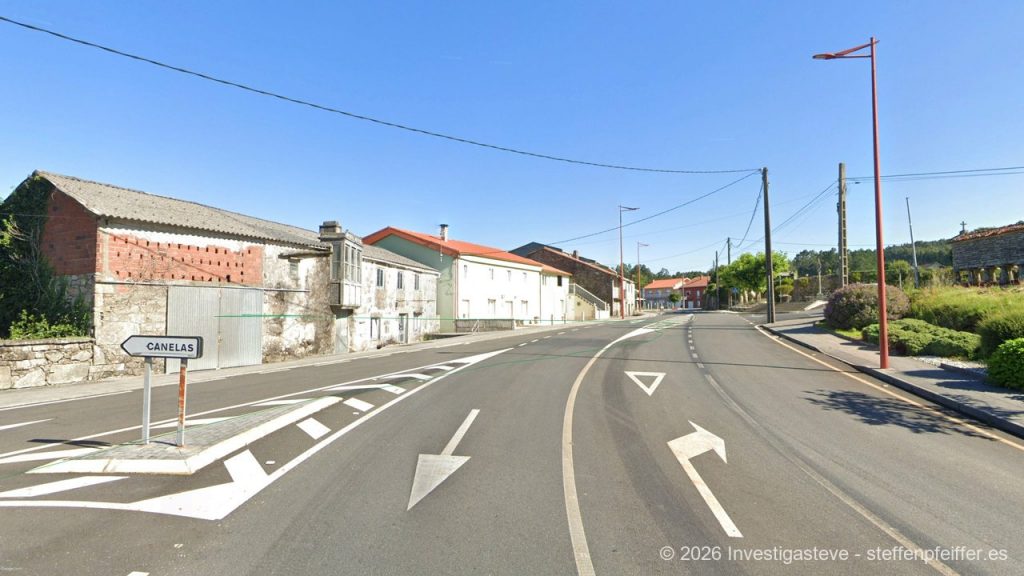
In the following table, you will find the distances for the current stage on the Camino Fisterra y Muxía (Variant CFM 3b):
| Previous Place | Distance (km) | Next Place | Distance (km) |
|---|---|---|---|
| Olveiroa (via Hospital) | approx. 5.2 km | Trasufre | approx. 3.8 km |
| Hospital (Fork) | approx. 3.0 km | Muxía (Destination) | approx. 20.3 km |
Addresses & tips in Dumbría
| Accommodation | 5 |
| Bars & Cafés | 1 |
| Health | 2 |
| Sights | 6 |
| Services | 2 |
Show all 16
Opening hours
Opening hours
Overnight Stay & Arrival
Arriving in Dumbría is a moment of relief for many pilgrims after the often strenuous ascent from Olveiroa. You notice that you are reaching the administrative center of the municipality when the dense forests give way to the functional but well-kept town center. It is an arrival in the modernity of Galicia: Next to traditional stone houses with their typical slate roofs, you will find first-class sports and social facilities here. The place functions as a strategic stage destination, specifically designed to offer hikers rest and comfort before the final decision between Fisterra and Muxía.
The primary point of contact for the night is the Albergue de Peregrinos do Conco, a municipal hostel known for its high standard and modern facilities. Located right next to the soccer field, it offers not only spacious dormitories but also clean sanitary facilities, a well-equipped kitchen, and Wi-Fi, which is not a given in this rural region. Arriving here means immersing yourself in a community of like-minded people who all share the same moment of decision. The haptic experience of fresh bed linen and a hot shower after kilometers through dust and forest shadows is the epitome of luxury for many pilgrims.
If you are looking for upscale accommodation, you will find authentic alternatives at the Casa Rural As Pías or the Pension Casa A Pichona. These houses, often housed in lovingly restored quarry stone buildings, breathe the charm of old Galicia without sacrificing modern comforts. Arriving here is more personal; you are often greeted by the owners with tips for the area and stories about the region. The Centro de Información ao Peregrino in the Hospital district, in particular, is a must for every new arrival: Here you not only get your stamp but also valuable information about the further route.
A special aspect of staying overnight in Dumbría is the nocturnal silence. When the sun sinks behind Monte Aro, a deep peace settles over the valley. The cool evening air carries the scent of damp grass and distant fireplaces. It is a time of reflection. In the dormitories of the albergues, whispering is heard, maps are studied, and the decision for the next morning ripens. Dumbría offers the space for this process – it is a place that safely envelops you before releasing you back onto the path the next morning.
Food & Drink
The culinary experience in Dumbría is radically honest and deeply rooted in the soil of the Costa da Morte. Here you don’t just eat to get full, but to absorb the strength of the region. An absolute must is the Pulpo a la Gallega, which is often prepared according to family recipes in the local bars. The octopus is cooked until tender in large copper cauldrons and served on wooden plates with coarse sea salt, olive oil, and the indispensable pimentón (paprika powder). The haptic experience of the tender meat and the spiciness of the paprika are the perfect reward for a long day of hiking.
A specialty rarely found in this quality elsewhere is the Caldo de Congrio, a hearty fish stew made from conger eel, reflecting the maritime proximity of the place. It is strong, mineral, and warms the body down to the toes. It is served in Dumbría with the heavy, dark country bread from the local bakery, whose crust is so hard you almost have to break it open, while the inside is moist and aromatic. If you prefer something heartier, go for the Empanada Gallega, a pie often prepared here with meat fillings or local vegetables. The combination of crispy dough and juicy filling is the ideal provision for the onward journey to Muxía.
The preferred drink in Dumbría is a young Rías Baixas white wine or a robust local Ribeiro, often still traditionally served from the “cunca,” a white ceramic bowl. The bowl lies cool in the hand, and the wine tastes earthy and fresh at the same time. The homemade cheese, Queixo Galego, should also not be missing at any snack; its creamy, mild flavor forms the perfect contrast to spicy sausages like the Chourizo. In bars like Bar O Casteliño in Hospital, there is an atmosphere of informal hospitality, where pilgrims and locals gather at long wooden tables and exchange the stories of the day over a “Café Solo.”
Supplies & Logistics
Dumbría is a logistical hub that is essential for planning the rest of the pilgrimage. The place has solid basic supplies, specifically tailored to the needs of long-distance hikers. In the town center, you will find a bakery and small shops where you can stock up on fresh fruit, water, and hiking provisions for the demanding 20 kilometers to Muxía. It is advisable to replenish your supplies here, as the route to Trasufre and on to Senande leads through more solitary terrain.
Medical care is ensured by a Centro de Saúde in the town, which offers reassuring security for pilgrims with joint problems or stubborn blisters. A pharmacy is also available to replenish the first-aid kit. The Centro de Información ao Peregrino in the Hospital district is much more than just a tourist office; it functions as a spiritual and logistical center where you can get your pilgrim’s passport stamped and receive current information about the occupancy of the hostels on the coast.
Shopping: A central bakery (Panadería) offers fresh bread and pastries; basic food items are available in small village shops (Tiendas).
Gastronomy: The Albergue do Conco has its own restaurant with pilgrim menus; other bars like O Casteliño and the restaurant in As Pías offer high-quality regional cuisine.
Overnight Stay: The Municipal-Albergue do Conco is the main option; private accommodation like Casa Rural As Pías or Albergue O Logoso offer additional comfort.
Public Facilities: A Centro de Saúde for medical matters, a post office, and an information center for pilgrims are available.
The logistical infrastructure in Dumbría is designed to keep your back free for your inner processes. The mobile network works excellently here, and most albergues offer fast Wi-Fi to organize the onward journey or keep in touch with home. Practical services such as laundry facilities and luggage transport are also professionally coordinated here. Dumbría is a place that works so that you can pilgrimage. You leave the place with the good feeling of being physically and logistically well equipped for the grand finale on the ocean.
Don’t Miss
Mirador de Ézaro: A spectacular viewpoint above the coast with a 0-degree view over the Ría and the Atlantic – a spiritual experience, especially at sunset.
Fervenza do Ézaro: The only waterfall in Galicia that plunges directly over the cliffs into the sea; a geological and visual natural wonder.
Ponte Olveira: A historic Baroque bridge from the 17th century, which gained fame as the scene of brave resistance during the Napoleonic Wars.
Centro de Information ao Peregrino: Visit the modern information center in the Hospital district for an exclusive stamp and well-founded background information on the Hospital tradition.
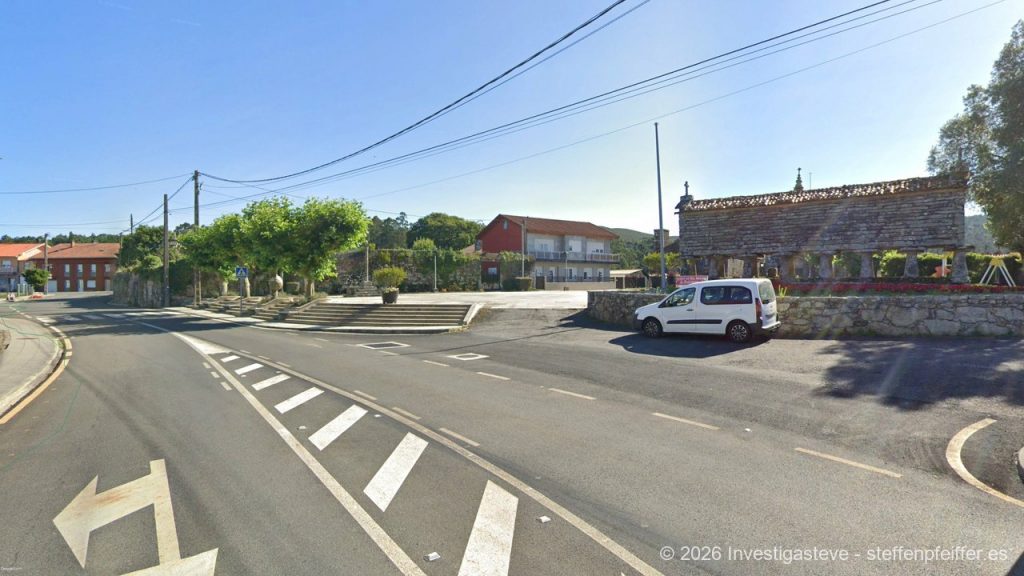
The Hórreos of Olveiroa: Admire the artfully restored corn granaries, which now serve as icons of Galician agricultural history and photo motifs.
Pazo de Cotón: An impressive noble estate from the 15th century, reflecting the defensiveness and wealth of old Galicia.
Insider Tips and Hidden Places
Off the official pilgrim path, Dumbría hides places of almost mystical silence that only reveal themselves to the patient explorer. One of these places is the narrow path of the “Ruta Fluvial,” which follows the winding course of the Rego do Hospital. While most pilgrims stay on the main road, you wander here through an emerald-green thicket of ferns and moss, where the light only sparsely penetrates the old alder crowns. It is a place where one would almost expect to encounter the “giants” or “castros” of local legends. If you walk in the early morning, when the mist still lies like cotton wool over the water, the auditory experience of the forest silence and the babbling river is of unprecedented intensity.
Another hidden treasure is the viewpoint directly above the Fervenza do Ézaro. While the waterfall itself is visited by many tourists, a small, barely marked trail leads to a rock platform from which the thunder of the water is not only heard but felt vibrating through the granite floor into your bones. Here, far from railings and signs, you are alone with the raw power of the elements. Rare mountain flowers thrive in the rock crevices, their scent mingling with the fine, salty spray that the wind carries up from the sea.
If you are interested in the history of the common people, you should visit Bar O Casteliño in the hamlet of Hospital in the evening hours. Here, it is not uncommon to sit with locals whose families have lived on this land for generations. If you ask them respectfully about the old battle at the bridge or the disappearance of the old Hospital ruins, you learn narratives that are not found in any history book. They are stories of tenacity, of survival in barren times, and of pride in a place that has guarded the gate to the “end of the world” for over eight hundred years. These conversations are the true gold of the Camino – they bring the stones to life and transform a hike into a genuine journey through time.
Moment of Reflection
In Dumbría, you stand on the threshold of decision, and while you sit on the granite steps of the old church or let your gaze wander over the horizon from the Mirador de Ézaro, the question inevitably arises: What does it actually mean to want to “arrive”? Dumbría is not an endpoint but a filter. For over 800 years, hospitaleros have welcomed people here who were at the end of their strength and given them the means to take the final step. The hospital of Esteban de Ulgoso was not a place of spectacle, but of “refectione” – restoration. Perhaps you notice here that you also need a form of restoration before you see the sea. The path has shaped you, ground you down, and perhaps also broken you a little. In the stillness of Dumbría, you are allowed to put these fragments back together.
The moment of choice – Fisterra or Muxía – is symbolic of the many forks in your life. Do you go where the sun dies, or where divine encouragement awaits? Dumbría does not take this decision away from you, but the place gives you the necessary grounding. The steadfastness of the Ponte Olveira, which defied the Napoleonic storms, reminds you that your inner storms will also pass. You are part of a chain of millions of people who have touched the same stone and asked the same question here. This realization is deeply healing: You are not alone in your search. When you leave Dumbría tomorrow, you do so not only with a new stamp in your passport, but with the clarity of a person who has understood that the path does not just contain the destination, but creates it step by step.
Camino of the Stars
This place lies on the Camino Fisterra y Muxía (Variant CFM 3b), on the stage from Olveiroa to Muxía. The sequence of places is:
Olveiroa → Hospital → Dumbría → Trasufre → Senande → Quintáns → Moraime → Os Muiños → Muxía
Did you feel the moment of great decision in Dumbría or experience your most spectacular sunset yet at the Mirador de Ézaro? Perhaps you had an encounter at the Albergue do Conco that changed your view of the path? Share your experiences, your photos of the roaring waterfall, or your very personal story of the oldest pilgrims’ Hospital with us. Your experiences make this guide truly valuable for all those who come after you. Write us a comment and tell us about your Dumbría!
About the Author