A First Glance – Introduction & Atmosphere
When you have left behind the gentle foothills of the Pamplona basin and the path leads you relentlessly higher into the flanks of the Sierra del Perdón, Zariquiegui appears like a silent promise of stone and constancy. Even from afar, you perceive the striking silhouette of the village, bracing itself defiantly against the often cloud-covered ridge of the mountain. It is that moment of the pilgrim journey when the urban hustle of the Navarrese capital finally gives way to the archaic tranquillity of the rural meseta. The air up here, at over 600 metres altitude, already carries the freshness of the nearby peaks, mingled with the pungent, dusty aroma of the grain fields that surround the place like a surging sea.
The auditory experience in Zariquiegui is shaped by a deep, almost sacred silence, broken only by the steady whistling of the wind. This wind is your constant companion; it rattles the heavy wooden gates of the old farmhouses and brings out the rhythmic clicking of your walking sticks on the ancient cobblestones. It is a sound that grounds you and simultaneously confronts you with the coming challenge. You feel the tactility of the place in the rough texture of the bright limestone from which almost every building is constructed – a material that stores the sun’s warmth of the day and releases it again in the cool evening hours as a gentle glow. When you place your hand on the walls of the church of San Andrés, you feel the furrows of centuries, polished smooth by countless pilgrim hands.
Psychologically, Zariquiegui marks a threshold. It is the last place of civilisation before the path rises steeply and relentlessly towards the Alto del Perdón. Here, anticipation of the spectacular view mingles with a quiet respect for the physical exertion. The smell of dry grass, mingled with a subtle note of incense often wafting from the open church door, creates an atmosphere of contemplation. Zariquiegui is not a place for the hasty; it is a stage of metamorphosis, where the walker matures into a true pilgrim, ready to shed their burdens on the summit. You stand here at the entrance to another world, where time is no longer measured in hours, but in steps and breaths.
What This Place Tells
Zariquiegui, whose name in Basque may mean “oak grove”, is a history book of Navarre made stone. Its roots reach deep into the Middle Ages, when the place gained importance as a strategic outpost of the kingdom and an important station for pilgrims to Santiago. Wandering through the Calle Mayor, the massive portals of the manor houses tell you of a time when this hamlet was a flourishing centre of rural life and religious fervour. Historical causality is palpable everywhere here: the houses were built so close together to provide protection against the harsh winds of the Sierra, but also to form a closed front against uninvited guests.
The architectural heart is undoubtedly the church of San Andrés, a Late Romanesque jewel from the 13th century. Its portal is a masterpiece of stonemasonry that makes you pause in awe. As you look at the capitals adorned with filigree leaf motifs and biblical scenes, you feel the spiritual depth that has shaped this place for over 800 years. It is reported that the stonemasons who worked here breathed the same aesthetic spirit as those who created the great cathedrals of Puente la Reina and Estella. The church served not only as a house of God, but also as a refuge. In its cool, thick walls, pilgrims found protection from the merciless midday sun and the sudden thunderstorms that are no rarity in the Sierra. The smell of old stone and damp earth inside the church is an olfactory anchor that connects you directly with the generations of faithful who knelt here before you.
Yet the narrative of Zariquiegui would be incomplete without the legend of the “Fuente de la Reniega”, located somewhat above the village. The story tells of a thirsty pilgrim to whom the devil offered water if he would only deny God and the Virgin Mary. The steadfastness of the pilgrim, who refused the offer and was finally rewarded with cool water by Saint James himself, is the moral foundation of this section. This legend lends the ascent an almost mystical dimension. It is not only about overcoming altitude metres, but about the psychological test of integrity. The historical presence of the Order of the Knights Hospitaller in this region further underscores the importance of Zariquiegui as a place of care. Here, not only bread was broken, but also the spirit was strengthened. Every crevice in the wall, where stonecrop and small ferns now grow, is a witness to this centuries-old service to humanity.
Addresses & tips in Zariquiegui
Camino Distances
In Zariquiegui, the final phase of the ascent to the legendary pass of the Sierra del Perdón begins. The distances are short, but the topographical intensity increases noticeably.
| Previous Place | Distance (km) | Next Place | Distance (km) |
|---|---|---|---|
| Guenduláin | ca. 3.1 km | Alto del Perdón | ca. 2.4 km |
Sleeping & Arriving
Arriving in Zariquiegui is a ritual act of letting go. As soon as you set down your backpack in front of the door of the “Albergue de Zariquiegui”, you feel the tension of the first hours of the day fall away from you. The hostel, often housed in a lovingly restored stone building, welcomes you with an atmosphere somewhere between monastic silence and family warmth. The tactile experience of freshly made beds in a room with visible oak beams and thick walls is a sensory luxury deeply appreciated after the dusty hike. It smells here of lavender and fresh laundry, a stark but pleasant contrast to the sharp smell of the Sierra air.
The auditory backdrop of arriving is shaped by the quiet conversations of fellow pilgrims in the small inner courtyard and the distant splashing of a fountain. It is a soothing murmuring that signals community without being intrusive. Psychologically, Zariquiegui offers the perfect environment for a first true reflection. Here you are far enough from Pamplona to have forgotten the world of appointments, but close enough to the summit to feel the spiritual dimension of the Way. The feeling of being safe within these ancient walls while the wind presses against the shutters outside creates a deep emotional security. You do not feel like a guest, but like part of an eternal chain of travellers.
A communal dinner is often offered in the hostel, completing the ritual character of arriving. The tactility of the heavy ceramic tableware and the clatter of cutlery are the rhythm of social metamorphosis. Here, strangers become companions within a few hours. When the sun sinks behind the Alto del Perdón and the first stars light up over Zariquiegui, a deep contentment sets in. The pilgrim knows: they have found a safe haven before continuing the “Way of the Stars” tomorrow. Staying overnight in Zariquiegui is thus far more than just a logistical necessity; it is a form of grounding that regenerates the body and clears the mind for the coming trials.
Eating & Drinking
The gastronomy in Zariquiegui is, like the village itself, honest, down-to-earth, and deeply rooted in the tradition of Navarre. Here, the cuisine of the earth reigns: everything that comes to the table seems to come directly from the surrounding fields and gardens. A culinary experience often begins with a hearty “Menú del Peregrino”, served in the local hostels or in the small bar “La Tiendica de Mertxe”. Think of a steaming bowl of “Lentejas con Chorizo” – the lentils are small and firm, the sausage gives off a spicy, deep red oil that exudes a tempting scent of paprika and garlic. The tactility of the warm bowl in your hands and the creaminess of the stew on your tongue are the best answer to the physical exhaustion of the day.
A must is the local bread, whose crust is as hard and resilient as the limestone of the region, while the interior preserves an almost unreal softness. When you dip it into the golden-yellow olive oil of the Valdizarbe region, you experience the pure essence of Navarre. Psychologically, this food acts like a remedy; it conveys a feeling of energy and vitality. Served with it is usually a robust red wine, often a Tempranillo or Garnacha, whose dark ruby colour captures the last rays of the evening sun in the glass. The first sip that runs down your throat is a tactile pleasure – cool, berry-like, and with a hint of oak, telling of the maturity in the nearby bodegas.
For dessert, the “Cuajada” must not be missed, a sheep’s milk pudding traditionally served with honey and walnuts. Its cool, creamy texture forms the perfect conclusion to a hearty meal. Eating in Zariquiegui means being part of an ecological and historical cycle. You taste the sun of Navarre, the rain of the Pyrenean foothills, and the care of the people who cultivate this land. The auditory finale of the meal is the laughter and the babble of languages of the pilgrims, sharing their experiences with each other. Here, eating becomes a sacrament of community that not only satiates the walker physically, but also enriches them emotionally and steels them for the upcoming ascent to the Mountain of Forgiveness.
Supplies & Logistics
Logistically, Zariquiegui is a functional oasis before the “dry stretch” of the ascent. Since the place is small, the infrastructure is compact and perfectly tailored to the needs of pilgrims preparing here for the decisive leap over the Sierra.
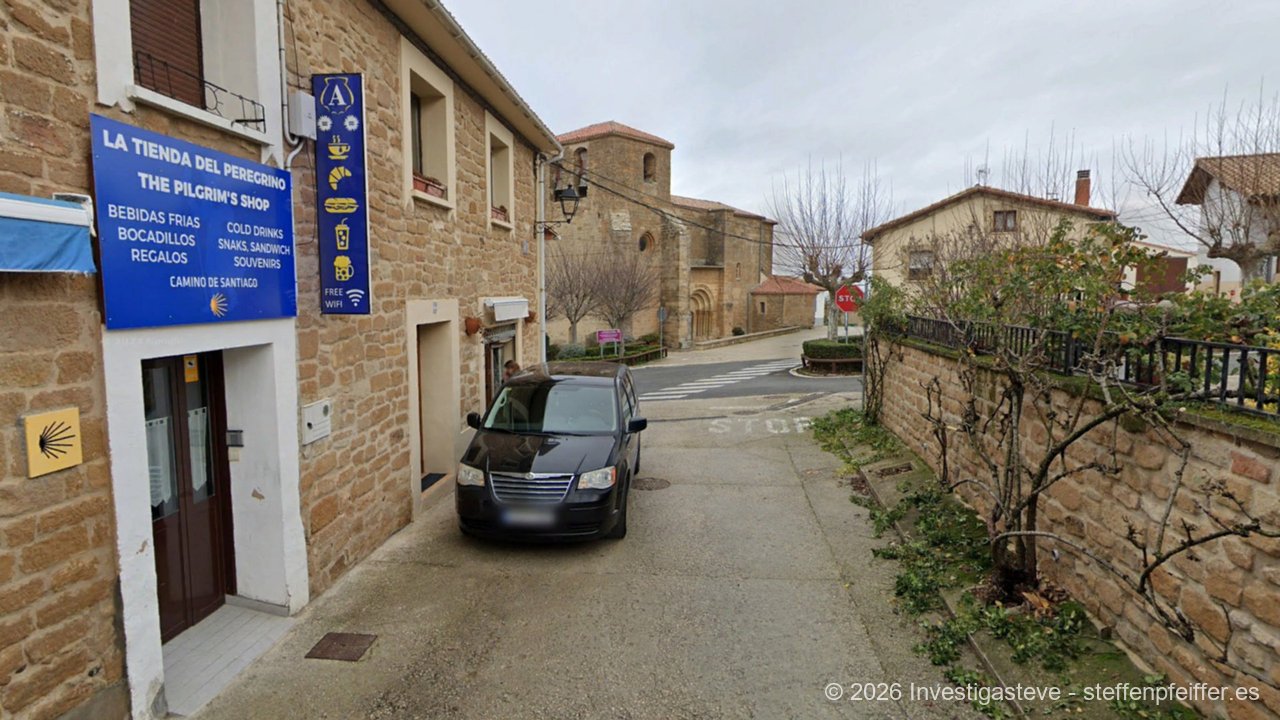
Shopping: In the “Tiendica de Mertxe”, you will find everything necessary for daily needs. It is particularly important to refill water supplies here, as there are hardly any reliable sources until Uterga. The tactility of the plump fruits and the scent of fresh cold cuts in this small shop are an invitation to careful preparation.
Gastronomy: Several hostels offer meals, and there are small bars for a quick “Café con Leche” or a hearty breakfast. The quality of the regional products is consistently high here.
Accommodation: With two well-run hostels and some private accommodations, Zariquiegui offers enough capacity for those wanting to escape the bustle of Pamplona. Reservations are still advisable in high season.
Public Facilities: There is no cash machine (the nearest is in Pamplona or Puente la Reina), so you should carry sufficient cash. A small basic medical service is available for emergencies, which is especially important for treating minor walking ailments before the ascent.
The logistical causality of Zariquiegui is clear: it is the last base station. You use the time here to check your equipment and loosen your joints. The good signage guides you safely through the narrow alleys, and the connection to regional bus services allows you to return quickly to Pamplona in an emergency. For the pilgrim, this means: in Zariquiegui, you find the necessary security to fully concentrate on the spiritual and physical ascent to the Alto del Perdón. Everything is within a few minutes’ walk, which supports regeneration and sharpens focus.
Don’t Miss
Take the time to view Zariquiegui not merely as a transit station. These points are the visual and tactile milestones of your visit:
– Church of San Andrés: Admire the Late Romanesque portal. Pay attention to the fine indentations in the stone, telling of the tools of the medieval masters. The coolness inside is a blessing.
– The noble houses with coats of arms: Walk consciously slowly through the streets and look for the stone family coats of arms above the portals. They are tactile proof of the village’s former wealth and pride.
– Fuente de la Reniega: Even though it is somewhat outside, it is the symbolic goal of every visit to Zariquiegui. Feel the coolness of the water on your wrists and remember the legend.
– The view back to the Pamplona basin: Go to the edge of the village towards the north. From there, you see the city in the distance – a visual proof of the path you have already mastered today.
– The old stone walls: Touch the rough dry-stone walls that border the fields. They are a tactile masterpiece of gravity and a symbol of peasant endurance.
Insider Tips & Hidden Places
Beyond the Calle Mayor, Zariquiegui conceals corners that only the attentive observer discovers. One of these places is the small path leading east behind the church of San Andrés. Here, away from the main route, you look over a wide valley that glows in an almost unnatural green in spring. The auditory experience here is characterised by the distant ringing of the church tower bells and the rustling of the wind in the tall grass. It is a place of absolute psychological freedom, where for a moment you feel like the only person on earth. The scent of wild thyme and fennel is so intense here it acts like an invisible hand clearing the mind and expanding the lungs.
Another insider tip is the visit to the small, private gardens on the edge of the village, should you receive a friendly glance from the owners. Often, old varieties of fruit grow there, no longer found in any supermarket. The tactility of a sun-warmed plum, directly from the tree, is a gustatory revelation. It smells here of damp earth and compost, an archaic scent that connects you directly with the farming tradition of Navarre. Here you become aware that Zariquiegui does not only live from tourism, but from the power of its soil. In some of these gardens stand ancient olive trees, whose silvery leaves tremble in the wind and whisper stories of wars and times of peace.
Those with an eye for detail will find tiny, embedded symbols in the walls of some barns – protective signs against evil or secret markings of the migrant workers. Touching these tactile traces of the past is like shaking hands with history. In a small courtyard not far from the hostel, there is also an old stone fountain whose water is so clear you can count the pebbles at the bottom. The psychological effect of such hidden oases is enormous: they give the pilgrim the feeling of having discovered a secret that belongs only to them. These hidden details are what transform Zariquiegui from a mere point on the map into a living, breathing part of your personal pilgrimage. They turn physical locomotion into an emotional journey of discovery that will resonate long after your return.
Moment of Reflection
When you sit in the evening on the stone wall opposite the church and watch the last swallows circling over the roofs of Zariquiegui, a deeper reflection imposes itself. Zariquiegui is the place of preparation. The upcoming ascent to the Alto del Perdón, the Mountain of Forgiveness, casts its shadow ahead. What have you gathered so far on your path? And what are you ready to symbolically leave behind up there? The psychological metamorphosis of the pilgrim in Zariquiegui consists of acknowledging one’s own strength while preserving humility before nature.
The permanence of the stone houses around you gives you the confidence that every change needs time and a firm foundation. In this silence, ask yourself: Where in my life am I rushing past what truly matters, just to arrive faster? Zariquiegui teaches you that time is not an enemy to be defeated, but a space to be filled with presence. The historical causality that made this place a refuge reminds us that we all need protection and community to grow. When you leave the village tomorrow, take not only the dust on your boots, but also the certainty that every ascent is the preparation for a new, clearer view of your life. In Zariquiegui begins the understanding that the path consists not of kilometres, but of the moments when the heart comes to rest.
Camino of the Stars
This place lies on the Camino Francés, on the stage from Pamplona to Puente la Reina. The sequence of places is:
Pamplona → Cizur Menor → Zariquiegui → Alto del Perdón → Uterga → Muruzábal → Obanos → Puente la Reina
Did you also experience that moment of pause in Zariquiegui before the path led you up to the Alto del Perdón? Perhaps you defeated the devil at the Fuente de la Reniega or had an encounter in the cool corridors of the hostel that changed your path? Share your experiences, your photos of the Romanesque capitals, or your very personal tips for the ascent with us. Your story makes the Camino alive and tangible for all who come after you!
About the Author