A First Glance – Introduction & Atmosphere
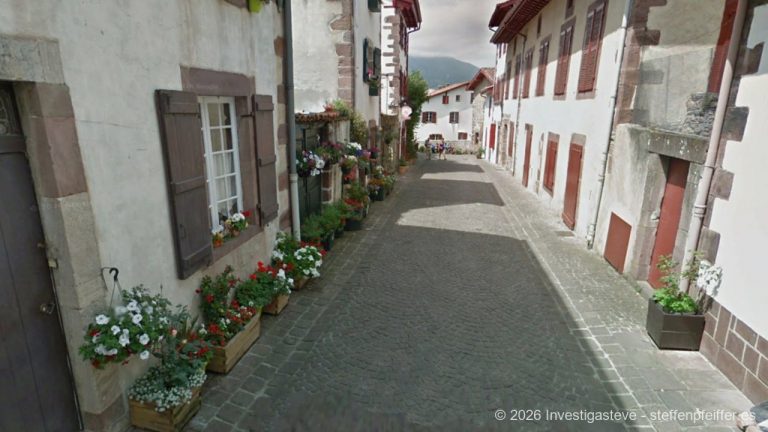
You set foot in Villatuerta – and immediately feel how the rhythm of your path changes. After leaving the dusty tracks of Lorca behind, the path gently descends into the valley of the river Iranzu. It is a moment of tactile and auditory metamorphosis: the dry crunching of the marl ground gives way to the hard, rhythmic clicking of your walking sticks on the historic cobblestones of the Calle Rúa Nueva. The air here in the valley is noticeably cooler and more humid than on the exposed high plain before. It smells of river mist, of green moss, and the earthy aroma of damp stone, which hangs like an invisible fog between the massive house fronts, especially in the early morning hours. Villatuerta does not greet you with the loud spectacle of a big city, but with the stoic serenity of a place that has seen travellers come and go since antiquity.
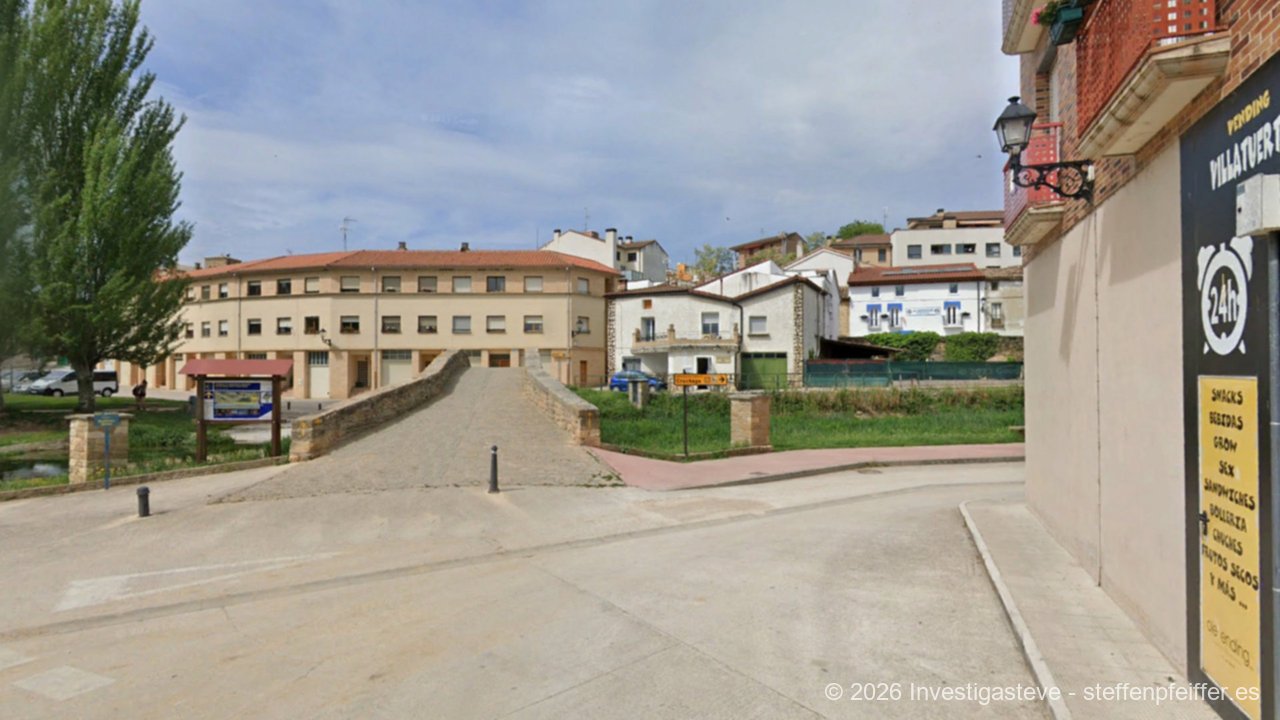
When you cross the bridge over the Iranzu, the world divides before your eyes. To the left rises the Barrio de Arriba, the historic old town, whose ochre-coloured sandstone façades absorb the golden light of the low-hanging sun and release it again in a warm aura. To the right stretches the modern Barrio de Abajo, a testament to the dynamic growth of recent decades. Acoustically, the soft, constant murmur of the river mingles here with the distant, almost melancholic ringing of the bells from the Iglesia de la Asunción, calling to the Angelus. Psychologically, arrival in Villatuerta is a moment of caesura. Only about four kilometres now separate you from the magnificent city of Estella, yet here, in the silence of this valley, you find an authenticity often lost in the shadow of the larger centres. It is a place of pause, where time does not flow, but seems to rest in the metre-thick walls of the old noble houses.
What This Place Tells
The history of Villatuerta is a narrative of detours, rivalries, and deep roots in the Roman past. Long before the name Villatuerta appeared in the chronicles of the Spanish crown, the Basque natives called this place “Arandibarren,” which means something like “the lower part beyond the water.” It was a purely geographical, almost humble designation for a settlement defined by the river Iranzu. The later renaming to Villatuerta by the Castilian crown was a deliberate act of Romanisation, an attempt to bury Basque identity under a layer of Castilian administration. Yet the deepest roots of the place lie even further back: in the foundations of Villatuerta, Roman tombstones have been found, such as that of the young Octavia, daughter of Pudente, who was buried here two thousand years ago at the age of only 30. This historical causality – from Roman province via Basque tribal land to modern industrial site – lends the place a gravity you feel with every step.
A central and almost amusing chapter of local history is the lifelong rivalry with the neighbouring village of Arellano over the birthplace of San Veremundo. The saint, who served as abbot of the monastery of Irache in the 11th century and is considered the “pilgrim manager” of the Middle Ages, is the spiritual figurehead of the region. He it was who opened the monastery’s larders for the hungry and organised the Camino in Navarre. The dispute over his origins is now conducted in a civilised, almost cheerful manner: the saint’s relics change hands between Villatuerta and Arellano every five years. When you enter the Iglesia de la Asunción and see the urn above the altar, you know the saint is currently “at home.” This tradition is more than just folklore; it is a tactile link between medieval piety and today’s community.
Yet Villatuerta also tells a story of economic brutality and strategic calculation. Before 1090, the Camino de Santiago ran through the flat plain of Zarapuz, a little north of here. When King Sancho Ramírez decided to found and economically strengthen the city of Estella, he ordered a radical diversion of the pilgrim stream. Villatuerta lost its central role as a place of passage overnight, but thereby gained another quality: that of a place that has preserved its peace. The destruction of the Castilian-Navarrese wars in the 14th century, in which the church was set on fire, left scars in the stone that you can still see on the exterior walls today. The Gothic reconstruction over the Romanesque ruins is an architectural metamorphosis reflecting the survival will of the people here. Villatuerta is thus a palimpsest of history, in which every epoch – from the Roman Octavia to the modern plastics industry – has left its distinctive mark.
Addresses & tips in Villatuerta
| Accommodation | 7 |
| Restaurants | 1 |
| Bars & Cafés | 4 |
| Shopping | 3 |
| Health | 3 |
| Sights | 3 |
| Services | 4 |
Show all 25
Camino Distances
After about five kilometres through the gentle hill country of the Yerri Valley, the gate to the valley of the Iranzu opens here.
Sleeping & Arriving
Arriving in Villatuerta is marked by an almost intimate warmth, standing in stark contrast to the often anonymous bustle of the large stage destinations. When you loosen your backpack straps and settle down on the Plaza Iglesia, you feel the psychological relief this place offers. The decision to stay here and postpone the last four kilometres to Estella until the next morning rewards you with a deep calm. In the town’s hostels, such as Etxeurdina or Casa Mágica, arriving becomes a ritual act of community. It smells of homemade vegetarian stew and fresh lavender cleaner, an olfactory signature that signals immediate relaxation. Tactilely, you perceive the texture of the old stone houses – the coolness of the massive walls protects you from the burning afternoon sun of Navarre.
The Casa Mágica in particular has earned a reputation among pilgrims as a place of “magical encounter.” Here, dinner is not simply served; it is celebrated. The communal vegetarian meal at long wooden tables fosters an exchange that goes beyond the usual questions about blisters and kilometres. You hear the polyglot murmuring, the clatter of wooden spoons on ceramic, and the laughter echoing through the high, beamed rooms of the 17th century. It is a space of social healing, where physical exhaustion transforms into mental clarity. Psychologically, this stay acts as a buffer before the urban intensity of Estella; you gather strength once more in rural security.
For those preferring a more modern and family-oriented feel, the Albergue Etxeurdina offers accommodation often rated as one of the best on the entire Camino Francés. The owners run the house with a dedication that is tactilely perceptible in every perfectly folded blanket and acoustically in every friendly “Buen Camino.” Here, arriving is a personal welcome. You feel the smooth wood of the bunk beds and the cleanliness of the modern sanitary facilities, an important tactile comfort for the battered pilgrim body. The silence of the night in Villatuerta is interrupted only by the soft rustling of the Iranzu, an acoustic lullaby ensuring deep regeneration.
The village has grown significantly in recent years, yet the atmosphere in the hostels has preserved its original warmth. When you step outside again in the evening and see the illuminated façade of the church while the wind carries the scents of the nearby olive groves, you grasp the causality of your journey. You are here not just to devour kilometres, but to find such moments of silence. Arriving in Villatuerta is an arrival in the here and now, a conscious choice for the quality of pause over the quantity of the path. In the twilight silence of the old alleys, you feel part of a community that has sought the same comfort in this place for 1000 years.
Eating & Drinking
The culinary world of Villatuerta is an honest bow to the Tierra Estella, a region known for its fertile soils and uncompromising quality. When you sit down at the Asador Gori Gori, you are greeted by the archaic scent of burning wood and grilled meat. The tactile experience of a perfectly prepared “Chuleta de vaca,” whose crust cracks under the knife while the interior remains tender and juicy, is a sensory revelation after days of sparse pilgrim fare. The smell of roasted Pimientos del Piquillo mingles with the heavy, fruity note of a robust red wine from Navarre. Every bite tells of the historical causality between the hard work of the farmers in the surrounding fields and the hospitable culture of the taverns.
In the Casa Mágica, a different but equally intense cuisine is cultivated. The vegetarian communal meals are legendary and offer a gustatory variety of regional vegetables, pulses, and fresh herbs. It smells of cumin, coriander, and the sweetish aroma of braised onions. Tactilely, you feel the warmth of the plate in your hands as you sample the creative compositions. This form of nutrition has a psychologically purifying and energising effect, a welcome change from the often meat-heavy menus along the way. It is often served with homemade bread that smells of yeast and the region’s grain – a simple but deeply satisfying pleasure.
For a quick snack in the morning or a short rest in between, Pastelería Marta is the first address. Here it smells temptingly of freshly baked bread, sugary ensaimadas, and strong espresso. It is an acoustic experience to watch the bustling activity of the locals drinking their first coffee of the day while you pack your bocadillo for the road to Estella. The coolness of the shop and the rustling of the paper bags are tactile companions of your departure. Eating and drinking in Villatuerta means tasting the essence of Navarre – from the rustic power of the grill to the fine sweetness of craftsmanship. It is a sustenance that strengthens the body and warms the soul, a perfect preparation for the coming kilometres.
Supplies & Logistics
Logistically, Villatuerta is a small but highly efficient hub marking the transition from rural seclusion to the urban centre of Estella. The place is so compactly designed that all important facilities are within a few minutes’ walk, which is an invaluable relief for aching legs. You feel the historical causality of a settlement that grew organically along the Iranzu; the paths are logical, orientation is easy. The proximity to Estella also offers the security of being able to access larger medical or technical services in an emergency, while enjoying the peace of a village in Villatuerta itself.
The supply of medical goods is exemplary through the Farmacia María del Puy Araiz Martínez. The pharmacist has decades of experience in treating pilgrim ailments; she knows exactly how to treat a stubborn blister or cool an overused tendon. It is a place of tactile care – you feel the competence in the advice and the relief through the right products. Psychologically, this presence on site gives a deep sense of security, especially before the next stage section. Villatuerta’s logistical strength lies in its function as a “technical outpost,” where you can equip your body and equipment.
Shopping: Small local shops in the old town offer everything necessary for daily provisions, from fresh fruit to regional cheese. Larger supermarkets are only found again in Estella, 4 km away.
Gastronomy: With the Asador Gori Gori and the specialised offerings in the hostels, catering is of high quality, though limited in the number of establishments.
Accommodation: Two first-class hostels (Etxeurdina and Casa Mágica) offer approx. 80–120 beds; advance reservation is advisable in high season due to the popularity of these houses.
Public Facilities: The town hall (Ayuntamiento) offers pilgrim stamps and basic information; for ATMs or comprehensive medical centres, one must go to Estella.
The logistical significance of Villatuerta lies in its role as a decelerator. Here you sort out your finances, replenish supplies, and mentally prepare for the cultural richness of Estella. The historical metamorphosis from medieval farming village to modern dormitory and industrial location has improved logistics without destroying the charm of the old core. Those who leave Villatuerta logistically well-prepared do so with a feeling of completeness – physically provided for and psychologically strengthened for the path that continues westwards behind the next hill range. It is this mix of rural tranquillity and professional service that makes Villatuerta one of the cleverest stops on the Camino Francés.
Don’t Miss
Villatuerta is rich in architectural and spiritual treasures that you should explore with all your senses:
– Iglesia de la Asunción: Admire the Gothic portal with the angels in the keystones and the robust Romanesque tower that withstood the destruction of 1378.
– San Veremundo Monument: The statue on the Plaza Iglesia commemorates the patron saint of the Camino de Santiago in Navarre and is a central photo point.
– 15th-century murals: Inside the church, you will find depictions of the Archangel Michael and Saint Catherine – silent witnesses of medieval painting.
– Ermita de San Román: The remains of this old chapel outside the village offer an atmospheric setting amidst olive groves.
Insider Tips & Hidden Places
A true insider tip in Villatuerta is the visit to the ruins of the Ermita de San Miguel, dating back to the 10th century. This place lies slightly off the main route and is ignored by most pilgrims hurrying straight to Estella. The chapel is one of the oldest monuments in Navarre and radiates an almost eerie, mystical power. It smells here of dry grass and old, weathered stone. Standing there, you feel the archaic silence, broken only by the whistling of the wind in the crevices of the ruins. The prehistoric motifs of the reliefs, now housed in the museum of Pamplona, had their origin here. It is a place of total psychological immersion in the time around the year 1000.
Another hidden treasure is the Paseo Iranzu, a riverside path leading you along the river, away from the roads. While the official route often leads over hard asphalt, this path offers a tactile boon for your feet: soft forest floor and cool grass. The acoustic experience of the babbling water and the distant chirping of woodland birds acts like a natural meditation. Here you find benches in the shade of old trees, ideal for a final rest before the “assault” on Estella. It is a place where you can breathe the nature of the valley in its purest form.
For the hot summer months, there is a very special tip: the swimming pool of Luquin. It lies about two kilometres north of Villatuerta, and the short detour is often celebrated in pilgrim reports as the ultimate “oasis.” The tactile feeling of ice-cold chlorinated water on sunburned skin is a form of redemption after a long stage. The attached café offers cold drinks and a relaxed atmosphere that makes you forget for a moment that you are a pilgrim. It is a break from the routine that works wonders psychologically.
Finally, you should visit the weekly market on Friday morning. It is not a tourist event, but an authentic piece of Navarrese village life. You hear the lively haggling of the market women, smell the scent of fresh cheese and ripe tomatoes, and feel the energy of a community gathering here. Mingling with the people, you experience a warmth that needs no words. Buying a piece of local cheese directly from the producer is a tactile and gustatory souvenir that will accompany you for kilometres to come. These small, hidden moments make Villatuerta a place you do not just pass through, but experience.
Moment of Reflection
In Villatuerta, your journey reaches a point of subtle decision. The proximity to Estella tempts you to view the place as a mere transit point, yet here lies the psychological test: Can you resist the temptation of the big city to choose the quality of silence? The historical diversion of the path in 1090 reminds you that ways are often dictated by external forces, but the decision of where to linger is yours alone. In the coolness of the Iglesia de la Asunción, you are allowed to ask yourself whether you follow the rhythm of the masses or trust your own inner compass.
This place stays in memory because it teaches you that the “in-between” is often more valuable than the goal. The rivalry over San Veremundo shows us that home and identity are often a matter of perspective. Take this moment of reflection on the riverbank of the Iranzu: What have you truly gained on the last kilometres, and what can you finally let go here in the silence of the valley? The tactile and spiritual grounding in Villatuerta is a lesson in humility and frugality that prepares you for the coming, more magnificent stages.
Camino of the Stars
This place lies on the Camino Francés, on the stage from Puente la Reina to Estella. The sequence of places is:
Puente la Reina → Mañeru → Cirauqui → Lorca → Villatuerta → Estella
Did you experience the vegetarian communal dinner at the Casa Mágica as the spiritual highlight of your stage, or was it the mystical silence at the ruins of San Miguel that moved you most? Share your very personal moments and photos from Villatuerta with us. Every story helps keep this “quiet rural secret” of Navarre alive for future pilgrims. We look forward to hearing from your path through the Iranzu Valley!
About the Author