A First Glance – Introduction & Atmosphere
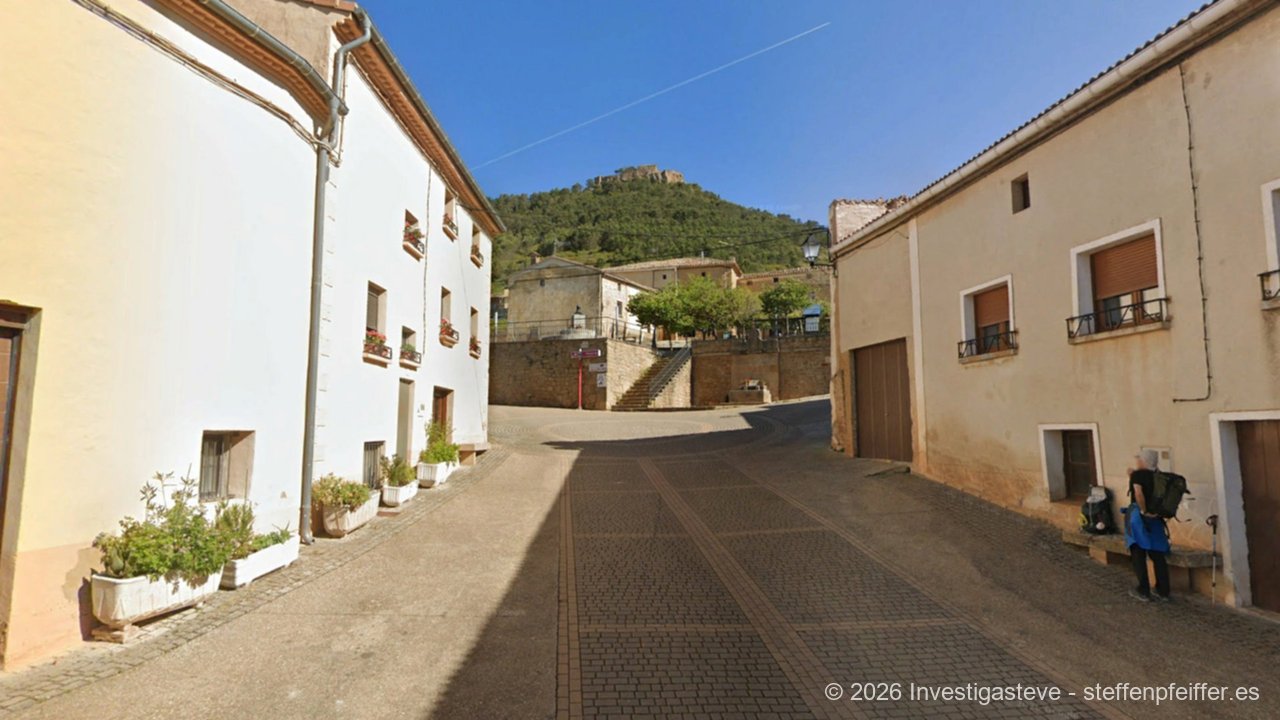
When you leave the shady forest of Irache behind and tread the flat, sun-flooded paths near Azqueta, a picture begins to form on the horizon that will shape your entire perception of this day. Villamayor de Monjardín does not appear simply as another village by the wayside; it towers like an impregnable bastion on a rugged cone, crowned by the ruins of a fortress that has watched over the vast plains of Navarre for over a millennium. The ascent to this place is a tactile experience of a special kind. You feel the resistance of the rising terrain in your calves, while the ground beneath your boots changes from soft forest humus to hard, calcareous stone. The air up here is often clearer, more cutting than in the valley, and it carries the pungent, almost metallic smell of dry rock and the first hint of the nearby vineyards.
Arriving in Villamayor, you are greeted by an atmosphere imbued with a deep, almost archaic tranquillity. It is a place that eludes the fleeting eye if one is not willing to immerse oneself in its silence. Acoustically, the wind dominates here, constantly brushing around the corners of the massive stone houses and singing a soft, plaintive song in the tall cypresses. The rhythmic clicking of your walking sticks echoes off the ochre-coloured façades and becomes the metronome of your entry into a world where time has a completely different consistency. You feel the psychological relief that comes with reaching this height – the view widens, the confinement of the previous wooded sections falls away from you, and for a moment you feel like a guardian of time, raised high above the worries of everyday life. Villamayor is not a place of passage, but a place of elevation, both physically and mentally.
What This Place Tells
The stones of Villamayor de Monjardín whisper stories of blood, honour, and divine aid. Historically, this place was a strategic key position during the Reconquista. In 908, the Navarrese king Sancho Garcés I succeeded in conquering the Moorish fortress on the summit of Monjardín, which was then considered impregnable. This historical causality is still anchored in the collective memory of the place today. The conquest was more than a military victory; it was a symbol of the strengthening of the Christian north against the rule of the Banu Qasi. You can almost imagine the clashing of swords and the neighing of horses when you look up to the ruins of the Castillo de San Esteban de Deyo. This fortress is the origin of everything that makes Villamayor what it is today – it gave the place its protection and its pride.
Another chapter of the town’s history is written in the church of San Andrés. Here you encounter a Romanesque architecture that unfolds enormous spiritual power in its simplicity. The church houses one of the most precious treasures of the Camino: a Romanesque processional cross of gilded silver, a masterpiece of medieval goldsmithing. It tells of the deep piety of the pilgrims who came here over the centuries to seek divine protection for the onward, often dangerous, journey. The thick walls of the church have withstood sieges and wars and radiate a tactile permanence that grounds the pilgrim today just as it did then. It is a metamorphosis of architecture – from the purely functional to the transcendent space.
The history of Villamayor is also inseparable from water. The “Fuente de los Moros”, a Moorish fountain from the 13th century, tells of the vital logistics in a region often poor in water. This cistern is an architectural jewel, sunk deep into the ground to preserve the coolness and purity of the precious liquid. Descending the steps, you feel the sudden drop in temperature and smell the damp moss thriving in the crevices of the old masonry. It is an encounter with a long-lost engineering skill that shows how deeply the roots of provision run in this place. Villamayor de Monjardín is thus a palimpsest of history – every epoch has left its mark, from the warlike Middle Ages through the Baroque flowering to the present-day renaissance as a place of power for pilgrims.
Addresses & tips in Villamayor de Monjardín
| Accommodation | 6 |
| Restaurants | 2 |
| Health | 1 |
| Sights | 2 |
| Services | 2 |
Show all 13
Camino Distances
Villamayor de Monjardín is a crucial point on the stage between Estella and Los Arcos, often the last place with significant infrastructure before the long, lonely stretch through the fields.
Sleeping & Arriving
Arriving in Villamayor de Monjardín is marked by a feeling of security that you only find in places wholly dedicated to serving the walker. As you walk up the steep main street and your lungs greedily suck in the thinner air, the village opens up like a protective harbour. The Albergue de Villamayor de Monjardín, often lovingly run by Christian brotherhoods or international hospitaleros, is a place of genuine encounter. It smells here of freshly brewed coffee and the distinctive aroma of lavender cleaning products that permeates the dormitories. The tactile experience of placing the heavy backpack in a corner and putting your burning feet on the cool tiled floor is a form of redemption that you only truly appreciate after a hard climb.
Psychologically, Villamayor marks a turning point. Behind you lies the green, wooded hill country around Estella; before you spreads the wide, often merciless plain of Navarre. In the hostel, you feel this ambivalence – a mixture of pride in what you have achieved and respect for the coming emptiness. The conversations in the evening are often quieter, more intense. You hear the muted murmuring of pilgrims in the kitchen, the clatter of cutlery, and the distant ringing of church bells that set the rhythm of village life. It is a space of silence where your own exhaustion becomes a form of meditation. The massive walls of the old stone houses, in which the hostels are often housed, offer a psychological bulwark against the inclemencies of nature.
Those who opt for an overnight stay in the private guesthouses or smaller albergues often experience an even more family-like atmosphere. In the Casa de la Fuente or similar accommodations, you feel the warm heart of Navarrese hospitality. You lie in your bed, feel the heaviness of your limbs, and hear the wind whistling around the roof beams – an acoustic contrast to the inner peace slowly spreading. Villamayor offers you the chance to break away from the hustle of mass pilgrimage. Here you are not an anonymous passer-through, but a guest who helps write the history of the place. The historical continuity of hospitality becomes physically tangible here as you walk down the worn steps to the dining hall.
Especially at dusk, the place unfolds its full magic. When the sun sinks behind the distant mountains and the ruins of the Castillo are bathed in a deep violet, an almost monastic silence descends. Arriving then becomes a pause. You feel the causality between effort and reward. The view from the window of your accommodation down to the lights of the valley below reminds you of how far you have come today – not only in kilometres, but also in your inner development. Villamayor gives you a sleep as deep as the roots of the olive trees that line the slope. It is a preparation of the mind for the vastness of the next day.
Eating & Drinking
The cuisine in Villamayor de Monjardín is a bow to the fertility of the earth and the power of wine. You are here in one of the most renowned wine-growing regions of Navarre, and you feel it with every breath. The smell of fermenting must during the harvest season or the heavy aroma of oak barrels emanating from the cellars of the Bodegas Castillo de Monjardín is ubiquitous. When you taste a glass of the local red wine, you taste the minerality of the soil and the intensity of the sun. The tannins on your tongue are like a liquid chronicle of the landscape – tannic, strong, and full of character. A dinner here without the accompanying wine would be like a Camino without a scallop shell.
In the small taverns and hostel kitchens, down-to-earth cooking prevails. A classic is the “Menestra de Verduras”, a stew of fresh seasonal vegetables so rich it fills every fibre of your body with energy. The texture of the crunchy vegetables, combined with local olive oil and a hint of garlic, is a tactile feast for the palate. Served alongside is often crusty country bread, so firm you can almost feel the farmers’ labour in it. It smells of freshly ground grain and the fire of the oven. This food is not mere calorie intake; it is a grounding, a connection to the rhythm of nature, which still sets the pace up here.
Those with a sweet tooth should try the regional “Leche Frita” – fried milk dishes sprinkled with cinnamon and sugar. The warmth of this dessert, combined with the cool evening air on the terrace, creates a feeling of well-being that penetrates deep into the psychological centre of contentment. You hear the hiss of the coffee machine in the bar and the laughter of the locals enjoying their “Pacharán” – the typical Navarrese sloe liqueur. The smell of aniseed and wild berries mingles with the scent of the wine to form an olfactory portrait of Villamayor. Eating and drinking here means honouring the causality between hard work in the vineyard and enjoyment at the table. It is honest gastronomy that dispenses with frills and instead focuses on depth.
Supplies & Logistics
Although Villamayor de Monjardín is small, it offers a logistical efficiency precisely tailored to the needs of the modern pilgrim. Everything is geared towards equipping you for the upcoming, almost 13-kilometre stretch to Los Arcos, where there is little shade and no water. Provisioning here is therefore an act of foresighted care. You feel the psychological relief when you refill your water supply at the fountain and know you are self-sufficient for the next hours. The place functions as the last bastion of civilisation before the solitude of the fields begins.
The infrastructure is compact and concentrated along the main axis of the village. Shopping here, you quickly notice that the local traders know exactly what is missing from a pilgrim’s backpack. It is a tactile logistics – you check the firmness of the bananas, the weight of the water bottles, and the quality of the cheese. The paths are short, which is an invaluable relief for battered feet. Everything is within walking distance in a few minutes, from the small shop to the postbox for the last postcard before the Rioja. The logistical clarity of the place contributes significantly to mental relaxation.
Shopping: A small convenience store (Tienda) supplies you with fruit, nuts, water, and regional cheese – essential for the stage to Los Arcos.
Gastronomy: There are several bars and hostel restaurants offering pilgrim menus; the wine from the local bodega in particular is a must.
Accommodation: The choice ranges from the community-oriented church hostel to comfortable private rooms in country houses.
Public Facilities: Basic medical care is provided through local consultation hours; ATMs or pharmacies, however, are only found again in Estella or Los Arcos.
The logistical significance of Villamayor lies above all in its function as a “checkpoint”. Before you plunge into the vastness of Navarre, you can organise everything once more here. Your equipment, your provisions, and above all your thoughts. The tranquillity of the place allows you to make these preparations without haste. Those who leave Villamayor logistically well-prepared enter the next section with a feeling of security. It is the historical causality of a former fortress: here you are equipped to face the open field.
Don’t Miss
In Villamayor de Monjardín, there are places that will sharpen your perception of history and nature:
– Castillo de San Esteban de Deyo: The ascent to the ruins is strenuous, but the panoramic view over all of central Navarre is the ultimate reward for every pilgrim.
– Iglesia de San Andrés: Admire the Romanesque silver cross; its attention to detail is a testament to medieval devotion that will deeply impress you.
– Fuente de los Moros: Descend the steps to the fountain and feel the coolness and silence of this Moorish structure – a tactile moment of history.
– Bodegas Castillo de Monjardín: A wine tasting here is not only pleasure, but a lesson in the geography and culture of the region.
– The viewpoints on the town wall: Find a spot for the sunset; the colours of the sky over the wine fields are a visual spectacle you will never forget.
Insider Tips & Hidden Places
A true insider tip for Villamayor de Monjardín is the visit to the small chapel located somewhat off the main path at the foot of the castle hill. While most pilgrims rush straight to the summit, this quiet place offers an almost intimate atmosphere of devotion. Here it smells of beeswax and dry wood, and the acoustics are so fine that even your breath becomes part of the silence. It is a place of psychological centring, perfect for taking stock before the long march of the next day. Here you feel the spiritual causality of the Camino most strongly – far from the tourist streams.
Another hidden treasure is the narrow path leading behind the church of San Andrés into the old vineyard terraces. These terraces were built by hand over centuries, and when you run your hands over the rough dry-stone walls, you feel the effort and the tactile connection of the people with their land. From here, you have a view of the village that shows it in its entire medieval compactness. The smell of wild thyme and rosemary growing among the vines is particularly intense here. It is a place of total sensory immersion, far from the official route, where you can breathe the soul of Navarre.
For the evening hours, a short walk to the village cemetery is recommended. Sounds unusual, but the cemeteries in this region are often places of incredible aesthetic tranquillity and offer wonderful views. Here you can read the inscriptions on the old stones and contemplate the finitude and at the same time the permanence of life. The cypresses sway gently in the wind, and the tactile feeling of the warm sandstone of the boundary wall under your hands gives you a feeling of grounding. It is a place for the ## Moment of Reflection, reminding you that you are part of a chain of walkers who have passed through over the centuries.
Finally, mention should be made of the small “pilgrim garden” that some of the private hostels maintain. Often there are herbs there that you are allowed to pick for your own tea. Rubbing a fresh mint leaf between your fingers, releasing the essential oils, and then enjoying the tea is a small but highly effective act of self-care. These small gestures of nature are the true secrets of Villamayor. They require no great planning, only an open eye and the willingness to leave the path for a moment to find the essential.
Moment of Reflection
When you sit on one of the walls of Villamayor in the evening and watch the shadows of the castle ruins creep ever longer over the wine fields, it is a moment of deep psychological reflection. You stand on a threshold. Behind you lie the first strenuous days of the journey, the physical adaptation of your body to the load and the rhythm. Up here, above the valley, you often become aware for the first time of the magnitude of your undertaking. The historical metamorphosis of the fortress – from a place of violence to a place of outlook – may reflect your own development: your initial tension gives way to a new clarity.
In this silence, ask yourself: What burdens have I truly carried up the mountain today, and which of them can I leave behind up here? The castle ruin reminds you that everything is transient, except the stone and the spirit that shaped it. In the tactile tranquillity of Villamayor, you are allowed to learn that strength does not always come from the urge forward, but often from pausing at a high point. The vastness of the horizon corresponds to the vastness of your thoughts. Take this feeling of elevation with you into your dreams, for tomorrow the path will lead you back into the plain, where you will need the strength of this place in every step.
Camino of the Stars
This place lies on the Camino Francés, on the stage from Estella to Los Arcos. The sequence of places is:
Estella → Ayegui → Irache → Azqueta → Villamayor de Monjardín → Los Arcos
Did you also find the steep ascent to the Castillo de Monjardín so liberating, or was it the cool silence of the Moorish Fuente de los Moros that impressed you most? Share your experiences, your photos, and your very personal moments of peace in Villamayor de Monjardín with us. Every story helps make the magic of this place tangible for future pilgrims. We look forward to your contribution and your perspective from the stone crown of Navarre!
About the Author