A First Glance – Introduction & Atmosphere
When the first rays of sunlight creep over the fertile plain of the Rioja Alta and dissolve the haze over the endless fields, a silhouette appears on the horizon that captivates the pilgrim from kilometers away. Santo Domingo de la Calzada does not announce itself shyly; the city dominates the landscape with its freestanding bell tower, rising like a proud exclamation mark into the azure Spanish sky. Arriving in this city is an experience for all the senses. The ground beneath the feet changes from the dusty field paths of the preceding kilometers to the firm, history-laden cobblestones of the old town. This tactile signal immediately transfers to the body: the tension of the open highway gives way to an urban security that is nevertheless profoundly sacred. You feel the vibration of the ground when the heavy bells of the cathedral call to mass, an acoustic tremor that reaches into the pit of the stomach.
The air in Santo Domingo de la Calzada is saturated with a peculiar mixture of scents. There is the tart aroma of incense streaming from the portals of the churches, mingled with the sweetish scent of freshly baked “Ahorcaditos,” the traditional shortbread of the city. Yet those who enter the cathedral are greeted by an olfactory surprise unparalleled in the world: a sharp, animal whiff of poultry and hay lies in the cool air. It comes from the legendary hen and rooster living in a magnificent late Gothic chicken coop high up in the nave. Psychologically, this place triggers an immediate metamorphosis. The pilgrim is no longer just a walker; they become part of a 1000-year-old legend. The feeling of being in a “city of the way” – founded by a man who dedicated his life to building bridges and roads for pilgrims – lends every step a deeper meaning. You touch the rough, cool walls of the old hostels and feel the historical causality: without this place and its founder, the modern Camino in this form would be unthinkable.
In the evening hours, when the light bathes the facades in a warm, almost glowing orange, the city transforms into an acoustic mosaic. The distant clatter of dishes from the restaurants on the Plaza Mayor mingles with the rhythmic click of the hiking poles of late arrivals. You hear the cooing of pigeons on the old city walls and the reverent whispering of visitors in the crypt of the saint. The psychological weight of the past kilometers often falls away here, replaced by a solemn melancholy and anticipation for the coming stages towards Castile. Santo Domingo de la Calzada is a city that not only houses the pilgrim but envelops them in a mantle of history, myth, and deep human care.
What This Place Tells
The history of Santo Domingo de la Calzada is the story of a man and his unshakeable will to serve his neighbor. Domingo García, born in the 11th century, was no warrior or powerful nobleman, but an engineer of God. After being rejected by the monasteries of Valvanera and San Millán de la Cogolla, he decided on a life as a hermit on the banks of the river Oja. Yet his solitude was not an escape, but the beginning of a great vision. He saw the plight of the pilgrims who had to struggle through dense forests and over raging rivers. With his own hands, he began to lay a road (Calzada) and build a massive stone bridge. He erected a Hospital and a chapel – the germ cell of today’s city. Those who walk through the streets today encounter this historical causality on every corner. The city was built around the path; it exists through and for the pilgrim.
The heart of the city’s history, however, is the famous miracle of the rooster, a legend that has been told throughout Europe since the 14th century. It is the story of a young pilgrim who was wrongly accused of theft and hanged, yet survived the gallows through the intervention of Saint Domingo. When his parents reported this to the judge while he was dining on roasted chickens, he scoffed: “Your son is as alive as this chicken on my plate.” At that very moment, the hen and the rooster on the serving platter began to grow feathers and crow loudly. This moment of divine justice is so present in the city’s collective memory that the crowing of the rooster in the cathedral is considered an acoustic testimony to this miracle. When you see the birds inside the church, you touch psychologically the boundary between the possible and the impossible. It is a tactile miracle – living beings amidst dead stone.
Architecturally, Santo Domingo is a stage of contrasts. The city wall, once built to protect against conflicts between the kingdoms of Castile and Navarre, encloses a center that unites all styles from Romanesque to Baroque. Particularly impressive is the freestanding tower of the cathedral, which had to be rebuilt several times due to uneven ground and is now considered the “most beautiful daughter of the Giralda.” The smell of old stone, which has defied wind and weather for centuries, mingles here with the metallic coolness of the grilles. Every epoch has left its mark: the magnificent tombs of nobles, the simple stones of the first Calzada, and the Baroque splendor of the altarpieces. Santo Domingo tells of the metamorphosis of an inhospitable marshland into a gleaming metropolis of faith. It is the story of civilization arising from compassion.
Addresses & tips in Santo Domingo de la Calzada
| Accommodation | 11 |
| Restaurants | 7 |
| Bars & Cafés | 4 |
| Shopping | 3 |
| Health | 1 |
| Sights | 4 |
| Services | 2 |
Show all 32
Show all 11
Camino Distances
The stage to Santo Domingo de la Calzada leads through the heart of the Rioja Alta. The paths are well-developed, but due to the open landscape and often intense solar radiation, they demand good fitness and sufficient sun protection.
Sleeping & Arriving
Arriving in Santo Domingo de la Calzada is for many pilgrims the epitome of reward. After passing through the suburbs, the path leads directly into the medieval heart of the city. The moment you put down your backpack in front of one of the numerous hostels is marked by a physical redemption. You feel the easing of pressure on your shoulders and the pleasant coolness of the thick stone walls that keep out the heat of the day. Particularly noteworthy is the Parador hotel, housed in the former pilgrim Hospital directly opposite the cathedral. Those who cross its threshold enter a space that has been dedicated to hospitality for almost a millennium. The smell of floor wax, old wood, and fresh laundry creates an atmosphere of exclusive protection. Tactilely, it is the heavy curtains and the smooth stone floors that complete the transition from wanderer to guest.
Yet the pilgrim hostels of the city, such as the famous Albergue de Peregrinos in the heart of the old town, also offer a deep experience of community. You hear the babble of languages from all over the world, the clatter of dishes in the communal kitchen, and the rustling of sleeping bags. Psychologically, this is a place of consolidation. Experiences are exchanged, blisters are treated, and new friendships are formed. Arrival is ritually sealed by visiting the cathedral and hearing the rooster crow. It is a tactile process: having your pilgrim passport stamped in the cathedral cloister feels like an official milestone of the journey. The coolness of the interior acts like a filter that sheds the stress of the last kilometers.
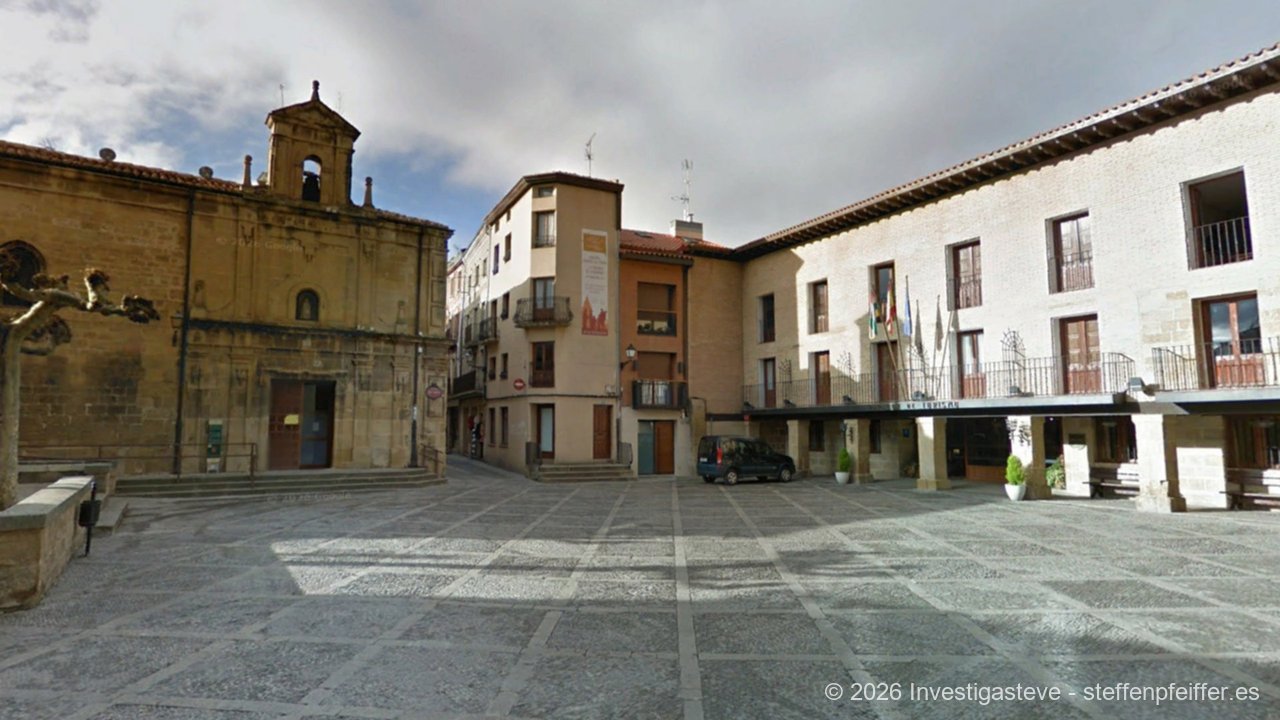
In the evening, arrival transforms into social immersion. The Plaza Mayor fills with pilgrims and locals alike. You hear the laughter of children, the distant ringing of church bells, and the murmuring of prayers. The smell of burning wood from the chimneys and the freshness of the evening air wafting down from the nearby mountains create a feeling of security. You do not feel like a stranger, but as part of an infinite procession that has been welcomed here for centuries. This psychological security is essential for regeneration. Those who sleep in Santo Domingo do so under the protection of Saint Domingo, whose spirit of hospitality is still present in every alley.
The night in Santo Domingo is of a special quality. The city wraps itself in a heavy, peaceful silence, interrupted only occasionally by the call of a night bird or the distant crowing of the holy rooster. In the monastic accommodations, it often smells of lavender and cool masonry. Tactilely, it is the firm mattresses and the heavy blanket that force the body to rest. It is a deep, dream-rich sleep that concludes the emotional metamorphosis of the day. You wake with the feeling of having been not only physically rested but also spiritually nourished. Arriving in this city is more than just the end of a stage; it is admission into a family that has kept the Way of St. James alive for centuries.
One final tactile moment of arrival is washing clothes at the old stone fountains or in the modern washrooms of the hostels. The feeling of water on the skin and the smell of soap symbolize the cleansing from the hardships of the path. You prepare yourself – physically and mentally – for the next section that will lead the pilgrim deeper into Castile. In Santo Domingo de la Calzada, arrival is a holistic ritual that addresses body, mind, and soul equally and strengthens the pilgrim for the challenges ahead.
Eating & Drinking
The culinary world of Santo Domingo de la Calzada is a homage to the fertility of the Rioja. When the pilgrim sits down at the table of a local bodega after a long day, they are greeted by an olfactory bouquet that immediately makes their mouth water. The dominant scent is that of wine – the robust red wines of the region, shimmering deep red in the glass and tasting of dark berries, vanilla, and the tart aroma of the earth. Tactilely, you feel the weight of the heavy glasses and the coolness of the wine on the tongue, a sensory experience that lets physical exhaustion be forgotten in seconds. It is often served with “Patatas a la Riojana,” a nourishing stew of potatoes and chorizo, whose spicy steam enlivens the senses.
A must for every visitor are the “Ahorcaditos,” the little hanged ones. This shortbread in the shape of a scallop shell, filled with a fine almond cream, is a direct reference to the legend of the rooster miracle. The name may sound macabre, but the taste is heavenly sweet. The tactile experience when biting into it – the crumbly crust that almost dissolves on the tongue, and the soft, sweet center – is a culinary highlight. You hear the crackling of the paper they are wrapped in and smell the fine aroma of sugar and almonds. This sweet is more than just a dessert; it is a piece of edible history that psychologically solidifies the connection to the place and its legends.
For dinner, the restaurants around the Plaza de la Alameda lure with dishes shaped by hunting and agriculture. “Lechazo,” the tender suckling lamb from the wood-fired oven, is a delicacy here. The meat is so tender it almost falls off the bone, and the skin is crispy and full of smoky nuances. You hear the clatter of heavy knives on the ceramic dishes and feel the warmth of the oven spreading through the room. It is served with the heavy, dark country bread, whose crust cracks wonderfully and whose soft crumb is ideal for soaking up the delicious sauces. Eating in Santo Domingo is an act of appreciation for nature and tradition. It is a five-dimensional celebration of constancy that nourishes the body and warms the soul for the onward path.
Supplies & Logistics
As one of the most significant cities on the Camino Francés, Santo Domingo de la Calzada is logistically perfectly adapted to the needs of pilgrims. Here you find everything the walker’s heart desires, from specialized equipment shops to well-stocked pharmacies. The smell in these shops is often a mixture of leather, high-tech textiles, and the sterile scent of medical ointments – an olfactory testament to the modern pilgrim journey. The city functions as a supply center for the coming, lonelier stages towards Burgos, which is why forward-looking planning is particularly important here.
Shopping: In the old town, there are numerous small “Ultramarinos” that stock regional specialties such as wine, cheese, and olive oil. Larger supermarkets can be found on the outskirts, where you can replenish supplies for the next few days at reasonable prices.
Gastronomy: The selection ranges from inexpensive pilgrim menus in the bars of the Calle Mayor to upscale dining in the Parador. Many bakeries offer fresh coffee and bocadillos early in the morning, whose scent awakens the spirits.
Accommodation: Santo Domingo offers an enormous bed capacity, from the large municipal hostel to exclusive hotels. In the summer months, a reservation is recommended for hotels, while the hostels often operate on a first-come, first-served basis.
Public Facilities: A modern health center (Centro de Salud) is available for medical emergencies. ATMs and a main post office are located in close proximity to the cathedral, as is an information office for tourists and pilgrims.
The logistical significance of the city lies primarily in its function as a maintenance station. Many pilgrims use their stay to have their hiking boots resoled or to supplement their equipment. You feel the tactile pleasure of slipping into a fresh pair of socks or holding a new water bottle in your hands. Acoustically, the city is characterized by the announcements at the bus station and the bustling activity in the markets. Psychologically, this infrastructure conveys a feeling of security: here you are not alone, here you are helped. Santo Domingo de la Calzada is the logistical backbone of the Rioja Alta, a city that proves that modern efficiency and historical depth need not be mutually exclusive.
Don’t Miss
– Cathedral of Santo Domingo: An architectural must, not only because of the living chicken coop but also because of the magnificent altarpiece by Damián Forment.
– The Freestanding Tower: Climb the steps and enjoy the tactile resistance of the stone and the breathtaking view over the Rioja.
– Plaza del Santo: Here beats the heart of the city; observe the activity in front of the old pilgrim Hospital.
– City Wall: Take a walk along the best-preserved walls of the Rioja and feel the city’s defensive past.
– The Bridge over the Oja: Walk in the footsteps of the saint and cross the structure that laid the foundation for the city.
– Crypt of the Saint: A place of absolute silence and coolness, where you can come haptically and spiritually close to the founder.
– Cistercian Monastery Nuestra Señora de la Anunciación: Visit the church and let the sacred acoustics work on you.
– House of the Saint (Casa del Santo): Learn more about the life and work of Domingo García in this informative museum.
Insider Tips & Hidden Places
Away from the large tourist streams, Santo Domingo de la Calzada hides places of quiet beauty that only those willing to get lost in the side streets will discover. One of these places is the old watermill on the edge of the city, near the Rio Oja. When you go there, the acoustic backdrop changes abruptly: the distant roar of the water and the soft creaking of the old gears create a meditative atmosphere. The smell of damp flour and cool river water is a balm for the senses. Here you can feel the primal force of nature that Domingo García once used to supply his Hospital. It is a tactile place where you can touch the cool water of the river and stop time for a moment.
Another insider tip is visiting the “Paseo de los Molinos” early in the morning. This walking path leads along the old mill canals and offers spectacular views of the city’s silhouette while the mist still hangs over the fields. The scent of wild mint and damp grass is particularly intense here. Psychologically, this retreat offers a necessary break from the busy old town. You hear only the singing of birds and the distant ringing of church bells. It is a place of absolute immersion in the landscape of the Rioja Alta, far from souvenir shops and hostels. Here the pilgrim finds the peace to order their thoughts and focus on the spiritual dimension of their journey.
Those interested in modern art should look out for the murals hidden in some lesser-known alleys. They interpret the city’s legends in a contemporary way and offer an interesting visual contrast to the medieval facades. You feel the tactile texture of the plaster and see the vibrant colors that bring history into the present. A visit to the small chapel of the “Virgen de las Abejas” (Virgin of the Bees) is also a special experience. The chapel is often lonely and radiates a deep, almost mystical peace. The smell of old beeswax and wildflowers is captivating. These hidden places are the true heartbeats of the city, revealing their secrets to the attentive walker.
One final tip: Visit the local weekly market, held every Tuesday. Here, the smells of fresh fruit, local cheese, and leather goods mingle. The tactile experience of checking the firm tomatoes or stroking a piece of handmade embroidery is a wonderful way to immerse yourself in the real life of the inhabitants. You hear the loud bargaining of the vendors and the laughter of the women – an acoustic celebration of joy. In these moments, Santo Domingo de la Calzada becomes more than just a historical monument; it becomes a living organism that integrates the pilgrim into its everyday life for a few hours. It is these fleeting encounters at hidden places that complete the mosaic of the journey.
Moment of Reflection
Santo Domingo de la Calzada is a place that forces the pilgrim to engage with the theme of “building.” Not in the sense of agriculture, but in the sense of creating. Domingo García built paths where there were none, and bridges where rivers hindered progress. Psychologically, this poses the question to every individual: What paths am I building in my life? Where am I building bridges to other people? The city acts like an architectural mirror of these inner questions. When you stand before the chicken coop in the cathedral, you recognize the power of belief in the impossible. The emotional metamorphosis that takes place here is characterized by the realization that we are all architects of our own path.
The coolness of the crypt and the vastness of the nave offer the space for this deep reflection. You feel the historical causality – that you are walking on stones that a man laid with love for us a thousand years ago. This gratitude is haptically tangible. You do not leave the city as the same person who entered it. The weight of the backpack often feels lighter after the stay, not because it weighs less, but because the spirit has been strengthened. Santo Domingo de la Calzada teaches us that care and engineering can go hand in hand to create a better world. It is a place of encouragement that shows us that even a simple hermit can change the world if they just set one stone upon another.
Camino of the Stars
This place lies on the Camino Francés, on the stage from Nájera to Santo Domingo de la Calzada. The sequence of places is:
Nájera → Alto de San Antón → Azofra → Cirueña → Santo Domingo de la Calzada
Did you also perceive the crowing of the rooster in the cathedral of Santo Domingo de la Calzada as a personal greeting from the saint? Perhaps you paused on the old bridge over the Oja and thought about the paths you still want to build in your life, or you experienced the hospitality of the Rioja in its purest form in one of the bodegas? Share your experiences, your photos of the “Ahorcaditos,” or your spiritual moments in the crypt with us. Your story makes this legendary place even more alive for all of us!
About the Author