First Glance – Introduction & Atmosphere
When you have left the arduous climb from Hospital da Cruz behind you and the path finally widens on the high plateau of the Serra de Ligonde, you reach Ventas de Narón, a place that feels like a reward from nature. It is not a place of monumental cathedrals, but an archaic hamlet that defiantly braces itself against the often harsh winds of Galicia. As soon as you enter the village, the acoustic signature of your journey changes. The heavy panting after the climb gives way to a deep, almost reverent silence, broken only by the rhythmic click of your pilgrim staff on the uneven cobblestones. The air here, at over 400 metres, has a completely different quality; it is clear, cooler than in the valley, and carries the tart, resinous scent of the nearby pine forests, mingled with the note of damp fern and the smoky aroma of distant wood fires curling from the chimneys of the few stone houses.
In Ventas de Narón, you feel the tactile power of the earth in its most unadulterated form. The ground beneath your feet changes from firm forest path to a mixture of granite slabs and earthen trail that stores the heat of the day and gives off a gentle warmth during the cool Galician evenings. Psychologically, this place marks a decisive turning point for many pilgrims. Here, at this strategic threshold, one often unconsciously looks back at the altitude conquered, while the soul already prepares for the gentler hollows of the Comarca Ulloa. The visual panorama is a lush, almost unnaturally bright green, softened by the milky Galician mist, the orballo, which dips the contours of the world in a timeless silver. You feel the moisture on your skin, the coolness of the old walls under your fingertips, and a deeply felt psychological relief: you have reached the summit of the stage. Ventas de Narón is not just a stop; it is a spiritual viewpoint, an anteroom of inner reflection that urges you to adapt the tempo of your heart to the rhythm of your steps.
What This Place Tells
Ventas de Narón is a silent chronicler whose walls whisper stories of blood, honour, and unshakeable faith. The name itself carries the legacy of change: in the Middle Ages, this point was known as “Sala Regina”, a designation you can still read with reverence in the Codex Calixtinus. This historical causality leads us back to the year 820 AD, when this ground became the site of one of the most significant battles of the early Reconquista. Here, the troops of the Christian king Alfonso II of Asturias met the armies of Emir Abd-al-Rahman II. You can imagine the scene: the clashing of swords, the neighing of horses, and the smell of sweat and iron hung in the same air that pilgrims breathe today. This Christian victory not only consolidated the power of the young kingdom but also created the necessary space for the development of the Camino de Santiago in this region.
The heart of the narrative is the simple but dignified chapel of Santa María de Ventas de Narón. Even though the current building predominantly bears neoclassical features from the 18th and 19th centuries, it rests on the foundations of an ancient Romanesque chapel. Historical immersion becomes tangible when you stand before the small portal and look at the massive granite ashlars that have survived many a storm. Inside, the chapel preserves a silence that is almost physically tangible. The smell of old incense, cold stone, and beeswax forms an olfactory bridge to an era when pilgrims thanked here not only for their journey but also for their bare survival after crossing the mountains. The adjoining medieval pilgrim Hospital, of which only archaeological traces and oral tradition remain today, underscores the functional importance of the place as a life-saving station of hospitalitas.
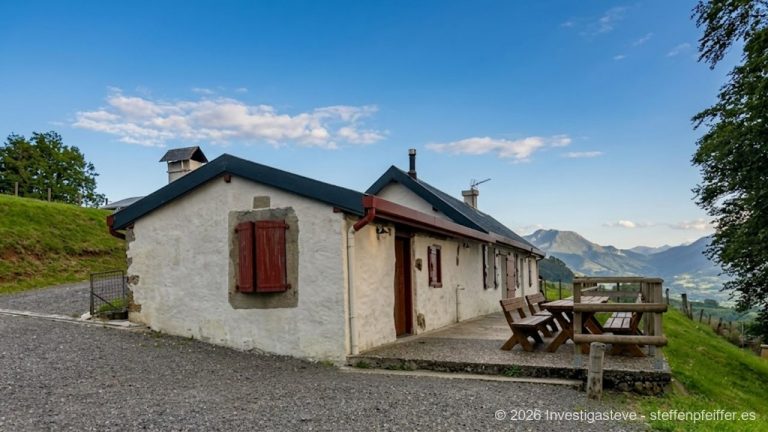
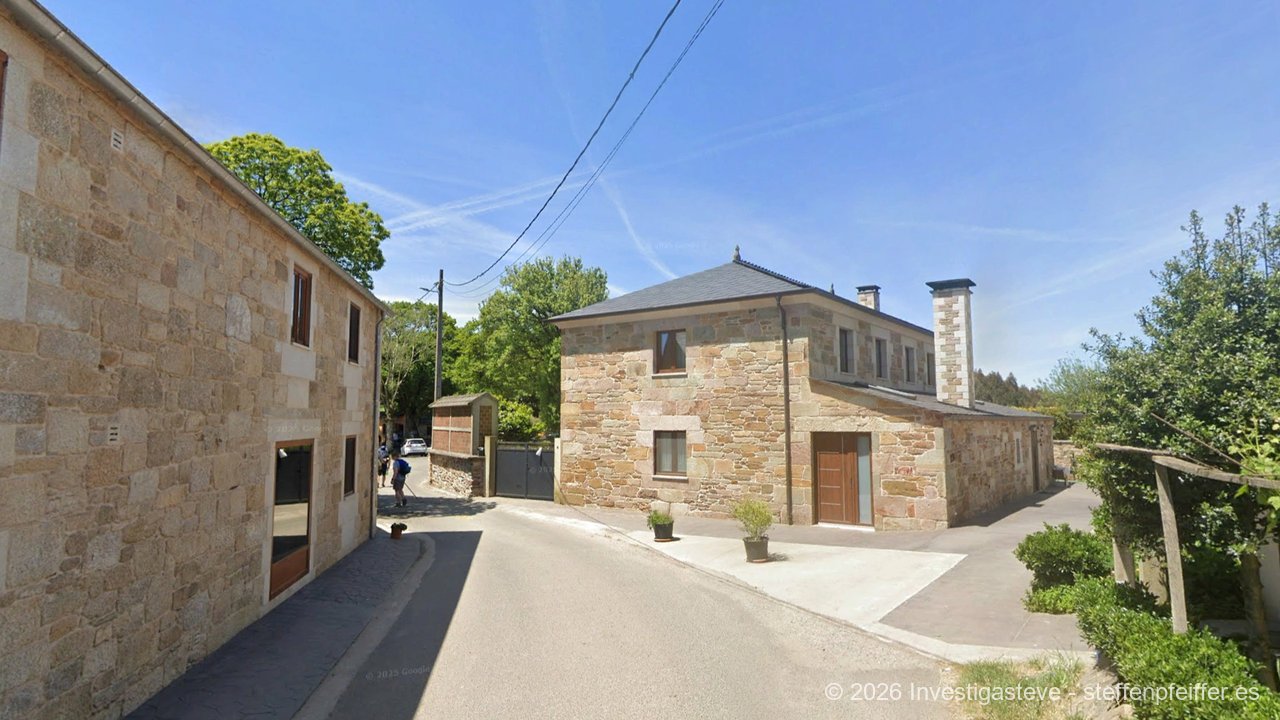
But Ventas de Narón also tells of the everyday business of survival. The hamlet was always a hub for traders and drovers who rested here before crossing the Serra de Ligonde. The architecture of the houses reflects the agrarian causality of Galicia: thick walls against the wind, slate roofs against the rain, and the typical hórreos, the granaries on stone stilts that stand like archaic guardians at the edge of the fields. When you walk through the narrow lanes today, you feel the historical continuity in every crack of the granite. It is the story of a place that refuses to be more than it is – a safe haven for the soul on an often arduous path. In Ventas de Narón, the 1200-year history of the Camino is not read in books but felt through the soles of the feet; every stone beneath your step is a tactile document of millions of people who felt the same wind on their faces and carried the same hope in their hearts right here.
Addresses & tips in Ventas de Narón
| Accommodation | 3 |
| Bars & Cafés | 1 |
| Sights | 4 |
Camino Distances
Ventas de Narón lies as a striking high point on the 30th stage of the Camino Francés, nestled between Portomarín and Palas de Rei.
| Previous Town | Distance (km) | Next Town | Distance (km) |
|---|---|---|---|
| Hospital da Cruz | ca. 2.5 km | Os Lameiros | ca. 2.1 km |
Sleeping & Arriving
Arriving in Ventas de Narón is like entering a protective capsule of peace. When you have overcome the last climb and stand before the chapel, the burden of the kilometres falls away from you for a moment. The accommodation in this small hamlet is characterised by an authenticity often lost in the larger centres. The public Albergue de Peregrinos (Xunta) is a simple but clean house that preserves precisely that monastic modesty that has distinguished the Camino de Santiago for centuries. With only about 20 beds, this place offers an intimacy that invites deep conversations among pilgrims. The tactile experience of the cool stone walls inside, combined with the soft creaking of the beds, creates a microclimate of security that makes you forget the rest of the world.
For those seeking a slightly more private atmosphere or more comfort, the Albergue-Pensión O Cruceiro and the Albergue Casa Molar offer excellent alternatives. Arriving at these family-run houses is associated with a warm welcome that you can often already smell: the scent of freshly brewed coffee or the preparation of the communal pilgrim’s menu wafts through the corridors and immediately revives the spirits. The psychological component of arriving in Ventas de Narón is characterised by the feeling of being “over the hill”. You feel the proximity of civilisation in Palas de Rei, but still enjoy the privileged isolation of the high plateau. The communal areas, often with a view of the wide, green hills of Galicia, foster a social metamorphosis – strangers become fellow travellers for a night, tending to their blisters and comparing their maps.
The rooms and dormitories in Ventas de Narón are places of acoustic purity. Since there is no through traffic, at night you perceive sounds you had long forgotten: the distant buzzing of bees in the broom bushes, the rhythmic chirping of crickets, and your own calm breathing. This acoustic isolation is an essential part of regeneration. Those who stay here consciously choose the quality of silence. It is a tactile feast to snuggle into the clean sheets while outside the mist drifts over the Serra de Ligonde, enveloping the world in a soft white. Sleeping in Ventas de Narón means diving deep into the soul of the region and gathering strength for the last great stage to Santiago.
Particularly worth mentioning is the O Cruceiro hostel, which enjoys an excellent reputation for its cleanliness and the quality of its food. The tactile feeling of hot water on tense shoulders in the modern sanitary facilities feels like a blessing here. Those who arrive in Ventas de Narón often feel a sudden clarity. The reduction to the essentials in these hostels promotes a psychological readjustment: you don’t need much to be content – a bed, a roof of stone, and the certainty of resting in a place steeped in history. It is this specific feeling of “having arrived” that makes Ventas de Narón one of the most important milestones of their journey in the memory of many pilgrims.
When the evening sun bathes the granite walls of the hamlet in a deep orange, you feel the historical continuity of this place most strongly. It is that moment when the boundary between past and present blurs. You feel part of an infinite chain of seekers who all sought the same tactile contact with the ground at exactly this point. Resting here means connecting with the spiritual primal power of the Camino. Arriving in Ventas de Narón is thus not only a logistical necessity but an emotional event that sharpens the spirit for the coming days on the way to the cathedral.
Eating & Drinking
The culinary experience in Ventas de Narón is a journey to the roots of Galician home cooking. In the small bars and hostels, eating is celebrated as an act of care. The smell that wafts through the village in the late afternoon is an olfactory revelation: it smells intensely of freshly cooked Caldo Gallego, that nourishing soup of cabbage, potatoes, and beans, refined with a hearty piece of bacon. The tactile warmth of the soup bowl in your often cool hands is the first step towards physical regeneration. Each spoonful of this honest food brings the power of the Galician soil directly into your system. It is a culinary causality that needs no frills to unfold its effect.
The pilgrim’s menu at the O Cruceiro hostel is particularly appreciated in Ventas de Narón. Here you taste the quality of the region: the juicy meat of local cattle, fresh salads, and the typical Galician country bread, whose crust is so crispy that it gives a loud, auditory signal of freshness when broken. The tactile chewing of the firm dough, combined with the mild, buttery taste of the regional cheese, is a sensory feast. To drink, a simple but characterful red wine is often served, offered in traditional ceramic bowls. The cool weight of the bowl in your hand and the earthy taste of the wine form the perfect end to a strenuous day of walking on the plateau.
Eating in Ventas de Narón also means perceiving silence as an ingredient. Since there is no urban hustle, you enjoy every bite more consciously. The psychological component of eating is closely linked here to reward: you have made the climb, you are safe, and this meal seals the day’s success. Even a simple bocadillo, a filled sandwich, becomes a tactile delight here thanks to the crusty bread. Those who dine in Ventas de Narón experience a form of hospitality deeply rooted in the tradition of the “Sala Regina”. It is food for the body and peace for the mind.
Supplies & Logistics
Logistically, Ventas de Narón is a place of specialised support at a geographically exposed point. As a pilgrim, you must be aware that this hamlet is not a shopping centre; those who come here seek reduction to the essentials. However, the strategic causality of its location makes it an indispensable anchor point on the 30th stage.
Shopping: There are no supermarkets or shops in Ventas de Narón. The supply of snacks or small travel items is exclusively through the points of sale within the hostels. Pilgrims should have already replenished their main supplies in Portomarín. The next comprehensive shopping opportunity is only in Palas de Rei, about 9 km away.
Gastronomy: Catering is excellently covered by the kitchens of the hostels (O Cruceiro, Casa Molar) and a small bar. Here you get hot meals, breakfast, and drinks, tailored specifically to the rhythm of the walkers. Opening hours are reliably linked to the flow of pilgrims.
Sleeping: With the public hostel and two private options, a total of about 50 to 60 places are available. In high season, advance reservation in the private hostels is advisable to guarantee the psychological security of a fixed camp.
Public Facilities: There are no medical facilities, banks, or post offices in Ventas de Narón. In an emergency, however, the connection to Palas de Rei is excellently organised via local taxi services or the 112 emergency number. The nearest large health centre (Centro de Saúde) is in Palas de Rei.
Safety in Ventas de Narón is extremely high due to its manageability and social control by the small community. Acoustically, the place remains an oasis as it is located away from major traffic routes. Logistically, the hamlet acts as a “safety valve” of the stage: those who realise that their strength is no longer sufficient for the final sprint to Palas de Rei find a safe haven here. Logistical processes – from luggage transport to stamping the credential – function smoothly and professionally. Ventas de Narón proves that good pilgrim logistics do not consist of the number of shops, but of the reliability of basic services at a historically significant point.
Don’t Miss
- The chapel of Santa María: Visit this small sacred jewel and feel the silence between the ancient granite walls – a place of deep spiritual immersion.
- The O Cruceiro hostel: Enjoy the pilgrim’s menu here, which among connoisseurs is considered one of the most honest and nourishing in the region.
- The historic chapel of San Marcos: A short walk leads you to this simple building that perfectly embodies the traditional architecture of Galicia.
- The view of the Serra de Ligonde: Stop at the edge of the village and let your gaze wander over the gentle green waves of the hills – a visual panorama of freedom.
- The cobblestones: Feel the tactile reality of the medieval path under your soles and mentally connect with the millions of pilgrims of history.
- The stone walls: Touch the rough stones of the ancient dry stone walls that line the fields around the village – a testimony to centuries of agricultural labour.
Insider Tips & Hidden Places
Away from the marked pilgrim path, just a few steps behind the chapel of Santa María, a narrow, almost invisible path leads to a small hill hidden by dense broom bushes. Here you will find a flat stone slab that looks almost like a natural altar. It is a place of extreme acoustic isolation, where even the wind is only heard muffled. The ground here is covered with a thick layer of dry grass and soft moss, offering a tactile blessing for your strained feet. In the air lies an intense scent of wild thyme, often overpowered on the official pilgrim paths by the dust of walkers. This is the perfect spot for a private reflection or a small meditation, far from the cameras of other walkers. Here you feel the primal power of the “Sala Regina”, when the place was still a sacred space without walls.
Another hidden treasure in Ventas de Narón is the small, half-ruined stone fountain at the western exit of the village. While most pilgrims rush past carelessly, it is worth pausing here. The water there is ice-cold and crystal clear, a relic from a time when such springs decided over life and death on the path. When you dip your hands into the water, you feel a tactile freshness that immediately clears your senses. In the evening hours, when the light falls flat over the plateau, the silhouettes of the nearby oaks are reflected in the well water, creating an almost mystical atmosphere. It is a place of ritual purification, such as pilgrims of the 9th century might have used after the battle against the Moors. Such small, inconspicuous details make Ventas de Narón a place of discovery for those ready to look behind the façade of the obvious.
Did you know that near the chapel of San Marcos there is an old stone into which tiny, almost faded crosses are carved? They are not official monuments, but rather personal testimonies of hope from pilgrims of past centuries. When you run your fingertips over these cool, rough notches, you touch the individual history of a person who stood at this very spot two hundred years ago. This tactile communication across time makes the psychological depth of the Camino tangible. At dusk, when the mist rises from the valleys, Ventas de Narón transforms into an almost unreal scene, where the shadows of the past seem to come alive. Here, in the silence of the stones, you often find a part of yourself that you had forgotten in the hustle of everyday life.
Finally, it is worth directing your gaze not only into the distance but directly at the ground of the old dry stone walls. Between the granite crevices grow rare lichens and tiny ferns that sparkle like small jewels in the morning dew. The visual experience of these tiny microcosms offers a fascinating contrast to the monumental history of the battle of 820. It teaches you the psychological acuity of observation of detail: even in the small and inconspicuous lies the greatness of creation. Those who take the time to perceive these nuances in Ventas de Narón discover a world behind the yellow arrows – a Galicia that pretends nothing, but preserves its beauty in silence and detail.
Moment of Reflection
In Ventas de Narón, you stand at a point of maximum historical and spiritual density. Here, where the name “Sala Regina” recalls royal dignity and the earth was soaked with the blood of a decisive battle, the question inevitably arises: “What battles do I fight within myself, and where do I find my peace?” The psychological metamorphosis that takes place in this hamlet is the transition from external effort to inner clarity. Ventas de Narón challenges you to pause before you continue the path to Santiago. It is a filter for your thoughts. In the silence of the chapel, your worries become small, and your true goals emerge more clearly.
The historical causality of your being here connects you with the soldiers of King Alfonso II and the millions of pilgrims for whom this place was a spiritual anchor. Do you feel the responsibility to carry forward this heritage of constancy? In Ventas de Narón, you become aware that the Camino is not a race against time, but a search for your own centre. The tactile reality of the rough granite under your hands reminds you of your own resilience. Use this moment of reflection to recalibrate your inner compass. When you leave Ventas de Narón tomorrow, take a piece of the royal peace and historical dignity of this place with you. It will be your anchor when the hustle of Santiago finally reaches you. Here, on the ridge of the Serra de Ligonde, you have found the strength to continue your journey with a new, clear sovereignty.
Camino of the Stars
This place lies on the Camino Francés, on the stage from Portomarín to Palas de Rei. The sequence of places is:
Portomarín → Gonzar → Castromaior → Hospital da Cruz → Ventas de Narón → Os Lameiros → Ligonde → Airexe → Portos → Lestedo → A Calzada → Palas de Rei
Did you also feel that deep moment of awe in the silence of the chapel of Santa María in Ventas de Narón, or experience the honest hospitality of Galicia at the O Cruceiro hostel? Perhaps you have found your own secret place of power in the broom bushes or at the old stone fountain? Share your personal impressions, your photos of the granite waves of the surroundings, or your thoughts on the historical significance of the “Sala Regina” with us. Every story makes this special threshold point on the Camino come alive for the community – we look forward to your contribution!
About the Author