The Camino de Santiago 2025: New Rules, Record-Breaking Pilgrim Numbers, and November Adventures on the Camino Francés and to Fisterra-Muxía
The year 2025 marks a turning point on the Camino de Santiago. With around 570,000 pilgrims expected, a record year is on the horizon—about 14 percent more than in the already record-breaking previous year. This exceptional increase is partly attributed to the Jubilee Year of the Catholic Church, during which many pilgrims are combining their journey to Santiago with a visit to Rome. At the same time, 2025 also introduces significant rule changes that will fundamentally reshape the pilgrim experience.
New Compostela Rules for 2025: More Flexibility for Pilgrims
Since 2025, more liberal requirements have applied to those seeking the coveted Compostela (the official pilgrim certificate). Pilgrims may now complete any continuous stretch of at least 100 kilometers on foot or 200 kilometers by bicycle on any official Camino route—not only the last 100 kilometers from Sarria. This change is designed to ease the overwhelming crowds starting from Sarria and offer greater flexibility in route selection.
Another important update concerns the daily stamp requirement: pilgrims must now collect at least two stamps per day. Furthermore, up to 30 kilometers on officially recognized Camino routes outside Spain can now count toward the Compostela, provided the final section to Santiago is continuous and that at least 100 kilometers are completed within Spain. These new rules open more room for personalized pilgrimages and reflect the growing internationalization of the Camino.
The Camino Francés in November 2025: Quiet Days and Authentic Experiences
The Camino Francés remains the most popular route in 2025—about 55 percent of all pilgrims choose this classic path. November offers a particularly distinctive atmosphere. Temperatures usually range between 5 and 15 degrees Celsius, though higher areas such as O Cebreiro can be considerably colder. The weather varies between autumn rain and occasional bursts of sunshine, alternating with calm, reflective days that give the season a special charm.
Although the overall number of pilgrims declines, the flow remains concentrated along the final 100 kilometers from Sarria. Earlier stages between Pamplona and León are noticeably quieter, allowing walkers a more tranquil and contemplative experience. Many pilgrims value this late-autumn ambiance, with its warm hues and slower rhythm.
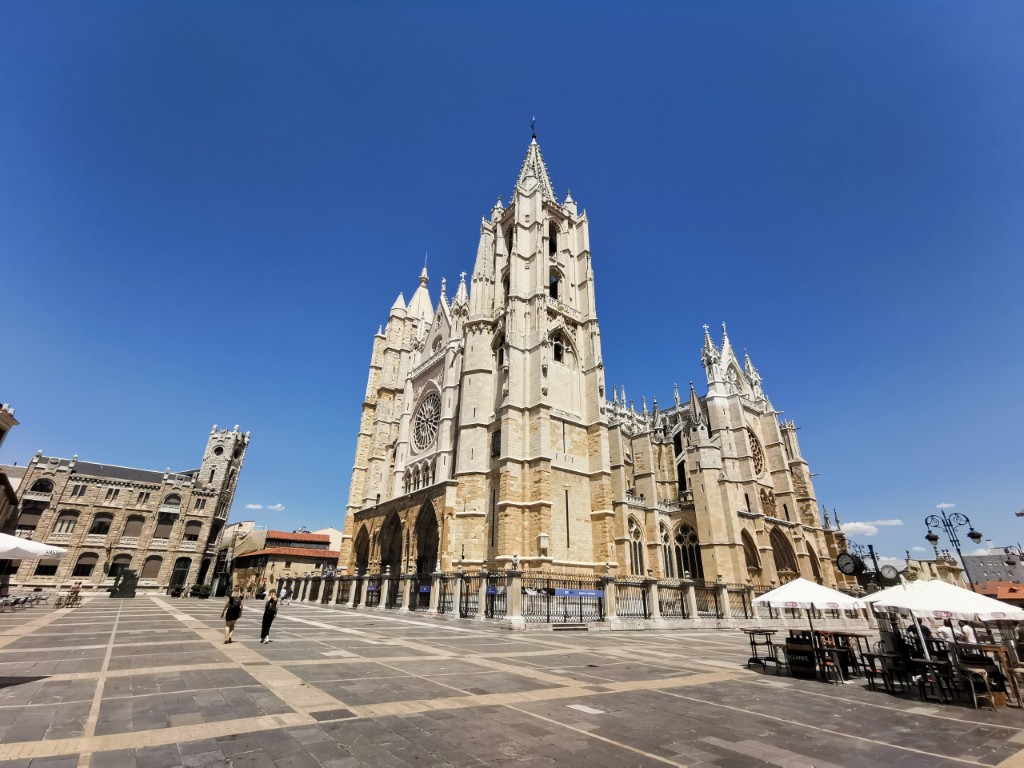
Infrastructure remains available throughout the off-season, though with certain limitations. Smaller albergues in towns such as Palas de Rei and Arzúa stay open, but advance reservations are strongly recommended, especially for longer stretches without larger villages. Pilgrims should carry sufficient food and water, as not all service points are staffed continuously.
Cultural Highlights Along the Camino Francés
November brings a variety of local festivals that enrich the Camino experience. The Ferias de San Andrés in Estella (late November) feature livestock and artisan markets, regional cheese competitions, and traditional dances. In León, the León Gótico festival (November 14–16) offers a cultural weekend that brings the town’s medieval history vividly to life. Meanwhile, the Feria de San Martín in Mansilla de Mulas (November 11) celebrates with traditional chestnut roasts.
The most significant November celebration is Magosto, held in Santiago de Compostela and throughout Galician towns (November 10–15). This festival has pre-Celtic origins and today merges with the Christian observance of All Saints’ Day. Chestnuts are roasted over open fires in traditional caniceiras, while locals and pilgrims gather to share regional wines, sweet ciders, liqueurs, and traditional sausages. The Festival de Músicas Contemplativas in Santiago (November 16–23) adds to the month’s cultural richness with sacred and contemplative music performed in historic churches and the Cathedral itself.
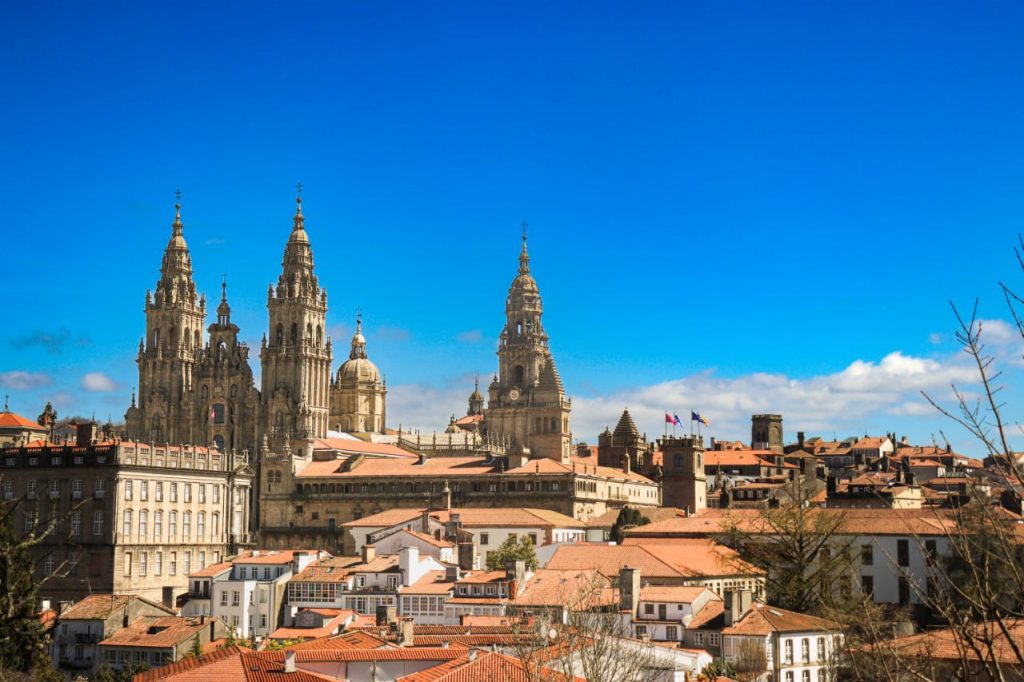
In Fisterra, the XI Xornadas Micolóxicas (November 8–9) – a mushroom hiking event – adds a special touch to the November calendar. The Outono Cultural in Fisterra (October 12 to November 22) fills the season with theater, music, and humor, highlighting traditional Galician artistic expression.
The Camino Fisterra-Muxía: The True End of the World
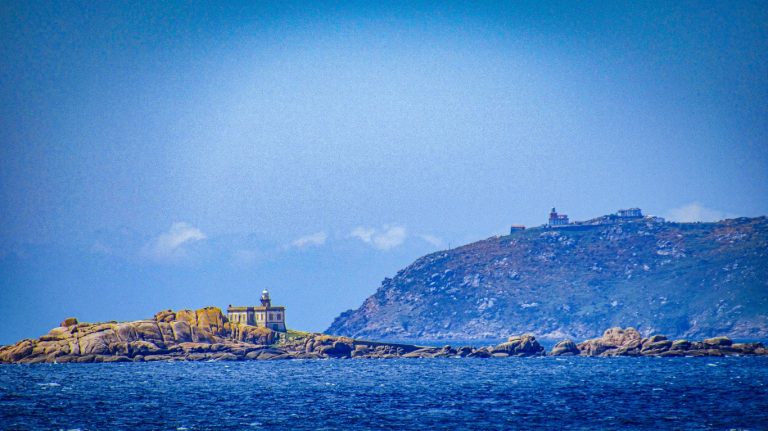
For many pilgrims, the journey does not end in Santiago. Instead, they continue for four to six additional days along the Camino Fisterra-Muxía, a spectacular coastal extension that leads to the Atlantic Ocean. This route serves as the emotional finale of the pilgrimage, where wild landscapes and spiritual depth merge into one.
Fisterra and Muxía: Two Destinations with Distinct Histories
Fisterra carries a millennia-old legacy. Known in antiquity as “Finis Terrae” (The End of the Earth), it was referenced by Roman geographers such as Pliny the Elder (77 AD) and Ptolemy (150 AD). They described the legendary Promontorium Nerium and the Ara Solis, a sun altar said to have been destroyed by the Apostle James. For both Romans and Christian pilgrims, Fisterra symbolized the end of the known world.
Muxía, on the other hand, has a different and younger history. The town was founded in the 11th century as a Benedictine settlement, when the Monastery of Moraime granted settlement rights to local fishermen. Its Sanctuary of Santa María de la Barca preserves Celtic legends—according to one, the Virgin Mary is said to have arrived here by boat to bless St. James.
Muxía’s modern fame as a pilgrimage endpoint is, surprisingly, owed largely to the film “The Way” (2010) starring Martin Sheen. The film ends in Muxía, not Fisterra, which greatly increased its international recognition among pilgrims in recent years. Today, Muxía—marked by the symbolic “Kilometer 0.0” milestone—stands as an equal endpoint alongside the historically older Fisterra.


The Stages from Fisterra to Muxía
The route from Santiago to Fisterra consists of several daily stages through rural landscapes, forests, and small villages. The first stage (Santiago to Fisterra) is generally more demanding, with longer walking distances and magnificent views of the legendary cape. The second section (Fisterra to Muxía) is shorter and easier, often running directly along the wild, rocky coast. The route from Muxía to Fisterra (around 32 kilometers) follows parallel to the sea, passing through small villages, beaches, and historic watchpoints. A special highlight is the Church of Virxe da Barca in Muxía, whose stones are believed by pilgrims to have healing powers.
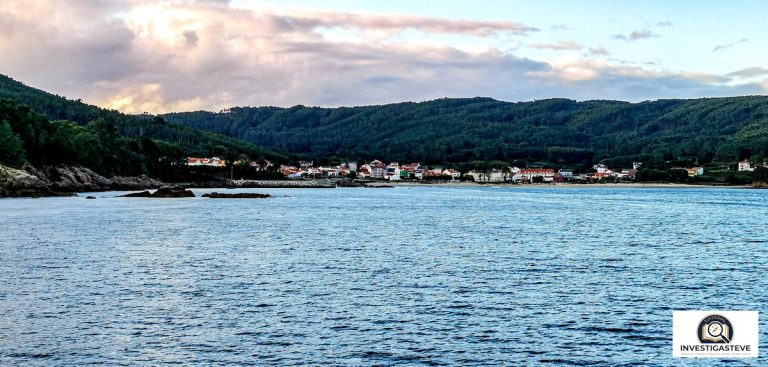
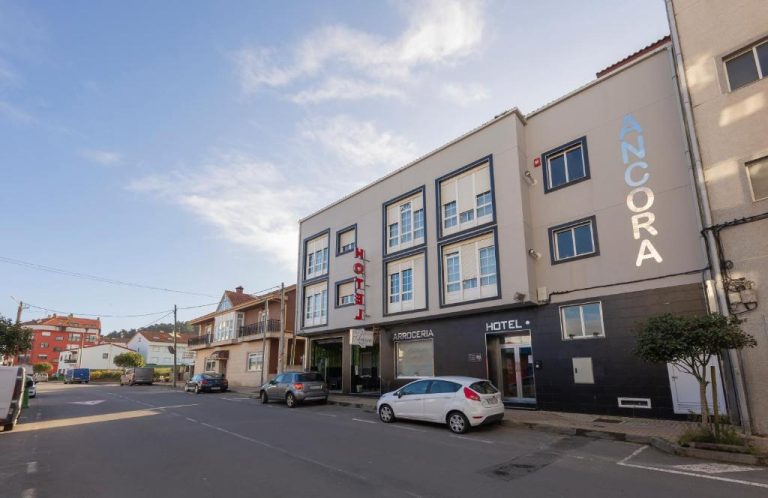
Many pilgrims combine both destinations in a circular route, earning both the Fisterrana (for Fisterra) and the Muxiana (for Muxía)—independent certificates that accompany the Compostela. In villages like Lires, located between Fisterra and Muxía, new accommodation options have emerged, including small guesthouses and restaurants. The route offers stunning scenery, with beaches, forests, and traditional Galician villages.
Practical Pilgrim Tips for November 2025
Planning and Reservations
The off-season requires careful preparation. Many albergues close or reduce their services in November. Advance reservations are strongly advised, especially in smaller villages and for stages along the Camino Fisterra-Muxía. Detailed stage plans, PDF guides, and GPX data are available online and should be downloaded in advance, as mobile coverage is limited in some areas.
Equipment and Provisions
Autumn weather calls for layered clothing. With temperatures between 5 and 15 degrees Celsius, pilgrims should carry a good jacket, gloves, and possibly a wool hat. Waterproof gear is essential. Pilgrims are advised to carry enough water and food, as some remote sections can stretch long distances without services.
The Right Daily Rhythm
A steady pace of around 20 kilometers per day is ideal. This allows enough time for breaks, blister prevention, and mental and physical recovery. Pilgrims should start early to reach their next accommodation before dark—sunset in November is around 5 p.m.
The Modern Pilgrim Experience in 2025
The year 2025 represents a time of contrast. On one hand, record numbers and mass tourism; on the other, quiet off-season stages offering deep personal encounters in the albergues. Recent pilgrims’ testimonies speak of emotional and spiritual moments, of silent reflection at sunrise, and of vibrant community energy in the taverns of Santiago.
The pilgrim movement is becoming increasingly international—many travelers combine their Camino with Rome or other sacred destinations. At the same time, locals express concern about commercialization, as traditional pilgrimage routes are increasingly flanked by tourist infrastructure. Yet the churches along the Camino are experiencing renewed vitality, helping to preserve these cultural treasures.
Those walking in autumn or early winter should plan well, check current weather reports, and stay connected with the pilgrim community through forums and social networks. The encounter with fellow pilgrims remains the heart of the Camino—no matter how many people walk it.
Conclusion
The Camino de Santiago 2025 is no longer a secret—it has become a global phenomenon, yet still offers deeply spiritual experiences. The new rules bring greater flexibility, the infrastructure continues to improve, and November provides a unique opportunity to walk the Camino away from the crowds. The Camino Francés and its extension to Fisterra and Muxía remain timeless journeys, enriched by local festivals, cultural highlights, and genuine human connections that make the path unforgettable.
Buen Camino in November 2025!
About the Author