First Glance – Introduction & Atmosphere
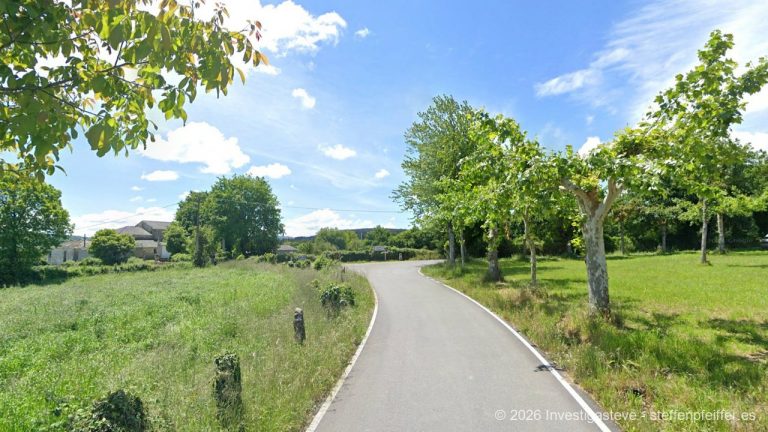
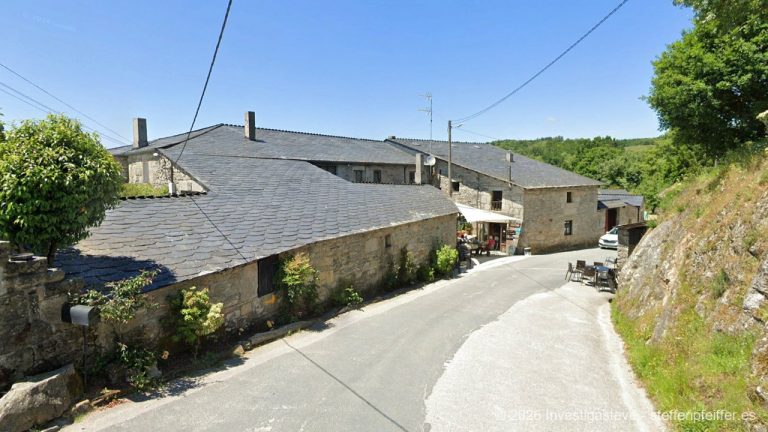
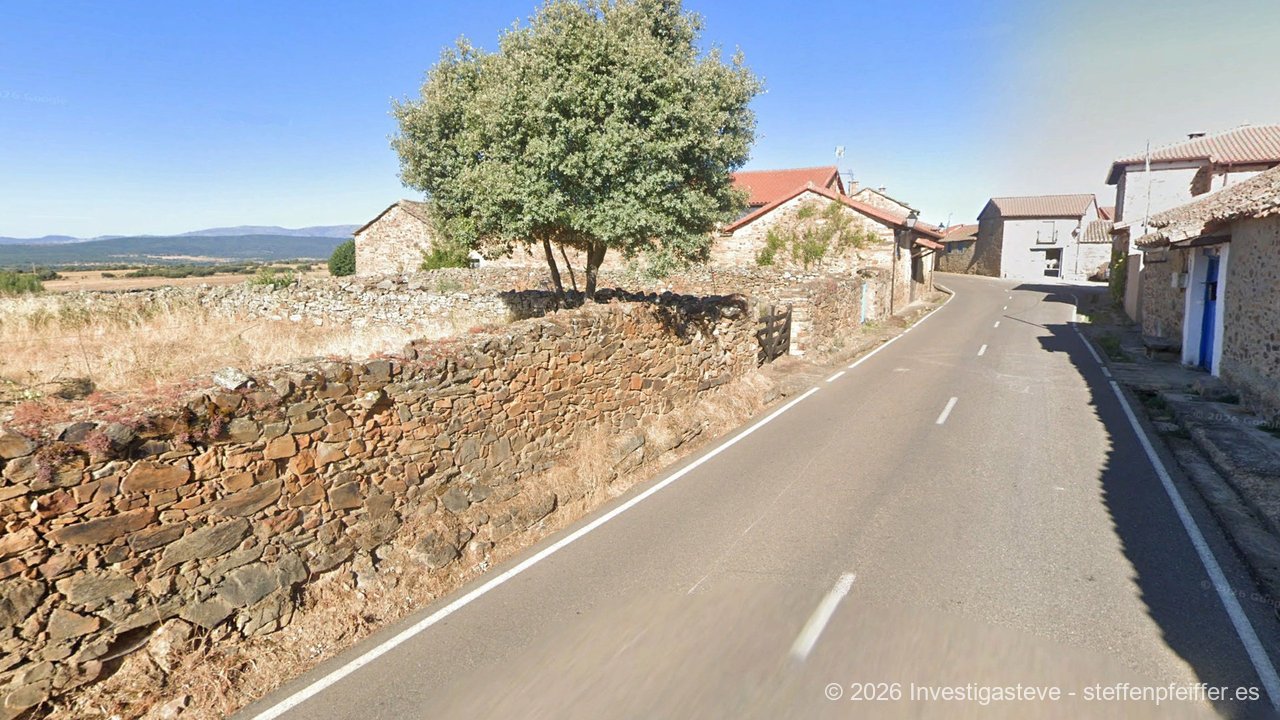
You leave the proud, wall-encircled Astorga completely behind you, and as the silhouette of the cathedral and the Gaudí palace slowly fades in your rear, the world beneath your feet changes. The asphalt soon gives way to a path that takes on the color of rusty iron and dried blood – the typical red earth of the Maragatería. After almost ten kilometers, which feel like a gentle but steady invitation into the vertical, you reach Santa Catalina de Somoza. It is not a place that overwhelms you with loud attractions; rather, it sneaks quietly and persistently into your senses. The first thing you hear is the rhythmic tapping of your own poles on the rough cobblestones of the Calle Real, which here is simultaneously the main street and the soul of the village. The acoustics in the narrow alleys are peculiar – the massive granite walls of the houses throw back every sound: the gasping of a fellow pilgrim, the distant barking of a dog in one of the patios, or the soft rustle of the wind already carrying the coolness of the nearby Montes de León.
Santa Catalina de Somoza appears like a precious still life, frozen in time, only to be brought to life anew every day by the pilgrims. You feel the haptic quality of this place in the roughness of the stone when you run your hand over one of the facades. It is coarse, honest granite, often covered with lichen in silver and gold, telling of the resilience of the people here. Olfactorily, the village welcomes you with a mix typical of rural Castile: the dry smell of dust, the spicy aroma of pine needles from the surrounding forests, and, if you are lucky, the heavy, promising scent of a Cocido Maragato simmering for hours in one of the kitchens. Here, at almost a thousand meters altitude, the air has a purity that clears the mind and expands the lungs, while you psychologically prepare to finally exchange the flat security of the plain for the challenges of the mountains.
This place is a threshold. Those who arrive here have left the urban bustle behind and feel the first real acclimatization to altitude. It is a moment of anticipation, but also of humility. The architecture of Santa Catalina with its famous “portalones” – those huge, double-leaf gates painted in vibrant blue, passionate red, or deep green – signals to you: something is protected here. Behind these gates, the Arrieros, the legendary muleteers of the region, once hid their wealth and their teams. When you walk past these colors today, it is as if you are strolling through a gallery of constancy. You feel strangely safe here, as if the village itself were a great Hospital, protecting the wanderer before the paths become narrower and the nights colder.
What This Place Tells
The stones of Santa Catalina de Somoza are silent chroniclers of a history inseparably linked to the Hospital system of the Middle Ages. Once, this place was known as the site of the “Hospital de Yuso.” In medieval logic, “Yuso” meant something like “lower-lying.” This suggests that there was either a corresponding “Hospital de Suso” (upper) or that this place marked the first safe station below the dangerous pass heights of Monte Irago. First documented in 1539, this Hospital was far more than just a roof over one’s head; it was a place of grace, where the pilgrims’ wounds were cared for and their souls strengthened. Even though the physical walls of the Hospital have long since merged into the foundations of today’s houses, the energy of care lives on in field names like “Huerta del Hospital.” You walk here on ground that has been soaked with the hopes and prayers of millions for centuries.
Particularly fascinating is the place’s connection to Maragatería culture. Santa Catalina was a bastion of the Arrieros, those proud long-distance traders who transported goods from the Galician coast to Madrid with their mule caravans. Their wealth shaped the face of the village. The massive stone houses with their large inner courtyards were not showy buildings but functional necessities to protect the precious goods and the animals from the elements and from thieves. The fact that King Felipe II stopped here in 1577 on his own pilgrimage underscores the former importance of this inconspicuous hamlet. It was a hub of power and trade, a place where the paths of kings crossed with those of beggar pilgrims. This social mixing has left a psychological trace that you can still feel today: a mixture of proud independence and deep hospitality.
The spiritual dimension of the place is embodied by the patron saint San Blas – Saint Blaise. In the parish church of Santa María, a relic of this saint is kept, traditionally invoked against throat ailments and for the protection of the respiratory tract. For a pilgrim about to cross the Montes de León, where thin air and cold mountain winds can irritate the throat, this symbolism is invaluable. The annual festival on February 3rd is an archaic spectacle, where the men of the village beat castanets to the sound of drums. This ritual is not a tourist attraction but a living heritage that solidifies the connection between the earth of the Maragatería and the sky of the Camino. Those who walk through Santa Catalina enter a narrative field that speaks of the healing of the body and the strengthening of the spirit – a preparation for the great letting go that awaits everyone just a few kilometers further at the Cruz de Ferro.
Addresses & tips in Santa Catalina de Somoza
Camino Distances
After about 9.3 kilometers that have steadily led you uphill from the walls of Astorga, Santa Catalina de Somoza marks the first real resting point in the rising hilly landscape.
| Previous Location | Distance (km) | Next Location | Distance (km) |
|---|---|---|---|
| Murias de Rechivaldo | approx. 4.2 km | El Ganso | approx. 4.2 km |
Sleeping & Arriving
Arriving in Santa Catalina de Somoza feels like slipping into a warm, stone cave. The village has, for its small size, a remarkable capacity of beds, showing that it has rediscovered its medieval role as a Hospital core. The largest house on the square is the “Centro de Turismo Rural El Caminante.” When you step through the heavy wooden door, you are often greeted by Ofelia, the soul of the house. Here, the sounds mingle: the rustling of maps, the soft hiss of the coffee machine, and the international murmuring of pilgrims settling into the cozy common rooms. The haptic quality of the house is characterized by cool stone and warm wood – a combination that immediately conveys a sense of grounding. The large inner courtyard, the patio, is the heart of arriving. Here, the hikers sit, stretch out their battered feet, and let their gaze wander over the roofs while the afternoon wind gently plays in the potted plants.
The atmosphere in the smaller hostels like “San Blas” or “Bohème” is more private, almost familial. Here, arriving is a personal act of being welcomed into a temporary community. In the “Bohème,” which often operates on a donation basis, you feel the idealistic spirit of the Camino particularly clearly. It smells of freshly brewed herbal tea and the honest effort of the day. In such moments, the pilgrim becomes a guest in the best sense of the word. You not only share a room but often also a piece of life story. Psychologically, this is an important point: after the hustle of Astorga, Santa Catalina is the place where groups become smaller and conversations become deeper. It is the calm before the mountain, a last station of social intimacy before the landscape becomes rougher and the stages lonelier.
Those seeking more comfort find a refuge of the highest order in the “Hotel Rural Vía Avis.” Here, arriving becomes an aesthetic experience. The rooms, housed in a carefully restored Maragato house, offer a silence that is almost tangible. You hear nothing but your own heartbeat and the distant chiming of the church bell. This form of accommodation offers the necessary psychological distance to process the impressions of the past days. The texture of the heavy linen bed sheets and the warm light of the lamps create a space of regeneration that goes far beyond mere physical recovery. It is a homage to the old Arriero tradition: luxury through quality and constancy, not through ostentation.
The collective arrival in the village usually takes place on the small square in front of the statue of Aquilino Pastor. Here, those who are only taking a break meet those who are staying. It is a coming and going, a constant exchange of information: How is the path to Rabanal? Where is the best water? This acoustic tapestry of advice and encouragement is the true welcome signal of Santa Catalina. You feel that you are welcome here, not as a tourist, but as part of an ancient stream. The village functions as a protective space, a place that gives you the security you need to prepare yourself inwardly for the further ascent. It is the feeling of docking in a harbor before setting sail for the crossing of an ocean of stone.
Finally, there is the “Albergue Municipal,” which often only opens seasonally but preserves the essence of simple pilgrimage. Here, arriving is reduced to the essentials: a mattress, a shower, a stamp in the Credencial. Yet it is precisely in this simplicity that great power lies. In the high, cool rooms, the laughter of the pilgrims echoes particularly beautifully. You smell the soap and the disinfectant, scents of hygiene and order that give structure to the chaotic pilgrim routine. No matter which hostel you choose, in Santa Catalina de Somoza, arriving is always a promise of regeneration and proof that the way provides exactly what every pilgrim needs at that moment.
Eating & Drinking
The gastronomy in Santa Catalina de Somoza is a declaration of love to the Maragatería. Those who stop here should prepare their stomachs for something special: the Cocido Maragato. This dish is more than just food; it is a cultural monument. In the dining rooms of “El Caminante” or at “San Blas,” this heavy, promising scent hangs in the air – a mix of smoked meat, chickpeas, cabbage, and paprika. The peculiarity that you eat the meat first, then the vegetables, and only at the very end the soup will be explained to you here with proud naturalness. It is a haptic feast when the steaming plates arrive on the table. You feel the heat of the clay pot, the firm meat of the chorizo, and the creaminess of the chickpeas, which have a very special quality here. This stew is designed to give strength for days, and in the cool mountain air of Santa Catalina, it tastes better than anywhere else on the plain.
Aside from the grand Cocido, the village offers the honest, rough cuisine of the mountain. A simple “Menú del Peregrino” here often consists of a warming Sopa de Ajo (garlic soup), which smells of herbs and old bread and drives the cold from your limbs. The taste is intense and unadulterated. You drink it with the local red wine, a Mencía or a robust drop from Tierra de León, which tastes of dark berries and slate earth. The sound of the pouring, the clinking of the heavy glasses, and the breaking of the crusty, dark bread form the acoustic backdrop of every meal. Here, eating becomes a ritual of community. You share the platters, exchange recommendations, and forget for a moment the blisters on your feet over the enjoyment of hand-cut Jamón Serrano, whose fat melts on the tongue like butter.
For a quick hunger in between, there are the legendary bocadillos. In Santa Catalina, they are usually generously filled with Lomo (pork loin) or Queso de Valdeón, a strong blue cheese from the Picos de Europa. The smell of freshly cut cheese and the tart scent of olive oil on the bread revive the spirits. Those with a sweet tooth should look for the Mantecadas – butter-tender pastries that became famous in nearby Astorga but here in the mountains often taste a notch more traditional. The psychological effect of these sweet calorie bombs is immediate: one bite, and the world looks a little friendlier again. In Santa Catalina, you don’t eat just to get full; you eat to arm yourself for the battle with Monte Irago. It is a gastronomy of strength and preparation.
In the morning, culinary life begins with the scent of freshly roasted Café con Leche. The clinking of spoons in the cups is the wake-up signal of the village. The bakeries or the small shops in the hostels offer firm bread and hard cheese – ideal provisions that do not spoil in the backpack and still taste good even after hours in the sun. The taste of Santa Catalina remains in memory as a mix of smoke, paprika, and the irrepressible strength of the Maragatos. It is a cuisine that makes no compromises and teaches the pilgrim that true satiety comes from the combination of good raw materials and centuries-old tradition.
Supplies & Logistics
The logistics in Santa Catalina de Somoza are characterized by the strategic calm of a village that knows exactly what a pilgrim needs but offers nothing unnecessary. There is no large supermarket here and no glittering shopping street. Supplies are obtained from the small “Ultramarinos,” which are often integrated directly into the hostels. In these tiny shops, it smells of grain, dried meat, and the typical, slightly sweet scent of fruit standing in crates at the entrance. Here you buy the essentials: water, nuts, perhaps a new pack of blister plasters or sunscreen. The haptic quality of this shopping is archaic – you reach into the shelves, exchange a few coins for supplies, and exchange a few words with the shopkeeper, who is usually also the hospitalero. It is a highly efficient form of micrologistics, perfectly tailored to the rhythm of the way.
A critical point for logistics is the absence of an ATM and a pharmacy. Those who forgot to withdraw cash or replenish their travel pharmacy in Astorga are confronted here with the harsh reality of the mountain. Santa Catalina teaches you forward planning. The psychological effect of this gap is healing: you learn to make do with what you have, or you learn the solidarity among pilgrims when one helps another with an ibuprofen or a banknote. Medical emergencies must be brought back to Astorga or coordinated via emergency call 112. Local care is limited to the first aid that Ofelia or other experienced hospitaleros can provide – often with more heart and experience than in an anonymous clinic.
Shopping: There are no separate supermarkets. Small shops (“Tiendas”) in the hostels such as El Caminante or Gabino offer basic foodstuffs, drinks, and important pilgrim accessories (socks, stamp pads). Gastronomy: Catering is almost exclusively provided by the hostel restaurants. The range extends from a rich breakfast to traditional dinner (Cocido). Separate bars are rare, but those that exist offer high quality. Accommodation: A broad spectrum from the donation-based hostel to the rural hotel. For groups or in high season, telephone reservation or booking via online portals is strongly advised. Public Facilities: The Iglesia Santa María is the spiritual center. There is a public fountain with reliable drinking water – an acoustic and haptic fixed point for all those filling their bottles for the way to El Ganso.
The logistical infrastructure is complemented by the excellent laundry services in the hostels. The soft hum of washing machines and dryers is a familiar sound in the afternoon. Here, the dust of Astorga is washed away. Wi-Fi is standard in most accommodations, allowing digital planning of the next stages. But be careful: mobile signals can fluctuate in the thick stone walls, forcing you to go outside to the patio and perceive the real environment. Santa Catalina is logistically a place of “frugal abundance.” Everything you need for survival and the ascent is here, but nothing that unnecessarily distracts or burdens you. It is the perfect preparation for the wilderness that lies before you.
Don’t Miss
– The San Blas relic in the parish church: A quiet moment before the relic of the throat saint gives you the psychological security for the coming mountain passes. The atmosphere in the cool, simple church is characterized by a deep, almost tangible piety. – The colors of the “Portalones”: Take time for a conscious walk along the Calle Real. Each gate tells a story of family pride. The contrasts between the vibrant colors and the gray granite are a visual feast for every photographer. – The monument to Aquilino Pastor: The statue of the Tamboritero Mayor on the square is a haptic testimony to local hero worship. Place your hand on the cool stone and imagine the sound of the drums that have set the rhythm here for centuries. – An afternoon in the patio of “El Caminante”: Nothing beats the peaceful acoustics of this inner courtyard. When pilgrims from all over the world gather there, you feel the true, uniting soul of the Camino Francés. – The huertas on the edge of the village: Walk a few steps behind the houses. The smell of fresh cabbage and fertilized earth and the distant ringing of grazing animals reconnect you with the agricultural base of Galicia and Castile. – Ofelia’s stamp: Get the pilgrim stamp at the hostel. It is often artistically designed and a lasting souvenir of the hospitality of the Maragatería. – The windows of Santa Catalina: Pay attention to the small, deeply recessed windows in the thick walls. They show how the architecture here was geared towards defense and warmth – a haptic proof of the hard life in the mountains. – The sunset over Monte Irago: When the sun sinks behind the peaks, the village begins to glow. The shadows of the stone walls grow long and the atmosphere becomes almost mystical. – Traditional music (if available): If you are lucky enough to hear a tamboritero, it is an acoustic experience that transports you directly back to the time of the Arrieros. The rhythm goes straight into the blood. – The water at the village fountain: A ritual sip. The water is ice-cold, clear, and tastes of the purity of the Montes de León. A haptic refreshment for the soul.
Insider Tips & Hidden Places
Beyond the marked route of the Calle Real, Santa Catalina de Somoza reveals its quiet, almost invisible treasures. One such place is the hidden alley that leads steeply up behind the church of Santa María to a small viewpoint. There, where the houses end and the stone walls transition into the dense scrub of the pine forests, you find a peace often lost in the main stream of pilgrims. Here you hear only the distant roar of the A-6 motorway, which acts like a quiet, modern echo of the old trade routes, and the hissing whisper of the wind in the broom. It is the perfect place to let your gaze wander back to Astorga and grasp the distance you have already overcome physically and internally. The smell of resin and dry grass is particularly intense here and cleanses the senses for the coming ascent.
Another hidden treasure is the remains of the old Hospital de Yuso in the “Huerta del Hospital” zone. Those who look closely will find stones in the garden walls that have a different patina than the rest. They are smoother, more worked – fragments of a time when prayer and care for sick pilgrims set the rhythm here. It is a haptic insider tip to touch these old foundations. You feel the cool weight of the centuries and the continuity of care for the wanderer. It is a place of silence where you can imagine the weary pilgrims of the 14th century sitting here in the shade of the walls, just as you do today. The psychological effect of this historical presence in the everyday is enormous.
In the evening hours, when most pilgrims are already in the hostels, a visit to the back of the church is worthwhile. Here there is a small, almost completely overgrown cruceiro – a stone wayside cross that looks almost ghostly in the pale light of the street lamps. It is often overlooked as it is not directly on the path. The acoustics here are isolated and private. It is the ideal place for a final reflection before the night’s rest. You smell the incense still seeping from the crevices of the church walls and feel the spiritual weight of the place. This cross once marked the boundary of the sacred space and today offers the modern seeker a place for an undisturbed prayer or meditation.
Finally, pay attention to the small details of the house doors that do not face the main street. In the side paths, you often find the original metal fittings of the Arrieros – hand-forged rings and bolts, now marked by rust and time. When you run your fingers over these cold, rough metal parts, you connect haptically with the world of trade and the muleteers. These small relics make Santa Catalina a true insider tip for those who walk the Camino with the eyes of an archaeologist of the soul. It is the beauty of the inconspicuous that reigns here, and those willing to leave the beaten path for a few minutes will be rewarded with a depth that no guidebook can describe.
Moment of Reflection
In Santa Catalina de Somoza, your pilgrimage reaches a critical turning point of inner inventory. You have left the security of the plain and the logistical abundance of Astorga. Here, at nearly a thousand meters, the air begins to be closer to the truth. The ascent is no longer just a topographical indication but a psychological necessity. The massive walls and the colorful doors of the village challenge you to ask yourself: What do you take with you into the mountains, and what have you left on the plain? It is a time of reduction. In the simplicity of a Maragato house, you recognize how little you actually need to be happy and safe. A dry place, a plate of warm stew, and the community of those who share the same goal – nothing more is needed.
The silence of the Maragatería and the presence of the San Blas relic act as a catalyst for your thoughts. You feel that you are no longer the same person who started in Saint-Jean-Pied-de-Port or Burgos. The way has worn you down, just as the wind smooths the edges of the granite blocks in Santa Catalina. You learn here to accept effort as part of the reward. When you sit in the patio in the evening and watch the shadows of the mountains grow longer, you grasp the finiteness of your journey and at the same time the eternity of the Camino. This realization fills you with a pride that has nothing to do with arrogance but with deep humility before your own endurance.
When you leave Santa Catalina, you do so with a new seriousness. The mountains before you are no longer obstacles but symbols of your own growth. The spirit of Aquilino Pastor and the rhythm of the drums that once sounded here give you a new tempo. You have learned to listen to your body, to ration your strength, and to focus on the essentials. Santa Catalina de Somoza has grounded you and at the same time prepared you for flight. It is the place of the last, deep inspiration before the pass of Monte Irago demands everything from you. You take the glow of the red and blue doors as inner light into the darkening mountain forests.
The psychological effect of the Maragatería landscape is immense here. The vastness of the view backward and the narrowness of the path forward create a feeling of centering. You stand exactly in the middle of your own transformation. In Santa Catalina de Somoza, you grasp: the way leads not only to Santiago; it leads inevitably to yourself. The silence of the night under the bright starry sky of León cleanses your senses and prepares you for the great spiritual discharge that is only a few stages away. Here, in the company of stones and history, you find the answer to the question of why you set out at all. It was the search for that one clear voice within you, which you can finally hear again here, far from any noise.
Camino of the Stars
This place lies on the Camino Francés, on the stage from Astorga to Rabanal del Camino. The sequence of locations is:
Astorga → Valdeviejas → Murias de Rechivaldo → Santa Catalina de Somoza → El Ganso → Rabanal del Camino
Did you also feel the glow of the colorful doors in Santa Catalina de Somoza as a sign of hope on your way? Which moment – perhaps a shared meal at El Caminante or the silence in the church of Santa María – touched you most? Was it the cool wind of the mountains or the warming scent of the Cocido Maragato? Share your experiences, your photos, and your insider tips from this hidden jewel of the Maragatería with us. Your story brings this place to life for future pilgrims!
About the Author