A new stage day – entering the stage
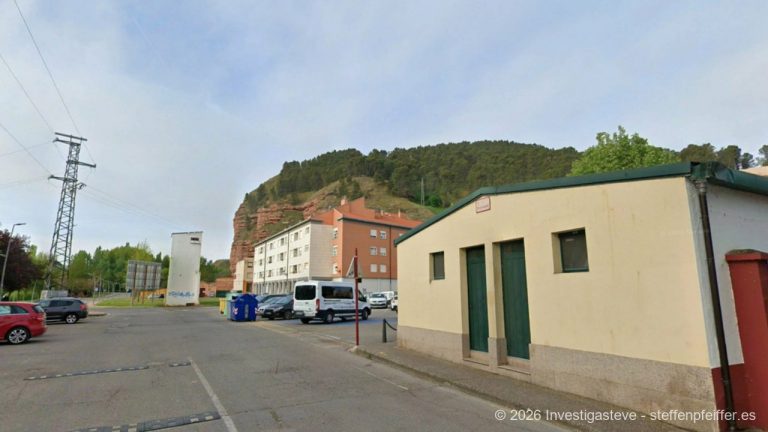
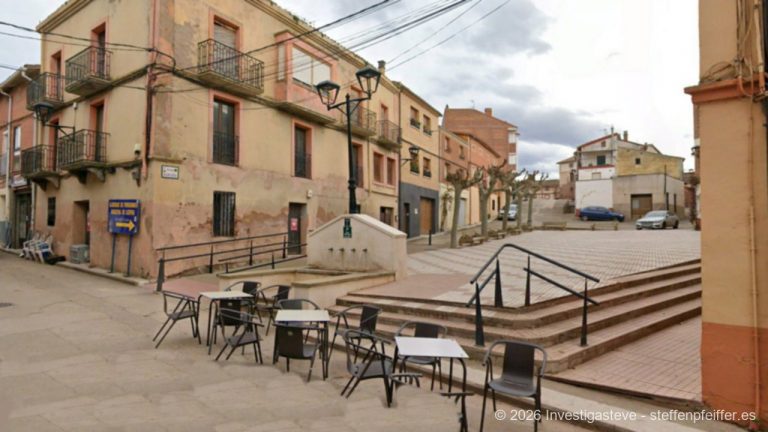
The morning in Nájera begins with an almost reverent silence, broken only by the gentle murmur of the Río Najerilla, which winds like a silver ribbon through the heart of the town. When you step out of your hostel, a cool, almost damp veil of mist still lies over the valley, bathing the massive, glowing red sandstone cliffs that tower over the town like protective guardians in a mystical, diffuse light. The air is sharp and clear, laden with the dew on the last vineyards of La Rioja, and carries the pungent scent of damp stone and the first smoke of chimney fires. It is that magical moment of caesura, in which the echo of your own footsteps on the cobblestones of the Calle Mayor reminds you that you are now leaving behind the legacy of the kings of Navarre to immerse yourself in the wide, open plain.
You feel the hard, cool granite beneath your soles as you cross the bridge over the river and cast one last glance back at the facade of the monastery of Santa María la Real, whose stones breathe the secrets of centuries-old history. It is a departure into the expanse. Your gaze wanders westward, where the horizon already glows in a bright ochre and the first rays of sunlight make the red earth of the coming paths glow. In this moment of isolation, before the busy hustle of the day begins, you feel a deep connection to the millions of pilgrims who, for over a thousand years, have gathered their courage precisely at this spot to take the coming kilometers under their feet. The anticipation mixes with a respectful shudder at the relentless linearity of the Castilian plateau, which will already announce itself on the horizon at the end of this day.
Route and elevation profile
Distance: 20.7 km
Elevation gain: ↑ 310 m / ↓ 180 m
Difficulty: Easy to Moderate. The inclines are gentle and steady, but the exposed location on the wide agricultural tracks demands mental endurance.
Special features: Transition from the wine landscape of La Rioja to the grain fields; crossing the “ghost town” of Cirueña; arrival at the tomb of Santo Domingo.
Today’s route is a study in geological transformation. After leaving the urban fabric of Nájera, the path rises steadily but gently into the hill ranges that separate the Rioja basin from the plateau of Santo Domingo. The elevation profile shows a long, drawn-out incline on the first six kilometers up to Azofra, followed by an undulating plateau that finally leads the pilgrim to an altitude of just under 750 meters. The ground changes from the almost soft, reddish earth of the vineyards to a harder, ochre-colored mixture of clay and gravel, which in dry weather swirls up the dust like small clouds with every step.
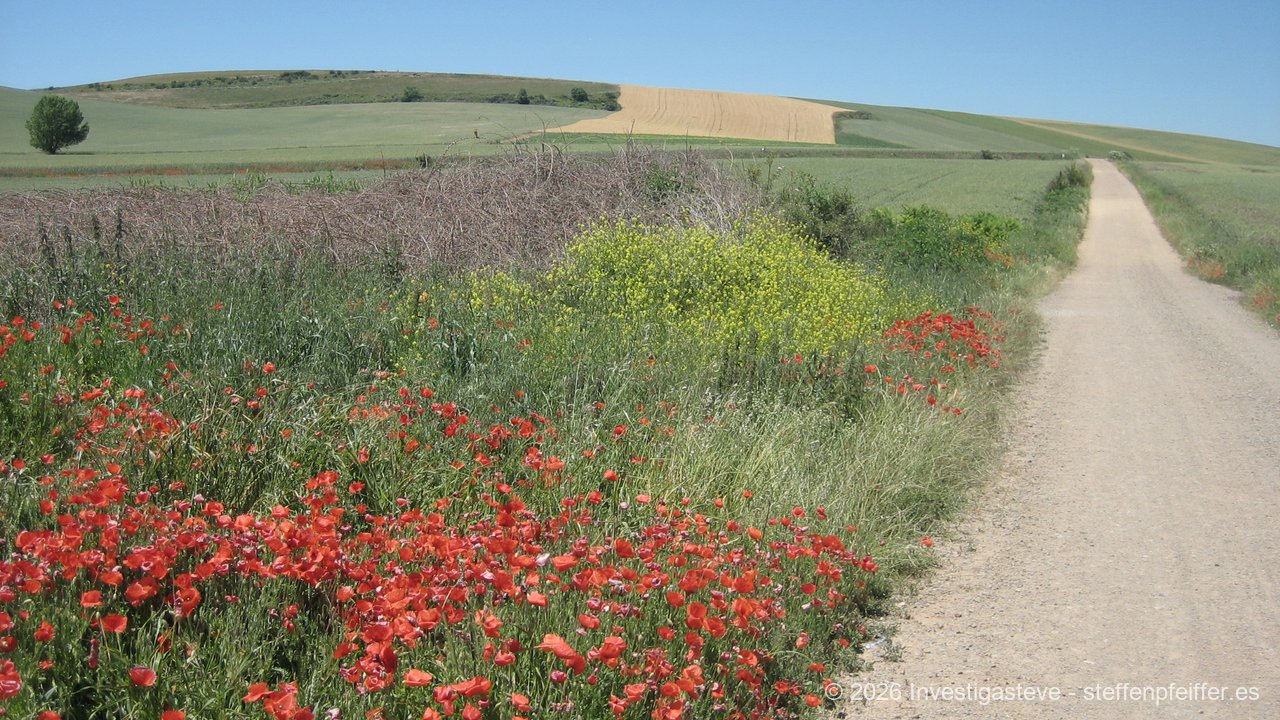
The technical challenge is low, as the paths are wide and well-maintained. The true complexity lies in the acoustic and visual monotony of the second half of the stage. Between Cirueña and Santo Domingo de la Calzada, the path stretches like an endless ribbon of light gravel through the region’s breadbasket. Here, there is no natural shade, no protective forest – only the wide sky and the earth. It is a stage that trains rhythm; here, the walker becomes a pendulum, swinging back and forth between the static landscape and the inner monologue, while the destination, the distant tower of the cathedral, seems to approach only agonizingly slowly.
Variants and small detours
On this stage, the Camino offers few, but nonetheless significant, variants that can influence the character of the day. The classic route leads directly through the center of Azofra, a place entirely dedicated to the legacy of pilgrimage. However, those seeking absolute solitude and who have already warmed up their legs in Nájera can opt for the field paths that skirt the town to the north. This variant saves little time but offers an unfiltered view of the Sierra de la Demanda to the south, whose bluish peaks are often still capped with snow well into spring, forming a dramatic contrast to the red earth of the path.
Another, almost informal “detour” presents itself in Cirueña. While the official path leads through the surreal urbanization with its golf course, there are small paths that touch the old village center. It is worth pausing here briefly to feel the bizarre contrast between the archaic core and the modern planned town. These small decisions along the way are what tear the pilgrim from the trance of monotony and direct focus to the cultural fractures that make this region so unique.
Description of the path – with all senses
The path begins with a haptic experience of hardness. The departure from Nájera first leads you over asphalt, which still holds the coolness of the night. But as soon as you have left the last houses behind, you feel the transition to what defines this stage: the red earth. The ground beneath your boots is firm, almost unyielding, and when the first sun hits the flanks of the hills, the iron oxides in the soil begin to glow. You hear the rhythmic “clack-clack” of your walking poles, which sounds strangely hollow and metallic on the compacted clay. The air in the vineyards smells of damp earth, of the sweetish aroma of ripening grapes, and the distant scent of wild thyme growing at the edges of the plots. It is a smell that celebrates the fertility of this earth and makes you breathe deeply.
When you reach Azofra, the acoustic backdrop changes. The monotonous roar of the distant main road fades, and what remains is the splashing of fountains and the distant ringing of a bell. In Azofra, you feel the historical causality on every corner. Your hand glides over the rough, sun-warmed limestone of the walls that have sheltered pilgrims for centuries. It smells here of stone and history, of the dust of the generations who sat here before you. The ascent behind Azofra is a psychological threshold. The path becomes lonelier, the vineyards slowly give way to wide grain fields. You taste the fine dust on your lips, a mixture of lime and earth that makes you reach for your water bottle again and again. The water tastes more alive in this environment, almost like a liquid reward for the effort of the ascent.
Arriving on the plateau, you reach Cirueña. It is a five-dimensional immersion into the surreal. You hear the rhythmic “ping” of golf clubs on balls, a sound that seems so out of place in the archaic world of the Camino. The smell changes abruptly: the earthy scent of nature is replaced by the aroma of freshly mown grass and the artificial freshness of irrigation systems. You feel the hard contrast on your skin – the wind, sweeping unhindered over the plain up here, cools the sweat on your temples, while your eyes try to reconcile the modern architecture of the ghost town with the ancient path beneath your feet. It is a moment of cognitive dissonance, reminding you that the Camino is not an open-air museum but a living vein through modern Spain.
The path behind Cirueña leads you into absolute linearity. Here, visual reduction takes command. For kilometers on end, you see nothing but the ribbon of the path cutting through the gold of the wheat. You hear the wind brushing through the ears of grain, a dry, papery sound that rustles in your ears and puts you into a meditative trance. You feel the relentless heat now rising from the ochre-colored ground, a dry warmth that makes your clothes stick to your body. But in the midst of this monotony, something happens to your mind: thoughts order themselves, yesterday and tomorrow blur, and all that matters is the sensory perception of the next step. The historical dimension here becomes an inner journey – you are now in the “purgatory” of the country road, preparing you for the arrival.
And then, almost suddenly, it appears on the horizon: the tower of the cathedral of Santo Domingo de la Calzada. It first looks like a mirage, a stone needle piercing the wide sky. You hear the distant ringing of bells, a deep, resonant tone carried across the fields, signaling that the solitude is ending. The smell changes again: the dust is replaced by the scent of nearby gardens and finally by the aroma of the town. When you reach the town walls of Santo Domingo, you feel the massive coolness of the stones welcoming you. The acoustics condense; the clatter of dishes in the cafés, the murmur of people, and the cooing of pigeons form a lively contrast to the silence of the plain.
The moment you enter the cathedral is a feast for the senses. Suddenly, a cool, incense-laden breath envelops you. You hear the echo of your own footsteps on the smoothly polished stone floor, a sound that reverberates in the immense height of the nave. You smell old wax, cold granite, and the heavy history of centuries. When you stand before the tomb of Santo Domingo, you feel the haptic weight of the marble beneath your fingers. The psychological metamorphosis is complete: from the dusty wanderer of the plain, you become the silent observer of an architectural wonder. And then, quite suddenly, you hear it – the shrill, cheerful crow of a rooster in the middle of the cathedral. It is an acoustic shock that brings the legend to life and abruptly tears you from your devotion.
The haptic experience of the town of Santo Domingo is characterized by the solidity of the stone. The streets are narrow, shady, and cool the soles heated by the asphalt. You smell the aroma of “Ahorcaditos,” the flaky pastry that glistens golden in the bakery windows. The taste of vanilla and almonds on your tongue is the sweet reward for the hardships of the day. You feel the texture of the old wooden doors of the hostels, whose grain has absorbed the stories of millions of pilgrims. The historical causality here becomes tangible presence: you have arrived in a town that exists only because a man a thousand years ago decided to pave the way for people like you.
The reflection at the end of the stage usually takes place on the plaza in front of the cathedral. You sit on a stone bench, the sun warms your face, and you watch the arriving pilgrims. You hear the murmur of different languages merging here into a universal melody. Your legs are heavy, your mind is empty, but your heart is filled with the sheer expanse you have conquered today. You notice how the dust of La Rioja slowly gives way to a new form of clarity. Arrival in Santo Domingo is not merely the end of a stage, but immersion in a world where miracles still have a voice – in the form of a crowing rooster watching over your sleep.
Intermediate places & special features
Nájera – The former capital of the kings of Navarre is a place steeped in history, characterized by the spectacular red rock walls. The monastery of Santa María la Real is not only an architectural jewel of the late Gothic and Renaissance periods but also houses the Pantheon of Kings. The monastery’s cloister, known as the “Claustro de los Caballeros,” is a place of perfect harmony with its delicate stonework. In Nájera, you feel the chivalric past on every street corner, especially when you cross the bridge and see the town reflected in the calm waters of the Najerilla.
Azofra – This village is a prime example of devotion to the Camino. As early as the 12th century, Countess Isabel founded a Hospital and a cemetery here for pilgrims. Today, Azofra seems like a sleeping guardian of tradition. The main street, lined with solid stone houses, leads directly to the church of Nuestra Señora de los Ángeles. Particularly noteworthy is the Albergue de Peregrinos, which offers an almost monastic retreat with its individual cabins for pilgrims. Azofra is the place where the hustle of the world finally yields to the rhythm of walking.
Cirueña is the paradoxical heart of the stage. On one side stands the archaic village with its small church, on the other the modern “Ciudad de Golf.” This huge urbanization, built during the years of the Spanish real estate boom, often seems like a surreal film set today. Wide avenues, a pristine golf course, and hundreds of houses, often only occupied seasonally. For the pilgrim, Cirueña is a lesson in zeitgeist: here, thousand-year-old tradition meets the often fragile dreams of modernity. It is a place that invites reflection on the constancy of values.
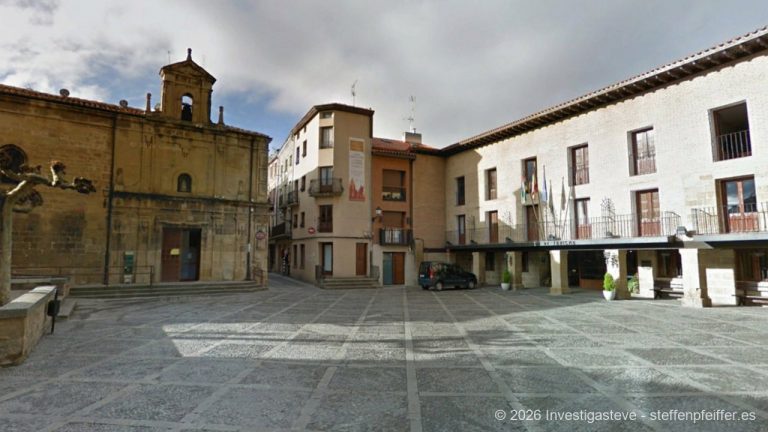
Santo Domingo de la Calzada – The town is the monument to a single man: Domingo García, who built bridges, roads, and a Hospital in the 11th century. The absolute highlight is the cathedral with the unique chicken coop in the world, commemorating the “Chicken Miracle.” The town walls, the well-preserved medieval alleys, and the Parador, housed in a former pilgrim Hospital, make this place one of the most significant stops on the Camino Francés. Santo Domingo is the town of “Holy Infrastructure” – here, walking and helping are declared a sacred act.
Dining, accommodation & supplies
The supply situation on this stage is excellent, which somewhat mitigates the physical strain of the open areas. In Azofra and Cirueña, there are strategically located bars specializing in the pilgrim trade.
Gastronomy: In Santo Domingo de la Calzada, trying the “Ahorcaditos” is a must – a flaky pastry whose name and shape allude to the legend of the hanged man. Additionally, the restaurants around the cathedral lure with hearty Castilian cuisine, referencing the grain fields of the surrounding area.
Accommodation: The Albergue de la Cofradía del Santo in Santo Domingo is one of the most traditional on the entire Way. For those who prefer luxury, the Parador de Santo Domingo de la Calzada offers world-class accommodation. In Azofra, the municipal hostel offers a unique standard for purists.
Public facilities: As a regional center, Santo Domingo offers all amenities: pharmacies, specialized outdoor shops, and a health center.
The special thing today
The absolute unique selling point of this stage is the “Chicken Miracle” of Santo Domingo de la Calzada. It is the only cathedral in the world where live poultry – a white rooster and a white hen – are kept. The legend says that an innocent pilgrim boy, executed, survived at the gallows through the intercession of the saint. When the judge refused to believe it and mocked that the boy was as alive as the roasted chickens on his plate, they flew away cackling. The special thing today is the acoustic experience: the crowing of the rooster breaks the sacred silence of the cathedral and connects faith with the rough reality of life in a humorous way.
A second special aspect is the legacy of Santo Domingo as the “Builder of the Way.” While other saints shone through miracles or martyrdom, Domingo was a man of action. He recognized that pilgrimage needs solid infrastructure. The special thing is the historical causality: the bridge over the Río Oja and the paved road (Calzada) are early masterpieces of engineering. Pilgrims today walk literally on the foundation laid by this visionary man almost a millennium ago. It is the day we learn that stone and mortar can be as sacred as prayer and meditation.
Finally, the visual paradox of Cirueña is a special phenomenon. The fact that the ancient pilgrim path leads right through a state-of-the-art golf course is a motif that perfectly captures the ambivalence of modern Spain. The special thing is the contrast between the pilgrim’s simple equipment and the luxurious leisure pleasure of the golfers. This section challenges the walker to question their own motivation and to find the beauty of the path even in the fractures of civilization. It is a stage of reality testing that sharpens the mind.
Reflection at the end of the stage
When you walk through the illuminated streets of Santo Domingo de la Calzada in the evening, while the warm light plays on the bright limestone of the buildings, a strange kind of clarity sets in. You notice how your perception has sharpened over the last 21 kilometers. The dust of the Rioja fields still clings to your boots, but a new space has opened up in your mind. You hear the rhythmic clatter of hooves on the pavement and smell the scent of history. In the quiet of the evening hours, surrounded by the majestic architecture, you become aware that you have passed a test of monotony today.
Santo Domingo de la Calzada is a place of order and solidity. Here, in the shadow of the great builder, your own effort is put into perspective. You realize that the path has led you today through all layers of time – from the medieval severity of Nájera, through surreal Cirueña, to the transcendent world of wonders in the cathedral. In the reflection of the day, it becomes clear to you that the Camino has no destination you simply reach, but that it consists of the bridges we build to ourselves and to others. You are ready for what is to come, because today you have learned that a miracle is sometimes only a crow away.
Camino of the Stars
This stage lies on the Camino Francés, on the stage from Nájera to Santo Domingo de la Calzada. The sequence of places is:
| Stage | Start | Destination | Distance (km) | Elevation gain | Difficulty | Intermediate places |
|---|---|---|---|---|---|---|
| 09 | Nájera | Santo Domingo de la Calzada | 20.7 | ↑ 310 / ↓ 180 | easy | Azofra → Cirueña |
Did you hear the crowing of the rooster in the silence of the cathedral, or did you find your very own miracle on the wide tracks between the grain fields? Was the contrast in the “Golf Village” of Cirueña a shock for you or an interesting contemporary testimony? Share your story of the builder’s legacy with us – your experience is another star in the sky of the pilgrim community.
About the Author