Introduction & First Impressions
Fisterra is not just a place. It is a sensation, a threshold between past and future, an invisible line between earth and sky. The Romans called it Finis Terrae—the end of the world—and anyone who arrives here can feel the weight of that name. The wind carries the salty breath of the Atlantic through the narrow streets, where exhausted pilgrims meet weathered fishermen who have spent their lives battling the moods of the ocean. The sea, vast and relentless, crashes against the cliffs as if asking: “And? What have you lost here?”

Those who reach Fisterra have already left the roads of Santiago behind. They have continued walking because something within them remained unfinished. The lighthouse, the last outpost of civilization before the open ocean, stands watch over those who arrive, whispering: “This is it. You can let go now.” And many do. Some climb onto the cliffs and stare at the sea for hours, waiting for an answer. Others leave a piece of themselves behind—a piece of clothing, a thought, an unspoken farewell. Pilgrims once burned their garments here to symbolize shedding the old and embracing the new. Today, fires are forbidden, but the idea endures.

Yet, Fisterra is not only a place of myths. It is also a lively, wind-swept fishing town where weary pilgrims share bars with bearded sailors. Those who wander its narrow streets will find hostels, where the beds are so worn that they carry the scent of past travelers, and small hotels, whose windows open directly to the vast ocean. Down at the harbor, where the wind carries away voices, restaurants serve fresh seafood—hake, lobster, octopus—alongside a glass of Albariño that seems to contain the very essence of the sea. In small shops, one can find engraved shells, amulets filled with Atlantic water, and stones said to bring luck if carried on the long journey home.

But Fisterra would not be Fisterra without its history. Here, where pilgrims and sailors have always crossed paths, where pagan shrines stand beside ancient churches, the past is not merely preserved—it is still alive. In the Church of Santa María das Areas, there is a statue of Christ that locals claim is growing. The Monte do Facho, high above the town, was once a site of Celtic rituals, and if you sit in silence, you might swear you can still hear the whispers of ancient druids drifting among the stones.

Yet, Fisterra is also a place of celebration. Every year on the first weekend of August, the town hosts the Festa do Longueirón, a festival dedicated to the razor clam—revered here as much as the Apostle in Santiago. On the same weekend, on Saturday, the town is taken over by pirates—or so they pretend. The Desembarco de las Piratas reenacts the 1403 raid by English privateer Harry Paye, who once plundered Fisterra. Today, the people of Fisterra and Poole, Paye’s hometown, share a town friendship, celebrating the event with laughter, costumes, and a spectacle that feels as if the town has been transported back in time for a day.

And then there is another, quieter but deeper connection: the town friendship between Fisterra and Nachi Katsuura in Japan. Both places mark the end of a pilgrimage route—Fisterra at the end of the Camino de Santiago, Nachi Katsuura at the end of the Kumano Kodo. Yet while Fisterra is seen as the end of the world, Nachi Katsuura represents the beginning—a poetic symmetry that manifests in a remarkable way. Twice a year, in July and December, something extraordinary happens: as the sun sets over Fisterra, it rises at the exact same second in Nachi Katsuura. Since 2024, this phenomenon has been celebrated with a live broadcast, showing both towns in split-screen, one bathed in golden twilight, the other in the first light of dawn. It is a moment that stretches not only between two places but across two worlds.
Fisterra is not a destination—it is a transition. Some arrive and realize they still have further to go. Others stay longer than expected, sitting by the harbor, listening to the wind. And then there are those who finally close their eyes and think: “Yes. This was it. Now I can turn back.”

But can you really turn back after standing at the edge of the world?
Practical Information for Pilgrims
Those arriving in Fisterra will find a variety of pilgrim hostels, both municipal and private. For those who wish to treat themselves after so many kilometers, there are charming small hotels with breathtaking sea views.
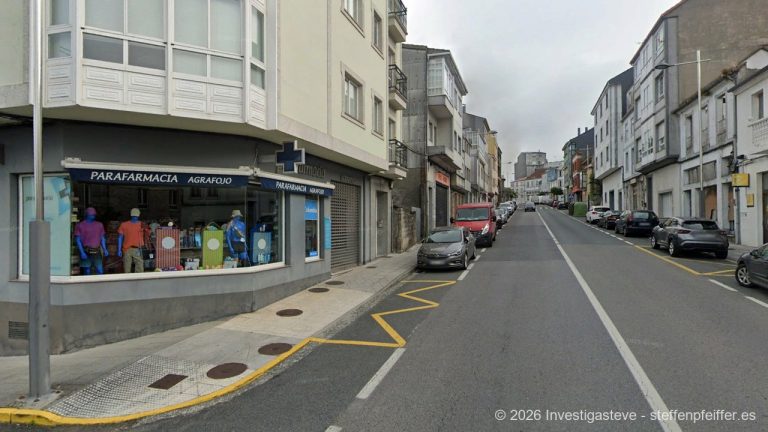
Good food is never a problem here—at the harbor restaurants, fresh seafood is served daily, best enjoyed with a glass of Albariño. Those seeking one of the best tortillas in the region should visit one of the small bars near the waterfront promenade. For pilgrims preparing for the journey home, there are supermarkets in the town center, as well as a pharmacy, just in case the final memory of the Camino comes in the form of blisters or sunburn.
About the Author